



Ashwagandha Root Extract Powder: Cortisol, Sleep & Dosage Data
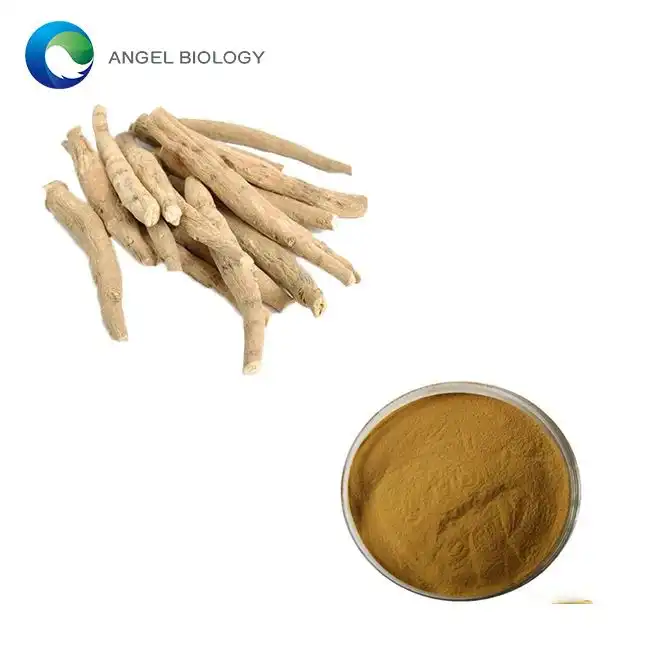
Ashwagandha Root Extract Powder is a botanical ingredient that comes only from the roots of Withania somnifera. It is scientifically standardized to have a withanolide content that is always between 1.5% and 10%, as shown by HPLC testing. Unlike raw powders that are inconsistent from batch to batch, this concentrated extract meets the growing need for stress-resilience, cortisol regulation, and restorative sleep adaptogenic formulas. The extraction process gets rid of the fibrous parts while concentrating the bioactive compounds. This makes sure that the medicine works at doses that are safe and can be used in nutraceutical, functional food, and cosmetic products.
Understanding Ashwagandha Root Extract Powder: Composition & Benefits
Botanical Origins and Extraction Technology
The plant Withania somnifera is in the family Solanaceae and does best in dry places in India and the Mediterranean. Premium manufacturers use root-only sourcing methods to keep leaves from getting contaminated, which would add too much Withaferin A, a cytotoxic compound that shouldn't be in commercial formulations. The bioactive markers are concentrated using advanced hydro-alcoholic or water-based solvent extraction technologies that keep the phytochemical integrity. This process turns raw farming material into a standardized ingredient that can meet pharmacopeial standards like USP and IP. This solves the long-standing problem of crude herb powders having different levels of potency.
The extraction methods have a big effect on the end product's properties. Organic extraction methods care more about the environment and follow buyer trends toward clean labels, while traditional methods may be cheaper for markets that care about price. When purchasing professionals look at different sources, they should check the extraction methods, solvent residue tests, and GMP certification to make sure the Ashwagandha Root Extract Powder is stable and follows the rules.
Active Compounds: Withanolides and Their Mechanisms
Adaptogenic qualities are mainly due to withanolides, which are potent steroidal lactones. According to research, these chemicals change the hypothalamic-pituitary-adrenal axis, which helps the body's stress reaction system. Standardized extracts make sure that amounts are always the same, which lets formulators make goods that can back up their claims of effectiveness. To meet high standards, Withaferin A can't be more than 1.0%, and safer withanolide forms like Withanoside IV and Withanoside V are given more weight.
The standardization process fixes problems with bioavailability that happen in whole root powders because active compounds get stuck in cellulosic matrices. Concentrated extracts get around this problem by giving beneficial doses in small amounts that can be put into capsules or tablets. This improvement directly affects the time it takes to develop a new product, making formulations simpler and speeding up the time it takes for brands to enter the market when they want to stand out from the competition.
Scientific Evidence Supporting Key Health Claims
Controlling cortisol is one of the most well-studied uses. Clinical trials show that taking supplements every day helps keep cortisol levels healthy, especially when you are under a lot of stress. This mechanism is what makes products in the stress management and mood support categories appealing to modern consumers whose lives are busy.
Getting better sleep is another benefit that has been proven to work. Studies show that adaptogens can help reduce sleep delay and restore normal sleep architecture. This is done by changing the HPA axis instead of making people sleepy. This difference means that it can be used during the day without making people sleepy, which opens up more uses in functional beverage and nootropic formulas.
More study shows that Ashwagandha Root Extract Powder can help the immune system, improve cognitive ability, and make you stronger physically. Because these benefits are multifaceted, brand creators can make well-being stories that appeal to a wide range of age groups and interests, from goods that improve athletic performance to those that help people age more gracefully.


Dosage Guidelines and Usage Recommendations for Optimal Outcomes
Evidence-Based Intake Ranges for Different Applications
Based on evidence, different uses need different intake ranges. The recommended daily dose for products standardized to 5% withanolides is between 300 mg and 600 mg, according to clinical research. Formulations that help with stress usually use 300–500 mg, and plans that help with sleep might use 500–600 mg before bed. A lot of sports nutrition products that are meant to help with healing and endurance use 600 mg along with adaptogens.
Dosages should be calibrated based on the concentration of withanolide by people who work in formulation. A 10% standardized extract needs a lot less mass than a 1.5% version, which changes the choice of pill size and how much they cost. This dosage range lets companies make the most of their products' economic benefits while still meeting medicinal standards, which are confirmed by HPLC analysis.
Practical Considerations for Bulk Manufacturing Integration
Because Ashwagandha Root Extract Powder absorbs water, it needs to be kept in a controlled humidity environment while it is being encapsulated and tableted. Particle size requirements of 95% passing through 80 mesh make sure that excipients are mixed evenly, which stops problems with segregation during high-speed production runs. Fill weights are affected by bulk densities between 0.3 and 0.6 g/ml, which means that formulation changes are needed to get target doses into normal pill sizes.
The mild solubility profile of the extract works well in tincture preparations, but extra cosolvents or emulsifiers may make it more stable in liquid forms. Thermal stability tests should be done by people who are making functional drinks because withanolides are sensitive to long-term heat exposure above 60°C. These technical factors guide test batch development and scale-up processes, which cut down on the number of times that formulas need to be changed and speed up the time it takes to go on sale.
Safety Profile and Interaction Considerations
At suggested doses, the extract is well tolerated, but individual results are different. Mild stomach problems can happen when you first start taking the supplement, but they usually go away after a while or when you take it with a meal. Pregnancy and breastfeeding are not recommended because there is not enough information about safety. This means that clear labeling disclaimers are needed to meet regulations in all international markets.
There is a chance that this drug will interact with sedatives, thyroid hormones, and immunosuppressant drugs, so it needs to be labeled with a warning and a note to talk to a doctor. These steps toward openness help achieve risk management goals and increase customer trust in brand responsibility. To meet the standards for due diligence, procurement teams should make sure that providers provide full safety documents, such as toxicology studies and methods for tracking bad events.
Comparing Ashwagandha Root Extract Powder Products for Procurement Decisions
Form Factor Analysis: Powder Versus Finished Dosage Forms
For experienced producers, buying Ashwagandha Root Extract Powder in bulk gives them the most formulation options and the best value for money. The prices of raw materials usually run from cheap to expensive, depending on their certification status and the amount of withanolide they contain. Organic GMP-certified products are more expensive, but they are worth it because they are easier to sell. Powder formats make custom blending for private formulas easier and allow brands to stand out by using plant mixtures that work well together.
Capsule and tablet forms offer complete solutions for new brands that don't have their own production facilities, but the returns are low because of the costs of processing that adds value. Some types of customers like tinctures because they come in liquid form, but they have trouble staying fresh and need special packaging and protection systems. When you compare form factors to the needs of your target market, your production skills, and your profit margin needs, you can find the best procurement strategies that fit your business plan.
Quality Benchmarking and Certification Priorities
GMP certification is an absolute must for quality assurance; it shows that there are systematic controls in place to keep processes clean. Organic certification through the USDA, EU, or similar programs meets the standards for a clean label, which is especially important for stores that sell natural goods and people who care about their health. Verification by a third party for heavy metals, microbial toxins, and herbicide residues adds more layers of proof that boost the trustworthiness of the brand.
The COA should list the amount of withanolide found using approved HPLC methods, the amount of moisture below 5% to keep the product from breaking down, and the particle size distribution that meets manufacturing requirements. Predictive quality management allows tracking batch consistency through kept samples and stability testing data. This cuts down on costly formulation failures during scale-up phases. In markets for botanical ingredients that aren't unified, these strict paperwork requirements separate trustworthy sellers from dishonest ones.
Supplier Evaluation Framework for Strategic Partnerships
Logistics reliability, not just product specifications, determines how resilient the supply chain is. Inventory management and cash flow plans are affected by minimum order amounts, lead times, and how well you know how to fill out shipping documents. Suppliers with flexible MOQs can work with smaller names that are testing the market, and volume price tiers reward bigger commitments with chances to increase margins.
Customer support services like expert advice, help with custom formulations, and regulatory advice add value above and beyond the price of a commodity. When buying things internationally and dealing with complicated compliance issues, these service dimensions are especially helpful. When looking for a long-term relationship, you should look at how innovative the provider is, how easy it is to track down raw materials, and how willing they are to work with you to create unique extracts that give you an edge over your competitors.
Strategic Insights for B2B Buyers: Sourcing and Market Trends
Global Supply Landscape and Manufacturer Profiles
India has the most traditional knowledge and the best farming facilities for growing and extracting Ashwagandha root extract powder. Leading makers keep vertical integration from growing from planting the plants to extracting the products. This makes sure that quality control and tracking are maintained throughout the entire production chain. These well-known companies usually have a lot of different certifications and work with global names that have strict requirements.
New suppliers from other regions can help with diversification, but it takes more work to evaluate these new market entrants. Procurement risks can be reduced by checking a company's reputation through industry references, facility checks, and trial order evaluations. Because the supply base is so concentrated, it could be affected by problems in area's agriculture. Brands that count on ongoing access should use supplier diversification strategies.
Market Demand Dynamics and Pricing Influences
Adaptogenic pill groups are growing steadily, thanks to trends in stress awareness and preventative health. Consumers' choice for standardized extracts over generic root powders shows that they have higher quality standards, which supports price strategies that use premium ingredients for unique formulations. The price of an extract is directly related to how strong it is; higher amounts of withanolide fetch higher prices, which are supported by better effectiveness and lower dosage needs.
The level of certification has a big effect on how prices are set. Organic certification raises prices by 15–30%, and pharmaceutical-grade standards that include strict testing procedures command the highest prices. Smart procurement weighs these costs against how much the target market is willing to pay, placing products in price ranges that are competitive and meet both volume and margin goals at the same time.
Innovation Opportunities and Emerging Applications

High-withanolide extracts that are more than 10% standardized are cutting-edge research that makes ultra-low-dose products appealing to people who only want to take a few supplements a day. New ways of delivering drugs, like liposomal encapsulation and nanoparticle technologies, improve bioavailability, which opens up possibilities for premium placement. When you mix ashwagandha with other adaptogens, nootropics, or sports nutrition compounds that work well together, you get more benefits and more ways to use it.
More and more researchers are interested in cognitive health applications that help with focus, memory, and mental clarity. This could mean that these apps can reach more people who aren't just dealing with stress. As a non-stimulant alternative to caffeine-based products, ashwagandha is used in energy support formulas that appeal to people who want to feel energized without getting jittery. These new uses point forward-thinking brands in the direction of strategic product development.
Conclusion
Ashwagandha Root Extract Powder has standard adaptogenic benefits that work through scientifically proven mechanisms that help control cortisol, improve sleep quality, and make you more resistant to stress. For the procurement process to go smoothly, withanolide standardization, extraction methods, and certification qualifications that make sure formulation stability and regulatory compliance are carefully looked over are needed. Strategic partnerships with reputable manufacturers help brands take advantage of the growing demand for adaptogens while lowering the risks in the supply chain. The dosage guidelines, quality standards, and supplier evaluation frameworks that have been laid out give formulation professionals and procurement teams actionable information that helps them make confident sourcing decisions that improve product effectiveness and set the product apart in the market.
FAQ
1. What withanolide content should I specify for effective formulations?
Standardization of withanolides between 2.5% and 5% is the range that has been used in clinical studies to show that it helps with stress and sleep. Lower amounts need proportionally higher doses, which changes the size of the pill and how much it costs. Higher concentrations above 10% allow for very precise dosing, but they come with higher prices that are reflected in the processes used to make them.
2. How does ashwagandha extract integrate into bulk manufacturing workflows?
Because the particles are so small and easily absorb water, controlled-humidity conditions are needed during encapsulation. For direct compression tableting, the right flow agents are needed, and for liquid uses, co-solvents are needed to improve solubility. Because it is sensitive to heat, withanolide needs to be kept intact during processing by keeping an eye on the temperature.
3. Which certifications are essential for regulatory compliance and market acceptance?
GMP approval makes sure that quality controls are carried out in a way that meets the standards for making pharmaceuticals. Organic certification meets the standards for clean label placement in outlets for natural goods. Verification for contaminants by a third-party testing adds to the brand's reputation with quality-conscious customers and regulatory bodies around the world.
Partner with Angelbio for Premium Ashwagandha Root Extract Powder Supply
Through our partnership with Xi'an Jiaotong University's Institute of Life and Health Research, Angelbio provides top grade Ashwagandha Root Extract Powder that has been standardized to exact withanolide specifications. This is backed by 18 years of independent research and development excellence. Our GMP-certified factories make sure that uniformity from batch to batch is maintained, which is important for formulation reliability. Thorough testing methods make sure that the product meets purity, potency, and safety standards that go beyond international standards. As a reliable manufacturer, we offer flexible MOQs, technical formulation support, and full regulatory documentation to make it easy for our products to reach markets around the world. Our team creates unique health formulas, functional drinks, and pills to help with stress. We make sure that these solutions are in line with your brand's values and quality standards. Get in touch with angel@angelbiology.com right away to get full specs, COA samples, and prices that are geared to your buying needs. Let's work together to make your next big product.
References
1. Chandrasekhar K, Kapoor J, Anishetty S. "A prospective, randomized double-blind, placebo-controlled study of safety and efficacy of a high-concentration full-spectrum extract of ashwagandha root in reducing stress and anxiety in adults. "Indian Journal of Psychological Medicine, 2012, 34(3): 255-262.
2. Salve J, Pate S, Debnath K, Langade D. "Adaptogenic and anxiolytic effects of ashwagandha root extract in healthy adults: A double-blind, randomized, placebo-controlled clinical study. "Cureus, 2019, 11(12): e6466.
3. Lopresti AL, Smith SJ, Malvi H, Kodgule R. "An investigation into the stress-relieving and pharmacological actions of an ashwagandha extract: A randomized, double-blind, placebo-controlled study." Medicine, 2019, 98(37): e17186.
4. Wankhede S, Langade D, Joshi K, Sinha SR, Bhattacharyya S. "Examining the effect of Withania somnifera supplementation on muscle strength and recovery: A randomized controlled trial." Journal of the International Society of Sports Nutrition, 2015, 12(1): 43.
5. Langade D, Kanchi S, Salve J, Debnath K, Ambegaokar D. "Efficacy and safety of ashwagandha root extract in insomnia and anxiety: A double-blind, randomized, placebo-controlled study. "Cureus, 2019, 11(9): e5797.
6. Singh N, Bhalla M, de Jager P, Gilca M. "An overview on ashwagandha: A Rasayana of Ayurveda. "African Journal of Traditional, Complementary and Alternative Medicines, 2011, 8(5S): 208-213.