



Ashwagandha Root vs Leaf Extract: Specs That Drive Formula Choice
Since root and leaf extracts are not the same, formula selection should be based on the information provided in the product specification and supporting documents. Before comparing ashwagandha extract powder from different sources, I evaluate the plant part, analytical method, marker content, extract ratio, and physical properties. Root extract is commonly selected for products that emphasize traditional botanical sourcing and defined standardization. Leaf or root-and-leaf extracts may also be considered for specific formulation concepts when their composition, safety information, and documentation are clearly established. The right choice depends on dosage form, serving size, target market, and cost per finished serving. This guide explains how to evaluate each factor when selecting a suitable ingredient.
Why the Root vs Leaf Decision Matters in Ashwagandha Extract Powder
One Botanical Name, Several Different Ingredients
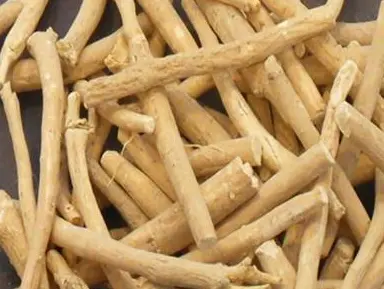
The botanical name Withania somnifera (L.) Dunal identifies the plant species, but extracts made from different plant parts are not interchangeable. Their composition, taste, dispersibility, regulatory considerations, and withanolide profiles may vary depending on whether the material comes from the root, leaf, root-and-leaf combination, or whole plant. A 2008 study in Phytochemical Analysis reported withanolides in both roots and leaves and identified differences in their compound profiles. For example, withaferin A is often discussed in relation to leaf material. This is why I never consider ashwagandha extract powder a single uniform ingredient. I evaluate each grade according to the intended dosage form, product positioning, target market, and serving size. A suitable match is more important than choosing the lowest bulk price or the highest advertised potency.

Botanical and Chemical Specifications to Compare
Botanical identity is the first step in a fair comparison. I check the scientific name, plant part, country of origin, and available information about cultivation and raw material sourcing. Then I review the extraction ratio, solvent system, carrier, and processing conditions. Water-based and hydro-ethanolic extraction can produce different chemical profiles and marker concentrations. However, it is not accurate to assume that water extraction always produces 1.5% to 2.5% withanolides or that hydro-ethanolic extraction automatically reaches 5% or more. Actual results depend on the raw material and manufacturing process.
Total withanolide content alone does not provide a complete picture. I also review the analytical method, marker compounds such as withaferin A, withanolide A, and withanolide B, the chromatographic profile, and the agreed acceptance range. Gravimetric and UV-based methods may measure broader groups of compounds, while HPLC can separate and quantify selected compounds when the method is properly validated. Results from different methods should not be treated as directly interchangeable. Buyers should confirm the method, calculation basis, and marker definitions before comparing specifications.
Physical Specifications That Decide Performance
The powder's physical properties influence how it behaves during blending, encapsulation, compression, and other production operations. Color may range from light beige to dark brown, depending on the plant material, extraction conditions, and carrier system. Particle size, bulk density, moisture content, and flowability should be evaluated against the requirements of the intended production line.
For example, a specification of 95% passing through an 80-mesh sieve and a bulk density of 0.45 to 0.65 g/mL may be suitable targets for certain capsule formulations, but they are not universal requirements for every grade. For pre-workout tubs and dry blends, moisture content and hygroscopicity should be checked because they can affect powder handling and caking during storage. A loss-on-drying value below 5% should only be used when supported by the actual product specification and batch COA.
For extracts standardized to 5% withanolides, the required ingredient quantity depends on the target marker level per serving and the capsule's actual filling capacity. Formulators should calculate the ingredient amount and assess the remaining space for other components rather than assume a specific capsule size will always be sufficient. Since ashwagandha has a characteristic earthy taste, flavor, odor, dispersibility, and bitterness should also be evaluated in beverage formulations. Water-dispersible grades may offer formulation advantages in selected systems, but their performance should be confirmed through application testing.
How Root and Leaf Extracts Differ in Formula Applications
Where Root Extract Fits Best
The Ayurvedic background of ashwagandha is discussed in the American Herbal Pharmacopoeia monograph on the ingredient. Root extract is commonly considered by brands developing botanical supplements and products positioned around traditional herbal ingredients, subject to the applicable claim and labeling regulations. For capsule and tablet production, flowability, compressibility, particle size, and blend uniformity are important formulation considerations.
Root extract may also be evaluated in multi-ingredient formulations containing minerals such as magnesium or zinc. For sports nutrition and dry blends, moisture behavior, powder flow, taste, and compatibility with other ingredients should be checked. Clearly identifying the root as the plant part also helps quality teams establish specifications and compare batches. Angelbio focuses on root-based extracts for buyers who require a clearly defined botanical source and consistent product specifications.
Where Leaf and Combined Extracts Fit
Leaf extracts and root-and-leaf extracts of ashwagandha extract powder may be considered for different formulation concepts. Brands may evaluate them because their phytochemical profiles differ from those of root-only extracts, providing alternative ingredient specifications for research-led product development and cost evaluation. One commercially recognized example of a root-and-leaf extract is Sensoril. However, brand names alone do not establish the suitability of an ingredient for every formulation.
These options should be evaluated using documented composition and safety information, including the exact plant-part ratio where applicable and a suitable analytical fingerprint. Leaf material may have different sourcing costs, but its regulatory status and permitted use can vary by destination market. The addition of leaf material can also change the marker profile, so the withanolide content of a leaf or combined extract should not be directly compared with that of a root-only extract without considering the analytical method and composition. Each ingredient grade should therefore have its own specification and supporting data.
Choosing Ashwagandha Extract Powder for a Commercial Formula
I recommend following a clear selection process. First, define the product format, serving size, and intended application. Next, establish the required marker content and standardization method. Then review the supplier's available documentation and any certification requirements relevant to the target market. Finally, compare branded and non-branded ingredient options.
KSM-66 and Sensoril are two different branded ingredient options, so buyers should look beyond the brand name. Compare the plant part, manufacturing information, available research, licensing conditions, supply availability, and cost per finished serving. Before finalizing specifications or product claims, review the regulations in the destination market, including the US, EU, UK, Canada, and Australia. For US dietary supplement products, the relevant ingredient status, labeling, and applicable regulatory requirements should be reviewed by qualified regulatory personnel. California Proposition 65 requirements may also be relevant when evaluating exposure to listed contaminants.
Quality, Safety, and Verification Requirements for B2B Procurement
Testing Items to Request
For ashwagandha extract powder, three important areas of quality evaluation are botanical identity, marker content, and contaminant control. HPTLC or other suitable identification methods can help evaluate botanical identity and distinguish different material profiles when supported by appropriate reference information. The content of selected markers, such as withaferin A, withanolide A, and withanolide B, may be evaluated by HPLC when these parameters are included in the product specification.
A suitable safety testing program may cover heavy metals, pesticide residues, microbiological limits, aflatoxins, residual solvents, moisture, and foreign matter, depending on the raw material, manufacturing process, and target market. Heavy metals such as lead, arsenic, cadmium, and mercury should be assessed against applicable product and market limits. Buyers should not assume that one universal limit applies to every market or product category. Residual solvent testing should follow suitable methods and applicable requirements, including relevant USP guidance where appropriate.
Adulteration screening should also consider the declared carrier and the possibility of undeclared ingredients or inconsistent botanical materials. Buyers should request analytical evidence appropriate to the ingredient grade rather than rely on a single test result.
Documents and Quality Systems
A certificate without supporting test results is not sufficient for a complete supplier assessment. I recommend requesting batch-specific certificates of analysis, independent laboratory reports where available, sample retention information, traceability records, and procedures for handling deviations and corrective actions.
It is also important to review the manufacturer's production controls, food safety management documentation where applicable, cleaning procedures, and change management practices. Changes to solvents, carriers, or raw material sources can affect product specifications even when the commercial product name remains unchanged. This is why change management is an important part of supplier evaluation.
As part of my review, I compare the plant-part declaration on the COA with the product label, invoice, and technical data sheet. All four documents should identify the same product and plant part. If there is a difference, I pause the approval process and request clarification. Angelbio states that it continues to improve its production controls and quality management practices, and buyers can request relevant documentation for the specific product and batch.
Safety and Dose Considerations During Development
Safety and serving-size considerations should be addressed during product development, not only after a product has been released. A 5% extract and a 1.5% extract provide different amounts of specified marker compounds at the same ingredient inclusion level. I therefore consider the serving size, product specification, and intended consumer group together when reviewing a formulation.
Formulators should work with qualified technical and regulatory advisors to determine appropriate ingredient levels and label statements for each target market. Finished-product claims should be supported by suitable evidence and comply with local requirements. Consumers with existing medical conditions or those taking medication should be directed to consult a qualified healthcare professional before using products containing ashwagandha.
Clear composition data are particularly important for leaf and combined extracts because their marker profiles may differ from those of root-only materials. Storage conditions should also be confirmed. Depending on the grade, ashwagandha extract powder may absorb moisture during storage. Airtight, moisture-protective packaging, such as suitable foil bags with inner liners, may help protect the material when stored under the supplier's recommended cool and dry conditions. Shelf life should be established using product-specific stability information. A period of 24 to 36 months should only be stated when supported by the relevant product data.
Supplier and Manufacturing Criteria That Affect Formula Success
How Manufacturing Steps Shape the Final Powder
The final powder reflects each stage of the production process. Typical stages include raw material sourcing, harvesting, botanical identification, drying, milling, extraction, filtration, concentration, drying, sieving, blending, testing, and packaging. Water-based and hydro-ethanolic extraction can produce different profiles of plant constituents, depending on the process and raw material.
Compared with unprocessed root powder, a concentrated extract may provide a higher level of selected marker compounds per gram, depending on the specification. However, the ingredient quantity and formulation performance should be assessed using analytical data rather than general assumptions about bioavailability or effectiveness. Standardized extracts can help formulators work with defined marker ranges and consistent ingredient specifications, while particle size and blend uniformity influence handling during production.
When evaluating suppliers, I ask them to explain the extraction steps, solvent system, concentration process, drying method, sieving, and blending controls. These details help buyers understand how the final powder is produced and which parameters may influence the finished ingredient.
Supply Terms and Total Cost of Ownership
The price per kilogram of ashwagandha extract powder does not tell the whole story. I review the minimum order quantity (MOQ), production capacity, available stock, lead time, and reorder schedule. I also ask about supply planning options based on estimated demand and the product's shelf life.
Next, I calculate the total cost of ownership, which may include cost per finished serving, marker content per kilogram, testing fees, freight, documentation costs, packaging, and the potential cost of nonconforming lots. A 5% extract with a higher price per kilogram may have a lower ingredient cost per target marker level than a 2% extract, depending on the actual specifications and inclusion rate. For importers and distributors, supply continuity and complete documentation can be as important as unit price because delayed shipments may affect production schedules.
Technical Data Sheet and OEM Support
A reliable supplier should provide clear technical information for the specific product grade. Important details include scientific name, plant part, extraction solvent, extract ratio, carrier, marker compounds, assay range, appearance, odor, particle size, moisture content, bulk density, dispersibility, shelf life, storage conditions, and packaging.
Supporting documents may include a batch-specific COA, product specification, safety data sheet where required, allergen and non-GMO statements where applicable, relevant certificates, contaminant reports, country-of-origin information, and stability data. Buyers should confirm which documents are available for the actual product and manufacturing site.
For OEM and private-label projects, I also ask about customization options such as extract ratio, marker range, particle size, packaging, regulatory documentation, and specification responsibilities. Request samples and confirm MOQ, production capacity, and lead time before committing to a larger order.
A Practical Decision Guide and Common Purchasing Mistakes
Matching Root, Leaf, or Combined Extract to Your Concept
Root extract may be suitable for products that emphasize a clearly identified botanical source, traditional ingredient positioning, and defined standardization. If you want to investigate leaf extract, first review its distinctive phytochemical profile, target marker content, and intended formulation application. For root-and-leaf or full-spectrum extracts, buyers should examine fingerprint data, exact plant-part ratios where available, standardization, supporting evidence, and market-specific requirements.
A concentrated root extract was evaluated in a clinical study published in the Indian Journal of Psychological Medicine in 2012. However, findings from a specific study should not be generalized to all ashwagandha extracts, different plant parts, or finished products. The study material, dose, formulation, and research conditions need to be considered separately. When connecting an ingredient to published research, I first confirm that the material being evaluated matches the plant part and specification discussed in the study.
A Simple Scoring Matrix for Supplier Comparison
As a practical way to compare suppliers, I assign each one a score from 1 to 5 across nine factors: botanical identity and traceability, assay consistency, contaminant controls, regulatory documentation, physical performance, price, supply stability, customization, and technical support. Each project can assign different weights to these criteria.
For a capsule brand, physical performance and assay consistency may receive higher scores. For a beverage brand, dispersibility and taste may be more important. Botanical identity, safety, and documentation should be treated as essential approval criteria. A supplier with incomplete information in these areas should not be selected simply because its price is attractive. This scoring method provides a practical worksheet that R&D, QA, and procurement teams can use when comparing suppliers.
Common Purchasing Mistakes and Pilot Testing
One common mistake is ranking products only by their reported withanolide percentage. Results obtained through different analytical methods, such as gravimetric methods and HPLC, may not be directly comparable. Plant part, extraction ratio, marker definition, and serving size also affect the overall comparison.
Another mistake is accepting the term "full spectrum" without a clear definition or supporting chromatographic data. A third mistake is failing to compare plant-part declarations across labels, invoices, certificates of origin, and technical data sheets. Finally, some buyers place large orders before completing sample and application testing.
I recommend preparing a small pilot batch to evaluate flavor, color, dispersion, flowability, and compatibility with other ingredients. For liquid formulations, this testing can help identify issues such as sedimentation before production begins. Pilot testing also provides useful information for confirming the final specification and reducing the risk of formulation changes during scale-up.
Conclusion
Root and leaf extracts are different ingredient materials, so the product specification should guide formula selection. The suitability of ashwagandha extract powder for capsules, beverages, and sports nutrition blends depends on several factors, including plant part, extraction solvent and ratio, analytical method, marker content, and powder properties such as particle size, bulk density, and moisture content.
Root extract is commonly selected for products that require a clearly identified root-based ingredient and defined specifications. Leaf and combined extracts may also be considered, but their plant-part ratios, chromatographic profiles, composition data, and market-specific requirements should be reviewed carefully. Batch-specific COAs, contaminant testing, traceability, and consistent plant-part declarations help buyers evaluate product quality and supplier reliability.
The price per kilogram or reported withanolide percentage alone does not provide a complete comparison. Total cost of ownership, supply terms, documentation, and pilot test results should all be considered. A structured supplier evaluation process helps R&D, QA, and procurement teams make a more informed decision.
FAQ
1. Is root extract always better than leaf extract?
No. The suitable option depends on the intended application, botanical identity, composition, standardization, supporting documentation, and regulations in the target market. Root, leaf, and combined extracts should be evaluated as different ingredient grades rather than ranked by plant part alone.
2. How does root powder differ from root extract powder?
Root powder is made by drying and grinding the root material, while root extract powder undergoes extraction and concentration before drying. Their composition, marker content, physical properties, and required inclusion levels can differ. Buyers should compare the specifications and analytical results before selecting a format.
3. How do I evaluate a supplier?
Review botanical identity, analytical methods, marker results, batch-specific COAs, contaminant testing, traceability, and relevant production documentation. Then request samples and confirm MOQ, lead time, packaging, and technical support before placing a larger order.
4. What belongs on a COA?
A COA should identify the botanical name, plant part, batch number, test date, analytical method, and relevant test results. Depending on the specification, it may include marker content, heavy metals, pesticide residues, microbiological results, residual solvents, and moisture or loss-on-drying data.
Request a Technical and Commercial Quote for Ashwagandha Extract Powder from Angelbio
Angelbio provides botanical ingredient information and sourcing support for buyers evaluating ashwagandha extract powder. If you are comparing root, leaf, or combined extracts, please share your required plant part, target withanolide range, preferred analytical method, intended application, destination market, packaging requirements, estimated annual volume, and MOQ.
Our team can discuss available product specifications, relevant batch documentation, sample evaluation, and quotation options according to your requirements. Angelbio focuses on root-based extract options for buyers who need a clearly identified botanical source and defined analytical specifications. Send an email to angel@angelbiology.com to discuss product details, samples, and commercial terms.
References
1. Phytochemical Analysis, 2008. "Analysis of withanolides in root and leaf of Withania somnifera by HPLC with photodiode array and evaporative light scattering detection."
2. Pharmaceutics, 2023. "Ashwagandha (Withania somnifera)—Current Research on the Health-Promoting Activities: A Narrative Review."
3. American Herbal Pharmacopoeia, 2000. "Ashwagandha Root (Withania somnifera): Analytical, Quality Control, and Therapeutic Monograph."
4. Indian Journal of Psychological Medicine, 2012. "A Prospective, Randomized Double-Blind, Placebo-Controlled Study of Safety and Efficacy of a High-Concentration Full-Spectrum Extract of Ashwagandha Root in Reducing Stress and Anxiety in Adults."
5. California Office of Environmental Health Hazard Assessment, 1986. "Safe Drinking Water and Toxic Enforcement Act (Proposition 65)."