



Berberine HCl Purification to 97%+: Inside the Manufacturing Process
When sourcing botanical ingredients for supplement, cosmetic, or functional food formulations, purity is an important factor in product quality and formulation consistency. Berberine HCl powder, a standardized alkaloid ingredient commonly associated with botanical sources such as Coptis chinensis and Berberis species, is widely evaluated by B2B buyers seeking well-characterized raw materials. Achieving a specified purity of 97% or higher requires appropriate raw material selection, controlled extraction and purification, and reliable analytical testing. In this article, we explain the key stages involved in producing high-purity berberine hydrochloride and why they matter to ingredient buyers and product developers.
Why Purity Above 97% Matters for Berberine HCl
What "Purity" Actually Means in Herbal Extracts
The reported purity of a botanical ingredient depends on the target compound, analytical method, calculation basis, and product specification. For berberine hydrochloride, high-performance liquid chromatography (HPLC) is commonly used to assess the content of the target compound and distinguish it from certain related substances. A result of 97% or higher indicates that the sample meets the stated analytical criterion under the specified method; it does not automatically mean that every other component makes up exactly 3% or less by total mass. Moisture, residual solvents, inorganic residues, and other impurities may require separate tests.
For this reason, buyers should review the analytical method, reporting basis, and individual test results rather than relying on a purity figure alone. A clear specification and batch-specific Certificate of Analysis (COA) help procurement and quality teams evaluate whether the material is suitable for the intended application.


Industry Standards That Set the Benchmark
Pharmacopoeias such as the United States Pharmacopeia (USP), European Pharmacopoeia (Ph. Eur.), and Chinese Pharmacopoeia (ChP) contain monographs or relevant requirements for certain substances and materials. However, the applicable standard depends on the specific ingredient, grade, intended use, and market. A supplier's claim of compliance should be supported by the relevant monograph or specification and suitable test results.
A COA may report assay, loss on drying, ash, residual solvents, heavy metals, and microbiological results where applicable. Values such as 0.2% ash or 12.0% loss on drying should not be treated as universal requirements for all berberine HCl products. Buyers should check each result against the agreed product specification and the requirements of the destination market. These documents are useful for R&D teams assessing suppliers and planning ingredient qualification.
Premium Grade vs. Standard Grade: A Procurement Reality
Berberine ingredients with different assay levels may vary in price, composition, and suitability for a particular formulation. Lower-assay materials are not necessarily inconsistent or unsuitable, just as a higher assay does not by itself guarantee superior overall quality. The relevant comparison should include the target compound content, impurity profile, analytical methods, safety data, and consistency between batches.
For manufacturers developing standardized supplement or cosmetic products, a clearly defined specification can simplify formulation calculations and incoming quality checks. Choosing a material that meets the actual project requirements may also reduce the risk of unnecessary reformulation, retesting, and production delays. Buyers should assess total quality and supply costs rather than making decisions based on the stated purity or unit price alone.
The Manufacturing Process of Berberine HCl Purification
Step 1 — Raw Material Sourcing and Baseline Alkaloid Content
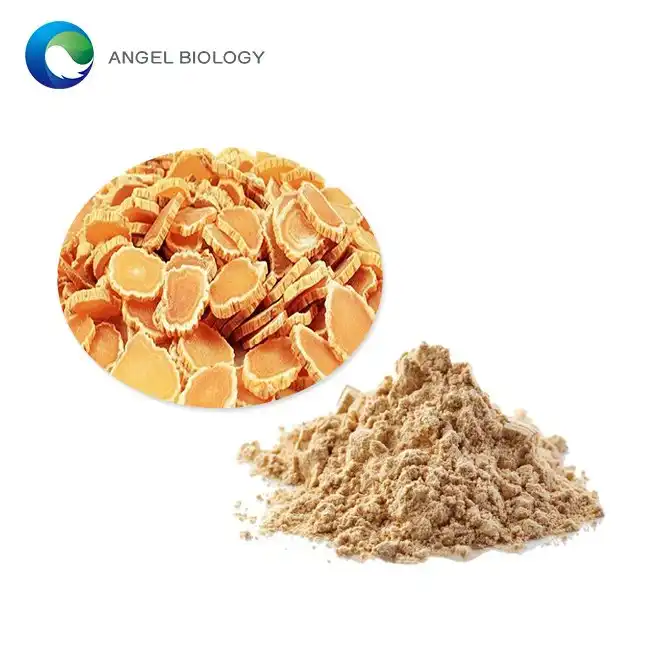
The botanical source and its initial alkaloid profile can influence the composition and processing requirements of berberine hydrochloride powder. Coptis chinensis and Phellodendron amurense are among the plants associated with berberine-containing raw materials, while some Berberis species are also used as botanical sources. The content of berberine can vary according to species, plant part, growing conditions, harvest timing, storage, and analytical method. A fixed range should therefore not be assumed for every batch or plant source.
A reliable sourcing process includes botanical identification, supplier qualification, traceability where available, and testing of incoming materials. Consistent raw material selection can help manufacturers manage variation before extraction begins. For B2B buyers, asking about the botanical source and the supplier's incoming material controls provides useful context when comparing ingredient specifications and evaluating long-term supply suitability.
Step 2 — Extraction: Solvent-Based vs. Modern Approaches
Conventional extraction methods use suitable aqueous, acidic aqueous, or ethanol-based systems to transfer berberine-containing compounds from prepared botanical material into an extract. These methods can also extract other alkaloids and plant constituents, so the resulting extract generally requires further separation and purification to reach a specified assay.
Process development may involve adjusting solvent composition, temperature, extraction time, and other operating conditions. Alternative techniques, including pressurized liquid extraction, may be considered where suitable for the material and production setup. No single extraction method guarantees a higher yield or lower impurity level under all conditions. The appropriate process depends on raw material characteristics, product requirements, process validation, and the desired balance between recovery and purification needs.
Step 3 — Advanced Purification: Chromatography and Recrystallization
Filtration alone is generally not sufficient to separate all related alkaloids and other compounds from a botanical extract. Depending on the starting material and the target specification, manufacturers may use one or more purification methods. Two possible approaches are:
Chromatographic separation: Chromatography can separate berberine from certain related compounds, including palmatine and coptisine, when the selected method provides adequate resolution. The separation depends on the stationary phase, mobile phase, process conditions, and composition of the starting extract. A properly designed process can produce an intermediate with a higher proportion of the target compound.
Recrystallization: Recrystallization may be used to further purify berberine hydrochloride. The material is dissolved in a suitable solvent system, and crystallization conditions are controlled to encourage formation of the desired product while limiting the incorporation of impurities. The effectiveness of this step depends on solvent selection, concentration, temperature profile, and the impurity profile of the feed material.
The sequence and combination of purification steps should be selected according to the process and final specification. Chromatography and recrystallization are possible approaches, not universal requirements for every production route. Consistently achieving an assay of 97% or higher depends on suitable process design, monitoring, and final testing across production batches.
Step 4 — Quality Control and Third-Party Verification
A quality-control program for berberine HCl may include HPLC assay, identification testing, heavy metal analysis for lead, arsenic, mercury, and cadmium, microbiological testing, moisture or loss-on-drying measurement, and particle size analysis where relevant. The exact test panel and acceptance criteria should reflect the agreed specification, intended use, and destination-market requirements.
For example, a requirement that 95% of the powder passes through an 80-mesh sieve may be appropriate for a particular blending or processing application, but it is not a universal property of all high-purity berberine HCl. Particle size should be specified and verified separately from assay. Independent third-party testing can provide additional evidence when requested, provided the laboratory, method, sample identification, and report are appropriate for the purpose.
Comparing Berberine HCl to Other Salt Forms
HCl vs. Sulfate vs. Citrate: Purification Complexity Differs
Different berberine salt forms have different chemical properties, solubility profiles, and processing requirements. Their behavior during crystallization and analytical testing depends on the salt form, solvent system, impurities, and selected method. It is therefore not accurate to assume that sulfate is always more difficult to recrystallize or that citrate invariably produces more challenging purity tests.
Berberine hydrochloride may be a suitable choice when the product specification, analytical method, formulation characteristics, and market requirements align with this salt form. Buyers comparing hydrochloride, sulfate, or citrate should request salt-form identification, assay basis, solubility information, and relevant stability data. A direct comparison using consistent analytical criteria is more useful than assuming that one form is universally easier to manufacture or more compliant.
Plant-Derived vs. Other Sourcing Routes: What B2B Buyers Prefer
Plant-derived berberine HCl may appeal to nutraceutical and cosmetic brands developing botanical ingredient portfolios. However, plant origin alone does not establish purity, safety, sustainability, or suitability for a particular product. These factors should be assessed using traceability information, analytical results, and documentation appropriate to the intended use.
Where natural-origin positioning is important, buyers should confirm the source material, processing route, and supporting documentation with the supplier. They should also check whether any proposed natural-origin or clean-label statement meets the requirements of the target market. Clear sourcing records and transparent specifications can help brands make better-informed purchasing decisions.
Contextualizing Purity Against Research and Product Standards
Berberine has been studied in a range of laboratory and clinical research settings, including research involving metabolic pathways such as AMP-activated protein kinase (AMPK). However, mechanistic findings do not establish that a particular raw material purity will produce a specific clinical outcome. Nor does an assay of 97% or higher by itself demonstrate that a product is suitable for pharmaceutical use or any particular regulated application.
For formulation teams, a consistent and verified assay can support more accurate ingredient calculations and comparison between batches. Product suitability still depends on the applicable specification, safety assessment, dosage form, intended use, and relevant regulatory requirements. Buyers should evaluate purity alongside the complete quality profile rather than treating it as a substitute for broader qualification.
Procurement Considerations for Bulk Berberine HCl Powder
Essential Quality Metrics to Verify Before Purchasing
When purchasing berberine HCl powder in bulk, procurement teams should confirm the required assay, analytical method, and supporting quality documentation before placing an order. The following points provide a practical starting checklist:
Purity: A target of ≥97.0% by HPLC, if required by the project, with the assay basis and method clearly identified.
Heavy metals: Results should meet the limits specified for the intended application and destination market.
Microbiological quality: Test results should meet the agreed specifications for the relevant product category.
Particle size: For example, 95% passing 80 mesh, if this is required for the intended blending or processing application.
Shelf life: Confirm the supplier's documented shelf life and recommended storage conditions. A period of 2–3 years should only be used when supported by relevant stability data for the product.
The COA should include the batch identification, test methods, specifications, and actual results for the reported parameters. Buyers should also request supporting documentation where needed and confirm that shelf-life and storage statements are based on the product's available data rather than assumptions.
Supplier Evaluation: Certifications and Transparency
A qualified supplier should be able to provide relevant information about its quality system, production controls, traceability arrangements, and analytical testing. Where certificates or third-party reports are supplied, buyers should verify their validity, scope, issuing organization, and relevance to the product being purchased.
Regulatory obligations differ between food ingredients, dietary supplements, cosmetics, and other product categories. In the United States, the FDA has responsibilities relating to applicable food, supplement, and cosmetic requirements; in the European Union, the relevant rules and authorities depend on the product category and intended use. Neither authority's involvement should be interpreted as automatic approval of a specific ingredient or supplier. Buyers should confirm which documentation is needed for their product and market.
Pricing Dynamics and Long-Term Procurement Strategy
Producing berberine HCl to a specified high assay may require several extraction, separation, crystallization, and quality-control operations, depending on the starting material and manufacturing route. These requirements can affect production costs, although the actual cost depends on process efficiency, raw material quality, order volume, packaging, and testing needs.
When comparing quotations, purchasers should consider the full cost of qualification and supply rather than unit price alone. Clear specifications, representative samples, batch-specific documentation, and agreed acceptance criteria can help reduce the likelihood of unexpected discrepancies, retesting, or delays. Over the long term, a supplier whose material consistently meets the agreed requirements may help buyers manage procurement risk and production planning more effectively.
Future Trends in Berberine HCl Production
Membrane Filtration and Green Solvent Technologies
Membrane filtration and solvent-recovery approaches are among the technologies that manufacturers may evaluate to improve separation efficiency or reduce resource use. Their suitability depends on the characteristics of the extract, the target compounds, process scale, and the required product quality. Membrane filtration does not automatically replace other purification methods, and its performance should be confirmed for the specific process.
Manufacturers may also evaluate solvent systems with improved environmental or operational profiles, including ethanol or ethyl acetate where appropriate. The choice of solvent must consider extraction performance, product compatibility, residual-solvent requirements, worker safety, environmental controls, and applicable regulations. Buyers interested in sustainability can ask suppliers for relevant process information and supporting evidence rather than relying on broad claims about environmentally friendly manufacturing.
Evolving Regulatory Requirements in North America and Europe
Requirements for botanical ingredients depend on the product category, intended use, and jurisdiction. Buyers may need to consider ingredient identity, specifications, contaminants, labeling, traceability, and other documentation relevant to the target market. The exact requirements should be confirmed using current official guidance and applicable regulations.
For B2B suppliers, maintaining clear product specifications and accessible analytical documentation can help customers evaluate ingredients more efficiently. Procurement teams should identify documentation needs early in the qualification process and confirm whether additional testing or market-specific records are required before shipment.
Sustainable Sourcing as a Procurement Criterion
Responsible sourcing of Coptis chinensis, Berberis species, and other botanical raw materials may be important to brands seeking greater supply-chain transparency. However, sustainability cannot be established solely by naming a plant source. Relevant considerations may include traceability, supplier practices, harvesting methods, agricultural inputs, and evidence supporting any environmental or social claims.
For companies serving premium supplement and skincare markets, documented sourcing information can support supplier assessment and internal purchasing policies. Buyers should request the specific records available and distinguish verified sourcing information from general sustainability statements.
Conclusion
Selecting berberine HCl powder with an assay of 97% or higher starts with clear specifications, suitable raw material sourcing, effective purification, and reliable analytical verification. Purity is an important purchasing criterion, but it should be evaluated alongside impurity data, safety parameters, particle size, stability information, and application-specific requirements.
Whether you are sourcing ingredients for supplements, cosmetics, or functional food development, understanding the manufacturing and quality-control process can help you compare suppliers more effectively and protect your formulation investment. By defining acceptance criteria and reviewing batch-specific documentation before purchasing, your team can make more informed decisions and build a more dependable ingredient supply strategy.

FAQ
1. What HPLC method is used to verify 97%+ purity?
The appropriate HPLC method depends on the product specification and the applicable reference standard. A method may be based on a relevant pharmacopoeial monograph or a validated in-house procedure, where appropriate. Buyers should check whether the reported result refers to berberine hydrochloride assay, chromatographic purity, or another defined measurement. A COA should identify the test method and report the relevant result; a chromatogram or additional analytical data may be requested when necessary.
2. How does berberine HCl powder behave in capsule and tablet formulations?
Berberine HCl can be evaluated for capsule and tablet applications, but its processing performance depends on particle size distribution, bulk density, flowability, moisture content, excipient compatibility, and the formulation process. A specific fill weight or compression performance cannot be guaranteed from assay and mesh size alone. Buyers should request relevant technical data and conduct pilot trials to determine suitable processing conditions and dosage-form performance.
3. Is plant-derived berberine HCl suitable for clean-label supplement products?
Plant-derived berberine HCl may fit some botanical ingredient concepts, but suitability depends on the source documentation, processing method, intended product, and rules in the target market. Natural-origin claims should be supported by appropriate traceability records and reviewed against applicable labeling requirements. Buyers should not assume that every plant-derived ingredient automatically meets every clean-label standard.
4. How should bulk berberine powder be stored to maintain stability?
Store berberine HCl powder in tightly sealed packaging in a cool, dry place protected from direct light and excessive moisture. Follow the supplier's documented storage instructions and shelf-life specification. The need for humidity control and any recommended retesting schedule should be based on the product's characteristics and supporting data. A shelf life of two to three years should not be assumed unless it is documented for the material being supplied.
Partner with Angelbio for High-Purity Berberine HCl Powder
Angelbio supports B2B buyers evaluating berberine HCl powder for ingredient sourcing and product development. For projects requiring an assay of 97% or higher, buyers should confirm the current product specification, batch-specific COA, analytical method, and available supporting quality documentation before ordering. Samples and technical information can help your team assess whether the material meets your formulation and procurement requirements.
Whether you are developing a new product or sourcing raw materials for an established product line, a clear specification and early technical discussion can help streamline supplier evaluation. Contact Angelbio to discuss bulk requirements, sample availability, and product documentation.
Email: angel@angelbiology.com
References
1. Dong, H., et al. "Berberine in the Treatment of Type 2 Diabetes Mellitus: A Systematic Review and Meta-Analysis." Evidence-Based Complementary and Alternative Medicine, 2012.
2. Imenshahidi, M., & Hosseinzadeh, H. "Berberis Vulgaris and Berberine: An Updated Review." Phytotherapy Research, 2019.
3. Li, Z., & Geng, Y. "Berberine: A Review of Its Pharmacological Characterization." European Journal of Pharmacology, 2021.
4. United States Pharmacopeia (USP). USP–NF Monograph: Berberine Hydrochloride. USP Convention, 2022.
5. European Medicines Agency (EMA). Assessment Report on Berberis vulgaris L. and Its Preparations. EMA/HMPC, 2020.
6. Chinese Pharmacopoeia Commission. Pharmacopoeia of the People's Republic of China, Volume I. China Medical Science Press, 2020.