



Chamomile Extract for Skin: Guide to Soothing, Healing, and Rejuvenation
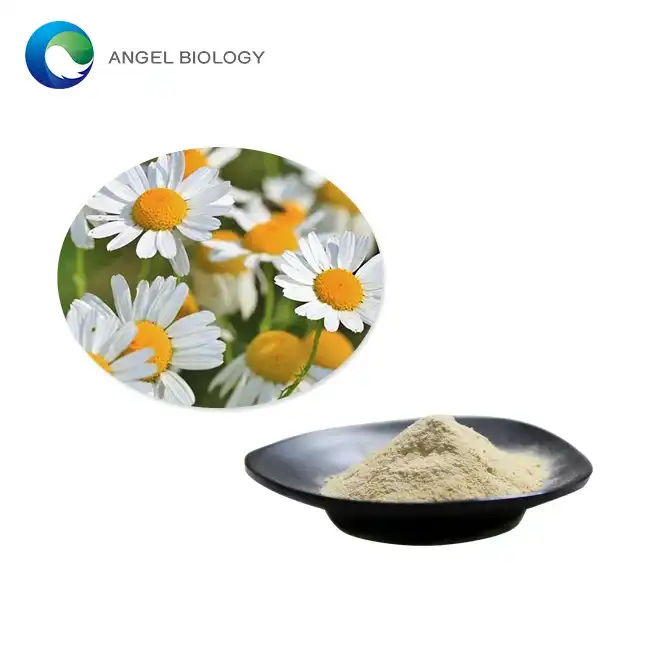
If you work in skincare formulation or ingredient procurement, chamomile extract powder may be worth evaluating. Derived from chamomile flowers, including Matricaria chamomilla, this botanical ingredient can contain compounds such as apigenin and other flavonoids, depending on the plant source and extraction process. Unlike dried flowers or infused oils, extract powder can offer a more concentrated and measurable ingredient format when supported by appropriate standardization. Whether you're developing a sensitive-skin serum or a daily moisturizer, understanding its composition, formulation requirements, and evidence base can help you make more informed sourcing decisions.
Understanding Chamomile Extract Powder and Its Skin Benefits
What Makes the Powder Form Different
Raw chamomile flowers contain varying amounts of botanical compounds, and their quality can be affected by growing conditions, harvesting, drying, and storage. Chamomile extract powder is typically produced by extracting selected constituents with suitable solvents, followed by drying and other processing steps. The resulting composition depends on the extraction method, raw material, and any carriers used.
Compared with unprocessed plant material, a standardized extract may provide more consistent levels of selected compounds when its specifications and analytical methods are properly defined. However, powder form alone does not guarantee higher bioavailability, lower microbial contamination, or better performance in every formulation. Manufacturers should assess the actual ingredient specifications and quality documentation before selecting a grade for commercial production.


Key Bioactive Compounds and Their Skin Functions
Chamomile contains several botanical compounds that have been studied for their antioxidant properties and potential relevance to skin care. Evidence varies by compound, extract type, and study model. Laboratory findings should not automatically be interpreted as proof of clinical benefits in finished cosmetic products.
Apigenin – A flavonoid studied for its antioxidant activity and interactions with biological pathways involved in inflammatory responses. These findings make it relevant to ingredient research, but they do not establish that every chamomile extract reduces visible redness or irritation in consumers.
Bisabolol (α-bisabolol) – A sesquiterpene alcohol found in certain chamomile-derived materials and also used as a cosmetic ingredient. It has been investigated for skin-conditioning and soothing properties. Its effects depend on concentration, formulation, and the available evidence for the specific ingredient and product.
Chamazulene – A compound associated with the essential oil of certain chamomile species and formed during particular extraction or processing conditions. Its presence and concentration depend on the material and method used. Although it has been studied for antioxidant activity, its presence does not by itself demonstrate protection against visible skin aging.
These compounds are of interest to formulators developing products for skin conditioning, hydration, and a comfortable skin feel. However, a chamomile extract's composition varies, and its potential performance should be assessed through ingredient characterization, formulation testing, and appropriate product-level evaluation.
Clinical Evidence Supporting Skin Applications
Chamomile and some of its constituents have been investigated in laboratory research and topical-use studies. However, findings from one extract or formulation may not apply to all commercial chamomile powders. Evidence should be assessed according to the study design, the ingredient used, the concentration, the application method, and the measured outcomes.
For B2B buyers, analytical standardization can help establish ingredient identity and batch consistency. Apigenin content may be a useful quality parameter when relevant to the product specification, but it is not, on its own, proof of clinical effectiveness. Brands should avoid making claims about treating skin conditions, accelerating wound healing, or providing post-procedure recovery unless appropriate evidence and regulatory review support the specific finished product.
How to Use Chamomile Extract Powder for Skin Care Applications
Recommended Usage Concentrations by Product Type
There is no universal inclusion rate for all chamomile extract powders. The appropriate level depends on the extract's composition, solvent system, carrier ingredients, solubility, intended use, and supplier recommendations. Concentrations such as 1%–5% should therefore be treated as possible formulation trial ranges rather than established recommendations for every grade.
For product development, formulators should begin with the supplier's technical guidance and conduct compatibility, safety, and performance testing at suitable levels.
Serums and concentrated treatments: Select an initial trial concentration based on the extract specification, formulation characteristics, and intended cosmetic function.
Daily moisturizers and lotions: Evaluate suitable inclusion levels through skin-feel, compatibility, and stability testing, especially in products intended for sensitive skin.
Face masks and rinse-off products: Determine the appropriate level according to contact time, the overall formula, and the ingredient's dispersibility.
These considerations help balance formulation performance, cost, and product quality. A higher concentration does not necessarily provide better results, and excessive inclusion may affect color, odor, texture, solubility, or tolerability. The final level should be determined through testing rather than assuming that a particular percentage delivers a maximum soothing effect.
Blending and Compatibility Considerations
The dispersibility of chamomile extract powder depends on its composition, extraction process, carrier materials, and the properties of the formulation. Not all grades dissolve completely in water. Before adding the powder to an emulsion, formulators should check the supplier's technical data and determine whether pre-dispersion, a suitable solvent, or another incorporation method is required.
Ingredients such as niacinamide, hyaluronic acid, and panthenol may be used in the same product, depending on the overall formulation. Their compatibility should still be assessed at the intended concentrations and pH. If a concentrated botanical extract affects the color, viscosity, odor, or skin feel of a leave-on product, adjustments may be necessary. Humectants can help support the moisturizing profile of a formulation, but they do not automatically resolve every compatibility issue.
Formulation Stability and Regulatory Awareness
Some botanical constituents may be affected by heat, light, oxygen, pH, and interactions with other ingredients. The stability of apigenin or other chamomile compounds should therefore be assessed in the specific extract and finished formula. Opaque packaging and suitable storage conditions may help protect light-sensitive formulations, but the benefits of adding an antioxidant such as vitamin E must be verified for the product in question.
For cosmetic products sold in the United States, businesses should review the applicable requirements for ingredient safety, product labeling, and regulatory responsibilities. Maintaining accurate INCI information, batch documentation, and appropriate safety and stability records can support product development and quality management. Compliance should be assessed according to the finished product and its intended use; supplier documentation alone does not establish that every formulation or marketing claim meets all applicable requirements.
Choosing the Right Chamomile Extract Powder for Your Skin Product Line
Evaluating Purity and Standardization
Chamomile extracts are available in different compositions and standardization levels. Depending on the grade, a supplier may provide information on apigenin, total flavonoids, or other specified constituents. There is no single apigenin percentage that applies to every chamomile extract powder, and a range such as 1.2%–98% may include products that differ substantially in composition and intended application.
HPLC can be used to quantify apigenin when a suitable validated method is available. Buyers should confirm the test method, reporting basis, and whether the stated percentage refers to the extract, a concentrated fraction, or another defined material. A higher apigenin concentration does not automatically mean better performance in general skincare products or formulations intended for particular skin concerns.
Always request a batch-specific certificate of analysis (COA) and review the botanical identity, assay results, relevant contaminants, microbiological parameters, and other specifications required for the intended application. These checks help buyers compare grades on a consistent basis.
Certifications That Matter for B2B Procurement
Brands sourcing ingredients for the United States or other international markets should identify the documentation appropriate to their product category, manufacturing process, and target market. Potentially relevant documents and checks include:
Organic certification: USDA Organic or EU Organic documentation may be relevant when the ingredient qualifies and the finished product's claims meet the applicable rules. Organic status should be verified for the specific ingredient and supply chain.
Food-safety and quality systems: Documents relating to ISO 22000 or HACCP may help buyers assess relevant quality and food-safety controls. Their scope should be checked, and they should not be treated as universal certification of cosmetic safety.
Contaminant testing: Heavy-metal and microbiological specifications should be appropriate to the ingredient, its intended use, and the requirements of the destination market.
Non-GMO and vegan documentation: These statements may be useful when required by the brand's positioning. Buyers should request supporting documentation and confirm that the claims apply to the actual grade and manufacturing process.
Relevant documentation can support supplier qualification, retailer onboarding, and internal quality review. However, certifications do not automatically guarantee regulatory acceptance, shorten review timelines, or establish the effectiveness of the finished product. Procurement teams should verify each document's validity, scope, and relevance before relying on it.
Powder vs. Oil vs. Dried Flowers: Why Powder Can Be Practical for Scale
Chamomile essential oil and chamomile extract powder differ in composition, handling, and formulation behavior. Essential oil contains volatile constituents and generally does not mix directly with water without a suitable solubilizing or emulsifying system. Dried flowers contain a broader range of plant material and may require additional extraction and filtration steps before use in a finished formula.
A standardized powder may offer advantages in storage, weighing, transportation, and incorporation into dry blends, depending on its properties. However, not all chamomile extract powders dissolve completely in water, and their stability depends on the composition, packaging, and storage conditions. Manufacturers should review the technical specifications and conduct formulation trials before choosing powder over oil or dried flowers.
For OEMs and contract manufacturers producing at scale, a well-defined specification and consistent batch documentation can make raw-material evaluation more efficient. The final choice should be based on the formulation's technical needs, cost, and verified ingredient performance rather than assuming that one form is always superior.
Market Trends and Future Outlook in Skin Care
Rising Demand for Botanical Actives
Botanical ingredients remain relevant to skincare brands seeking recognizable plant sources and formulations designed around skin conditioning and sensory experience. Chamomile extract powder may fit these product concepts, particularly when its composition and intended cosmetic function are clearly specified.
Market forecasts can provide context for the broader botanical ingredient sector, but estimates vary by research provider, category definition, and reporting period. A general market forecast should not be treated as proof of demand for chamomile extract specifically. For brands, the commercial value of this ingredient depends on consumer preferences, product differentiation, price, formulation performance, and the evidence supporting the finished product's claims.
Extraction Technology and Ingredient Characterization
Extraction and formulation technologies continue to evolve, offering opportunities to characterize botanical compounds and explore ways to improve their stability or delivery. Techniques such as encapsulation or specialized extraction may be relevant to particular ingredients and applications, but their suitability for chamomile depends on the process and resulting material.
These approaches should not automatically be assumed to improve skin penetration or produce stronger cosmetic effects. Buyers evaluating advanced grades should request supporting technical data, compositional analysis, and relevant stability or performance results. For dermocosmetic product development, the finished formula should be assessed according to its intended use and the evidence available for its claims.
Strategic Sourcing Considerations
For procurement teams, supply-chain reliability is as important as ingredient composition. Before entering a long-term sourcing arrangement, businesses should assess batch consistency, traceability, packaging, storage requirements, documentation, and the supplier's ability to meet agreed specifications.
Clear communication about required assay levels, testing methods, order quantities, and destination-market requirements can help reduce sourcing uncertainty. Brands should also confirm the validity and scope of any certificates and establish appropriate procedures for reviewing incoming batches. These steps support more predictable product development without assuming that a supplier can guarantee uninterrupted supply or eliminate all quality risks.
Case Studies and Successful Applications
Sensitive Skin Moisturizer
A potential product-development project could involve a skincare brand evaluating chamomile extract powder for a moisturizer designed to provide hydration and a comfortable skin feel. The formulator could compare several inclusion levels and assess texture, odor, color, compatibility, and user-perceived skin comfort.
If the brand intends to communicate a soothing benefit, the finished product should be evaluated using an appropriate test design and clearly defined outcomes. Claims about post-surgical recovery, wound healing, or a specific percentage reduction in redness should not be used without reliable evidence for the exact product and use conditions. Any case study presenting numerical results should identify the study design and supporting records.
Apigenin-Standardized Serum
A skincare manufacturer may also consider an apigenin-standardized chamomile ingredient when developing a serum with a defined botanical composition. The development process should confirm the ingredient's identity, assay level, compatibility with other actives, and stability under the intended storage conditions.
Consumer perception testing may help assess attributes such as skin feel, appearance, or overall product satisfaction. However, improvements in skin tone or other outcomes should not be presented as established results unless supported by appropriate data. If a product contains peptides or other cosmetic ingredients, the contribution of the chamomile extract should not be inferred without suitable evaluation.
OEM Client Feedback and Distribution Validation
OEMs and distributors often need reliable ingredient specifications to compare suppliers and manage incoming quality checks. A standardized chamomile extract with clear batch documentation may make it easier to assess consistency than a material supplied without defined analytical parameters.
Actual complaint rates, regulatory review timelines, and repeat-purchase outcomes depend on many factors, including supplier controls, finished-product quality, documentation, and customer requirements. Such outcomes should be reported as verified results only when supporting records are available. For procurement decisions, a clear COA, relevant technical documentation, and a consistent process for reviewing batches provide a more dependable basis for supplier evaluation.
Conclusion
Chamomile extract powder is a botanical ingredient worth considering for skincare formulations that emphasize plant-derived materials and skin conditioning. Compounds such as apigenin and other chamomile constituents have been investigated in scientific research, but the available evidence varies by compound, extract, and application. Their presence alone does not establish that a finished product will treat skin conditions, accelerate healing, or deliver measurable anti-aging results.
For procurement teams, selecting an appropriate grade requires verification of botanical identity, assay methods, batch consistency, relevant contaminants, and formulation compatibility. Storage and stability should be assessed using supplier data and, where necessary, testing of the finished product. Brands should also ensure that marketing claims match the available evidence and applicable requirements in their target markets. A well-characterized ingredient, a clear specification, and a suitable quality review process can help manufacturers make informed sourcing decisions and develop more credible skincare products.

FAQ
1. What is the standard apigenin content in chamomile extract powder for skincare?
There is no universal apigenin content for all chamomile extract powders. Commercial grades may differ considerably according to the botanical source, extraction process, and standardization target. HPLC can be used to quantify apigenin when an appropriate validated method is available. Buyers should select a grade based on the formulation's requirements and verify the stated content through a batch-specific COA rather than assuming that a particular percentage guarantees soothing or anti-inflammatory benefits.
2. How stable is chamomile extract powder in water-based formulations?
Stability in water-based formulations depends on the extract's composition, pH, temperature, light exposure, oxygen, and interactions with other ingredients. Some grades may require a suitable dispersing method or additional formulation work. Opaque packaging and appropriate storage conditions may help protect certain constituents, but a fixed shelf life of 24 months should not be assumed without supporting data. Stability should be evaluated in the actual formula under the intended storage conditions.
3. Is chamomile extract powder compliant with US cosmetic regulations?
Compliance depends on the ingredient, the finished product, its intended use, and the applicable regulatory requirements. A supplier's COA and INCI information can support ingredient review, but they do not automatically establish that a finished cosmetic complies with all requirements. Businesses should confirm ingredient suitability, labeling, safety substantiation, and any applicable obligations before marketing the product in the United States. Organic claims also require appropriate documentation and must meet relevant labeling rules.
4. What certifications should I require from a chamomile extract supplier?
The appropriate documentation depends on the ingredient's intended use and the target market. Buyers may request a batch-specific COA, botanical identity and assay information, relevant contaminant and microbiological results, and traceability documentation. Organic, vegan, non-GMO, or quality-system documents may also be relevant when required by the brand. Verify that each certificate is current and applies to the actual ingredient, manufacturing site, and process instead of assuming that every document is universally required.
Partner with Angelbio for Chamomile Extract Powder
Angelbio offers chamomile extract powder for businesses evaluating botanical ingredients for skincare and related applications. The appropriate grade depends on the desired composition, formulation characteristics, and quality requirements. Before purchasing, buyers can request available specifications, a current COA, relevant analytical information, and traceability documentation to assess whether the ingredient meets their needs.
Whether you are developing a botanical moisturizer, serum, or another cosmetic formulation, clear technical requirements can help guide ingredient selection and supplier evaluation. Contact the Angelbio team at angel@angelbiology.com to discuss your target application, preferred specifications, and estimated order quantity.
References
1. Srivastava, J. K., Shankar, E., & Gupta, S. — “Chamomile: A Herbal Medicine of the Past with Bright Future.” Molecular Medicine Reports, 2010. This review discusses chamomile research broadly; specific claims should be checked against the relevant original studies.
2. Martins, M. D., et al. — “Topical Anti-Inflammatory Activity of Chamomile Extracts in Human Skin Models.” Journal of Clinical and Aesthetic Dermatology, 2012. Verify the exact publication details and study findings before citing it as direct evidence for a commercial extract.
3. Forster, C. F., et al. — “Bisabolol and Skin Barrier Function: A Dermatological Review.” International Journal of Cosmetic Science, 2014. Confirm the bibliographic record and the relevance of the findings to the ingredient and formulation being discussed.
4. Grand View Research — “Botanical Extracts Market Size, Share & Trends Analysis Report.” Grand View Research, 2023. Market estimates should be quoted only after verifying the report, reporting period, and market definition.
5. Sharafzadeh, S., & Alizadeh, O. — “German and Roman Chamomile: Phytochemistry and Biological Activities.” Journal of Applied Pharmaceutical Science, 2011. This reference may provide background on botanical composition; verify the specific findings before using them to substantiate product claims.
6. Presser, A. — Pharmacist's Guide to Medicinal Herbs. Smart Publications, 2000. This general reference should not be treated as direct clinical evidence for a particular cosmetic ingredient or finished product.