



Five Sourcing Mistakes That Wreck Horse Chestnut Extract Quality
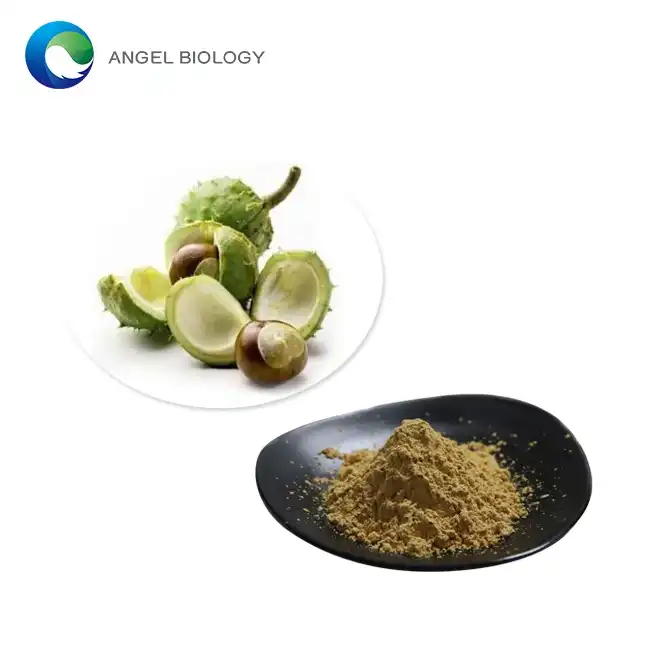
When a batch fails testing, a formulation becomes inconsistent, or a supplier cannot meet a delivery schedule, sourcing horse chestnut extract powder can quickly become more complicated than expected. This guide covers five common mistakes made by business-to-business buyers, formulators, and distributors when purchasing this botanical ingredient. Standardized escin extracts are used in nutritional supplements, selected cosmetic formulations, and products positioned around circulation-related wellness, depending on the ingredient's intended use and applicable regulations. These extracts are derived from the seeds of Aesculus hippocastanum. By evaluating suppliers, specifications, and documentation from the beginning, you can better protect product quality, supply continuity, and your brand's reputation.
Mistake 1: Overlooking Botanical Origin and Raw Material Traceability
The botanical origin and quality of horse chestnut seeds can influence the composition of the final extract, including its measured aescin content and other phytochemical characteristics. Growing conditions, harvest timing, storage, and raw-material handling may contribute to natural variation between batches. However, geographical origin alone does not guarantee a particular concentration or quality level.
Why Origin Documentation Matters
Without reliable origin records, buyers may find it difficult to assess whether incoming raw materials meet their botanical identity and composition requirements. Harvest timing and storage conditions can affect the quality of the starting material, while differences in raw-material composition may influence the final extract's measured saponin content. These variations can create additional challenges for formulation, quality control, and batch-to-batch consistency.


The Risk of Undocumented Supply Chains
Supply chains with limited traceability can make it harder to investigate incorrect labeling, botanical substitution, contamination, or unexplained differences in analytical results. Material from different sources may also vary in composition, even when it appears similar in colour and appearance. A supplier's description alone is not sufficient evidence of identity or potency, so buyers should request supporting documentation and appropriate analytical results.
What Buyers Should Require
Request available harvest and sourcing records, botanical identification information, and documentation connecting the raw material to the finished extract. Depending on the supplier and application, additional identity testing or independent verification may be appropriate. Reviewing these records before placing a purchase order helps procurement teams assess traceability and establish clearer expectations for incoming material.
Mistake 2: Ignoring the Extraction and Processing Method
Different extraction methods can produce extracts with different chemical profiles, impurity levels, and physical properties. The process used to recover escin influences the composition of the finished powder, but extraction technology alone does not establish product quality or biological performance. Selecting a supplier without understanding its process and product specifications can create avoidable sourcing risks.
Solvent Residue and Contamination Risks
Solvents used during extraction must be appropriately controlled and assessed against the relevant product specifications and market requirements. Ethanol and other permitted solvents may be used in botanical extraction, depending on the process. Buyers should not assume that a particular solvent or advanced extraction technology automatically produces a safer or more effective ingredient. Request applicable residual-solvent data and information about the supplier's controls. Methods such as ultrasound-assisted extraction or supercritical carbon dioxide may be suitable for certain processes, but their benefits depend on the raw material, extraction conditions, and intended product.
Evaluating Manufacturing Controls and Documentation
A supplier should be able to explain its production controls, testing procedures, and measures for managing potential contamination. Relevant documentation may include process information, batch records where available, analytical results, and procedures for investigating deviations. These details help buyers assess whether the supplier can consistently meet the agreed specification and support the quality requirements of the intended application.
Evaluating Drying and Powder Preparation
Post-extraction drying and powder preparation can affect particle size, moisture content, bulk density, flowability, and dispersibility. Spray drying and vacuum drying may produce different physical characteristics, depending on the formulation and processing conditions. Buyers should specify the physical properties needed for their manufacturing process rather than assuming that one drying method is always superior. A moisture target below 5% may be suitable for some grades, but the actual requirement should be confirmed against the product specification, stability data, and intended application. Bulk density should also be measured and assessed rather than described as universally high.
Mistake 3: Accepting Potency Claims Without Independent Verification
Standardized aescin content is an important parameter when evaluating horse chestnut extract. However, a label stating "20% aescin" is not enough to establish comparability unless the analytical method, reporting basis, and supporting results are clear. Buyers should confirm what the stated percentage measures and whether the test method is appropriate for the specified product.
UV vs. HPLC: A Critical Distinction
UV spectrophotometry and high-performance liquid chromatography (HPLC) can provide different types of analytical information. UV-based methods may estimate total saponins or related constituents through a specified measurement procedure, while a suitable HPLC method can separate and quantify selected aescin-related compounds or markers. Neither method is automatically more accurate in every situation; performance depends on method validation, reference standards, sample preparation, and the target analytes. A result of 20% by UV cannot necessarily be compared directly with a result of 20% by HPLC. Buyers should specify the required method and reporting basis in their purchasing requirements to avoid misleading comparisons.
The Consequences of Potency Variability
Differences in aescin content between batches can complicate formulation calculations, increase the need for adjustments, and affect finished-product consistency. Depending on the product category and destination market, results outside an agreed specification may also create labeling or compliance concerns. A clear ingredient specification and a defined procedure for handling out-of-specification results can help reduce these risks. Buyers should establish acceptance criteria before production rather than relying solely on a supplier's headline potency claim.
Certificate of Analysis Review Protocol
Each batch should be accompanied by a Certificate of Analysis (COA) that reports the agreed aescin or other relevant assay results and applicable quality parameters, such as moisture, heavy metals, and microbiological results. Additional tests may be needed according to the product and market. Review the analytical methods and acceptance limits, and consider periodic independent testing based on supplier risk, order volume, previous results, and internal quality procedures. A risk-based verification plan is generally more useful than applying the same testing frequency to every supplier and batch.
Mistake 4: Choosing Price Over Process Integrity
Price pressure is common in B2B purchasing. However, choosing a supplier solely because of the lowest quoted price per kilogram can create additional costs if the material fails to meet the agreed specification, performs poorly during formulation, or arrives later than planned.
Hidden Costs of Low-Quality Ingredients
An extract that fails identity or potency requirements may need further investigation, reformulation, or replacement. These issues can increase testing costs, interrupt production, and delay delivery schedules. If a finished product does not meet its specifications or triggers a customer complaint, the resulting investigation and corrective actions may cost more than the initial savings on raw materials. Evaluating the total cost of procurement helps buyers look beyond the quoted unit price.
What Quality Assurance Processes Actually Include
A reliable supplier of horse chestnut extract powder should provide clear product specifications, relevant analytical documentation, and an explanation of how incoming materials and finished batches are evaluated. Depending on the supplier, available support may include in-house testing capabilities, stability information, batch traceability, and independent laboratory reports. Buyers should verify claims through documents and, where appropriate, sample testing or supplier assessments rather than relying on promotional statements alone.
Balancing Cost and Credibility
There is no single supplier that is best for every application. Before committing to a large order, compare quotations alongside assay requirements, test methods, documentation, packaging, delivery terms, and sample results. Requesting a representative sample can help confirm whether the ingredient meets the intended formulation requirements. Over time, a supplier relationship built around transparent specifications, timely communication, and consistent quality may help reduce procurement uncertainty and unexpected costs.
Mistake 5: Skipping Supplier Compliance and Certification Checks
Supplier documentation and regulatory suitability are important when sourcing botanical ingredients for different markets. However, a certificate does not automatically establish that every ingredient, finished product, or proposed claim is permitted in every jurisdiction. Buyers should confirm which requirements apply to their intended product category and destination market.
Core Certifications and Documents to Verify
Depending on the application and target market, relevant documentation may include a quality management certificate, food-safety documentation, a hazard-control plan, organic certification, or other applicable credentials. Organic certifications, such as USDA Organic or EU Organic, may be relevant when an organic claim is planned, but buyers should confirm that the certification is current and covers the specific product and supply chain. Certification scope and issuing-body information should be checked directly where possible. Also request the product specification, batch COA, traceability information, and any relevant independent test reports.
Regulatory Alignment Across Markets
Requirements for horse chestnut extract depend on the destination market, product category, ingredient history, intended use, composition, and proposed claims. In the United States, buyers should assess applicable FDA requirements for the intended dietary supplement or other product category, including ingredient-specific requirements where relevant. In the European Union, food-supplement and botanical requirements may vary according to the ingredient and national rules; Novel Food status should be assessed when applicable rather than assumed. Other market-specific obligations, including contaminant limits and labeling requirements, may also need review. Documentation concerning regulatory status can support an assessment, but it does not automatically establish authorization. Buyers should confirm the suitability of the specific ingredient and intended use before launch.
Assessing Long-Term Supplier Reliability
In addition to certificates, buyers should evaluate the supplier's relevant experience, production capacity, order history, communication, and ability to provide technical information. A supplier that responds clearly to specification questions and provides available stability data, handling guidance, and batch documentation can make product development and quality review easier. Before entering a long-term agreement, clarify lead times, order quantities, packaging options, change-notification expectations, and the process for handling quality concerns.
Conclusion
Early sourcing decisions for horse chestnut extract powder influence the consistency and suitability of downstream formulations. Buyers can reduce avoidable risks by checking botanical origin, understanding extraction and processing, verifying aescin content, evaluating total procurement costs, and reviewing supplier documentation and market-specific requirements. For R&D managers, formulation scientists, and procurement teams working in supplements, cosmetics, or functional foods, a structured supplier-evaluation process can support more reliable purchasing decisions. Confirming the specification, reviewing the COA, and testing a sample before placing a bulk order are practical steps toward a more dependable supply relationship.
FAQ
1. What aescin concentration is typically used in professional supplement formulations?
Commercial horse chestnut extracts are available with different aescin standardizations, and the appropriate specification depends on the intended product and applicable requirements. A percentage such as 16% or 20% should not be treated as a universal formulation target or a guarantee of clinical performance. The analytical method matters because results obtained through different methods may not be directly comparable. Buyers should confirm the assay method, reference standard, and reporting basis before selecting a grade.
2. How can buyers confirm the authenticity of a horse chestnut extract?
Request a batch-specific COA that includes the agreed assay and relevant quality results. Botanical identity may be assessed using suitable methods, such as microscopy, chromatographic fingerprinting, or other validated techniques, depending on the material and available laboratory capabilities. DNA-based testing may be useful in some raw-material contexts, but it may not be suitable or conclusive for every highly processed extract. Independent laboratory testing and traceability documentation can provide additional evidence before larger orders are placed.
3. Is horse chestnut extract powder suitable for aqueous cosmetic formulations?
Suitability depends on the extract's composition, extraction method, processing, and the requirements of the finished formula. Some grades may disperse only partially in water, while others may be designed for improved dispersibility. Buyers developing transparent serums or other water-based cosmetics should request solubility or dispersibility data and evaluate colour, sedimentation, pH compatibility, and stability in the actual formulation. A supplier's description of a grade as water-soluble should be verified through application testing.
4. What storage conditions does this extract require?
Storage requirements depend on the grade, packaging, and supporting stability information. To help protect powder quality, keep the material in its recommended sealed packaging and protect it from excessive moisture, heat, and direct sunlight. Moisture-resistant liners or suitable desiccant protection may be appropriate for some products. Buyers should confirm the recommended temperature range, shelf life, and handling instructions with the supplier instead of assuming that one set of storage conditions applies to every extract.
Partner with Angelbio for Horse Chestnut Extract Supply
Angelbio has more than 18 years of experience in ingredient research and development and works with buyers sourcing botanical ingredients for supplement, cosmetic, and functional food applications. Our team can help you evaluate horse chestnut extract powder specifications, available aescin standardizations, analytical methods, batch COAs, and documentation relevant to your intended application. Product availability, testing options, and customization depend on the selected grade and order requirements. Before a bulk purchase, request a sample and confirm the specification that best fits your formulation and target market. To discuss technical requirements, request samples, or obtain a quotation, email us at angel@angelbiology.com.
References
1. Siebert, U., et al. "Horse Chestnut Seed Extract for Chronic Venous Insufficiency." Cochrane Database of Systematic Reviews, 2012.
2. Pittler, M. H., & Ernst, E. "Horse Chestnut Seed Extract for Chronic Venous Insufficiency." The American Journal of Clinical Nutrition, 2004.
3. World Health Organization. WHO Monographs on Selected Medicinal Plants, Volume 2. WHO Press, 2002.
4. European Medicines Agency. Assessment Report on Aesculus hippocastanum L., Semen. EMA/HMPC, 2012.
5. United States Pharmacopeia. Dietary Supplements Compendium: Botanical Ingredient Standards. USP, 2021.
6. Blaschek, W., et al. Hagers Handbuch der pharmazeutischen Praxis: Drogen A–D. Springer, 2007.