



Ginsenoside Standardization for Energy and Cognition Supplement Formulas
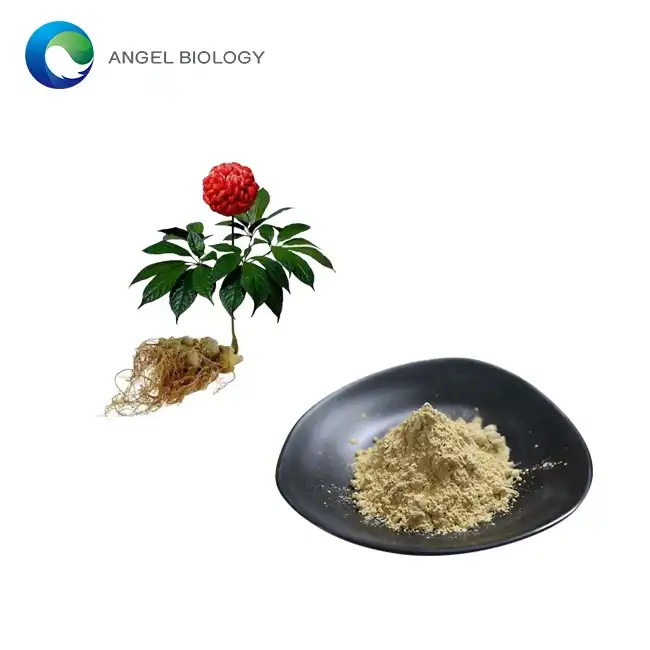
Ginsenoside standardization is the process of adjusting and verifying the content of key saponins in a ginseng extract. For R&D teams developing energy and cognitive wellness products, standardization helps establish consistent ingredient specifications and supports more predictable formulation work. When sourcing Panax ginseng extract powder standardized to a specified total ginsenoside content, such as 10%, 20%, or another available grade, buyers should confirm the actual assay, analytical method, and batch-to-batch consistency. Clear specifications help manufacturers manage formulation requirements, maintain product quality, and develop more reliable finished products.
Understanding Panax Ginseng Extract Powder and Ginsenoside Standardization
Botanical Origin and Bioactive Profile
Panax ginseng C.A. Mey. belongs to the Araliaceae family and contains a range of naturally occurring ginsenosides. Commonly analyzed compounds include Rb1, Rg1, Re, and Rd. These compounds have been investigated in scientific research for their biological activities, including interactions with various cellular signaling pathways. Ginsenosides are commonly classified into two major structural groups: protopanaxadiols (PPD) and protopanaxatriols (PPT).
The relative proportions of individual ginsenosides vary with the plant source, growing conditions, processing method, and extraction procedure. For formulators, understanding this profile helps distinguish extracts with similar total ginsenoside values but different individual compound compositions.


Raw Root vs. Standardized Extract
Raw ginseng root powder and standardized ginseng extract serve different formulation needs. The ginsenoside content of raw root powder can vary depending on the cultivar, growing environment, harvest conditions, and storage. As a result, two batches may have different chemical profiles even when their weights are identical.
Standardized extract provides a defined target for selected constituents and may contain a higher concentration of ginsenosides per unit weight than raw root powder. However, the concentration depends on the specific product grade and must be confirmed by testing. For example, a 40% extract contains a different proportion of measured ginsenosides than a 10% extract, assuming both values use comparable analytical methods and reporting bases. This information helps formulation teams calculate ingredient quantities and compare products more accurately.
Extraction and Quality Control Methods
Ginseng extracts may be produced using suitable water-based or hydroalcoholic extraction processes, followed by filtration, concentration, drying, and other processing steps as appropriate. The actual process affects the extract's composition and physical properties, so buyers should request product-specific information rather than assume that every extraction method removes all contaminants or preserves every constituent equally.
Batch-level HPLC analysis can help identify and quantify selected ginsenosides. Other relevant tests may include moisture, heavy metals, pesticide residues, microbiological parameters, and additional contaminants, depending on the product specification and destination market. A batch-specific Certificate of Analysis (COA) gives procurement teams a documented basis for comparing the offered material with their requirements.
Benefits and Applications of Standardized Ginseng Extract in Energy and Cognition Formulations
Research on Potential Functional Benefits
Panax ginseng extract powder is used in a variety of botanical formulations, including products marketed for energy, vitality, and cognitive wellness. Scientific studies have investigated ginseng and individual ginsenosides in relation to attention, mental performance, and cellular processes. However, study outcomes depend on the extract composition, dosage, study design, and population, and findings from individual compounds or laboratory research cannot automatically be applied to every commercial extract.
For product developers, it is important to distinguish ingredient research from evidence supporting a finished product's specific claims. Standardization can help establish a consistent chemical profile, but it does not by itself demonstrate improved memory, reduced mental fatigue, increased ATP production, or a particular cognitive outcome. Finished-product claims should be supported by relevant evidence and comply with the rules of the intended market.
Dosage Planning by Ginsenoside Concentration
Formulation planning should consider both the amount of extract per serving and its measured ginsenoside content. The appropriate inclusion level depends on the intended product category, the specific extract, relevant safety information, applicable regulations, and supporting evidence. There is no universal dosage that applies to every ginseng extract or every energy and cognitive wellness formula.
When comparing standardized grades, formulation managers can use the declared assay to calculate the approximate amount of measured ginsenosides supplied by a proposed quantity of extract. For example, an extract with a 20% declared ginsenoside content provides a different calculated amount of those constituents per gram than a 10% extract, provided the results are based on comparable methods.
The following considerations can help guide product development:
Lower-standardized extracts: May be considered when a formulation requires a larger amount of botanical extract or a broader extract profile, subject to the product specification.
Mid-range standardized extracts: May offer a practical balance between extract inclusion level and declared ginsenoside content, depending on formulation requirements.
Higher-standardized extracts: May be considered when a formulation requires a more concentrated ingredient, provided the assay, impurity profile, safety information, and applicable use requirements have been evaluated.
These categories are formulation considerations, not universal serving-size or efficacy recommendations. Before finalizing a formula, verify the assay and reporting basis, calculate the intended ingredient contribution, and review the applicable requirements for the destination market.
Comparative Context: Panax Ginseng vs. American Ginseng
Panax ginseng, commonly known as Asian or Korean ginseng, and Panax quinquefolius, known as American ginseng, are different botanical species. Their ginsenoside profiles can differ, although the actual composition varies with source material and processing.
Neither species should be assumed to produce a particular stimulating, calming, or cognitive effect solely because of its name or the relative abundance of one ginsenoside. For ingredient selection, compare the botanical identity, total ginsenoside content, individual ginsenoside profile, extraction details, and available research relevant to the intended application. This approach helps formulators select ingredients based on measurable specifications rather than generalized functional descriptions.
Procure with Confidence: Selecting a Reliable Ginseng Extract Supplier
Certifications and Documents That Matter
When evaluating a Panax ginseng extract powder supplier, review the documents that are relevant to your product category and destination market. Depending on the application, these may include facility registration information, applicable food safety system certificates, a product specification, a batch-specific COA, and supporting contaminant test results.
For products intended for the United States, the European Union, or Japan, regulatory and documentation requirements may differ according to the finished product category, ingredient status, and intended use. A supplier's facility registration or general certificate should not be interpreted as automatic approval of the ingredient or finished product.
Request available heavy-metal results, pesticide residue information, and an HPLC ginsenoside profile. Confirm that the records relate to the actual product and manufacturing site, and check certificate validity and scope where applicable.
Evaluating Ginsenoside Content Claims
Different analytical methods may produce results that are not directly comparable. UV spectrophotometry may be used to estimate total saponins under a defined method, but it generally does not provide the same compound-specific information as a suitable chromatographic method. HPLC can be used to quantify selected individual ginsenosides when the method is appropriately validated.
When reviewing a COA, check whether the declared percentage represents total ginsenosides, total saponins measured by a colorimetric method, or the sum of specified individual compounds. These terms are not necessarily interchangeable. Ask which compounds are included, which reference standards are used, and whether the result is reported on an as-is or dry basis.
Suppliers that provide clear analytical methods and batch-level results make it easier to compare products and confirm whether the material meets your formulation specification.
Supply Chain Reliability and Logistics
Reliable delivery is an important part of sourcing Panax ginseng extract powder. Minimum order quantities, lead times, packaging formats, storage recommendations, and shipping arrangements can all affect production planning. The required transport conditions depend on the product's stability, packaging, route, and expected transit time.
When evaluating a supplier, confirm whether the material is produced at the stated facility or sourced through a third party, and ask how batch traceability and incoming material checks are managed. Repacking or distribution is not automatically an indicator of poor quality; what matters is whether the supplier can provide reliable records, maintain product identity, and meet the agreed specification.
Navigating the Market: Price, Quality, and Product Comparison
How Ginsenoside Concentration Affects Pricing
The price of ginseng extract powder can vary with ginsenoside content, raw material origin, extraction yield, analytical requirements, packaging, order volume, and supply conditions. A higher standardized percentage may have a higher price per kilogram, but price alone does not establish which grade is more cost-effective for a particular formulation.
Buyers can compare the cost per unit of declared ginsenosides by considering both the quoted price and the verified assay. This calculation is useful only when the suppliers use comparable definitions and analytical methods. It should complement, rather than replace, the evaluation of impurity levels, product suitability, documentation, and delivery reliability.
For procurement teams, comparing the cost per kilogram alongside the cost per unit of measured active constituents can support more informed purchasing decisions. Request quotations for the required grade and order quantity to make the comparison relevant to your actual production needs.
Powder vs. Capsule and Other Format Considerations
For B2B buyers, bulk powder offers flexibility for developing capsules, tablets, sachets, powdered beverages, and other suitable formulations. However, the final performance depends on the extract's physical properties, solubility or dispersibility, compatibility with other ingredients, and the processing method.
Ginseng extract powder should not automatically be described as fully water-soluble or suitable for clear acidic beverages. Solubility, color, taste, and dispersion can vary by grade and composition. If the target product is a ready-to-drink beverage, emulsion, or other specialized formulation, request relevant technical information and evaluate the material in the intended formula.
For cosmetic applications, confirm that the extract's composition, appearance, and quality attributes are suitable for the proposed product. Application-specific testing is preferable to assuming that one extract grade will perform equally well in food, supplement, and cosmetic systems.
Safety Profile and Regulatory Compliance
A standardized ginseng extract with documented composition and relevant contaminant test results can provide buyers with clearer information than an ingredient accompanied by limited analytical data. However, standardization alone does not establish that an ingredient is suitable for every user, dose, product category, or market.
In the United States, dietary supplement requirements differ from those for conventional foods and cosmetics. Ingredient identity, intended use, labeling, manufacturing controls, and applicable notification or other obligations should be evaluated according to the specific product. Facility registration does not mean that the FDA has approved a particular ingredient or finished supplement.
For products sold in multiple markets, buyers should verify applicable requirements and ensure that the supplier's available documentation meets the needs of their own regulatory review. Full technical records can support this process, but the finished-product manufacturer remains responsible for assessing the suitability and compliance of the final formula.
Optimizing Your Supply Chain for Panax Ginseng Extract Powder
Bulk Purchasing and Volume Contract Strategy
Working with a supplier on planned purchasing volumes may help improve supply visibility and simplify procurement. Before agreeing to a long-term contract, define the required ginsenoside content, analytical methods, acceptance limits, packaging, delivery schedule, and batch documentation.
Prices and available discounts depend on the supplier, grade, order size, raw material availability, and delivery terms. Quantities such as 25 kg, 50 kg, or 100 kg may be useful quotation points, but they should not be assumed to guarantee a lower unit price in every case.
For repeat orders, agree on how specification changes will be communicated and how nonconforming batches will be evaluated. Clear contractual terms can help both parties manage quality expectations and delivery planning.
International Shipping and Import Compliance
Import requirements depend on the destination country, product category, botanical identity, intended use, and applicable customs rules. Commercial documents may include product specifications, a COA, an invoice, a packing list, and a certificate of origin. Additional documents, such as a phytosanitary certificate or advance notification, may be required in certain circumstances and should be verified for the specific shipment.
Confirm the correct botanical name, product description, declared composition, country of origin, lot number, and other required label information before dispatch. Packaging should be appropriate for the ingredient and expected shipping conditions, with protection against moisture, contamination, and physical damage as needed.
For sea or air freight, clarify shipping responsibilities, expected transit time, and any special storage instructions before confirming the order. Buyers should verify destination-market requirements with their importer or regulatory adviser rather than assuming the same documents are needed for every shipment.
Building Long-Term Supplier Partnerships
A long-term supplier relationship can help procurement teams improve order planning, maintain consistent specifications, and streamline technical communication. Repeat business may also make it easier to coordinate sample evaluation, documentation updates, and the development of new product grades.
When assessing a potential partner, consider responsiveness, batch traceability, consistency of analytical results, sample availability, and the ability to address formulation questions. Technical support is particularly useful when a new extract grade is being introduced into an existing product or when the target application has specific requirements.
Clear communication and agreed quality criteria can help reduce avoidable delays and support a more predictable sourcing process.
Conclusion
Ginsenoside standardization in Panax ginseng extract powder is an important part of ingredient specification and procurement. It helps buyers define the content of selected constituents, compare different extract grades, and establish measurable quality requirements. However, a standardized percentage alone does not guarantee a particular energy, cognitive, or other physiological effect.
For supplement and wellness product development, the most useful purchasing approach combines botanical identity, ginsenoside assay, individual compound profile where required, contaminant testing, physical properties, and reliable documentation. Buyers should also confirm that the chosen ingredient is appropriate for the intended formulation and destination market.
Working with a supplier that can provide clear specifications, batch-specific analytical results, and responsive technical support helps R&D and procurement teams evaluate products more efficiently. Before committing to a bulk order, request the relevant documents and compare the offered grade with your formulation requirements.
FAQ
1. What ginsenoside percentage should I use for a cognition supplement?
There is no single ginsenoside percentage that is suitable for every cognitive wellness formulation. The appropriate grade depends on the intended product, extract composition, planned inclusion level, available supporting evidence, and applicable regulations. A higher standardized percentage means a greater proportion of the measured constituents, but it does not automatically establish better finished-product performance.
When comparing grades, review the declared assay, individual ginsenoside profile where relevant, test method, and product documentation. Determine the inclusion level through a suitable formulation and regulatory assessment rather than relying on a universal dose recommendation.
2. What is the difference between Rb1 and Rg1 ginsenosides?
Rb1 and Rg1 are two distinct ginsenosides with different chemical structures. Rb1 belongs to the protopanaxadiol group, while Rg1 belongs to the protopanaxatriol group. Both have been studied for various biological activities, but findings from laboratory or individual-compound research do not automatically establish the effects of a commercial ginseng extract.
For formulation purposes, the relative amounts of Rb1 and Rg1 can help characterize an extract's chemical profile. Whether a particular ratio is appropriate depends on the product specification, intended application, and supporting evidence. Request an analytical profile if the individual ginsenoside content is important to your formula.
3. How do I verify the ginsenoside content on a COA?
Start by checking the declared assay, test method, reporting basis, and acceptance range. UV spectrophotometry may estimate total saponins, while HPLC can quantify selected individual ginsenosides when a suitable validated method is used. These results should not be treated as interchangeable without understanding the method and the reported analyte.
If your specification requires Rb1, Rg1, Re, or Rd, request results for those compounds and confirm that the analytical method is appropriate. The COA should identify the tested batch and provide results that can be compared with the agreed specification.
4. Is organic ginseng extract better than conventional extract?
Organic certification and ginsenoside standardization describe different product attributes. Organic status relates to applicable production and certification requirements, while ginsenoside content describes the measured composition of the extract. An organic product does not automatically contain more ginsenosides or provide better formulation performance than a conventional product.
Choose according to your target market, sourcing policy, required composition, and budget. If an organic claim is important to your finished product, request valid documentation covering the relevant ingredient and supply chain, and separately verify the ginsenoside assay and other quality parameters.
Partner with Angelbio for Ginsenoside-Standardized Ginseng Ingredients
Angelbio offers Panax ginseng extract powder for B2B customers developing supplement, cosmetic, and other suitable formulations. For ingredient evaluation, buyers can request available product specifications, batch-specific COA documentation, ginsenoside profile information, packaging details, and relevant supporting test reports.
When requesting a quotation, please share your target application, required total ginsenoside percentage, any individual ginsenoside specifications, estimated order quantity, packaging preferences, and destination market. This information helps our team identify the most relevant available grade and respond with product details suited to your procurement needs.
For sample inquiries, technical documentation, and bulk pricing, contact angel@angelbiology.com.
References
1. Kennedy, D. O., & Scholey, A. B. (2003). Ginseng: Potential for the enhancement of cognitive performance and mood. Pharmacology, Biochemistry and Behavior, 75(3), 687–700.
2. Reay, J. L., Kennedy, D. O., & Scholey, A. B. (2010). Effects of Panax ginseng, consumed with and without glucose, on blood glucose levels and cognitive performance during sustained mentally demanding tasks. Journal of Psychopharmacology, 20(6), 771–781.
3. Attele, A. S., Wu, J. A., & Yuan, C. S. (1999). Ginseng pharmacology: Multiple constituents and multiple actions. Biochemical Pharmacology, 58(11), 1685–1693.
4. Nah, S. Y. (2014). Ginseng ginsenoside pharmacology in the nervous system: Involvement in the regulation of ion channels and receptors. Frontiers in Physiology, 5, 98.
5. Leung, K. W., & Wong, A. S. T. (2010). Pharmacology of ginsenosides: A literature review. Chinese Medicine, 5(1), 20.
6. Kim, J. H. (2018). Pharmacological and medical applications of Panax ginseng and ginsenosides: A review for use in cardiovascular diseases. Journal of Ginseng Research, 42(3), 264–269.