



Glucoraphanin Powder vs Sulforaphane: Which Raw Material Fits Your Line?
When sourcing broccoli-derived actives for your product line, the choice between Glucoraphanin Powder and sulforaphane can significantly influence formulation stability, conversion potential, and shelf-life management. Glucoraphanin powder functions as a stable precursor that can be converted into sulforaphane through enzymatic activation, offering practical advantages for storage and formulation flexibility. This difference isn't just biochemical—it can also influence manufacturing scalability, cost planning, and your ability to maintain consistent ingredient specifications across production batches. Understanding which raw material aligns with your product goals requires examining stability profiles, application scenarios, and procurement considerations specific to your market segment.
Understanding Glucoraphanin and Sulforaphane: Core Ingredients Comparison
Natural Origins and Biochemical Roles
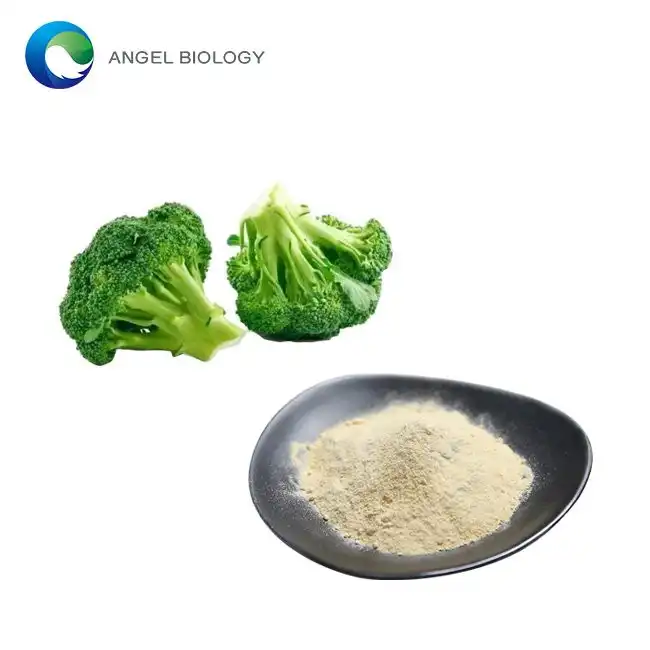
Cruciferous vegetables, especially broccoli seeds and sprouts (Brassica oleracea var. italica), are natural sources of both compounds. Glucoraphanin is a naturally occurring glucosinolate (4-methylsulfinylbutyl glucosinolate) that can be converted into sulforaphane through enzymatic activity. The compound is found in plant tissue and contributes to the plant's natural defense system. When plant cells are damaged and myrosinase comes into contact with glucoraphanin, it can facilitate the formation of sulforaphane. This conversion is similar to what occurs when fresh broccoli tissue is cut or chewed.
The resulting isothiocyanate, sulforaphane, has attracted extensive research interest because of its interaction with cellular antioxidant and defense pathways, including the Nrf2 pathway. Research from Johns Hopkins University published in 1997 identified broccoli sprouts as a particularly rich source of compounds capable of inducing protective enzyme systems in experimental models[1]. However, sulforaphane is considerably less stable than its glucoraphanin precursor, creating additional challenges for formulation, handling, and storage.
Chemical Stability and Formulation Impact
The difference in chemical stability affects subsequent formulation and supply-chain decisions. Under suitable storage conditions (cool, dry, and protected from light), Glucoraphanin Powder can provide substantially greater stability than direct sulforaphane preparations. Its glucosinolate structure makes it suitable for use in a range of dry formulations, including tablets, capsules, and powder blends, although actual shelf life should always be confirmed through product-specific stability testing.
Because sulforaphane is relatively unstable, stabilization and packaging strategies may be required. Temperature, light, oxygen, and formulation conditions can influence its stability. Direct sulforaphane formulations may therefore require specialized encapsulation, protective packaging, or tighter handling controls. These additional requirements can increase formulation complexity and influence production costs. For manufacturers, the better raw material is not necessarily the one with the strongest activity on paper, but the one that delivers the required specification, stability, and performance throughout the intended product lifecycle.


Key Benefits and Application Scenarios: Matching Ingredients to Product Lines
Strategic Advantages of Glucoraphanin Powder
The precursor approach can simplify several aspects of ingredient management. Glucoraphanin Powder provides a defined glucoraphanin specification that can be incorporated into formulations with controlled dosing. Its relative stability supports more predictable storage and handling compared with direct sulforaphane, helping manufacturers manage ingredient quality from production through distribution.
Here are the main advantages of glucoraphanin that are attracting attention in B2B markets:
Extended Shelf Stability: Glucoraphanin generally offers stronger storage stability than direct sulforaphane, which can simplify logistics and support longer product development timelines. Functional food, beverage, and supplement manufacturers can benefit from a precursor format that is easier to standardize and evaluate across production and distribution conditions.
Dual-Chamber Activation Technology: Advanced supplement formulators can pair glucoraphanin with stabilized myrosinase enzyme powder in separate compartments. Upon use, the two components can come into contact and facilitate conversion toward sulforaphane. This strategy can improve conversion efficiency compared with glucoraphanin used without an additional myrosinase source, although actual conversion depends on enzyme activity, formulation design, processing conditions, and physiological factors.
Clean Label Appeal: Glucoraphanin sourced from broccoli seeds or sprouts supports natural-origin positioning. Consumers recognize broccoli as a familiar food source, helping brands communicate ingredient origin and formulation transparency. This positioning can be particularly relevant to clean-label products emphasizing plant-based and naturally derived ingredients.
Because of these advantages, glucoraphanin can be an attractive choice for formulators seeking a stable, scalable, and versatile broccoli-derived ingredient. Brands developing supplements, functional beverages, powder blends, and other wellness-oriented products can evaluate glucoraphanin-myrosinase systems when they want to combine precursor stability with controlled sulforaphane-generation potential.
When Sulforaphane Makes Sense
In some applications, direct sulforaphane may be preferred when the formulation concept specifically requires the active isothiocyanate rather than its precursor. Research-oriented nutritional products and specialized formulations may consider direct sulforaphane when access to the active compound is an important formulation objective, provided that its stability and handling requirements can be adequately controlled.
Sulforaphane may also be investigated for use in cosmetic formulations. When incorporated into suitable delivery systems and protective packaging, formulators can explore its potential for antioxidant and cellular-defense positioning. In these applications, direct inclusion avoids the need for enzymatic conversion within the formulation itself, although ingredient stability, compatibility, concentration, and finished-product testing remain essential considerations.
Sourcing and Quality Considerations for B2B Procurement
Evaluating Supplier Credentials
When purchasing broccoli-derived actives, procurement teams should evaluate several quality indicators. GMP certification is an important starting point, while suppliers should also provide analytical documentation demonstrating the declared glucoraphanin content. HPLC or another validated analytical method can be used to verify specification compliance. Commercial specifications vary by supplier, raw material source, extraction process, and standardization level, so buyers should select specifications according to their formulation and market requirements.
The extraction and processing method can influence purity and product consistency. Suppliers should clearly identify the botanical source, extraction process, standardization method, and relevant quality controls. When evaluating a provider, procurement teams should request Certificates of Analysis from multiple production batches to assess consistency. Particular attention should be paid to glucoraphanin content, moisture, microbiological quality, heavy metals, pesticide residues, and other parameters relevant to the intended market.
Price Dynamics and Bulk Procurement
Glucoraphanin Powder pricing varies according to glucoraphanin specification, raw material source, processing technology, order volume, packaging, and testing requirements. Rather than relying on a fixed market price, procurement teams should request current quotations based on the required specification and purchasing volume. Larger-volume purchasing may provide more favorable commercial terms and can help improve supply continuity.
Sulforaphane may involve more demanding stabilization and handling requirements than glucoraphanin, which can contribute to higher formulation and supply-chain complexity. However, cost comparisons should consider the finished formulation, required active level, stability target, packaging, and validated potency—not simply the price per kilogram of raw material.
Custom specifications and qualification procedures may require additional lead time. Smart procurement therefore means establishing supply relationships with manufacturers that can provide consistent batches, complete documentation, samples, technical communication, and reliable production planning. Working directly with experienced production sites can be particularly valuable when formulation development, customized specifications, or long-term supply planning are involved.
How to Use Glucoraphanin Powder and Sulforaphane in Your Production Lines
Dosage Guidelines and Formulation Strategies
Research on glucoraphanin and sulforaphane has evaluated a range of intake levels, but there is no single universal dosage that can be described as effective for every adult or finished product. Formulators should determine the appropriate ingredient level according to the intended application, regulatory requirements, product format, target market, and available evidence. When glucoraphanin is combined with myrosinase, conversion efficiency can be influenced by enzyme activity, component ratio, processing conditions, and the stability of both ingredients.
The powder can be incorporated into capsules, tablets, and powder blends using conventional dry-processing approaches. During formulation, temperature, moisture, oxygen exposure, and processing time should be considered to help preserve the declared glucosinolate content. Ribbon blenders or tumble mixers may be suitable for applications where gentle dry blending is preferred. For beverages, formulators should evaluate pH, processing temperature, residence time, and finished-product stability before selecting final processing conditions.
Storage and Handling Best Practices
Proper storage can help maintain raw-material quality throughout its intended shelf life. Glucoraphanin Powder should be protected from direct sunlight, excessive moisture, and unsuitable temperature conditions and kept in well-sealed packaging. A cool, dry storage environment is generally preferred, while the supplier's specific storage recommendation should be followed. Finished-product and raw-material stability should be verified under the actual conditions expected during transportation and storage.
These considerations are particularly important when developing commercial product lines. Instead of relying on a single stability result from another formulation, manufacturers should conduct product-specific stability testing to confirm glucoraphanin retention over time. This provides procurement and R&D teams with more reliable information for setting specifications, shelf-life targets, packaging requirements, and production controls.
Making the Right Decision: Which Raw Material Fits Your Line?
Comparative Analysis Framework
Your choice of ingredients should be based on how you want to position your product and how you manage manufacturing. Glucoraphanin Powder works well for companies seeking a stable broccoli-derived ingredient that can be incorporated into a range of delivery formats, including capsules, tablets, powders, and selected beverage applications. The precursor can be converted into sulforaphane through myrosinase activity, either from a co-formulated enzyme source or through endogenous processes after consumption. Conversion efficiency, however, varies with formulation and physiological conditions.
Sulforaphane can be considered for specialized applications where the direct active form is specifically required. The additional stabilization and handling requirements may be acceptable for niche or premium formulations where the formulation concept justifies the added complexity. In these cases, packaging, storage, processing, and analytical verification become especially important.
When evaluating cost-effectiveness, degradation and finished-product stability should be considered alongside the initial raw-material price. A formulation using direct sulforaphane may require additional stabilization measures, while glucoraphanin-based products may offer a simpler storage and handling profile. Actual cost savings depend on ingredient specification, dosage, processing method, packaging, and validated shelf life, so manufacturers should compare total formulation economics rather than relying on a fixed percentage of savings.
Future-Proofing Your Ingredient Strategy
Regulatory environments increasingly emphasize transparent sourcing, substantiated claims, and consistent ingredient specifications. Glucoraphanin's plant origin can support natural-source positioning, but regulatory acceptance and permitted claims vary by country and product category. Suppliers should therefore provide appropriate technical and regulatory documentation to support market-specific compliance.
The precursor approach can also support consumer education around broccoli-derived ingredients and the relationship between glucoraphanin and sulforaphane. Brands can communicate the natural conversion concept while avoiding unsupported medical positioning. For B2B manufacturers, this creates a scientifically grounded product story that can be adapted to supplement, functional food, beverage, and other wellness-oriented product concepts.
Conclusion
Choosing between Glucoraphanin Powder and sulforaphane comes down to formulation requirements, target market, processing capabilities, and product positioning. Glucoraphanin Powder is an attractive option for many commercial applications because it combines a relatively stable precursor format with flexible formulation potential and a strong natural-source story. The precursor form can simplify quality control, storage, and supply planning while allowing formulators to develop products around sulforaphane-generation potential. Sulforaphane remains relevant for specialized applications where the direct active form and appropriate stabilization strategy are justified. When procurement teams work with suppliers that offer technical expertise, consistent specifications, analytical documentation, and reliable supply, they can make more informed ingredient decisions and reduce formulation risk. The raw material selected today can influence product stability, manufacturing efficiency, regulatory positioning, and long-term commercial performance.
Frequently Asked Questions
1. Can glucoraphanin powder and sulforaphane be used interchangeably in formulations?
Not directly—these compounds serve different roles in formulation. Glucoraphanin is a precursor that can be converted into sulforaphane through myrosinase activity or endogenous processes. If a product incorporates an appropriate myrosinase source, it may be designed to support sulforaphane generation after use. Direct sulforaphane may be considered when the formulation specifically requires the active isothiocyanate, but its stability and handling requirements are different. How interchangeable they are depends on the delivery format, desired active form, stability target, and regulatory requirements.
2. How do I verify supplier quality for broccoli-derived actives?
You should request a complete Certificate of Analysis that includes the declared glucoraphanin content and relevant quality parameters such as heavy metals, microbiological testing, moisture, and pesticide residues where applicable. Ask about the botanical source, extraction process, standardization method, and analytical methodology. Reliable providers should maintain appropriate quality certifications and provide batch documentation. Before placing a larger order, samples from multiple production batches can help evaluate consistency and confirm that the material meets your formulation specifications.
Partner with Angelbio for Premium Glucoraphanin Powder Supply
Angelbio offers high quality Glucoraphanin Powder, supported by extensive experience in botanical ingredient extraction and quality control. As a dependable Glucoraphanin Powder supplier, we provide standardized options according to customer specifications, complete COA documentation, and technical support for formulation and product development. Our R&D capabilities are designed to help customers evaluate ingredient specifications, application requirements, and supply considerations—not simply purchase a raw material. For detailed specifications, sample requests, or formulation discussions, please email our team at angel@angelbiology.com. We're committed to supporting your product development with consistent quality, clear documentation, responsive communication, and reliable supply.
References
1. Fahey, J. W., Zhang, Y., & Talalay, P. (1997). Broccoli sprouts: An exceptionally rich source of inducers of enzymes that protect against chemical carcinogens. Proceedings of the National Academy of Sciences, 94(19), 10367-10372.
2. Clarke, J. D., Dashwood, R. H., & Ho, E. (2008). Multi-targeted prevention of cancer by sulforaphane. Cancer Letters, 269(2), 291-304.
3. Dinkova-Kostova, A. T., & Kostov, R. V. (2012). Glucosinolates and isothiocyanates in health and disease. Trends in Molecular Medicine, 18(6), 337-347.
4. Traka, M., & Mithen, R. (2009). Glucosinolates, isothiocyanates and human health. Phytochemistry Reviews, 8(1), 269-282.
5. Yagishita, Y., Fahey, J. W., Dinkova-Kostova, A. T., & Kensler, T. W. (2019). Broccoli or sulforaphane: Is it the source or dose that matters? Molecules, 24(19), 3593.
6. Jeffery, E. H., & Araya, M. (2009). Physiological effects of broccoli consumption. Phytochemistry Reviews, 8(1), 283-298.