



How Does Pure Hyaluronic Acid Powder Improve Skin Hydration? Science-Backed Insights
One of the most highly proven methods for hydrating skin is pure hyaluronic acid powder. Because of the way its molecules are structured, it can bind up to 1,000 times its own weight in water. This crystal-clear, very pure powder deeply moisturises the skin by getting into the dermal layers and making a material in the extracellular space that holds on to moisture. Researchers say that hyaluronic acid works at the level of cells by attracting and holding on to water molecules. It makes the skin fuller, smooths out fine lines, and keeps the right amount of wetness in the skin so that the effects last.
Understanding Pure Hyaluronic Acid Powder and Its Hydration Mechanism
The glycosaminoglycan structure of hyaluronic acid means that it can keep things moist. This structure is made up of repeated disaccharide units of D-glucuronic acid and N-acetyl-D-glucosamine. This linear polysaccharide biopolymer really soaks up water, which makes it a great ingredient for skin care items that need to keep the skin wet.
The Science Behind Water Retention
Hyaluronic acid gets water by hydrogen bonding, which means that each molecule builds a three-dimensional web that can hold water molecules inside it. When the powder is put on the skin, it turns into a thick layer of gel that keeps water on the skin's surface. Making this hydrogel improves the skin's natural ability to protect itself and keeps releasing water for a long time.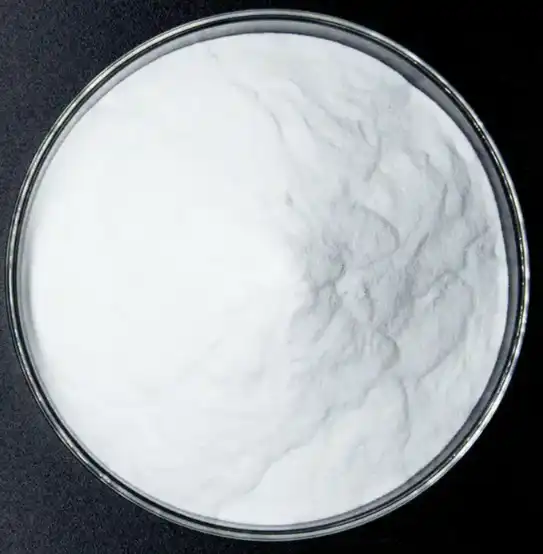
Hyaluronic acid molecules move through the stratum corneum like a train to reach the deeper layers of skin. When they get there, they mix with hyaluronic acid crystals that are already there. This interaction makes the body make more natural hyaluronic acid, which has a domino effect that makes the long-term benefits of hydration greater than the immediate effects of applying it topically.
Molecular Weight Variations and Absorption
How well hyaluronic acid powder soothes and how deeply it goes into the skin depend on its molecular weight. Different kinds that have a molecular weight of less than 100 kDa can go deeper into the skin and keep cells moist for longer. Forms with a molecular weight of 800 kDa to 2.0 MDa stay mostly in the top layers of skin, quickly making the skin plumper and stopping water from leaving the skin's surface.
This range of molecular weights lets formulators aim for different amounts of moisture, like quick moisture on the skin's surface or deeper moisture in the tissue. The molecules stay pure in powder form while they are kept and handled, so it always works the same way, no matter how it was made.
Comparing Pure Hyaluronic Acid Powder with Other Forms for Optimal Hydration
Formulators can choose the best water source if they know the pros and cons of the different types of hyaluronic acid, including pure hyaluronic acid powder. The way it is made, how stable it is, and how the person who uses it feels about it are all different for each form.
Powder Versus Liquid Formulations
It is more solid than pre-dissolved liquid types of hyaluronic acid, which can break down, get dirty, and change consistency over time. When it comes in powder form, manufacturers can exactly control the content while formulating, which helps them get the right amount of moisture in their products.
When making liquids, preservative systems are often needed, but they can lower the quality of the ingredients or stop the mixture from mixing with other things. You don't have to worry about these things with powder forms because they last longer and take up less room, which makes them great for large-scale manufacturing.
Powder Integration in Cream and Serum Formulations
When you mix hyaluronic acid powder with creams, you get a two-phase hydration system. The top layer of skin is hydrated right away, and over time, the moisture falls off. The powder slowly melts into the cream, giving the face just the right amount of moisture while the product is on it.
With powder, you can change the thickness level without changing the amount of active ingredient, which is useful for serums. That makes it easy for formulators to get the texture patterns they want while keeping the most water, which is hard to do with ready-made liquid solutions.
Practical Applications and Formulation Guidelines for Skincare Products
It is easy to shape hyaluronic acid powder, so it can be used in many skin care items. But to get the most out of water while keeping the product stable and the user experience good, each type of product needs a different way to be made.
Concentration Guidelines for Different Product Types
Most moisturisers have between 0.1% and 0.5% hyaluronic acid powder in them. This makes the product moisturising without being too thick, which could make it hard to spread. Between 0.5% and 1.5% is a good strength range for anti-ageing serums because it gives adult skin problems a lot of moisture.
Eye creams usually come in a range of 0.2% to 0.8%, so it's important to carefully control how much you use. For this reason, the sensitive skin around the eyes needs to be kept wet without getting swollen or hurt. Clinical tests have shown that these concentration levels are the best way to improve water without making the product less effective.
Processing and Stability Considerations
For powder integration to work well, the air must be kept under control during the production process. The powder should be mixed with water phase components when the temperature is less than 60°C so that molecules don't break down. You can stop agglomeration and make sure the end result is spread out properly if you use the right dispersion methods.
How pure hyaluronic acid powder is stored has a big effect on how well it works; it needs to be kept in a controlled humidity setting so that it doesn't soak up water and stick together too soon. The powder's ability to flow and dissolve stays the same when you close containers with desiccant materials. This is important for getting the same results every time when formulating.
Sourcing Pure Hyaluronic Acid Powder: Quality Standards and Supplier Evaluation
To find reliable providers, you should check their quality standards, how well they can make things, and how well they follow the rules. In this way, you can be sure that your goods always work well and are liked by people. Because it's so hard to make hyaluronic acid, tight rules are needed to make sure that suppliers are approved.
Critical Quality Parameters
The most basic way to judge quality is by how pure something is. In the case of pharmaceutical-grade powders, they must contain at least 95% sodium hyaluronate when they are dry. There should be more glucuronic acid than 42% to make sure that the hyaluronic acid is real and not made up of other polysaccharides.
How well a product works depends on how the molecular weight is spread out. This needs to be checked with gel permeation chromatography or a similar scientific method. They should tell customers the full chemical weight so they can pick the right types for their needs.
Manufacturing and Certification Standards
The Good Manufacturing Practice (GMP) and ISO 9001 quality control methods are kept up to date by dependable providers to make sure that quality standards are always met. Bacillus subtilis or Streptococcus zooepidemicus can be used in microbial fermentation processes to make sources that are cleaner than those that come from animals and that meet ethical sourcing standards.
It is important to keep track of where the raw materials came from, what was made in each batch, and the outcomes of any scientific tests that were carried out. This specific information helps with the paperwork and quality control systems that are needed to get a product out to the public.
Innovation Trends and Future Applications in Hydration Technology
The market for hyaluronic acid is always changing because of new technologies in molecular engineering, transport systems, and healing methods, with pure hyaluronic acid powder playing a key role in these developments. These new ideas make it easier to stay healthy and meet the needs of customers who want better performance and products that are better for the world.
Advanced Molecular Engineering
Hyaluronic acid structures are now more solid and stay moist for longer thanks to new cross-linking technology. These modified forms still have the ability to hold water and are not broken down by enzymes. The active ingredients will last longer in finished products because of this.
Hyaluronic acid molecules are kept safe in packaging technologies while the product is being stored. When the product touches skin, the molecules slowly come out. It's easier for these transport systems to get ingredients into the skin, and the benefits of hydration last longer than with older preparation methods.
Sustainable Production Methods
Because of growth in biotechnology, fermentation processes are now more efficient. This is better for the environment and makes goods more consistent. People want items that are good for the environment, and these environmentally friendly ways of making them meet those needs without lowering the standards of quality.
Conclusion
Pure hyaluronic acid powder has been shown by science to keep skin moist. It gives product makers a lot of freedom in how they make things, but the soothing effects are still proven. The chemical structure can hold a lot of water, which makes it better at moisturising than regular ingredients, both right away and over time. When you know about changes in quality standards, concentration rules, and molecular weight, you can make smart purchases that make your goods work better and make you more competitive in the market. Though hyaluronic acid technology keeps getting better thanks to new ideas, the powder form is still the best choice for professionals who need stable, high-performance hydration solutions.
FAQ
1. What makes pure hyaluronic acid powder more effective than other hydrating ingredients?
This is because the molecules in pure hyaluronic acid powder are made in a way that lets them link up to 1,000 times their own weight in water. Some ingredients that hydrate might only work on the top layer of skin. Hyaluronic acid, on the other hand, works deeper in the skin to hold water together by creating a three-dimensional network. This method gives you quick plumping effects and long-lasting hydrating effects that last for hours after you use it.
2. How does molecular weight affect the hydration performance of hyaluronic acid powder?
It depends on the molecular weight how deep something goes and how long it stays wet. It's less than 100 kDa, so it can get deeper into the skin and keep cells moist for longer. Variants with a high molecular weight stay mostly on the skin's surface, making it quickly fuller and stopping water from getting in. They can hydrate all layers of skin at the same time because they have a lot of different chemical weights.
3. What concentration of pure hyaluronic acid powder should be used in different skincare products?
It depends on the product and how it will be used to figure out the right quantity. When moisturisers keep your skin wet every day, they use 0.1% to 0.5%. When heavy serums heal, they use 0.5% to 1.5%. It's important for eye creams to have less than 0.2% to 0.8% because the skin around the eyes is very sensitive. It has been shown that these places have the best water, which doesn't make formulations less stable or people unhappier.
Partner with Angelbio for Premium Pure Hyaluronic Acid Powder Solutions
18 years ago, Angelbio began doing its own research and development. They have advanced production skills that let them make Pure Hyaluronic Acid Powder that is pharmaceutical-grade and meets the toughest packing needs. The Institute of Life and Health Research at Xi'an Jiaotong University helps us keep our buildings up to date. This means that our quality and cleanliness standards are always better than those of other countries. We are a trustworthy company that sells Pure Hyaluronic Acid Powder. We provide full technical support, different molecular weight options, and a variety of packing options that can be changed to fit your specific manufacturing needs. Leading skin care and nutrition brands from all over the world work with us because we are committed to using strict quality control and production methods that are good for the environment. Our expert team can be reached at angel@angelbiology.com to talk about your Pure Hyaluronic Acid Powder needs and find out how we can help your product work better and be more competitive in the market.
References
1. Papakonstantinou, E., Roth, M., & Karakiulakis, G. (2012). Hyaluronic acid: A key molecule in skin aging. Dermatoendocrinology, 4(3), 253-258.
2. Bukhari, S. N. A., Roswandi, N. L., Waqas, M., Habib, H., Hussain, F., Khan, S., ... & Arshad, M. (2018). Hyaluronic acid, a promising skin rejuvenating biomedicine: A review of recent updates and pre-clinical and clinical investigations on cosmetic and nutricosmetic effects. International Journal of Biological Macromolecules, 120, 1682-1695.
3. Necas, J., Bartosikova, L., Brauner, P., & Kolar, J. (2008). Hyaluronic acid (hyaluronan): a review. Veterinarni Medicina, 53(8), 397-411.
4. Jegasothy, S. M., Zabolotniaia, V., & Bielfeldt, S. (2014). Efficacy of a new topical nano-hyaluronic acid in humans. Journal of Clinical and Aesthetic Dermatology, 7(3), 27-29.
5. Stern, R., Asari, A. A., & Sugahara, K. N. (2006). Hyaluronan fragments: an information-rich system. European Journal of Cell Biology, 85(8), 699-715.
6. Price, R. D., Myers, S., Leigh, I. M., & Navsaria, H. A. (2005). The role of hyaluronic acid in wound healing: assessment of clinical evidence. American Journal of Clinical Dermatology, 6(6), 393-402.