



Hypericum Perforatum Extract in Skincare
Hypericum perforatum extract, derived from the flowering tops of St. John's Wort, is a botanical ingredient attracting interest in skincare formulations. It contains naturally occurring compounds, including flavonoids, phenolic constituents, hypericin, and hyperforin, although their levels vary with the plant material and extraction process. These compounds are studied for their antioxidant properties and potential relevance to cosmetic formulations. For businesses seeking botanical ingredients for product differentiation, St. John's Wort extract offers an option worth evaluating alongside formulation compatibility, quality specifications, and intended cosmetic use. Whether you are a cosmetic formulator, OEM manufacturer, or bulk ingredient buyer, understanding its characteristics can help you assess its suitability for your product range.
Understanding Hypericum Perforatum Extract and Its Role in Skincare
What Is It, Exactly?
St. John's Wort extract is produced from the aerial parts, particularly the flowering tops, of Hypericum perforatum L. Extraction methods may include water, ethanol, or hydroalcoholic systems, depending on the desired composition and product specifications. The resulting extract can contain several groups of plant compounds, including flavonoids, phloroglucinols such as hyperforin, and naphthodianthrones such as hypericin and pseudohypericin.
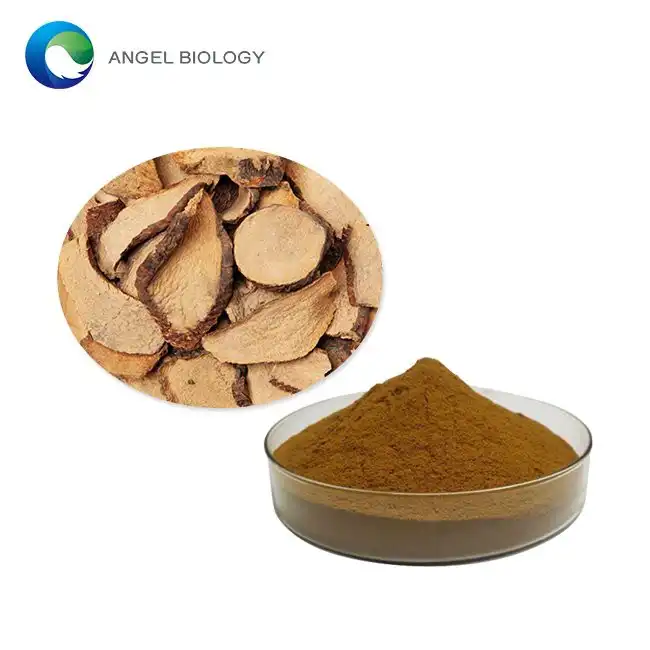
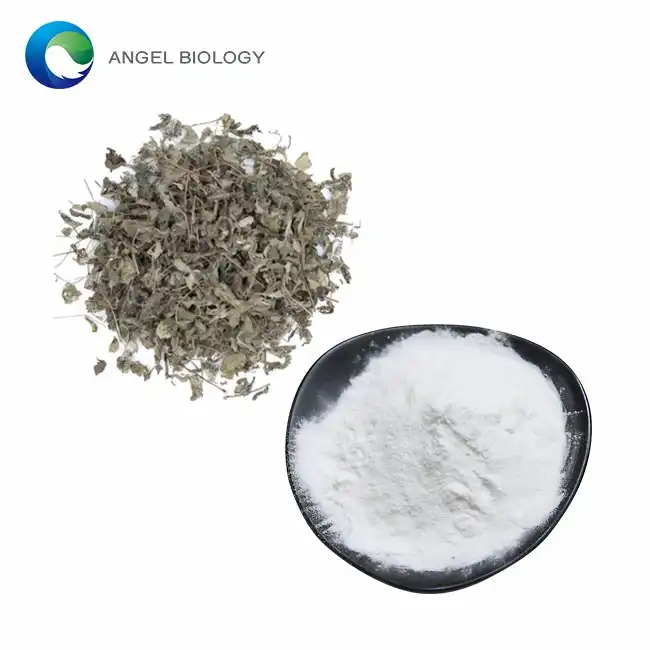
High-performance liquid chromatography (HPLC) can be used to identify and quantify selected constituents when appropriate reference standards and validated methods are available. The target specification should be confirmed with the supplier rather than assumed to be the same across all extract grades. Powder appearance can range from yellowish brown to dark brown, depending on the raw material, extraction conditions, and carrier ingredients. Particle size, moisture content, dispersibility, and bulk density should also be confirmed against the technical specification before commercial formulation.


How It Works on Skin
Hypericum perforatum contains plant-derived compounds that have been investigated for antioxidant activity and other biological properties. However, laboratory findings do not automatically establish a measurable benefit in finished skincare products. The performance of an extract depends on its composition, concentration, stability, delivery system, and compatibility with the overall formula.
In cosmetic development, the ingredient may be explored for products positioned around botanical skincare and skin-conditioning concepts. Claims about reducing redness, accelerating tissue repair, treating skin conditions, or preventing damage require appropriate evidence for the finished product and must comply with the regulations of the target market. Formulators should therefore evaluate the extract using relevant stability, compatibility, and skin-tolerance assessments before making specific performance claims.
Extraction and Standardization Quality
The quality of St. John's Wort extract depends on raw material identification, extraction conditions, processing controls, and finished-product testing. Buyers should request a Certificate of Analysis (COA) that identifies the tested batch and reports the relevant specifications, such as identity, assay where applicable, moisture, and contaminant results.
Heavy metals should be assessed against applicable requirements and the intended product category. Microbiological limits, residual solvents, and other potential contaminants should also be considered according to the manufacturing process and intended use. Requirements for individual elements and contaminants should be stated clearly in the specification rather than relying on a single universal threshold. Buyers should not assume that every extract grade has the same composition or automatically meets all cosmetic regulations in the United States or Europe.
Key Benefits and Applications in Skincare Formulations
Addressing Sensitive and Reactive Skin
St. John's Wort extract may be considered for botanical skincare formulations designed around skin conditioning and a comfortable skin feel. Its naturally occurring plant compounds provide a basis for investigating antioxidant-related properties, but the extract should not be presented as a proven treatment for inflammation, acne, or other skin conditions.
The suitability of the ingredient for sensitive-skin products depends on the specific extract, its concentration, the complete formula, and the intended use. Formulators should evaluate finished products for skin compatibility and avoid assuming that a botanical origin guarantees suitability for every skin type.
Hypericum perforatum extract may be explored in several cosmetic product categories:
Botanical creams and serums: Formulators can assess the extract as part of plant-based skincare concepts. Compatibility with ingredients such as niacinamide and ceramides should be verified through formulation and stability testing.
Skin-conditioning products: The extract may be considered for lotions and creams intended to support a pleasant skin feel. Product claims should reflect the available evidence for the finished formula.
Post-treatment skincare concepts: Brands developing products for use after cosmetic procedures should obtain appropriate safety and regulatory assessments before selecting the ingredient. The extract should not be promoted as a wound-healing agent or as a substitute for professional aftercare.
Antioxidant-focused skincare: The naturally occurring constituents can make the extract relevant to research into botanical antioxidant formulations. Claims about collagen preservation or visible changes associated with photoaging require product-specific substantiation.
The ingredient may be evaluated for use in creams, serums, gels, and lotions, depending on its solubility, dispersibility, carrier system, and compatibility with other formulation components.
Comparing With Other Botanical Actives
Calendula, chamomile, aloe vera, and St. John's Wort extracts each have distinct compositions and formulation characteristics. Their performance varies according to extract type, concentration, processing method, and finished-product design. It is not appropriate to rank one botanical as universally more effective than another without comparable testing data.
For product developers, a practical comparison should include botanical identity, marker compounds, extraction solvent, appearance, odor, solubility, stability, and cost-in-use. Selecting an ingredient based on these factors can help teams identify the most suitable option for a particular cosmetic concept.
Extract Forms and Formulation Flexibility
St. John's Wort extract may be supplied as a powder or liquid, depending on the manufacturing process and commercial grade. Extraction ratios, marker-compound specifications, carrier content, moisture, and bulk density can differ between suppliers. Buyers should confirm these parameters rather than assume that a particular ratio or density applies to every product.
Powder grades can be convenient for weighing and batch preparation, while carrier ingredients may be used to improve handling or flow properties. However, compatibility with water-based and oil-based formulations depends on the extract's actual characteristics; a powder should not automatically be considered soluble in both systems. Formulators should review the technical data sheet and conduct small-scale trials to determine dispersion, color contribution, odor, and storage stability.
Safety Profile and Regulatory Considerations for B2B Clients
Topical Safety Overview
The safety of a cosmetic ingredient depends on its composition, concentration, exposure conditions, formulation, and intended use. St. John's Wort extract should not be described as universally safe for all skin types without evidence specific to the extract and finished product.
Hypericin and related constituents warrant particular attention because some St. John's Wort preparations are associated with photosensitivity concerns, especially in non-cosmetic contexts or under particular exposure conditions. Their relevance to a topical cosmetic formula should be evaluated based on the actual composition and available safety data. Formulators should conduct appropriate safety and compatibility assessments, and ensure that product labeling and claims meet the requirements of the destination market.
Documentation Buyers Should Review
When sourcing botanical ingredients, buyers should request a current COA, technical data sheet, safety data sheet where applicable, batch identification, and relevant contaminant-testing results. Depending on the application and destination market, additional documents may be needed to support quality review and regulatory assessment.
Quality-system documentation, third-party test reports, and applicable pharmacopoeial or industry references should be evaluated according to the intended use. Buyers should confirm the scope and validity of any certification or compliance statement rather than assume that a document automatically establishes suitability for every cosmetic application.
Interaction with Common Skincare Actives
The behavior of Hypericum perforatum extract in a formula depends on its composition, extraction method, carrier ingredients, and the formulation environment. Some constituents may be sensitive to light, oxygen, temperature, or other processing conditions. Compatibility should therefore be assessed in the context of the specific product.
When combining the extract with retinol, alpha hydroxy acids (AHAs), niacinamide, or other cosmetic actives, formulators should evaluate pH, appearance, odor, dispersion, and stability over the intended shelf life. Supplier recommendations can provide a useful starting point, but they should be verified through formulation trials and finished-product testing.
Procurement Guide: Sourcing the Right Extract for Your Needs
What to Look for in a Supplier
A reliable supplier should provide clear product specifications, batch-specific COAs, technical documentation, and traceability information. Buyers should verify botanical identity, extraction method, marker-compound specifications, carrier content, moisture, contaminant limits, and packaging details.
For bulk projects, supply consistency, production lead times, minimum order quantities, sample availability, and technical communication are also important. Requesting a sample and reviewing its documentation before placing a large order can help procurement teams assess whether the ingredient fits their formulation and quality requirements.
Standardized vs. Non-Standardized Extracts
Standardized extracts are manufactured to meet a defined specification for one or more selected constituents. This can help buyers compare batches and establish clearer incoming- material criteria. The target marker and assay method should be stated explicitly, as standardization levels can vary by grade.
Non-standardized extracts may be suitable for formulations where a specific marker level is not required, but their composition can vary more noticeably. Neither category guarantees superior cosmetic performance on its own. The right choice depends on the intended formulation, documentation needs, budget, and evidence required to support the final product's claims.
OEM and Bulk Ordering Considerations
Brands working with OEM manufacturers should define the desired extract form, botanical source, marker-compound specification, particle size, carrier system, packaging, and documentation requirements before ordering. If a particular certification or sourcing status is essential, confirm its scope and supporting documents with the supplier.
Because some powder grades can absorb moisture, packaging should provide appropriate protection during transport and storage. Buyers should also confirm the minimum order quantity, available pack sizes, storage conditions, lead time, and shipping arrangements. Clear specifications and written acceptance criteria can reduce misunderstandings during scale-up and repeat purchasing.
Future Trends in St. John's Wort Extract for Skincare
Combination Formulations With New Actives
Cosmetic brands continue to explore combinations of botanical extracts with ingredients such as peptides, ceramides, and other skin-conditioning agents. St. John's Wort extract may be evaluated as part of these concepts, provided the ingredients are compatible and the finished formula remains stable.
Combination claims should be based on appropriate testing rather than assumptions that individual ingredient properties automatically translate into enhanced results when combined. For B2B developers, formulation trials and clear performance criteria can help determine whether a combination offers a practical advantage.
Sustainable Sourcing and Eco-Label Demand
Sourcing transparency and environmental considerations are increasingly relevant to ingredient selection. Buyers may request information about botanical origin, raw-material traceability, processing methods, packaging, and available sustainability documentation.
Any environmental or certification claim should be supported by appropriate records and should accurately describe the ingredient or supply chain covered. Brands planning to market finished products with environmental claims should also check the requirements of their destination markets.
Advances in Extraction Technology
Extraction technologies continue to be investigated for their ability to influence the yield and profile of plant constituents. Conventional solvent extraction and other processing approaches can produce extracts with different compositions, depending on the raw material and operating conditions.
For St. John's Wort extract, buyers should compare the resulting specifications and supporting analytical data rather than assume that one extraction technology always delivers higher potency or better stability. The most suitable process is the one that consistently meets the required composition, quality, and application needs.
Conclusion
Hypericum perforatum extract, also known as St. John's Wort extract, is a botanical ingredient that can be evaluated for selected skincare formulations. Its composition varies with the source material and processing method, making clear specifications, appropriate analytical testing, and formulation compatibility essential to ingredient selection. Rather than relying on broad therapeutic or performance claims, cosmetic developers should assess the extract based on documented characteristics and evidence relevant to the finished product.
For procurement teams and brand owners, choosing a supplier with transparent documentation, reliable batch specifications, and responsive technical support can make ingredient evaluation more efficient. Defining the target application, quality parameters, packaging needs, and order volume at the start of the project also helps streamline sourcing and product development.
FAQ
1. Is this extract suitable for all skin types?
Suitability depends on the extract's composition, concentration, finished formula, and intended use. It should not be assumed to be appropriate for every skin type. Formulators should assess safety and skin compatibility in the context of the intended cosmetic product.
2. How does it compare with other botanical ingredients?
St. John's Wort, chamomile, calendula, and aloe vera have different compositions and formulation properties. No ingredient can be considered universally superior without comparable testing. Selection should be based on the target product concept, specifications, compatibility, and supporting evidence.
3. What documentation should I prioritize when sourcing in bulk?
Start with a batch-specific COA, technical data sheet, safety data sheet where applicable, botanical identity information, and relevant contaminant-testing results. Depending on the application and destination market, additional quality-system or regulatory documentation may be needed.
4. What is the standard extraction ratio?
There is no single extraction ratio that applies to every St. John's Wort extract. The ratio depends on the product grade and manufacturing process. Buyers should confirm the extract ratio, marker-compound specification, carrier content, and analytical method with the supplier.
Partner With Angelbio — Your Hypericum Perforatum Extract Supplier
Angelbio supplies botanical ingredients for businesses developing cosmetic and personal-care formulations. For Hypericum perforatum extract inquiries, buyers can request product specifications, batch documentation, available grades, packaging details, and sample information to evaluate suitability for their projects.
Whether you are an OEM manufacturer, a skincare brand, or a bulk ingredient distributor, sharing your target application, required specifications, estimated order quantity, and destination market can help the team provide more relevant product information.
Contact angel@angelbiology.com to discuss your project, request available technical documents, or inquire about samples and bulk supply options.

References
1. Schempp, C. M., et al. “Topical application of St. John's Wort (Hypericum perforatum L.) and its extracts.” Phytomedicine, 2003.
2. Wölfle, U., et al. “Phytochemistry, pharmacology and clinical applications of Hypericum perforatum.” Planta Medica, 2014.
3. Bombardelli, E., and Morazzoni, P. “Hypericum perforatum: a review.” Fitoterapia, 1995.
4. Cosmetic Ingredient Review Expert Panel. “Safety assessment of Hypericum perforatum-derived ingredients in cosmetics.” International Journal of Toxicology, 2013.
5. Medina, M. A., et al. “Hyperforin: More than an antidepressant bioactive compound?” Life Sciences, 2006.
6. European Medicines Agency (EMA). “Assessment Report on Hypericum perforatum L.” Committee on Herbal Medicinal Products, 2018.