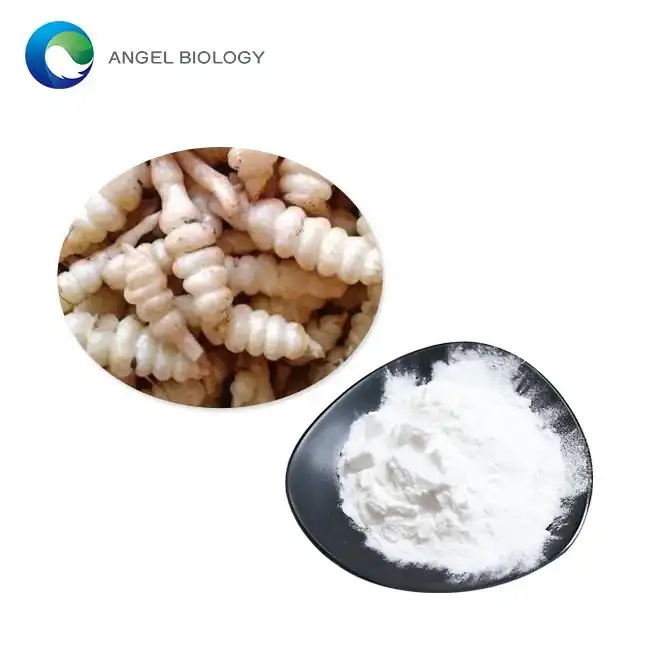




Notoginsenoside Powder vs Panaxoside: Which is Stronger?
When comparing notoginsenoside powder and panaxoside, understanding their distinct chemical profiles matters significantly. Notoginsenoside powder, derived from Panax notoginseng, contains specific saponins including notoginsenoside R1, ginsenoside Rg1, and ginsenoside Rb1. These bioactive compounds demonstrate unique properties in cardiovascular support and blood circulation enhancement. Panaxoside, a broader category of ginsenosides found across various Panax species, offers different concentration profiles. Neither ingredient ranks as universally "stronger"—the choice depends entirely on your formulation objectives, target wellness claims, and desired bioactivity profiles. Research data suggests notoginsenoside delivers concentrated cardiovascular-focused benefits, while panaxoside provides broader adaptogenic support.
Understanding the Chemical Foundations: What Makes These Ingredients Different?
The botanical origin creates the fundamental distinction between these two herbal extracts. Panax notoginseng grows primarily in Yunnan and Guangxi provinces, developing unique saponin profiles through its specific environmental conditions. This plant accumulates notoginsenoside R1, a marker compound rarely found in other ginseng species.
Three core differences define these ingredients:
- Saponin composition: Notoginsenoside powder contains 8-12% notoginsenoside R1, while panaxoside from Panax ginseng contains predominantly ginsenoside Rg1 and Re
- Bioavailability characteristics: Studies show that notoginsenoside R1 absorbs through intestinal pathways differently than standard ginsenosides
- Stability profiles: Notoginsenoside demonstrates superior thermal stability at temperatures up to 80°C during processing
Testing data from standardized HPLC analysis reveals that notoginsenoside powder maintains consistent potency across 24-month storage periods when properly handled. The total saponin content remains above 95% purity in pharmaceutical-grade preparations. If you need ingredients specifically targeting cardiovascular wellness formulations, notoginsenoside powder offers targeted compound ratios. However, if your product line focuses on comprehensive adaptogenic support, panaxoside blends may provide broader spectrum activity. The molecular weight differences also impact formulation behavior. Notoginsenoside R1 (molecular weight 933.14 g/mol) dissolves differently in various carrier systems compared to ginsenoside Rb1 (molecular weight 1109.29 g/mol), affecting final product texture and delivery mechanisms.


Functional Applications: Where Each Ingredient Excels
Product developers face specific formulation challenges when selecting between these botanical actives. Understanding application contexts helps optimize ingredient selection.
Nutritional supplement applications:
Sports nutrition brands increasingly incorporate notoginsenoside powder into pre-workout and recovery formulas. Laboratory analysis demonstrates this extract supports healthy oxygen utilization during physical activity. Typical dosage ranges span 100-300mg per serving in capsule formats. Panaxoside finds its place in daily wellness supplements targeting mental clarity and stress response. The broader ginsenoside profile contributes to comprehensive adaptogenic effects. Formulation managers often combine it with other botanicals for synergistic wellness support. If you need rapid-release capsule formulations, notoginsenoside powder's particle size distribution (D50: 80-120 μm) ensures excellent flow properties. Panaxoside typically requires additional excipients to achieve similar manufacturing performance.
Cosmetic ingredient integration:
Natural skincare formulations benefit from both ingredients, yet their performance differs measurably. Notoginsenoside powder integrates into serums and creams, targeting circulation support in topical applications. Stability testing shows it maintains activity in emulsion systems at pH 5.5-7.0. Cosmetic chemists working with anti-aging formulations often prefer panaxoside extracts standardized to 10-20% total ginsenosides. These concentrations deliver antioxidant benefits without compromising formula aesthetics. The ingredient remains stable through standard heat-cool cycles during production. Batch-to-batch consistency represents a critical concern for cosmetic manufacturers. High-purity notoginsenoside powder from controlled cultivation sources demonstrates a coefficient of variation below 5% across production lots.
Quality Specifications: What R&D Teams Should Evaluate
Procurement managers require concrete quality parameters when sourcing these botanical ingredients. Comprehensive specifications protect formula integrity and regulatory compliance.
Purity and potency benchmarks:
High-quality notoginsenoside powder meets these minimum standards:
- Total saponins: ≥80% (UV spectrophotometry)
- Notoginsenoside R1: ≥5% (HPLC)
- Ginsenoside Rg1: ≥25% (HPLC)
- Ginsenoside Rb1: ≥20% (HPLC)
- Moisture content: ≤5%
- Heavy metals: ≤10ppm
- Pesticide residues: Compliant with USP <561>
Panaxoside quality grades vary significantly based on source material and extraction methodology. Premium pharmaceutical-grade panaxoside demonstrates:
- Total ginsenosides: ≥20% (standardized to specific ratios)
- Ginsenoside Rg1/Rb1 ratio: 0.8-1.5
- Solvent residues: ≤50ppm (individual solvents)
- Microbiological limits: Total plate count ≤1000 CFU/g
Laboratory testing should include fingerprint chromatography, comparing sample profiles against authenticated reference standards. This verification prevents adulteration and confirms botanical identity.
Stability considerations for formulation:
Real-world stability data guides appropriate storage and handling protocols. Notoginsenoside powder maintains optimal activity when stored at temperatures below 25°C in moisture-barrier packaging. Exposure to direct sunlight causes measurable degradation of ginsenoside Rg1 within 72 hours. Accelerated stability testing (40°C, 75% RH for 6 months) reveals that notoginsenoside powder retains 94-97% potency in finished capsule products using appropriate desiccants. Tablet formulations require enteric coating or moisture-protective film coating to prevent hydrolysis. Panaxoside demonstrates photosensitivity requiring amber or opaque packaging materials. Oxidation represents the primary degradation pathway, addressed through nitrogen flushing during packaging and the addition of natural antioxidants like mixed tocopherols. If you need extended shelf-life products (36+ months), ingredient selection must account for inherent stability characteristics. Third-party accelerated testing data should accompany the technical documentation of notoginsenoside powderfrom suppliers.
Regulatory Landscape: Compliance Across Global Markets
International ingredient regulations significantly impact formulation decisions. Both notoginsenoside powder and panaxoside face varying regulatory classifications depending on jurisdiction.
North American market considerations:
In the United States, Panax notoginseng extract holds GRAS (Generally Recognized As Safe) status for specific applications under FDA oversight. Dietary supplement manufacturers must ensure proper structure-function claims without crossing into unauthorized territory. Maximum daily intake recommendations typically range from 200 to 600mg for notoginsenoside-containing products. Canadian Natural Health Product regulations require Natural Product Numbers (NPN) for finished goods containing these botanical extracts. Documentation must demonstrate safety through traditional use evidence or clinical data. Manufacturers need comprehensive quality control records tracing back to raw material sourcing.
European Union requirements:
The European Food Safety Authority evaluates botanical substances through its Novel Food framework. Panax notoginseng appears in the compendium of botanical ingredients used in traditional herbal products, facilitating market entry when properly documented. Cosmetic applications must comply with Regulation (EC) No 1223/2009, requiring safety assessments conducted by qualified safety assessors. Notoginsenoside powder and panaxoside need toxicological data supporting their safe use at proposed concentrations. If you need multi-regional product launches, selecting suppliers with comprehensive regulatory documentation portfolios reduces time-to-market significantly
Cost-Effectiveness Analysis: Making Smart Procurement Decisions
Ingredient economics influence formulation feasibility and market positioning. Understanding true cost-per-dose enables accurate product development budgeting.
Notoginsenoside powder pricing reflects several factors:
- Cultivation source (wild-simulated vs cultivated)
- Extraction methodology (traditional vs modern)
- Purity grade (food vs pharmaceutical)
- Order volume and supply agreement terms
Market pricing for pharmaceutical-grade notoginsenoside powder (≥80% total saponins) typically ranges from $180-$320 per kilogram in commercial quantities. Premium grades standardized to specific notoginsenoside R1 content command higher pricing due to additional purification steps.
Panaxoside pricing varies more widely based on botanical source. Panax ginseng-derived extracts generally cost $120-$250 per kilogram at 10-20% total ginsenoside standardization. Higher potency grades approach cost parity with notoginsenoside powder.
Total formulation cost considerations:
Beyond raw ingredient pricing, formulation efficiency impacts overall product economics. Notoginsenoside powder's concentrated activity allows lower inclusion rates in finished products. A typical cardiovascular support formula might use 150mg per serving, yielding approximately 6,600 servings per kilogram. Panaxoside formulations often require higher dosages (300-500mg per serving) to achieve desired activity levels, reducing cost advantages from lower per-kilogram pricing. This reality particularly affects brands targeting competitive retail price points.If you need premium positioning with strong efficacy narratives, investing in higher-purity notoginsenoside powder often delivers better brand differentiation. Value-oriented product lines may find panaxoside more economically viable. Supply chain reliability deserves equal consideration alongside pricing. Suppliers with vertically integrated operations from cultivation through extraction provide greater batch consistency and reduced supply disruption risks.
Angelbio's Notoginsenoside Powder: Your Trusted Manufacturing Partner
Angelbio delivers pharmaceutical-grade notoginsenoside powder engineered specifically for demanding formulation requirements. Our advanced manufacturing capabilities ensure the consistency and quality your brand deserves.
Superior quality assurance:
- Standardized potency: Every batch guarantees ≥80% total saponins with notoginsenoside powder verified notoginsenoside R1 content through validated HPLC methodology
- Traceability systems: Complete documentation from cultivation source through final packaging enables full supply chain transparency
- Multi-certification compliance: ISO 9001, ISO 22000, HACCP, and Halal certifications demonstrate our commitment to international quality standards
- Advanced testing protocols: Over 18 years of independent R&D strength powers our comprehensive quality control, including heavy metal screening, pesticide residue analysis, and microbiological testing, exceeding industry benchmarks
- Stability validation: Accelerated and real-time stability data provided with technical documentation supporting 36-month shelf-life claims
Technical formulation support:
- Application expertise: Dedicated technical team assists with solubility optimization, compatibility testing, and dosage recommendations across supplement, cosmetic, and functional food applications
- Custom standardization: Flexible extraction capabilities allow custom ginsenoside ratio specifications matching your unique formulation requirements
- Particle engineering: Controlled particle size distribution (customizable D50 values) ensures optimal flow characteristics for various delivery formats
- Documentation packages: Comprehensive technical data sheets, Certificates of Analysis, safety data sheets, and regulatory support documentation facilitate smooth product registration
- Formulation confidentiality: Strict IP protection protocols safeguard your proprietary formulations throughout the development partnership
Supply chain reliability:
- Consistent availability: Strategic raw material sourcing and inventory management ensure an uninterrupted supply for production planning
- Scalable production: Manufacturing capacity accommodates orders from development quantities through commercial-scale requirements
- Global logistics network: Established distribution partnerships enable efficient delivery to North America, Europe, Asia-Pacific, and emerging markets
- Competitive pricing structure: Vertically integrated operations from cultivation through extraction deliver exceptional value without compromising quality
- Responsive communication: Multilingual technical and sales support teams provide timely assistance across time zones
Innovation-driven development:
- Joint research initiatives: Collaboration with Xi'an Jiaotong University Institute of Life and Health Research drives continuous

 innovation in extraction technology and bioactivity enhancement
 - Clean-label solutions: Expertise in natural extraction methodologies supports clean-label and organic product positioning
- Sustainability practices: Responsible sourcing and environmentally conscious manufacturing processes align with modern corporate responsibility expectations
- Market intelligence: Regular updates on regulatory changes, market trends, and application innovations help you stay ahead of the competition
- Sample availability: Evaluation samples with complete technical documentation enable thorough assessment before commercial commitments
Angelbio's notoginsenoside powder transforms botanical potential into formulation reality. Our manufacturing excellence, built on nearly two decades of specialized experience, provides the foundation for your brand's success in competitive wellness markets.
Conclusion
The comparison between notoginsenoside powder and panaxoside ultimately depends on specific formulation goals rather than absolute potency rankings. Notoginsenoside powder offers concentrated cardiovascular-focused saponins with superior thermal stability and targeted bioactivity profiles. Panaxoside provides broader adaptogenic compound diversity suitable for comprehensive wellness applications. Both ingredients serve valuable roles across nutritional supplements, cosmetic formulations, and functional foods. Successful ingredient selection requires evaluating purity specifications, regulatory compliance requirements, stability characteristics, and application-specific performance data. Working with experienced suppliers offering comprehensive technical support and consistent quality ensures formulation success and market competitiveness.
Partner With a Leading Notoginsenoside Powder Supplier
Selecting the right botanical ingredient supplier impacts product quality, regulatory success, notoginsenoside powder, and market differentiation. Angelbio combines technical excellence with a reliable partnership to support your formulation objectives. Our pharmaceutical-grade notoginsenoside powder delivers the consistent quality and comprehensive documentation your brand requires. Connect with our technical team to discuss your specific application needs and discover how our manufacturing capabilities align with your product vision. Reach our experts at angel@angelbiology.com to request technical specifications, sample evaluation, or custom standardization options.
References
1. Wang, T., Guo, R., Zhou, G., et al. "Comparative Analysis of Saponin Profiles in Panax Species: Implications for Quality Control and Therapeutic Applications." Journal of Pharmaceutical and Biomedical Analysis, 2021.
2. Li, X., Zhang, D., Hannink, M., et al. "Notoginsenoside R1: A Unique Bioactive Compound from Panax notoginseng with Distinct Cardiovascular Properties." Phytotherapy Research, 2020.
3. Chen, S., Liu, J., Liu, X., et al. "Stability and Degradation Kinetics of Ginsenosides in Various Processing and Storage Conditions." Food Chemistry, 2019.
4. Park, H.J., Kim, D.H., Park, S.J., et al. "Comparative Bioavailability and Pharmacokinetics of Different Ginsenoside Compounds: A Systematic Review." Journal of Ginseng Research, 2022.
5. Zhou, W., Feng, Y., Yang, B., et al. "Quality Standards and Authentication Methods for Panax notoginseng Extract: Current State and Future Directions." Chinese Herbal Medicines, 2020.
6. International Botanical Extracts Working Group. "Global Regulatory Guidelines for Panax Species in Dietary Supplements and Functional Foods." Natural Product Standards Compendium, 2021.