



PQQ Bulk Powder: Everything You Need to Know
Pyrroloquinoline Quinone Disodium Salt (PQQ Powder) is a revolutionary redox cofactor that has changed mitochondrial health and cellular energy optimization. For B2B procurement professionals, knowing this reddish-brown fine powder goes beyond specifications to include its catalytic qualities, regulatory status, and formulation adaptability. This book covers everything from molecular structure to bulk sourcing techniques to assist you in making product efficacy and market compliance choices.
Understanding PQQ Powder: Properties and Benefits
What Exactly is PQQ Powder?
PQQ Powder, a new redox cofactor, is termed the "14th Vitamin" or "Longevity Vitamin" by scientists. This molecule cycles redox for thousands of catalytic reactions without self-destruction, unlike traditional antioxidants. Hyphomicrobium denitrificans-fermented commercial PQQ matches soil and food PQQ in structure and composition. The disodium salt form (CAS No. 122628-50-6) solves supplement formulation problems by being more stable and water-soluble than the free acid form.
Physical and Chemical Characteristics
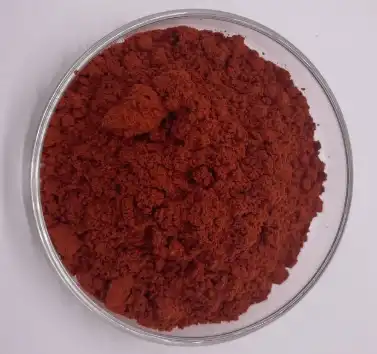
The technical specs of premium-grade PQQ Powder affect formulation performance. The reddish-orange to reddish-brown fine powder has good water solubility but is sparingly soluble in ethanol and insoluble in most organic solvents. The formula C14H4N2Na2O8 weighs 374.17 g/mol. Bulk density is 0.4-0.6 g/mL, and particle size distribution requires 95% transit through an 80-mesh filter for homogeneous mixing. To meet purity criteria, HPLC analysis must measure ≥99.0% purity, and 1% solution pH should be 3.0-5.0. Controlling the moisture level at ≤12.0% is necessary owing to its hygroscopic nature and requires proper storage practices.
Regulatory Status and Safety Profile
Compliance assurance crucial to B2B procurement teams. PQQ Powder is GRAS in the US and Novel Food in the EU. To comply with these designations, producers must adhere to rigorous limitations on solvent residues (methanol/ethanol) and heavy metal contamination (Pb ≤0.5 ppm, As ≤0.5 ppm). An effective dose of 10-20mg per serving provides compact formulations with strength. This micro-dosing capacity reduces costs and simplifies incorporation into capsules and functional drinks.
Comparison and Quality Assessment of PQQ Powders
Sourcing Methods: Fermentation vs Synthetic
Manufacturing origin greatly affects product quality and market position. Fermentation-derived PQQ Powder duplicates nature's molecular structure for optimum absorption and clean-label appeal. This bio-identical technique meets customers' desire for natural ingredients and costs more. While cost-effective, synthetic synthesis may bring structural differences that influence cellular absorption. R&D directors assessing vendors should seek fermentation strain identification and purification techniques.
Benchmarking Against Complementary Ingredients
Compare PQQ to similar chemicals to strategically position your product. COQ10 transports electrons within mitochondria, but PQQ Powder creates new mitochondria—a key difference. NMN (Nicotinamide Mononucleotide) replenishes NAD+ for energy metabolism, synergizing with PQQ. PQQ is more efficient than ubiquinol, which provides antioxidant protection but lacks catalytic cycling. Many innovative formulations combine PQQ as the mitochondrial biogenesis catalyst with energy metabolism boosters.
Quality Verification Parameters
Procurement teams should build strong multi-dimensional verification methods. HPLC purity analysis reveals ≥99.0% purity, whereas spectrum analysis verifies molecular structural integrity. ICP-MS heavy metal screening meets worldwide safety standards. Microbiological tests must fulfill USP criteria and show no pathogens. At least three manufacturing runs are reviewed for a certificate of analysis to ensure batch-to-batch uniformity. Requesting third-party testing reports from recognized labs improves quality assurance and shows downstream customers due diligence.
Bulk Procurement Guide for PQQ Powder
Strategic Sourcing Approaches
Understanding source channels helps navigate global supply chains. Direct manufacturer agreements provide the most specifications and supply chain transparency. Most of these connections have larger minimum purchase numbers but provide customization and an affordable price. Wholesale distributors provide cheaper MOQ and streamlined logistics for smaller enterprises or product testing. OEM agreements offer manufacturing and formulation help for brands without R&D. Check manufacturing facility certifications, production capacity, and technical support while assessing vendors.
Pricing Structures and MOQ Considerations
PQQ Powder bulk price is graded by order volume. Entry-level volumes of 1-5 kg cost 40-60% more than bulk pricing. Mid-tier orders of 25-100 kilos obtain better prices, while volumes over 500 kilograms approach manufacturer direct rates. In addition to unit cost, total landed cost includes shipment (typically chilled for stability), customs charges, testing costs, and storage. Annual volume agreements and multi-ingredient purchases boost negotiation leverage. Request comprehensive Incoterms, payment terms, and volume-dependent incentives quotes.
Supplier Verification Best Practices
Supply chain risk mitigation involves multi-layered verification. Examine production equipment, quality control labs, and raw material handling methods in direct or third-party facility audits. Ask established brands in your target market for customer references. Check company licenses, export credentials, and IP. Assess technical help through pre-purchase discussions on formulation issues particular to your application. Evaluate account management teams' English and communication skills. Before ordering in bulk, test product quality and service reliability with smaller orders.
Applications and Use Cases of Bulk PQQ Powder in B2B Industries
Supplement Manufacturing Integration
Premium cognitive improvement and energy metabolism formulas contain PQQ Powder. Its micro-dose (10-20mg) efficacy lets manufacturers make powerful single-ingredient solutions or complex multi-component stacks. In capsule selection and powder blend masking, the reddish-brown hue might affect product appearance. Functional shots and RTDs are possible due to water solubility. Stability across pH ranges allows for diverse formulation settings, although UV sensitivity requires opaque packaging. By adding CoQ10, Alpha-GPC, or Rhodiola to PQQ, products can be tailored to consumer demands.
OEM and Private Label Opportunities
PQQ-containing formulation contract manufacturers offer complete solutions for brands without internal production. These agreements often involve formulation consultancy, regulatory advice, package design assistance, and inventory management. Private label deals allow proven formulas to enter the market quickly while retaining brand integrity. Custom formulations support athletic performance, cognitive aging, and everyday wellness positioning initiatives. Assess OEM partners' ingredient sourcing transparency, manufacturing capacity scalability, and client portfolio. Depending on formula complexity, private label minimum order quantities are 1,000–5,000 units.
Regulatory Labelling Considerations
Labelling standards vary by jurisdiction, requiring caution. The FDA requires correct supplement info panels to identify PQQ content per serving as Pyrroloquinoline Quinone Disodium Salt. Structure-function claims must communicate advantages without illness treatment implications. Novel Food classification in the EU requires daily consumption restrictions and particular labelling. Health Canada's Natural and Non-prescription Health Products Directorate may need product licensing. Australian (TGA) and Japanese (MHLW) export markets have different criteria. Suppliers who supply regulatory support paperwork simplify compliance and approval times.
Conclusion
PQQ Powder Bulk Powder is a scientifically verified ingredient for knowledgeable B2B buyers seeking distinctive, effective formulas. Its mitochondrial biogenesis process, redox cycling capabilities, and regulatory status make it a premium component for cognitive and energy-focused goods. Quality assurance, regulatory compliance, and supply chain reliability must be balanced in strategic procurement. From purity criteria to particle size distribution, technical parameters affect formulation success and customer experience. Building ties with accredited suppliers becomes more important for competitive advantage as mitochondrial health products grow more popular.
FAQ
1. Is PQQ Powder Safe for Long-Term Continuous Use?
At 10-20mg daily, PQQ Disodium Salt has no notable side effects, according to a clinical study. United States GRAS certification indicates a thorough safety assessment of the chemical. Multiple-month intake trials reveal continuous benefits without tolerance or safety issues. Procurement teams can confidently promote PQQ-containing goods for everyday usage, but all supplement formulations should include disclaimer text about consulting healthcare specialists.
2. What Storage Conditions Preserve PQQ Powder Potency?
Due to its hygroscopicity and UV sensitivity, adequate storage is essential for stability. Keep bulk powder in opaque, sealed containers out of direct light. Ideal temperatures are 2-8°C (refrigeration), while room temperature storage at 15-25°C is suitable for shorter periods when humidity is below 60%. After opening, close containers quickly to reduce air exposure. Reputable vendors should provide stability statistics on potency retention over 24-36 months under specified storage circumstances. These restrictions affect completed product packaging and delivery.
3. Which Certifications Should Buyers Prioritize When Selecting Suppliers?
GMP compliance shows quality manufacturing standards and starts the certification hierarchy. The ISO 9001 accreditation verifies systematic quality management. Accredited laboratories verify analytical accuracy and batch uniformity. Kosher, Halal, Organic (where applicable), and Non-GMO certifications increase market access depending on target markets. US and EU markets require GRAS or Novel Food compliance documents. For authenticity, request current certifications with validity dates and audit reports.
Partner with Angelbio for Premium PQQ Powder Supply
Angelbio, a recognized PQQ Powder producer, has 18 years of R&D experience and strict quality control. Our fermentation-derived Pyrroloquinoline Quinone Disodium Salt satisfies worldwide purity requirements with ≥99.0% HPLC test, accompanied by certificates of analysis and regulatory paperwork. We provide technical consulting for your formulation needs as a joint venture between Angel Holding Group and Xi'an Jiaotong University's Institute of Life and Health Research. Our team delivers clear communication and dependable supply chain performance for bulk quantities for large-scale production or bespoke OEM solutions. Our procurement specialists can discuss your project specs, request samples, and provide competitive pricing on certified PQQ Powder for your next product innovation at angel@angelbiology.com.
References
1. Chowanadisai, W., Bauerly, K.A., Tchaparian, E., Wong, A., Cortopassi, G.A., and Rucker, R.B. (2010). "Pyrroloquinoline quinone stimulates mitochondrial biogenesis through cAMP response element-binding protein phosphorylation and increased PGC-1alpha expression." Journal of Biological Chemistry, 285(1), 142-152.
2. Nakano, M., Ubukata, K., Yamamoto, T., and Yamaguchi, H. (2009). "Effect of pyrroloquinoline quinone (PQQ) on mental status of middle-aged and elderly persons." Food Style, 13(7), 50-53.
3. Harris, C.B., Chowanadisai, W., Mishchuk, D.O., Satre, M.A., Slupsky, C.M., and Rucker, R.B. (2013). "Dietary pyrroloquinoline quinone (PQQ) alters indicators of inflammation and mitochondrial-related metabolism in human subjects." Journal of Nutritional Biochemistry, 24(12), 2076-2084.
4. Rucker, R., Chowanadisai, W., and Nakano, M. (2009). "Potential physiological importance of pyrroloquinoline quinone." Alternative Medicine Review, 14(3), 268-277.
5. Smidt, C.R., Unkefer, C.J., Houck, D.R., and Rucker, R.B. (1991). "Intestinal absorption and tissue distribution of [14C]pyrroloquinoline quinone in mice." Proceedings of the Society for Experimental Biology and Medicine, 197(1), 27-31.
6. Zhang, Y., Feustel, P.J., and Kimelberg, H.K. (2006). "Neuroprotection by pyrroloquinoline quinone (PQQ) in reversible middle cerebral artery occlusion in the adult rat." Brain Research, 1094(1), 200-206.