



Quercetin | Everything about effect, intake & dosage
Quercetin Powder is a plant-derived flavonoid widely used in nutraceutical, cosmetic, and functional food development. Commonly sourced from botanical materials such as Sophora japonica flower buds, quercetin provides a concentrated source of naturally occurring flavonoid compounds with well-characterized antioxidant activity.
With commercial grades commonly standardized to high purity, including grades reaching 95–98% by HPLC depending on supplier specifications, Quercetin Powder supports modern formulation development by providing a defined botanical ingredient for manufacturers seeking clean-label and plant-based solutions.
For B2B buyers, the key considerations extend beyond the ingredient's biological properties. Purity, chemical form, analytical specification, solubility, delivery technology, documentation, and supply consistency all influence the suitability of Quercetin Powder for a commercial formulation.
Understanding Quercetin Powder: Composition, Benefits & Uses
Chemical Identity and Technical Specifications
Anhydrous quercetin and quercetin dihydrate are two commercial forms of quercetin, chemically identified as 3,3',4',5,7-pentahydroxyflavone. Anhydrous quercetin is associated with CAS 117-39-5, while quercetin dihydrate is commonly identified as CAS 6151-25-3. Quercetin dihydrate has a molecular weight of approximately 338.27 g/mol, while anhydrous quercetin has a lower molecular weight because it does not contain the associated water molecules.
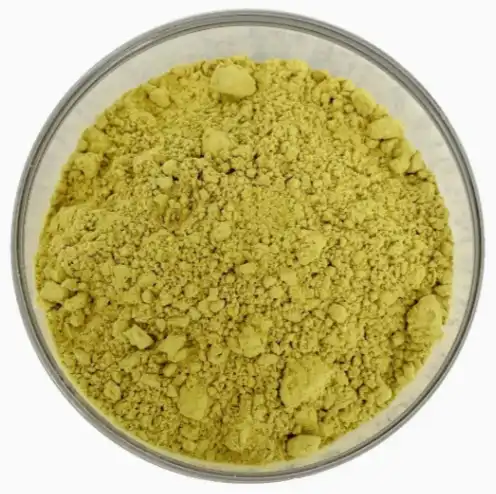
Loss on drying (LOD) varies according to the chemical form and product specification. Quercetin is typically characterized by a yellow to yellowish-green powder and has limited water solubility, which can influence formulation design.
For procurement teams, analytical specifications are critical. HPLC testing can verify quercetin content and help confirm batch consistency, while additional quality parameters may include moisture, residual solvents, heavy metals, and microbiological limits.
Because of its limited water solubility, manufacturers may evaluate micronization, phospholipid-based systems, liposomal approaches, or other delivery technologies when developing water-compatible or enhanced-dispersion formulations.
Antioxidant Properties and Functional Characteristics
Quercetin is a naturally occurring flavonoid that has demonstrated antioxidant activity in various experimental systems. Its chemical structure allows it to interact with reactive species, making it relevant to formulations designed around antioxidant properties and botanical ingredient positioning.
Quercetin is therefore of interest to manufacturers developing nutraceuticals, functional foods, beverages, cosmetics, and other plant-based products.
However, laboratory antioxidant activity should not automatically be presented as a guaranteed health or therapeutic outcome in humans. For finished products, claims should be based on the available evidence for the specific formulation and comply with the regulations of the target market.
From a B2B perspective, the commercial value of Quercetin Powder also comes from its defined chemical identity, high-purity options, flexible formulation potential, and compatibility with different botanical ingredient systems.
Industrial Applications Across Sectors
Nutraceutical manufacturers may incorporate Quercetin Powder into supplements, botanical blends, and functional formulations. Potential formats include capsules, tablets, powder mixes, stick packs, and selected beverage systems.
Its flavonoid profile and botanical origin also make quercetin relevant to functional-food concepts seeking recognizable plant-derived ingredients.
In cosmetics, formulators may evaluate quercetin in serums, creams, lotions, and other personal-care products where antioxidant-focused and botanical positioning is appropriate.
For OEM and ODM manufacturers, batch-specific COA, specifications, and traceability documentation can simplify raw-material qualification and help ensure consistency across production batches.

Formulation Considerations: Dosage, Absorption & Delivery Technologies
Industry Application Guidelines
Quercetin Powder dosage or inclusion level depends on the product category, formulation objective, chemical form, target market, and applicable regulations.
Nutritional supplements, functional beverages, botanical blends, and cosmetic formulations can require substantially different use levels. Therefore, there is no single universal dosage that applies to every commercial product.
For B2B product development, formulators should determine the appropriate inclusion level based on the supplier's specification, intended serving size, finished-product format, available evidence, and regulatory requirements.
Pure powder provides flexibility for manufacturers to establish their own ingredient ratios. Standard capsules, vegetarian capsules, tablets, and powder formats can simplify dosing and production.
For formulations where dispersion is a challenge, advanced delivery approaches such as liposomal or phospholipid-based systems may be evaluated to improve physical dispersion and formulation performance.
Enhancing Absorption and Formulation Performance
Quercetin has relatively low water solubility, which can present formulation challenges for liquid and high-water-content products.
Micronization reduces particle size and can increase surface area, potentially improving dispersion characteristics. However, improved dispersion should not automatically be described as equivalent to a specific increase in human bioavailability unless supported by appropriate evidence for the finished delivery system.
Phospholipid-based delivery systems, encapsulation, and other formulation technologies can also be considered when developing quercetin products with specific physical or delivery requirements.
For B2B formulators, the objective is not simply to select the highest-purity material. It is to identify the chemical form, particle size, delivery format, and specification that provide the best fit for the intended product.
Quality and Product Considerations
High-quality Quercetin Powder requires controlled processing from botanical sourcing through extraction, purification, drying, and final testing.
Qualified suppliers should be able to provide documentation covering relevant parameters such as:
- HPLC purity
- Loss on drying
- Residual solvents
- Heavy metals
- Microbiological limits
- Botanical identification
- Batch traceability
Certifications such as ISO-based quality systems, ISO 9001, where applicable, can provide additional information about manufacturing and quality-management practices.
The specific certification required depends on the target market and intended product category. Buyers should verify that the certificate applies to the relevant facility, product, and current production period.
Comparing Quercetin Powder with Other Forms and Competitors
Powder versus Capsule Delivery Systems
Bulk Quercetin Powder gives B2B manufacturers greater flexibility to determine the final dosage, blend ratio, excipient system, and product format.
Powder can be incorporated into:
- Stick packs
- Powdered beverages
- Effervescent products
- Tablets
- Protein or botanical blends
- Selected cosmetic formulations
Pre-encapsulated quercetin products provide convenience for finished-product manufacturers but generally offer less flexibility in formulation design.
For manufacturers purchasing at scale, bulk powder can also provide advantages in cost control, customization, and production planning.
The appropriate procurement format depends on the product concept, manufacturing capabilities, target market, required dosage, and total cost-in-use.
Complementary and Alternative Compounds
Quercetin is sometimes formulated alongside other botanical compounds or nutrients.
Bromelain, rutin, vitamin C, and other plant-derived ingredients may be considered when developing multi-ingredient products. However, the inclusion of complementary ingredients should be based on the intended formulation concept and available evidence rather than assuming that every combination produces a synergistic physiological effect.
Rutin is a quercetin glycoside with a different molecular structure and physicochemical profile from quercetin aglycone. Differences in solubility and formulation characteristics can make the two ingredients suitable for different product concepts.
Manufacturers should therefore compare chemical form, solubility, specification, dosage format, and target application when choosing between quercetin and related flavonoid ingredients.
Organic versus Conventional Sourcing
Demand for clean-label and transparent botanical ingredients continues to create interest in certified-organic Quercetin Powder.
Organic sourcing requires appropriate agricultural practices, traceability, processing controls, and certification by the relevant organization. These requirements can increase production and verification costs.
Conventional high-purity quercetin can also be appropriate for many applications where organic certification is not required.
For procurement teams, the best sourcing strategy should balance:
- Purity
- Botanical source
- Certification
- Price
- Target market
- Product positioning
- Supply stability
Rather than assuming that organic material is automatically superior for every application, manufacturers should select the specification that best matches their commercial and regulatory requirements.
Procurement Insights: Sourcing High-Quality Quercetin Powder
Critical Quality Certifications
Responsible Quercetin Powder procurement requires evaluation of supplier qualifications, manufacturing capabilities, analytical testing, and documentation.
GMP systems can demonstrate controlled manufacturing practices, while ISO 9001 reflects an established quality-management framework. Depending on the target market, Kosher, Halal, organic, or other certifications may also be relevant.
A complete COA should provide appropriate product-specific information, which may include:
- HPLC purity
- Loss on drying
- Residual solvents
- Heavy metals
- Microbiological results
- Batch number
- Manufacturing or testing date
- Applicable specification limits
Independent laboratory testing can provide an additional verification step for high-volume purchases or new supplier qualification.
Complete supply-chain documentation is particularly important when botanical ingredients are sourced internationally.
Evaluating Suppliers and Pricing Models
Successful supplier evaluation should go beyond price per kilogram.
Procurement teams should consider:
- Purity specification
- Batch consistency
- Production capacity
- MOQ
- Lead time
- Technical support
- Documentation
- Customization capability
- Packaging
- Long-term supply reliability
Price varies according to purity, chemical form, certification, order quantity, packaging, and customization.
Instead of assuming that purchasing 100 kg will always produce a specific percentage saving, buyers should request volume-based quotations from suppliers and compare total cost-in-use.
Sample orders provide an important qualification step. Before moving to bulk purchasing, manufacturers can evaluate the sample's appearance, analytical profile, formulation compatibility, and internal quality requirements.
Professional suppliers should be able to provide relevant samples and supporting documentation to facilitate this process.
Logistics and Supply Chain Management
International Quercetin Powder procurement requires appropriate documentation, shipping arrangements, and regional compliance review.
Depending on the destination and shipment structure, documentation may include:
- Commercial invoice
- Packing list
- Certificate of Analysis
- Certificate of origin
- HS code information
- Shipping documentation
- Applicable regulatory documents
Manufacturers should coordinate production schedules, quality inspection, shipping, and inventory planning in advance, particularly for larger-volume orders.
Reliable suppliers with established manufacturing and export processes can help reduce supply-chain uncertainty.
For long-term partnerships, batch traceability, consistent specifications, responsive communication, and predictable lead times can be as important as the initial purchase price.
Maximizing ROI with Quercetin Powder: Application & Integration Tips for B2B Clients
Aligning Quality with Market Positioning
High-purity grades, including specifications around ≥98% quercetin where available and appropriately verified, may be suitable for premium formulations that require a concentrated and clearly defined ingredient.
Organic-certified grades can support products targeting specific natural or organic market segments, while standardized conventional grades may provide a more cost-efficient option for mainstream products.
OEM and private-label manufacturers can benefit from formulation flexibility by adjusting quercetin inclusion levels, combining it with complementary ingredients, and selecting appropriate delivery technologies.
Technical collaboration with the supplier can help manufacturers evaluate:
- Specification requirements
- Particle size
- Dispersion
- Stability
- Packaging
- Application format
- Commercial-scale supply
This approach can help reduce unnecessary formulation trials and improve the transition from sample qualification to production.
Regulatory Compliance Across Markets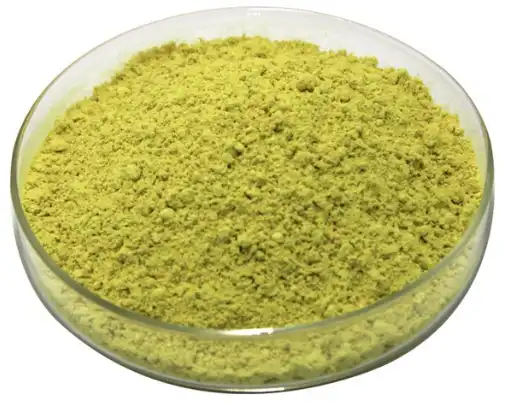
Botanical product regulations vary significantly between markets and product categories.
Dietary supplements, functional foods, cosmetics, and other natural products may be subject to different requirements for ingredient status, labeling, manufacturing, and marketing claims.
For U.S. dietary supplement products, manufacturers must follow applicable FDA requirements, including relevant labeling and manufacturing requirements. Marketing claims should be appropriately substantiated and should not imply disease treatment or prevention without the required regulatory basis.
European and other international markets have their own requirements concerning food supplements, cosmetics, novel ingredients, labeling, and permitted claims.
Suppliers can support manufacturers with technical documents and quality information, but the finished-product manufacturer remains responsible for confirming regulatory suitability in the target market.
Real-World Integration Success
Quercetin Powder can be evaluated in a variety of botanical and functional formulations.
Sports-nutrition brands may combine quercetin with amino acids, fruit extracts, vitamins, minerals, or other plant-derived ingredients when developing active-lifestyle products.
Functional nutrition manufacturers can use quercetin as part of multi-ingredient botanical systems designed around plant-based formulation concepts.
In cosmetics, quercetin may be evaluated alongside vitamin C derivatives, vitamin E, botanical extracts, and other cosmetic ingredients in antioxidant-focused formulations.
These combinations provide manufacturers with opportunities to develop clean-label, plant-based products with differentiated ingredient profiles.
The performance of each combination should be confirmed through formulation compatibility and stability testing rather than assumed from the individual ingredients alone.
Conclusion
Quercetin Powder is a versatile plant-derived flavonoid used across nutraceutical, functional food, beverage, and cosmetic ingredient development.
Its defined chemical identity, high-purity commercial grades, antioxidant properties, and flexible formulation options make it relevant to manufacturers developing plant-based products.
For B2B procurement, however, ingredient selection should extend beyond general functional descriptions. Purity, chemical form, extraction and purification process, analytical testing, delivery format, documentation, regulatory requirements, and supply reliability all influence the suitability of a Quercetin Powder for commercial production.
Manufacturers can improve sourcing efficiency by qualifying suppliers through samples, batch-specific COA, technical documentation, and formulation testing before moving to larger purchase volumes.
As demand for botanical and clean-label ingredients continues, a well-specified Quercetin Powder can provide manufacturers with a practical ingredient platform for developing differentiated nutritional, functional, and personal-care products.
FAQ
1. What is the optimal daily dosage of quercetin for immune support formulations?
There is no single universal daily dosage that can be recommended for every quercetin product or formulation.
Human studies have investigated different intake levels depending on the study design, product form, duration, and intended outcome. Therefore, research doses should not automatically be presented as a universal commercial dosage recommendation.
For B2B manufacturers, the appropriate amount should be determined according to the specific product category, quercetin specification, intended serving size, formulation technology, available evidence, and regulatory requirements of the target market.
Where a finished product makes a specific structure/function or other permitted claim, the manufacturer should ensure that the selected intake level and claim are appropriately substantiated.
2. Can quercetin interact with other nutritional supplements?
Quercetin may be incorporated into multi-ingredient formulations with nutrients and botanical ingredients such as vitamin C, rutin, bromelain, and other plant-derived compounds.
However, it is not appropriate to assume that combining ingredients automatically improves absorption or produces a guaranteed synergistic effect.
Formulators should evaluate ingredient compatibility, total active load, physical stability, chemical stability, and the evidence supporting the intended combination.
For complex formulations, laboratory testing and stability studies can help determine whether the combination is appropriate for commercial production.
3. How can B2B buyers verify quercetin powder purity and quality?
B2B buyers should request a batch-specific COA and review the relevant specification before purchasing.
Depending on the product, useful quality information may include:
- HPLC quercetin assay
- Loss on drying
- Heavy-metal testing
- Residual-solvent testing
- Pesticide-residue testing
- Microbiological results
- Botanical identity
- Batch traceability
For premium grades, buyers may specify a target assay such as ≥98%, provided the supplier's analytical method and specification are clearly defined.
Independent laboratory verification can also be considered during supplier qualification, especially before committing to large-volume purchases.
Partner with Angelbio for Premium Quercetin Powder Supply
For nutraceutical, cosmetic, and functional food applications, Angelbio supplies Quercetin Powder with specifications designed for B2B ingredient qualification.

Customers can evaluate available grades according to required purity, chemical form, application, documentation, packaging, and order volume.
Angelbio can support customers with:
- Sample supply
- Batch-specific COA
- Specification confirmation
- Quality documentation
- Formulation discussions
- Custom requirements
- Bulk quotation
- Long-term supply planning
For manufacturers comparing Quercetin Powder suppliers, the most efficient qualification process is to start with your required specification and application, evaluate a sample and COA, and then move toward a commercial quotation.
Whether you are developing a botanical supplement, functional food, beverage, cosmetic formulation, or private-label product, Angelbio can help you evaluate a Quercetin Powder grade aligned with your technical and procurement requirements.
Request a sample, review the COA, discuss your target specification, or request a bulk quotation.
Contact Angelbio at angel@angelbiology.com to discuss your Quercetin Powder requirements.

References
- Boots AW, Haenen GR, Bast A. Health effects of quercetin: from antioxidant to nutraceutical. European Journal of Pharmacology. 2008;585(2-3):325-337.
- Xu D, Hu MJ, Wang YQ, Cui YL. Antioxidant activities of quercetin and its complexes for medicinal application. Molecules. 2019;24(6):1123.
- Li Y, Yao J, Han C, Yang J, Chaudhry MT, Wang S, Liu H, Yin Y. Quercetin, inflammation and immunity. Nutrients. 2016;8(3):167.
- Andres S, Pevny S, Ziegenhagen R, Bakhiya N, Schäfer B, Hirsch-Ernst KI, Lampen A. Safety aspects of the use of quercetin as a dietary supplement. Molecular Nutrition & Food Research. 2018;62(1):1700447.
- Hollman PC, van Trijp JM, Buysman MN, van der Gaag MS, Mengelers MJ, de Vries JH, Katan MB. Relative bioavailability of the antioxidant flavonoid quercetin from various foods in man. FEBS Letters. 1997;418(1-2):152-156.
- Manach C, Scalbert A, Morand C, Rémésy C, Jiménez L. Polyphenols: food sources and bioavailability. American Journal of Clinical Nutrition. 2004;79(5):727-747.