



Rutin Powder vs. Quercetin: Which Fits Your Formula?
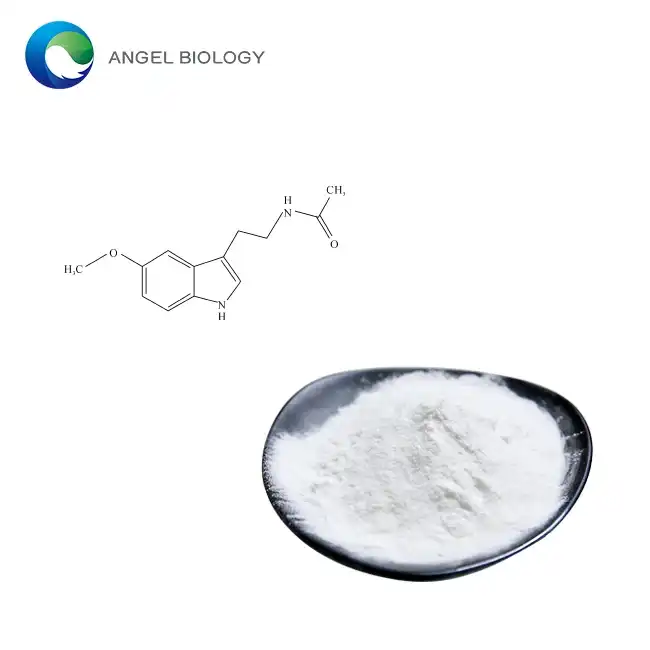
If you're formulating a supplement, skincare product, or functional food, you've likely encountered both rutin powder and quercetin on your ingredient shortlist. Both are plant-derived flavonoids studied for their antioxidant properties, but they differ in chemical structure, solubility, formulation behavior, and potential applications. Rutin powder—chemically identified as quercetin-3-rutinoside (C₂₇H₃₀O₁₆)—is the glycoside form of quercetin, commonly sourced from Sophora japonica flower buds. Quercetin, by contrast, is the corresponding aglycone. Understanding these structural differences is a useful starting point for making an informed procurement decision.
Understanding Rutin Powder and Quercetin
Botanical Origins and Chemical Identity
Rutin powder is commonly produced from the dried flower buds of Sophora japonica (also known as Styphnolobium japonicum). Buckwheat is another recognized source of rutin, and the composition and extraction yield can vary with the plant species, raw material quality, and processing method. Quercetin occurs naturally in a range of plants and foods, including onions, apples, and other fruits and vegetables. Commercial quercetin may be obtained from botanical sources or produced through other manufacturing routes, depending on the supplier.
One key structural difference is that rutin contains a disaccharide group called rutinose attached to the third position of quercetin. This structural feature affects its physicochemical properties, including solubility and how it is processed in the body. The two ingredients should therefore be evaluated separately when selecting raw materials for a particular formulation.


Antioxidant Properties and Research Considerations
Rutin and quercetin have both been investigated for their antioxidant properties in laboratory research. However, findings from chemical assays or experimental models do not automatically establish specific health benefits in humans or demonstrate the performance of a finished product.
Rutin is sometimes discussed in historical literature under the term "vitamin P," but this terminology should not be interpreted as proof that it is an essential vitamin or that it reliably improves blood vessel function. Quercetin has also been studied in relation to various biological pathways, including those associated with oxidative stress and inflammatory responses. These findings do not establish that a commercial ingredient can treat inflammation or alter a particular pathway in a clinically meaningful way.
For product developers, the most useful comparison focuses on verified composition, formulation suitability, stability, and evidence supporting the intended product claims. Claims should be reviewed against the requirements of the target market and supported by appropriate evidence.
Bioavailability and Formulation Interactions
Rutin is generally metabolized differently from quercetin aglycone. Its sugar group can influence how it is processed in the digestive tract, and intestinal microorganisms may contribute to its metabolism. The extent and timing of absorption can vary among individuals and formulations, so rutin should not automatically be described as providing longer-lasting antioxidant effects.
Rutin and vitamin C are sometimes combined in supplement formulations. However, claims that rutin reliably protects vitamin C from degradation in the stomach or significantly improves its use by the body should not be assumed without suitable evidence. Quercetin is also formulated with ingredients such as phospholipids or piperine in some commercial products. These combinations are intended to influence formulation or delivery characteristics, but their effects depend on the specific ingredients and product design.
For B2B buyers, compatibility, stability, analytical specifications, and the evidence available for the finished formulation are more reliable selection criteria than broad claims about ingredient synergy.
Critical Comparison Dimensions for Procurement and Formulation
Antioxidant Properties and Intended Applications
Rutin powder and quercetin are both relevant to research and product development involving plant-derived flavonoids. Their chemical structures and formulation characteristics differ, so the most appropriate ingredient depends on the intended application and product specifications.
Rutin may be considered for formulations where its identity, assay, and physicochemical properties meet the developer's requirements. Quercetin may be selected when its particular grade and formulation behavior better fit the product concept. Neither ingredient should be promoted as a proven treatment for vascular conditions, inflammation, or other diseases based solely on laboratory findings.
Commercial grades may be available with different specifications or compendial references. Buyers should verify the applicable standard, assay method, and documentation for the specific material rather than assuming that a grade designation guarantees suitability for a particular application. For cosmetic, food, or supplement products, the intended use and target-market requirements should guide ingredient selection.
Source Variations and Purity Standards
The quality of rutin powder from Sophora japonica depends on botanical identity, raw material quality, extraction and purification processes, and storage conditions. The amount of free quercetin may be a relevant specification item, but a single percentage threshold should not be treated as universal across all commercial grades. An elevated result should be investigated against the product specification and analytical method before its cause is determined.
Quercetin may also be obtained through different manufacturing routes. Buyers seeking botanical sourcing or specific label claims should request documentation that applies to the actual product and supply chain.
For both ingredients, buyers should request a batch-specific Certificate of Analysis (CoA) and review the relevant identity, assay, impurity, and contaminant data. HPLC or other suitable analytical methods can be used as specified for the grade. Any pharmacopoeial or industry standard should be verified for its applicability to the intended product and destination market.
Dosage Information and Safety Considerations
There is no single dosage range that can be recommended for every rutin or quercetin product. Appropriate intake depends on the formulation, intended use, target population, applicable regulations, and supporting safety evidence. Published research doses should not automatically be converted into general consumer recommendations or used as evidence that a particular commercial ingredient is safe at the same level.
Ingredient buyers should evaluate the available safety information and ensure that the finished product meets the requirements of its intended category. Regulatory requirements for dietary supplements differ by market, and compliance should be assessed for the specific ingredient, formulation, labeling, and proposed claims. Where applicable, seek qualified regulatory advice before commercializing a product.
Market Availability and Supplier Insights
Pricing, MOQ, and Logistics
China is an important source of Sophora japonica-derived rutin, although availability and pricing depend on raw material supply, production capacity, specification, and market conditions. Minimum order quantities vary by supplier and grade; a 25 kg order may be available from some suppliers, but it should not be assumed to be standard for every product.
Quercetin pricing can also vary according to assay, production route, particle characteristics, packaging, and order volume. A higher assay specification may affect cost, but it does not automatically make a material more suitable for every formulation.
For international orders, confirm the lead time, minimum order quantity, packaging options, shipping terms, and documentation before committing to a purchase. Packaging such as fiber drums with suitable inner liners may be available, depending on the supplier's standard options and the buyer's requirements.
Supplier Evaluation Criteria
When choosing a rutin powder supplier, price should be considered alongside quality documentation, traceability, technical support, and supply consistency. Ask for relevant third-party test results where needed, applicable quality-management documentation, and information about botanical sourcing and manufacturing.
Before placing a bulk order, consider the following points:
Purity verification: Request a batch-specific CoA with HPLC or other suitable analytical data confirming the agreed rutin assay and relevant impurity specifications.
Quality documentation: Review available quality-management documentation and product-specific safety information according to your intended application and target market.
Regulatory documentation: Ask which technical dossiers, regulatory statements, or registration-support documents are available and confirm whether they are relevant to your product and market.
Sample availability: Confirm whether representative samples can be provided for internal evaluation before a bulk commitment.
The CoA should clearly identify the batch, analytical methods where relevant, test results, and applicable acceptance criteria. If free quercetin is a critical parameter for your application, specify it in advance rather than assuming every grade has the same limit.
Documentation needs vary by product category and destination market. A supplier may be able to provide technical files or product dossiers, but these do not automatically establish that the buyer's finished product is approved or compliant in every jurisdiction. Request samples and review the relevant documentation before confirming a purchase.
Sample Testing Protocols
Sample testing can help reduce sourcing uncertainty and establish whether an ingredient meets the buyer's requirements. Before introducing material from a new supplier into a production formula, evaluate a representative sample against the agreed specification.
Depending on the application, checks may include identity, assay, appearance, moisture, relevant contaminants, solubility or dispersion behavior, and compatibility with the intended formula. The specific test plan should be proportionate to the product category, technical risks, and acceptance criteria.
Keep records of the sample batch, test methods, results, and approval decision. Sample evaluation supports supplier qualification but cannot guarantee that every subsequent bulk batch will perform identically. Batch documentation and incoming quality checks remain important after approval.
Matching Your Formula Needs: Which Ingredient Fits Best?
Use Cases by Industry Segment
The intended application is often the most practical starting point when choosing between quercetin and rutin powder. Rutin may be considered for dietary supplement, food, or cosmetic formulation projects where its identity and technical specifications suit the product concept. Quercetin may be selected for similar categories when its particular grade, composition, and formulation properties better meet the requirements.
For cosmetic applications, the choice should account for compatibility, color, solubility, stability, and evidence supporting the proposed cosmetic claims. For food and supplement applications, buyers should also confirm ingredient status, permitted uses, specifications, and labeling requirements in the target market.
Neither ingredient should be positioned as a guaranteed way to boost immunity, treat inflammation, or provide a specific clinical outcome without adequate product-specific evidence and appropriate regulatory review.
Decision Criteria: Stability, Cost, and Compliance
Rutin and quercetin differ in their physicochemical properties, and their behavior depends on grade, particle size, solvent system, pH, temperature, and the surrounding formulation. Neither should be assumed to be universally more stable or easier to process. Conduct compatibility and stability testing under the conditions expected for the finished product.
For cost-sensitive products, rutin may be an option when its specifications and formulation performance meet the project requirements. Quercetin may be preferred in other cases based on the product concept and available grade. Compare total formulation cost, material yield, testing needs, packaging, and supply conditions rather than using price per kilogram alone.
Regulatory suitability should be assessed separately from technical performance. A material's availability as a commercial ingredient does not automatically establish that it is permitted for every food, supplement, or cosmetic use in every market.
Scalability and Long-Term Supply Planning
Procurement teams should consider backup sourcing where feasible, especially for products that depend on consistent ingredient specifications and uninterrupted supply. Market demand, botanical harvests, production capacity, and logistics can all influence availability and pricing over time.
Suppliers with transparent sourcing information, consistent specifications, and responsive technical support can make long-term planning easier. However, vertical integration alone does not guarantee better quality or more competitive pricing. Evaluate each supplier using documentation, sample results, delivery performance, and the ability to meet agreed requirements.
Maximizing Your Investment: Recommendations and Best Practices
Formulation Synergies and Appropriate Use Levels
Rutin and quercetin may be combined in some formulations, but the benefits of combining them should not be assumed without suitable evidence. Their compatibility and performance depend on the ingredient grades, proportions, processing conditions, and finished-product design.
Vitamin C may also be included in flavonoid-containing formulations, depending on the product concept. Formulators should assess potential interactions and monitor stability over the intended shelf life. Any proposed synergy or performance claim should be supported by evidence relevant to the finished product.
Use levels should be established according to the intended application, applicable requirements, supplier specifications, and formulation testing. Research doses should not be treated as universal product recommendations.
Quality Control Measures
Each incoming batch should be evaluated against the approved specification. HPLC or another suitable analytical method can be used to assess identity, assay, and relevant related substances. ICP-MS or other validated methods may be used for heavy-metal testing where appropriate.
Particle-size distribution can be important for powder handling, blending, and processing. If a mesh-size requirement is specified, define the sieve method and acceptance criteria clearly. For example, a requirement for a stated percentage to pass through an 80-mesh sieve should be confirmed by the agreed test method rather than assumed from a supplier's general description.
The quality-control plan should also address other relevant parameters, such as moisture, microbiological quality, packaging integrity, and storage conditions, according to the intended application and risk assessment.
International Compliance and Supplier Partnerships
Suppliers should be able to provide product information relevant to the buyer's target market and intended application. This may include a CoA, technical data sheet, safety information, traceability details, and available regulatory documentation.
Buyers should verify the requirements that apply to their own finished products, including ingredient eligibility, labeling, permitted claims, and any necessary notifications or registrations. Supplier support can assist the review process, but it does not replace the buyer's responsibility to confirm compliance for the finished product.
Clear communication about specifications, documentation, lead times, and technical questions helps build a more effective long-term supplier relationship.
Conclusion
Both rutin powder and quercetin are plant-derived flavonoid ingredients with distinct chemical structures and formulation characteristics. The better choice depends on the intended product, required specifications, compatibility, cost, and applicable regulatory requirements—not on broad claims about medical or physiological effects.
For procurement teams, reviewing the CoA, verifying the assay method, evaluating samples, and confirming documentation can help identify a grade that meets project requirements. A supplier that communicates clearly about product specifications, sample availability, and bulk supply conditions can also make the sourcing process more efficient.
Before making a final selection, define your target application, required assay, critical impurity limits, order quantity, and destination market. These details help suppliers provide more relevant quotations and technical information.
FAQ
1. Is rutin powder suitable for daily-use supplement formulations?
Suitability depends on the ingredient specification, proposed intake, finished formulation, target population, and applicable regulations. There is no single dosage that is appropriate for every product. Buyers should review the relevant safety information and regulatory requirements before establishing a use level or making consumer-facing claims.
2. How does rutin compare to quercetin in skincare formulations?
The two ingredients differ in chemical structure and formulation behavior. Their suitability depends on factors such as solubility, compatibility, color, stability, and the intended product system. Microencapsulation or other formulation techniques may be considered where appropriate, but their effectiveness should be confirmed through testing. Neither ingredient should automatically be assumed to be suitable for a particular serum or emulsion without formulation trials.
3. What documentation should I request when buying bulk rutin powder?
Request a batch-specific CoA, technical data sheet, and relevant safety and contaminant information. Depending on the intended application and destination market, you may also need traceability information, quality-management documentation, or additional regulatory materials. Third-party laboratory reports can provide further evidence when their scope and test methods are appropriate.
4. Does high-quality rutin powder contain free quercetin?
The amount of free quercetin depends on the product specification, manufacturing process, and storage conditions. If this parameter matters to your formulation, establish an acceptable limit and analytical method with the supplier. A result outside the agreed specification should be investigated before attributing it to degradation or incomplete processing.
Source Rutin Powder and Quercetin from Angelbio
Angelbio supplies ingredient information and sourcing support for businesses evaluating rutin powder and related botanical ingredients. Buyers can request available product specifications, batch documentation, sample information, and packaging details to assess suitability for their projects.
For more efficient quotation and technical review, share your intended application, target assay, critical quality parameters, estimated order quantity, packaging needs, and destination market. This information helps the team identify the relevant grade and respond to your procurement requirements.
Contact angel@angelbiology.com to request product information, discuss sample availability, or inquire about bulk supply options.
References
1. Boots, A. W., Haenen, G. R. M. M., and Bast, A. “Health effects of quercetin: From antioxidant to nutraceutical.” European Journal of Pharmacology, 2008.
2. Chua, L. S. “A review on plant-based rutin extraction methods and their pharmacological activities.” Food and Bioproducts Processing, 2013.
3. Erlund, I. “Review of the flavonoids quercetin, hesperetin, and naringenin.” Nutrition Research, 2004.
4. Harwood, M., et al. “A critical review of the data related to the safety of quercetin.” Food and Chemical Toxicology, 2007.
5. Manach, C., et al. “Quercetin is recovered in human plasma as conjugated derivatives which retain antioxidant capacity.” FEBS Letters, 1998.
6. Srinivasan, K., et al. “Bioaccessibility and bioavailability of rutin from plant foods.” Journal of Agricultural and Food Chemistry, 2016.