



Solubility and Stability of Phosphatidylserine in Capsule Formulas
When formulators evaluate phosphatidylserine powder, solubility, dispersibility, and stability are important considerations. These properties can affect blending, capsule filling, storage, and finished-product quality. For manufacturers developing nutraceuticals, sports nutrition products, or cognitive wellness formulas, understanding the ingredient's physical characteristics and potential formulation challenges can help reduce development risks and support more informed bulk purchasing decisions.
Understanding Phosphatidylserine Powder: Properties and Challenges
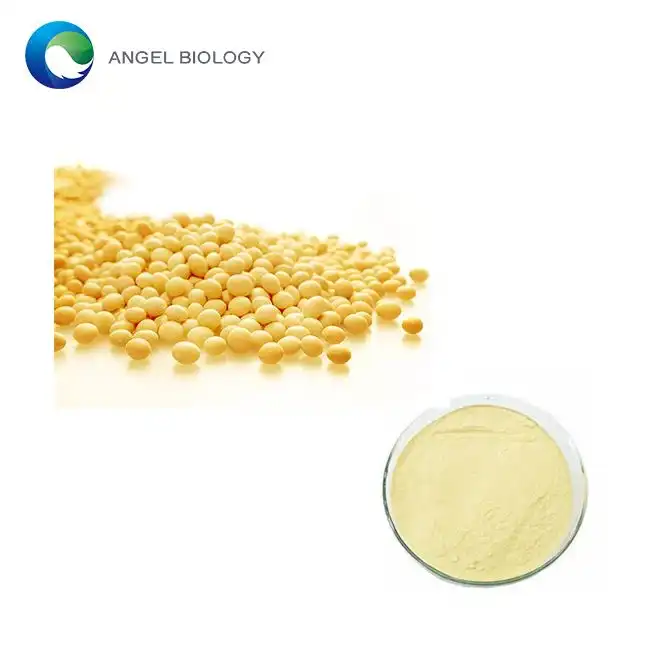
Phosphatidylserine powder is a phospholipid that may be produced from soy or sunflower lecithin through enzymatic conversion and other processing steps. Its amphiphilic molecular structure contains both a lipid-compatible region and a hydrophilic serine-containing head group. These characteristics influence its behavior in aqueous and lipid-based systems and should be considered during capsule formulation.
Physical Characteristics That Matter
Commercial phosphatidylserine powders may range from off-white to yellowish in appearance and can have a characteristic lipid-like odor. Bulk density, particle size, moisture content, and flowability vary by source and grade, affecting capsule fill weight and processing performance. Rather than relying on general values, manufacturers should obtain the supplier's specification sheet and confirm the relevant parameters for the selected batch. Moisture limits should be established according to the ingredient's characteristics, packaging, and stability data.


Solubility Behavior
Phosphatidylserine does not necessarily dissolve readily in water. Depending on its composition and physical form, it may disperse in certain lipid-containing systems, but its behavior can vary with the formulation and processing conditions. In dry capsule products, uniform blending, particle distribution, and suitable excipient selection are important for achieving consistent fill weights and ingredient distribution. Dispersibility should not be confused with complete dissolution or guaranteed absorption after ingestion.
Stability Vulnerabilities
Phosphatidylserine contains fatty acid chains that may be susceptible to oxidation, depending on their composition and exposure to oxygen, heat, moisture, and light. Elevated temperatures and unsuitable storage conditions may also affect powder handling and quality. Peroxide value and other relevant oxidation indicators can help assess lipid quality, but appropriate acceptance limits should be established for the specific grade and intended use. Residual solvent limits should likewise be confirmed against applicable regulations, product specifications, and the intended market rather than assuming one universal limit applies to every material.
Analyzing the Problem: Solubility and Stability Challenges in Capsule Formulas
Understanding common formulation challenges can help procurement and R&D teams reduce avoidable reformulation costs. A structured evaluation of ingredient compatibility, processing conditions, and packaging can identify potential problems before full-scale production.
Ingredient Interaction Issues
Phosphatidylserine may be used with hygroscopic ingredients, including certain mineral salts and amino acids, in multi-ingredient formulas. Depending on the blend, moisture uptake can affect powder flow, agglomeration, and storage stability. Formulas that also contain oils or botanical ingredients should be assessed for compatibility and potential oxidation risks. Compatibility testing is preferable to assuming that a particular combination will either improve or compromise stability.
Processing Parameter Risks
High-speed blending and other mechanical processing steps can generate localized heat or affect powder flow, depending on equipment and operating conditions. If the selected grade is prone to agglomeration, these factors may influence capsule filling and content uniformity. Manufacturers should evaluate mixing time, equipment settings, and environmental conditions during development. A suitable analytical method should be selected to verify phosphatidylserine content in the raw material and, where needed, in the finished capsules. HPLC-based methods may be appropriate, but method suitability and validation should be confirmed for the particular matrix.
Capsule Shell Compatibility
Ingredient characteristics, residual moisture, packaging, and storage conditions can influence the quality of a capsule product over time. Oxidized lipid components and formulation factors may affect interactions with capsule shells, although the extent of any effect requires product-specific evaluation. Gelatin and hydroxypropyl methylcellulose (HPMC) capsules may both be considered, depending on the product's formulation, target market, and labeling requirements. Neither shell type should be assumed to provide superior stability in every PS formula without comparative testing.
An evaluation of a new PS ingredient lot may include the following practical checklist for procurement and formulation teams:
Review the peroxide value and other relevant oxidation indicators against the agreed product specification.
Confirm moisture content using a suitable analytical method, such as Karl Fischer titration where appropriate.
Request a batch-specific CoA and verify the assay method and reported phosphatidylserine content.
Assess blend uniformity and capsule fill consistency during pilot-scale trials.
Conduct stability testing under conditions appropriate to the product, packaging, and intended shelf life. Accelerated conditions may be useful, but should be selected based on a suitable protocol rather than treated as a universal requirement.
These steps provide a practical starting point for quality assessment. When combined with suitable packaging and documented testing, they can help identify potential shelf-life issues and reduce avoidable quality complaints.
Comparative Insights: PS Powder vs. Other Delivery Forms and Ingredients
Choosing between phosphatidylserine powder and other delivery formats involves both technical and commercial considerations.
PS Powder vs. Pre-Filled Softgels
Bulk phosphatidylserine powder can give manufacturers greater flexibility in selecting the ingredient level, combining complementary ingredients, and designing capsule formats. Pre-filled softgels may offer convenience for brands that prefer an established dosage form, but customization options, unit economics, and minimum order requirements vary by supplier. For brands developing proprietary formulations, bulk powder may be worth evaluating alongside finished-product sourcing options.
Pairing PS with Complementary Ingredients
Phosphatidylserine may be considered alongside phosphatidylcholine, Bacopa monnieri, or DHA-containing oils in selected nutritional formulations. Each combination requires a separate compatibility assessment, especially when lipid-rich ingredients may contribute to oxidation risk. Oil quality, antioxidant systems, packaging, and storage conditions should be considered together. Formulation compatibility does not by itself establish a synergistic health effect, so any efficacy claims for a combined product should be supported by appropriate evidence.
Organic vs. Conventional PS Powder
Phosphatidylserine derived from sunflower lecithin may appeal to brands seeking a soy-free formulation, while soy-derived grades may suit other product and cost requirements. Organic certification, non-GMO status, allergen considerations, and market suitability must be verified for the specific ingredient. Pricing differences depend on the source, assay concentration, certification scope, order volume, and market conditions; a fixed premium should not be assumed. Buyers should compare technical specifications and total formulation costs rather than choosing on origin alone.
Best Practices for Enhancing Solubility and Stability in PS Capsule Formulas
Formulation decisions made early in development can influence processing efficiency and finished-product quality. The most suitable approach depends on the grade of phosphatidylserine and the intended capsule formulation.
Use of Emulsifiers and Dispersing Agents
Lecithin-based ingredients or medium-chain triglycerides (MCTs) may be considered in certain formulations to adjust dispersion or improve compatibility with lipid-containing components. However, their suitability and inclusion levels depend on the dosage form, ingredient properties, and processing requirements. Any proposed addition should be evaluated through formulation trials. Improved dispersion does not automatically demonstrate increased bioavailability or absorption.
Particle Size Control
Particle size can influence powder flow, blend uniformity, and dispersion behavior in selected systems. Micronized phosphatidylserine powder may behave differently from coarser grades, but the effect depends on particle characteristics and the overall formulation. Buyers can request particle size distribution data, such as D50 and D90, when these parameters are relevant to their process. Final selection should be based on practical trials rather than assuming that smaller particles will always perform better.
Antioxidants and Packaging Solutions
Antioxidants, including mixed tocopherols, may be considered in certain phospholipid formulations when compatible with the ingredient and intended use. Their effectiveness depends on the composition, concentration, processing conditions, and packaging system, so a standard inclusion level should not be assumed to work for every product. Packaging with suitable oxygen and moisture barriers may help protect sensitive ingredients during storage. Nitrogen flushing or desiccants may also be considered where justified by the product's stability requirements. Shelf life and acceptable assay changes should be supported by appropriate stability data rather than assumed in advance.
Together, these practices can support a more systematic quality strategy. Manufacturers should document the rationale for their formulation choices and verify finished-product performance using suitable testing procedures.
Procurement Considerations: Sourcing High-Quality PS Powder for Capsule Manufacturing
Selecting a phosphatidylserine powder supplier requires reviewing several factors beyond price per kilogram. Ingredient specifications, analytical methods, traceability, batch consistency, and technical support can all influence the total cost and reliability of sourcing.
Key Supplier Evaluation Criteria
Before placing an initial order, procurement teams should consider requesting the following documentation, where applicable:
- Certificate of Analysis (CoA): Review the phosphatidylserine assay, test methods, batch identification, and relevant release criteria.
- Contaminant testing reports: Confirm available testing for heavy metals and other contaminants relevant to the raw material and target application.
- Residual solvent information: Request results where relevant to the extraction process and applicable product requirements.
- Stability information: Ask for available stability data and recommended storage conditions for the specific product grade.
- Regulatory and market documentation: Confirm which ingredient-related documents are available and assess their relevance to the intended product category and destination market.
The required documentation depends on the product, jurisdiction, and customer specifications. Buyers should verify the scope and validity of each document instead of assuming that a general regulatory statement establishes suitability for every application.
Long-Term Supply Chain Reliability
Relying on a single source may create supply risks, so some manufacturers evaluate alternative suppliers when practical. Requesting samples from potential suppliers can support a side-by-side comparison of assay, physical properties, and formulation performance. Comparing CoAs from multiple batches can also help assess consistency over time. Any alternative source should be qualified against the same essential specifications before it is approved for commercial use.
Angelbio as a Sourcing Partner
Angelbio presents itself as a supplier of phosphatidylserine powder for business customers. When evaluating Angelbio or another potential supplier, buyers should confirm the available source materials, assay grades, analytical methods, and batch-specific specifications. Requesting a current CoA, relevant contaminant test results, available stability information, and technical documentation can help determine whether a grade meets the requirements of a capsule project. Sample availability, order quantities, and lead times should also be confirmed directly before procurement decisions are finalized.
Conclusion
Solubility, dispersibility, and stability are important considerations when developing phosphatidylserine capsule formulas. From assessing oxidation risk and particle size to evaluating capsule shell compatibility and supplier documentation, each step can influence processing performance and finished-product quality. By applying consistent ingredient specifications, pilot testing, and appropriate stability assessments, purchasing and formulation teams can make more informed sourcing decisions. Angelbio's phosphatidylserine powder may be evaluated against these requirements by reviewing the specifications and supporting documents available for the selected grade.

FAQ
1. What is the recommended dose of PS in capsule formulas?
The appropriate inclusion level depends on the intended product, phosphatidylserine concentration, serving size, and applicable evidence and regulations. Human studies have investigated different intake levels for specific outcomes, but those findings should not be treated as a universal recommendation for every product. Manufacturers should establish serving levels through appropriate formulation and regulatory review.
2. How does solubility affect the performance of PS in a capsule?
Phosphatidylserine does not readily dissolve in water, and its dispersion behavior depends on the material's physical properties and the formulation. Particle size, excipients, and the presence of lipid components may affect dispersion and processing performance. These factors do not guarantee a particular absorption rate, so finished-product performance should be evaluated using suitable methods where necessary.
3. What assay concentration should I look for when buying PS powder?
The appropriate assay concentration depends on the intended application, target serving size, and capsule fill-weight constraints. Different commercial grades may be available, but buyers should confirm the actual assay and test method through the product specification and batch-specific CoA. Comparing assay concentration alongside price, formulation requirements, and batch consistency provides a more useful basis for supplier selection.
4. Does PS powder meet FDA requirements for the US market?
Regulatory status and permissible claims depend on the ingredient's source, intended use, product category, and applicable requirements. The FDA has issued a qualified health claim decision concerning soy-derived phosphatidylserine and cognitive dysfunction, but the claim is subject to specific wording and qualifying conditions; it should not be interpreted as proof that PS prevents or treats cognitive impairment or dementia. Buyers should confirm the relevance of current FDA guidance and applicable requirements before using any claim on a finished product.
Partner with Angelbio for Reliable PS Powder Supply
When sourcing phosphatidylserine powder, clear specifications and appropriate documentation can help streamline product development and purchasing decisions. Contact Angelbio to ask about available assay grades, source options, batch-specific CoAs, relevant test reports, stability information, and sample availability. Share your target assay, capsule format, estimated order volume, and application requirements so the team can clarify which available options may fit your project.
Email: angel@angelbiology.com to request samples or discuss your technical requirements.

References
1. Glade, M. J., & Smith, K. (2015). Phosphatidylserine and the human brain. Nutrition, 31(6), 781–786.
2. Vance, J. E., & Tasseva, G. (2013). Formation and function of phosphatidylserine and phosphatidylethanolamine in mammalian cells. Biochimica et Biophysica Acta (BBA) – Molecular and Cell Biology of Lipids, 1831(3), 543–554.
3. Kidd, P. M. (1999). A review of nutrients and botanicals in the integrative management of cognitive dysfunction. Alternative Medicine Review, 4(3), 144–161.
4. Jorissen, B. L., et al. (2001). The influence of soy-derived phosphatidylserine on cognition in age-associated memory impairment. Nutritional Neuroscience, 4(2), 121–134.
5. United States Food and Drug Administration. (2003). Qualified Health Claim: Phosphatidylserine and Cognitive Dysfunction and Dementia. FDA Docket No. 02P-0413. FDA.
6. Blusztajn, J. K., Slack, B. E., & Mellott, T. J. (2017). Neuroprotective actions of dietary choline and phosphatidylserine. Nutrients, 9(8), 815.