



5 Formulation Errors That Destroy Anthocyanins in Elderberry Powder
The key to any high-grade black elderberry extract powder is its anthocyanin profile. These water-soluble pigments contribute to the characteristic color and compositional value that make elderberry a desirable component of nutraceutical and functional food formulations. Even high-quality raw material can lose anthocyanin content before reaching the customer—not necessarily because of poor sourcing, but because of preventable formulation and processing conditions. R&D directors, formulation managers, and procurement teams focused on protecting product quality from the lab bench to the retail shelf should pay attention to these five common mistakes.
Understanding Anthocyanins in Elderberry Extract
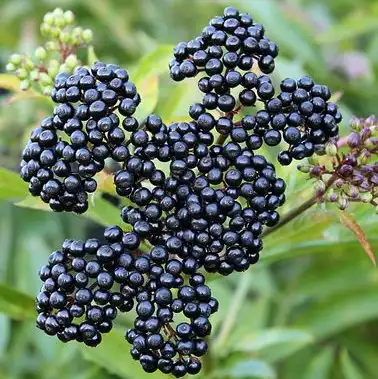
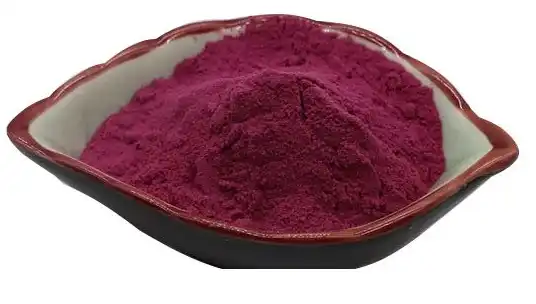
Anthocyanins are water-soluble pigments belonging to the flavonoid family and are found prominently in the fruit of Sambucus nigra L. Cyanidin-3-glucoside and cyanidin-3-sambubioside are two major elderberry anthocyanins. They are commonly analyzed using HPLC-DAD as an important method for evaluating their content and profile. Depending on the raw material, extraction process, and specification, elderberry powder may contain approximately 6% to 25% anthocyanins.
The structures of these molecules are sensitive to processing conditions. Research published in the Journal of Agricultural and Food Chemistry indicates that heat, alkaline pH, oxidative conditions, and light exposure can accelerate anthocyanin degradation. For B2B procurement teams, this means an ingredient's performance depends on more than supplier selection. It also depends on how the extract is handled, processed, stored, and combined during the manufacturing process.
Error #1: Excessive Heat Exposure During Processing
Why Heat Is the Silent Potency Killer?
Anthocyanins can be significantly affected by excessive heat exposure. In the case of cyanidin-based pigments, degradation generally becomes more pronounced as temperature and exposure time increase, with the actual impact depending on moisture, matrix composition, pH, and processing conditions. High-temperature extraction or drying may affect glycosidic structures and reduce the measured anthocyanin content.
This can be addressed by manufacturers through suitable ethanol/water extraction systems, controlled drying conditions, and protective carriers such as maltodextrin when appropriate. The specific process should be selected according to the extract specification, desired powder characteristics, and downstream formulation.
When sourcing black elderberry extract powder, always ask for batch-specific HPLC results and discuss the supplier's extraction and drying conditions directly. A supplier that cannot clearly explain its processing approach may make technical qualification more difficult.
Error #2: Incorrect pH in the Final Formulation
The Narrow Window Where Anthocyanins Thrive
Anthocyanin color and stability are strongly influenced by pH. In acidic systems, anthocyanins are more likely to remain in colored forms, while increasing pH can shift their molecular equilibrium toward less intensely colored forms and accelerate degradation. The exact stability range depends on the anthocyanin profile, formulation matrix, temperature, oxygen exposure, and storage conditions.
This is particularly significant for functional beverages and gummy products. Elderberry anthocyanins can contribute natural color to acidic formulations, but alkaline buffering agents, certain mineral ingredients, or heat treatment without appropriate pH control may change the color profile and affect anthocyanin retention over time.
Procurement managers should collaborate with suppliers and formulation teams to understand the powder's pH behavior and evaluate the finished formulation under relevant conditions. Standardized powders with documented analytical specifications can make formulation development and batch-to-batch comparison more manageable.
Error #3: Using Non-Standardized or Adulterated Raw Materials
What "Standardized" Actually Means in Practice?
There are different kinds of berry powders and botanical extracts. A persistent issue in the industry is economic adulteration, which may involve using other botanical or fruit materials to imitate the appearance or anthocyanin profile of genuine elderberry. UV-Vis spectrophotometry alone may not distinguish all botanical sources. Elderberry identity and anthocyanin composition are better evaluated through complementary analytical and botanical identification methods such as HPLC fingerprinting and HPTLC.
When buying bulk elderberry products, procurement teams should make sure that the following quality parameters are addressed:
HPLC Assay: Verifies key elderberry anthocyanins such as cyanidin-3-glucoside and helps assess the specified anthocyanin profile rather than relying only on total polyphenols.
HPTLC Identity Test: Supports botanical identification and helps distinguish Sambucus nigra from other Sambucus species with different phytochemical profiles.
Heavy Metal Screening: Lead, arsenic, cadmium, and mercury should meet the applicable specification and regulatory requirements for the intended market.
Loss on Drying: Should be controlled according to the product specification to support powder handling, storage stability, and consistency.
These criteria provide a practical procurement baseline. When suppliers provide complete CoA documentation for black elderberry extract powder, supported by appropriate third-party testing where needed, buyers can better evaluate batch consistency and supply-chain reliability.
Error #4: Inadequate Storage and Packaging Conditions
Oxygen and Light Accelerate Degradation Fast
Oxidative conditions can contribute to anthocyanin degradation. Oxygen exposure, enzymatic activity, and light can alter anthocyanin structures and gradually affect color and measurable anthocyanin content. The rate of change depends on the formulation matrix, moisture level, temperature, packaging, and storage duration.
Elderberry extract powder may also be hygroscopic, depending on its extraction process, carrier system, and residual moisture. Moisture uptake can contribute to caking and may influence powder stability and handling. Controlling humidity is therefore an important consideration during storage and transportation.
In order to maintain consistent anthocyanin quality throughout the supply chain, the following storage measures can be considered for premium ingredients:
Vacuum-sealed or nitrogen-flushed packaging when appropriate to reduce oxygen exposure.
UV-protective or opaque containers suitable for botanical extract storage.
Double-lined inner packaging with suitable desiccants when moisture control is required.
Warehouse storage under supplier-recommended temperature and humidity conditions.
Storage conditions should ultimately follow the supplier's validated specifications and the stability requirements of the specific elderberry extract grade.
Error #5: Incompatible Additives and Excipients
Some Common Co-Ingredients Work Against You
Some ingredients used in supplements and functional foods can influence the chemical environment of anthocyanins. Ascorbic acid, for example, may interact with anthocyanins in certain aqueous systems and can contribute to color or anthocyanin changes under specific formulation and storage conditions. Likewise, sulfite-containing ingredients may affect anthocyanin color through chemical interactions.
These reactions may be less pronounced in dry capsule and sachet formats because of the limited mobility of components. However, RTD drinks and syrups require more careful compatibility evaluation because elderberry extract, vitamin C, minerals, oxygen, pH, and storage temperature may interact within the same aqueous system.
Microencapsulation of the elderberry ingredient, two-chamber packaging that separates reactive ingredients until use, and careful selection of compatible co-ingredients are practical options for managing formulation risks. Stability testing in the final matrix remains important before establishing commercial specifications.
Conclusion
Anthocyanin preservation requires attention at every stage, from sourcing and processing to formulation, packaging, and storage. By avoiding these five common mistakes, manufacturers can better maintain the compositional quality and visual characteristics that make black elderberry extract powder valuable in high-end products. The final product depends not only on raw material quality but also on how carefully the ingredient is processed and formulated, whether the application involves functional gummies, beverages, or powder-based products.

FAQ
1. Does elderberry extract powder contain Sambunigrin?
Sambunigrin is a cyanogenic glycoside associated with raw or insufficiently processed elderberry materials. Proper processing can reduce relevant levels, but the actual specification depends on the raw material, extraction process, and finished ingredient. Buyers should request appropriate safety and processing documentation from suppliers rather than relying on a general assumption about every extract powder.
2. How should we manage the hygroscopic nature of elderberry powder in production?
Follow the supplier's recommended storage conditions and use moisture-protective packaging where appropriate. Double-lined packaging and suitable desiccants may help control moisture exposure. Powders containing carriers such as maltodextrin may also show different moisture-handling characteristics depending on the formulation and manufacturing process.
3. Why is HPLC testing preferred over UV-Vis for anthocyanin assay?
UV-Vis can provide useful information about overall color or total anthocyanin content, but it does not provide the same compound-level separation as HPLC. HPLC can separate and quantify specified anthocyanins such as cyanidin-3-glucoside, making it more useful when buyers need to verify an elderberry-specific analytical specification.
4. Is elderberry extract compatible with Vitamin C in dry formulations?
Compatibility depends on the formulation matrix, ingredient grades, moisture, packaging, and storage conditions. Dry capsule and powder systems may present different interaction risks from aqueous formulations. For products containing both ingredients, accelerated and real-time stability testing can help determine whether microencapsulation or physical separation is necessary.
Partner With Angelbio for Verified, Stable Elderberry Ingredients
With over 18 years of independent research and development, Angelbio supplies black elderberry extract powder for nutraceutical and functional food applications. Angel Holding Group and Xi'an Jiaotong University's Institute of Life and Health Research have supported the company's research activities. To help procurement teams evaluate anthocyanin quality, each batch can be supported with relevant HPLC and botanical identification documentation, together with technical specifications and quality records. Procurement teams looking for a reliable elderberry ingredient supplier with clear analytical support can contact angel@angelbiology.com.
References
1. Castañeda-Ovando, A. et al. — Food Chemistry, 2009.
2. Patras, A. et al. — Food and Chemical Toxicology, 2010.
3. Khoo, H.E. et al. — Food & Nutrition Research, 2017.
4. Clifford, M.N. — Journal of the Science of Food and Agriculture, 2000.
5. Wrolstad, R.E. et al. — Journal of Agricultural and Food Chemistry, 2005.
6. Brglez Mojzer, E. et al. — Molecules, 2016.