



7 Numbers on a Salicin COA That Decide If Willow Bark Extract Is Buyable
Seven figures tell me just about all I need to know before I place a purchase order when I look at a COA for white willow bark extract salicin. These values include the proportion of salicin, purity, moisture content, heavy metals, pesticide residues, microbiological counts, and particle size. Together, they help determine whether a batch meets formulation specifications, supports regulatory documentation, and provides the consistency your production process requires. It's a sourcing risk; you can't afford to skip any one of them.
Understanding the Salicin COA: What Are the 7 Key Numbers?
The Certificate of Analysis is one of the most important quality documents in any botanical ingredient supply chain. It converts supplier assertions into a documented data set, providing procurement teams with a fact base to compare. It’s good to look at the whole picture before judging any one statistic.
Here's what you'll discover in a genuine salicin COA: The seven metrics are:
1. Salicin test (%) – proportion of the specified active substance, usually determined by HPLC
2. Purity / identification — verification of botanical identity and assessment of potential adulteration
3. Water content (%) — moisture level affecting storage stability and powder handling
4. Heavy Metal Thresholds: Lead, Arsenic, Cadmium, and Mercury Limits in ppm
5. Compliance with applicable EU or USP/NF multi-residue requirements for pesticide residues
6. Microbial counts, total aerobic plate count, yeast, mold and relevant pathogens
7. Particle size / mesh – definition of physical form related to dispersion and mixing
These seven characteristics make up a quality checklist that helps differentiate suppliers of willow bark extract and identify batches that may require further review. Every number has a distinct quality or processing meaning, which I will explain in detail below.
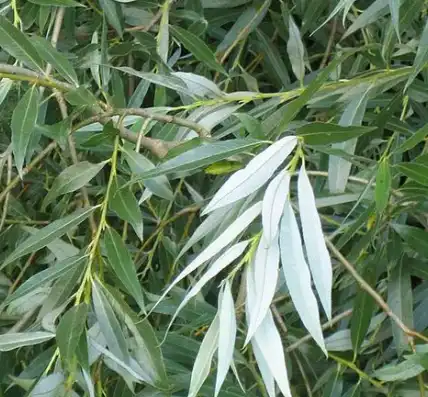
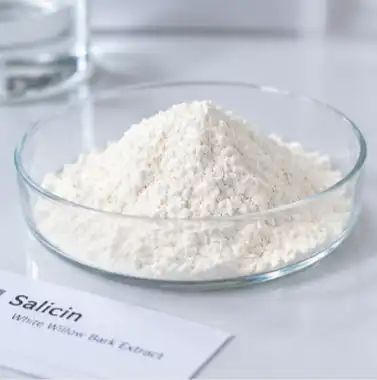
Deep Dive into the 7 Critical Numbers on the Salicin COA
Salicin Assay Percentage
This is the headline figure. White willow bark extract is available commercially in different salicin specifications, including 15%, 25%, 50%, and higher-assay grades, depending on the supplier and application. Always inquire whether the assay is HPLC or UV — UV testing may measure a broader group of salicylates and can report higher values than a method that specifically quantifies salicin. HPLC may show a substantially different salicin result in an extract reported using a broader UV-based method. For procurement, the accuracy and comparability of the assay are important when calculating active content, formulation loading, and cost per unit of specification.
Purity and Botanical Identification
In an HPLC fingerprint, a true extract of Salix alba L. may exhibit characteristic minor components, including salicortin and tremulacin, alongside salicin in white willow bark extract salicin. An unusually simple HPLC trace should be reviewed together with the supplier's identification and specification data rather than treated as conclusive evidence of adulteration. C14 isotope testing can provide additional information about the carbon origin of a material. If a buyer requires a specific natural-origin or clean-label claim, this check should be considered together with appropriate documentation.
Moisture Content
Higher moisture can contribute to caking, changes in powder handling, and reduced storage stability depending on the extract composition and packaging. Salicin-containing botanical powders should be evaluated for their moisture behavior under the intended storage and transport conditions. The COA should indicate moisture content by a suitable method such as Karl Fischer titration or loss-on-drying, with the acceptance limit defined for the specific grade. Confirm storage instructions, especially if desiccant packing is used for shipping to humid locations.
Heavy Metal Limits
Regulatory standards and market requirements can specify limits for elemental impurities such as lead, arsenic, cadmium, and mercury. The applicable limits depend on the intended use, product category, and destination market. A COA that merely says "pass/fail" and doesn't provide measured values may provide less useful information for supplier comparison. Please request appropriate elemental testing, such as ICP-MS or another validated method, when detailed numerical results are required.
Pesticide Residues
Willow bark may be sourced from agricultural or semi-wild locations with different cultivation and collection practices. A reputable vendor should be able to provide pesticide-residue information appropriate to the intended market and product category. Buyers may request applicable multi-residue pesticide panels and supporting documentation. For organic-certified extracts, certification and source documentation can help support a clean-label positioning when the certification scope covers the supplied material.
Microbial Limits
Microbial specifications are important for botanical powders intended for oral supplements, functional foods, or topical cosmetics. Acceptance criteria should be defined according to the finished-product application, destination market, and internal quality specifications. Testing may include total aerobic microbial count, yeast and mold, and relevant pathogens such as Salmonella and E. coli. An incomplete COA without appropriate microbiological results provides less information for supplier qualification. Any batch that falls outside the agreed specification should be reviewed before use in manufacturing.
Particle Size / Mesh Grade
The particle size of white willow bark extract salicin can influence dispersion, mixing homogeneity, flow properties, and downstream processing. The behavior of a high-assay salicin grade in water depends on its actual composition, formulation conditions, and pH, so solubility should be confirmed for the intended application rather than assumed from assay alone. Lower-assay extracts may contain additional co-extracted components that affect dispersion or appearance. The powder characteristics in capsule blending or liquid mixing activities can be managed through suitable particle-size specifications, such as 60, 80, or 100 mesh, when appropriate.
Why These Numbers Matter: From Purchase to Product Performance
A COA is one thing to read, but another to know what each statistic signifies for your completed product. Having a batch of 25% salicin extract with moisture near the agreed limit, incomplete elemental data, and only a broad UV test method can create additional formulation and quality-control questions downstream.
Buyers who compare the COA data to their unique application needs can reduce the risk of costly reformulation, failed internal QC checks, and documentation issues during import or customer audits. For nutraceutical products, salicin assay results are important for calculating the declared ingredient content and formulation loading. For cosmetic makers, purity, particle size, and dispersion behavior can influence how the ingredient integrates into serums or creams and how consistently the finished formula performs during processing. Food-grade microbiological specifications and pesticide documentation are important quality considerations for functional food producers.
The openness of the COA also speaks to the supplier's quality management culture. Genuine manufacturing traceability is shown by suppliers that offer batch-specific COAs, not generic templates. This difference affects you as you go from trial orders to commercial quantities.
Making the Right Procurement Decision Based on COA Numbers
Compare Assay Methods Across Suppliers
Always assess competing offerings using comparable analytical methods and clearly defined salicin specifications. A cheaper UV-measured extract may appear attractive until you calculate the cost of the specified salicin content per gram. A supplier using a more specific HPLC method can provide a clearer basis for comparing active-content specifications, formulation loading, and total ingredient cost.
Check Certification Alignment
Add the COA to the production certifications and quality documentation relevant to your target market, such as ISO or FSSC 22000 where applicable. These documents can provide additional information about quality systems, production controls, equipment management, and batch records. NSF or USP-related verification may provide additional documentation for certain products or market applications in the US.
Evaluate Batch-to-Batch Consistency
Ask for COAs for 3-5 consecutive manufacturing batches. If the statistics are consistent batch to batch, it can indicate effective control of extraction and raw-material sourcing. If you see significant swings in the salicin assay or moisture from batch to batch, it’s worth investigating the cause before you sign a long-term supply arrangement.
Conclusion
Seven parameters on a white willow bark extract salicin COA — assay %, purity, moisture, heavy metals, pesticide residues, microbiological counts and particle size — can make the difference between a well-documented purchase and an avoidable sourcing issue. Each figure represents a particular area of quality, safety, or formulation performance. Read these statistics together, and they provide a more complete picture of the extract you are going to incorporate into your product. Partner with suppliers who offer clear data for specific lots and provide appropriate supporting documentation.
FAQ
1. What salicin percentage is sufficient for a functional supplement?
There is no single salicin percentage that is sufficient for every formulation. The appropriate specification depends on the intended application, serving size, formulation design, regulatory requirements, and target cost. For example, a 25% extract requires a different loading calculation from a higher-assay grade. Buyers should determine the required salicin content based on their product specification rather than applying a universal dosage.
2. Why does the HPLC vs. UV testing method matter so much?
UV spectrophotometry can measure a broader group of salicylates and related compounds, while HPLC can separate and quantify individual compounds such as salicin when the method is designed for that purpose. Reported values can therefore differ substantially between methods. Procurement decisions should compare like-for-like analytical methods and confirm exactly what the reported percentage represents.
3. How do I confirm a willow bark extract is naturally sourced and not adulterated?
Request an HPLC chromatogram showing the relevant fingerprint of the extract together with botanical identification and source documentation. Authentic botanical extracts may contain characteristic minor constituents alongside the specified marker. However, an HPLC profile alone should not be treated as conclusive proof of natural origin or absence of adulteration. Additional techniques, including isotope testing where appropriate, can provide supporting evidence.
4. Can I request COAs for specific production batches?
Yes, and you should. Reputable suppliers issue batch-specific COAs tied to the actual lot number you receive. A generic, undated COA attached to every shipment regardless of batch provides less useful quality information. Always cross-reference the COA batch number against the shipping label before accepting a delivery.
Request a COA from Angelbio — Your Trusted White Willow Bark Extract Salicin Supplier
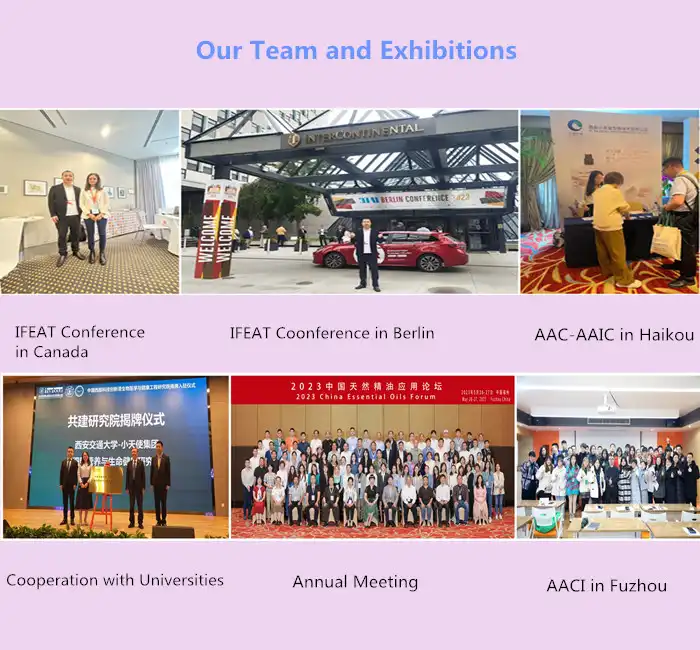
Angelbio, backed by over 18 years of R&D experience and co-invested by Angel Holding Group and Xi'an Jiaotong University, supplies batch-specific COA with orders of white willow bark extract salicin. Our extracts are available in different HPLC-specified grades, supported by analytical testing and quality documentation. Contact our team at angel@angelbiology.com to request a sample, a batch COA, or a bulk quote.
References
1. Vlachojannis, J., Magora, F., & Chrubasik, S. (2011). Willow species and aspirin: Different mechanisms of action. Phytotherapy Research, 25(7), 1102–1104.
2. Chrubasik, S., Eisenberg, E., Balan, E., Weinberger, T., Lux, R., & Conradt, C. (2000). Treatment of low back pain exacerbations with willow bark extract. The American Journal of Medicine, 109(1), 9–14.
3. United States Pharmacopeia. (2023). USP-NF: General Chapter <232> Elemental Impurities — Limits. USP Convention.
4. European Medicines Agency. (2020). Assessment Report on Salix [Various Species Including S. purpurea L., S. daphnoides Vill., S. fragilis L.], Cortex. EMA/HMPC.
5. Shara, M., & Stohs, S. J. (2015). Efficacy and safety of white willow bark (Salix alba) extracts. Phytotherapy Research, 29(10), 1455–1460.
6. Association of Official Analytical Chemists. (2019). AOAC Official Methods of Analysis: Pesticide Residues in Food, Method 2007.01. AOAC International.