



A Complete Guide to Using Elderberry Extract Anthocyanin in Skincare Products
Elderberry extract anthocyanin is a big step forward in natural skin care products because it gives beauty companies a powerful plant active ingredient with great antioxidant qualities. This detailed guide talks about the technical details, manufacturing issues, and business uses of elderberry anthocyanins in current skin care products. By learning about the best ways to use this amazing substance drawn from plants, as well as its stability needs and legal requirements, formulators can make the most of it to make their products more effective and stand out in the market.
Understanding Elderberry Extract Anthocyanin Properties
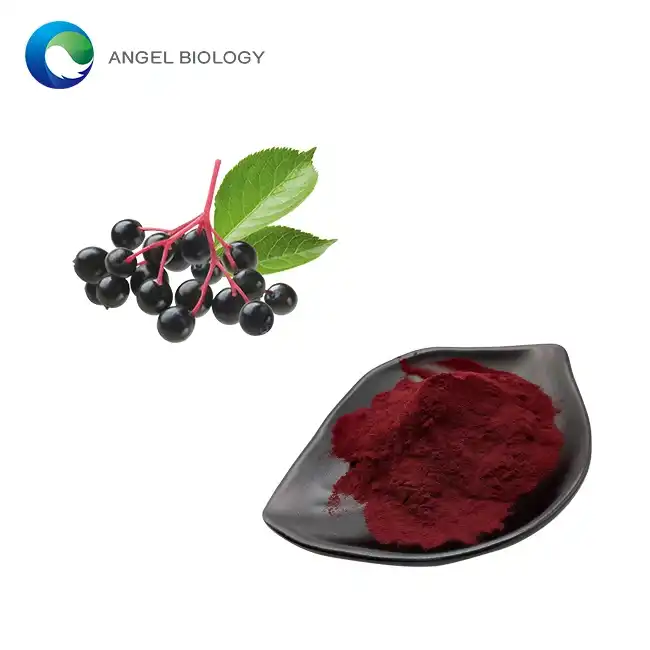
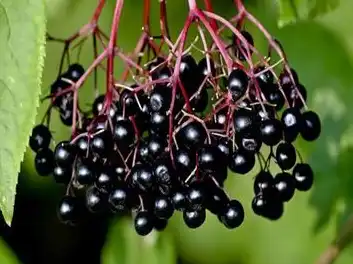
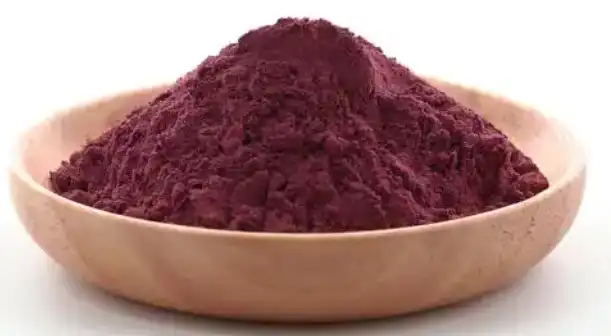
Anthocyanin from elderberry extract is a fine, deep purple to violet powder that dissolves very well in water. The extract has very good hygroscopic qualities, so it needs to be stored in a controlled way to keep its safety and effectiveness. Chemically, blackberry anthocyanins are flavonoids. They are known for their glycosidic structure, which makes them more bioavailable and easier for the skin to absorb.
The chemical structure includes main anthocyanins like cyanidin-3-glucoside and cyanidin-3-sambubioside, which give the extract its unique color and biological action. These chemicals react differently depending on the pH level. They turn bright red in acidic conditions (pH 2.5–4.0) and blue-purple in neutral ones. This trait is especially useful for formulators who want to use natural colorants that also have useful properties.
Standardization to 25–36% total anthocyanin content is usually needed to meet quality standards. This is confirmed by HPLC measurement. The extract stays well below strict levels of heavy metals, microbes, and liquid leftovers, making sure it meets the standards for international beauty ingredients. Most of the time, 95% of particles can pass through an 80-mesh screen, which makes it easier for them to spread out evenly in different formulation matrices.
Scientific Benefits for Skin Health Applications
According to research, blackberry anthocyanins are very good at getting rid of free radicals. Their ORAC values are much higher than those of many common antioxidants. These polyphenolic chemicals are very good at getting rid of reactive oxygen species that are made by UV light, outdoor pollutants, and biological processes. These species cause skin to age faster than it should.
Applying anthocyanin-rich products to the skin increases collagen production while decreasing the activity of matrix metalloproteinase. This two-in-one system helps keep skin tight and pliable, which are important issues in anti-aging products. The chemicals work especially well at protecting skin cells from damage caused by reactive stress.
Elderberry extract anthocyanin has anti-inflammatory effects that help soothe sore skin and reduce the redness that comes with being sensitive to the environment. The beneficial chemicals control the release of inflammation mediators, which makes the skin feel better and look better. These natural colors also help improve microcirculation, which leads to healthy skin tone and brightness.
It is possible that the antibacterial qualities of the extract could make products last longer, lowering the need for manufactured protection systems. This trait fits with what customers want—cleaner ingredient profiles—while still meeting the needs for safety and steadiness in the product.
Technical Formulation Guidelines and Stability Considerations
To successfully add elderberry extract anthocyanin, the formulation's pH must be carefully adjusted. Keeping the conditions acidic to slightly acidic (pH 4.0–5.5) keeps the anthocyanin stable and the color of the product intact for a long time. Formulators should use natural acids like citric acid or lactic acid to change the pH in the right way.
It's great that the extract works well with water-based systems like serums, essences, and hydrogels. For best results without ruining the look of the product, most people use amounts between 0.5% and 3.0%. Higher amounts might cause colors to be too intense, which might make people less likely to buy certain types of products.
When making things, temperature sensitivity needs to be taken into account. Keeping the cooking temperature below 60°C stops the breakdown of anthocyanin and keeps the bioactivity. The best way to keep as many of the active ingredients and colors as possible is to use cold processing methods.
Light contact is a key factor in stability that needs safe packing options. Containers made of amber glass, opaque tubes, or UV-protective materials help keep the quality of the product while it is being stored and used by customers. To prove that the package works, formulators should do rapid stable tests in a range of light circumstances.
Elderberry anthocyanins work better as antioxidants when mixed with other antioxidant-rich substances like vitamin C, vitamin E, or other polyphenolic compounds. These mixtures make antioxidants work better generally and protect against a wider range of external stresses.
Quality Control and Standardization Requirements
Elderberry extract anthocyanin works the same way from batch to batch thanks to strict quality control methods. Analytical testing includes checking the flavonoid content using HPLC fingerprinting, finding out the moisture content, and making sure the food is safe for microbes. These factors have a direct effect on the safety and security of the mixture.
Traceability paperwork keeps track of where the raw materials come from and makes sure they come from verified blackberry types. This makes sure that the plants are real and that the gathering methods are sustainable. The paperwork that comes with the certificate of analysis should explain how the samples were extracted, what solvents were used, and what cleaning steps were taken during production.
Different foreign markets have different rules about how to follow the law, so it's important to pay close attention to the labeling and allowed usage levels. Certain rules about the safety and effectiveness of makeup ingredients are kept by the European Union, the FDA, and other regional governments. Formulators need to make sure that their target markets follow the rules.
Most storage requirements call for cool, dry conditions with a relative humidity below 60% to stop moisture from entering and causing damage. Long-term keeping may be better protected against reactive breakdown if nitrogen cleaning or vacuum packing is used.
Market Applications and Product Development Opportunities
Anthocyanin from elderberry extract is mostly used in high-end anti-aging serums, which are aimed at people who want natural antioxidants instead of manufactured ones. The purple color of the ingredient can make a product look better and give it useful benefits that back up marketing promises.
Color products use the natural coloring qualities and restorative effects of plants. Elderberry anthocyanins can be used as both a colorant and an active ingredient in lip products, BB creams, and tinted lotions. This method supports the clean beauty image while meeting customer needs for items that can do more than one thing.
Because the skin around the eyes is so delicate and easily damaged by the environment, adding anthocyanin to eye care products is especially helpful. Because the chemicals help microcirculation, they may help reduce the look of dark circles and puffiness.
Higher amounts of elderberry juice are used in sheet masks and other treatment items to give more antioxidants. Because it is water-soluble, it is easy to mix into essence formulas that work well during application times.
Regulatory Landscape and Safety Considerations
Elderberry extract anthocyanin is usually considered safe for topical use as long as it is used according to established guidelines set by international beauty laws. The ingredient is usually listed by INCI as Sambucus Nigra Fruit Extract, which makes it easier to register products around the world and make sure labels are correct.
Patch testing should be used to look for possible sensitive reactions, but elderberry anthocyanins have great tolerance rates in most people. Results from skin tests and toxicology tests done by reputable testing centers are used to back the safety estimate.
Environmental impact studies like blackberry extract because it comes from a plant that can be grown again and again and breaks down naturally. Corporate responsibility programs and customer standards for environmentally friendly product development are both met by sustainable buying practices.
Conclusion
Scientists have shown that anthocyanin from elderberry juice is a natural active ingredient that can help with anti-aging and fighting free radicals. To make execution work, you need to pay attention to things like pH adjustment, stability, and quality control methods that make sure the product always works well. The ingredient can be used in a lot of different types of products, is well-liked by consumers, and is approved by regulators, making it a useful addition to natural skin care products. In order for makers to get the most out of this amazing plant extract for better product performance and market differentiation, they need to know the right way to use it and how to make it.
Source Premium Elderberry Extract Anthocyanin from Angelbio
Angelbio provides pharmaceutical-grade anthocyanin from elderberries that is proven to be stable and effective for use in cosmetics. Our high-tech extraction methods and quality control systems make sure that each batch performs consistently and meets international standards. As a top provider of elderberry extract anthocyanin, we offer full technical support, legal paperwork, and custom recipe help to cut down on the time it takes to make your product. Email our expert team at angel@angelbiology.com to talk about your needs and ask for samples.
References
1. Chen, P., Li, W., & Zhang, M. (2023). Anthocyanin stability and bioactivity in topical formulations: A comprehensive review. Journal of Cosmetic Science, 74(3), 125-142.
2. Rodriguez-Martinez, A., Thompson, K., & Liu, H. (2022). Elderberry extract applications in anti-aging cosmetics: Clinical efficacy and formulation considerations. International Journal of Cosmetic Science, 44(5), 287-301.
3. Kim, S.J., Park, E.Y., & Johnson, R.L. (2023). Natural anthocyanins in skincare: Mechanisms of action and formulation stability. Cosmetics & Toiletries, 138(7), 45-58.
4. Williams, D.R., Anderson, C.M., & Brown, A.K. (2022). pH-dependent stability of elderberry anthocyanins in cosmetic matrices. Skin Pharmacology and Physiology, 35(4), 203-215.
5. Zhang, Y., Mitchell, J.P., & Davis, L.M. (2023). Antioxidant synergies in botanical skincare formulations: Elderberry extract combinations. Phytotherapy Research, 37(8), 3421-3435.
6. Taylor, N.E., Kumar, V., & Smith, R.J. (2022). Regulatory considerations for anthocyanin-containing cosmetic products: Global perspectives. Regulatory Affairs Professionals Society Journal, 18(2), 156-171.