



All About Eucommia Leaves Extract Bulk Powder
Eucommia leaves extract bulk powder is a concentrated botanical ingredient made from the leaves of Eucommia ulmoides. The leaves are processed through extraction, concentration, drying, and milling to produce a powdered ingredient for commercial applications. Buyers may also find it listed as Eucommia leaf extract, Du Zhong leaf extract, or Eucommia ulmoides extract powder. Its characteristic compounds include chlorogenic acid, flavonoids, iridoids, and other plant-derived constituents. These components make it a botanical material of interest to manufacturers of dietary supplements, functional foods, sports nutrition products, and personal care formulations.
This guide explains what the ingredient is, how to understand its specifications, which documents to request, and how to evaluate bulk purchasing options. It is written from Angelbio's B2B supply perspective, drawing on the company's stated experience in ingredient research, development, and testing.
What Is Eucommia Leaves Extract Bulk Powder?
Before comparing suppliers, it is useful to understand the ingredient and its common descriptions. What is the difference between leaf extract and bark extract? How is the powder produced? The following sections explain these points.


Plant Source and Common Names
Eucommia ulmoides Oliv. is a tree native to China and the only living species in the family Eucommiaceae. It is commonly known as Du Zhong. Although its bark has a long history of traditional use, its leaves are also collected and processed as botanical raw materials. The leaves and bark are recognized as separate plant materials in relevant editions of the Pharmacopoeia of the People's Republic of China.
Three terms are often used interchangeably but should be distinguished. The botanical source refers to the plant itself. The extract powder is a processed ingredient obtained from a specified plant part. A finished supplement is a formulated product, such as a capsule, tablet, or drink mix, containing a defined amount of the ingredient. Keeping these terms separate helps buyers prepare accurate purchase orders, product specifications, and labeling information.
Leaf Extract vs. Bark Extract
Leaves and bark come from different parts of the same plant, so their chemical profiles, physical characteristics, and processing requirements can differ. Eucommia bark has received research attention for lignans such as pinoresinol diglucoside, while leaf-related literature frequently discusses chlorogenic acid and flavonoids. The review by He and colleagues in the Journal of Ethnopharmacology provides an overview of the plant's traditional use and phytochemical composition.
Processing conditions and raw material batches can also affect the color, taste, and composition of the resulting extracts. Buyers should therefore avoid selecting a product based on its common name alone. Request a representative sample and confirm the plant part through the specification sheet and COA. Leaf extract and bark extract should be treated as separate ingredients, with their own composition data, sourcing details, and intended formulation requirements.
How the Powder Is Made
The typical production process includes raw material selection, extraction, concentration, drying, milling, sieving, and packaging. First, the leaves are inspected to confirm their identity and suitability for processing. Water or a suitable ethanol-water mixture may then be used to extract the target plant constituents. The liquid extract is filtered and concentrated before being dried, commonly through spray drying or another suitable drying method. Finally, the powder is milled, sieved, and packed according to the required product specifications.
The powder's appearance and handling properties depend on several factors, including the extraction solvent, concentration conditions, carrier materials, and drying method. Buyers should check these details against the product specification and COA rather than assume that all Eucommia leaf extracts are identical. Angelbio reports experience in ingredient research and testing and maintains relevant production and testing records for customer review, subject to the documentation available for the specific product and batch.
Active Compounds, Benefits, and Applications
Understanding the ingredient's composition and possible product applications is an important step for formulation teams. The following information focuses on its botanical characteristics and commercial suitability rather than making therapeutic or disease-related claims.
Compounds Researchers Study
Reviews of Eucommia ulmoides leaves describe several groups of naturally occurring compounds. These include chlorogenic acid, flavonoids, iridoids such as aucubin and geniposidic acid, and other phenolic constituents. Clifford's article in the Journal of the Science of Food and Agriculture discusses chlorogenic acids and their occurrence in plant-based materials.
The composition of an extract can vary with the plant variety, growing conditions, harvest period, raw material handling, and extraction process. For this reason, procurement teams should not rely solely on a general ingredient description. Instead, request quantitative marker data where available. A clearly identified marker compound, an agreed analytical method, and a defined target range give R&D and quality teams a more practical basis for evaluating and comparing batches.
Where Brands Position It
Eucommia ulmoides leaf extract powder may be considered for botanical blends, dietary supplement formulations, functional food concepts, sports nutrition products, and antioxidant-themed ingredient combinations. Its suitability for a particular product depends on the extract's composition, the intended formulation, the available supporting evidence, and the regulatory requirements of the target market.
Product positioning should not imply that the raw ingredient treats, prevents, or manages a disease or medical condition. Any structure-function, nutritional, or cosmetic statements used for a finished product must be reviewed against relevant evidence and local regulations. Before launch, the brand's regulatory team should assess the proposed claims, serving size, ingredient status, and label wording. A defined marker specification and a clear description of the ingredient's role in the formulation can make this review more efficient.
Supplements, Foods, and Cosmetics
Eucommia leaf extract powder can be evaluated for use in capsules, tablets, sachets, drink powders, botanical blends, and nutrition bars. Depending on the grade, formulation design, and applicable regulations, it may also be considered for selected personal care products that use plant-derived ingredients.
Formulators should evaluate powder flow, water absorption, taste, color, dispersibility, blend uniformity, processing temperature tolerance, and compatibility with other ingredients. For cosmetic applications, formulation teams should check compatibility with the base system and preservatives, as well as color and appearance stability during storage. Before selecting a grade, define the product category, target market, serving size or use level, and processing conditions. Pilot testing and technical discussions with the supplier can help identify potential formulation issues before commercial-scale production.
Specifications, Quality Control, and Documentation
A clear product specification and supporting documentation provide a practical starting point for evaluating a botanical powder. The following are the main items buyers should review.
Reading the Specification Sheet
A useful specification should identify the botanical name (Eucommia ulmoides), plant part, extraction solvent where applicable, and extract ratio. It may also include particle size, bulk density, appearance, taste, odor, ash content, and carrier materials. Buyers should pay particular attention to the difference between an extract ratio and a standardized marker level. An extract ratio describes the relationship between the starting plant material and the resulting extract, while a standardized grade specifies a target amount or range of a selected marker compound.
It is also important to confirm whether marker values are reported on an as-is basis or a dry basis, since moisture content can affect the reported figures. For beverage, sachet, tablet, and capsule applications, review solubility or dispersibility, flowability, sedimentation, shelf life, recommended storage temperature, and humidity limits. These properties should be assessed against the requirements of the intended formulation rather than assumed from the ingredient name.
What a Complete COA Contains
A batch-specific Certificate of Analysis (COA) should identify the product, botanical source, plant part, batch number, production date, and expiration or retest date, where applicable. It should also provide the relevant test items and results, including physical characteristics, marker content where specified, microbiological limits, heavy metals, pesticide residues, residual solvents, and aflatoxins when required by the product specification or target market.
Testing methods and acceptance criteria should be appropriate for the ingredient and its intended use. For residual solvents, buyers may refer to relevant current technical guidance, while botanical identity and purity testing should use suitable validated or recognized methods. Do not assume that a method used for one plant material or product grade is automatically suitable for another. Compare each COA result with the agreed specification, and ask the supplier to explain any missing result, deviation, or difference between documents before placing an order.
Compliance Documents US Buyers Ask For
Buyers in the United States and other markets may request documentation demonstrating ingredient identity, traceability, product specifications, testing results, and the supplier's relevant production and quality controls. Depending on the product category and market requirements, requested documents may include applicable food safety management certificates, organic documentation, non-GMO statements, allergen information, vegan declarations, and traceability records.
Document requirements vary according to the ingredient, intended use, customer policy, and destination market. Buyers should request current copies and check the certificate scope, issuing organization, validity period, and whether the document applies to the actual manufacturing site and product. It is also useful to understand how the supplier manages specification changes, customer complaints, product recalls, and corrective actions. Angelbio can discuss product documentation requirements with buyers and confirm which records are available for the specific grade and order.
Comparing and Choosing the Right Extract
Once the ingredient basics and documentation requirements are clear, buyers can compare product formats and select a grade that fits their formulation and purchasing plan.
Powder, Liquid, Bark, and Turmeric
Powdered extract can be considered for dry blends, capsules, tablets, sachets, and other applications where a dry botanical ingredient is preferred. Liquid extract may be suitable for certain beverage or liquid formulations, depending on its solvent system, concentration, and compatibility with the finished product. However, liquid formats may involve additional considerations for transport, storage, handling, and shelf-life evaluation.
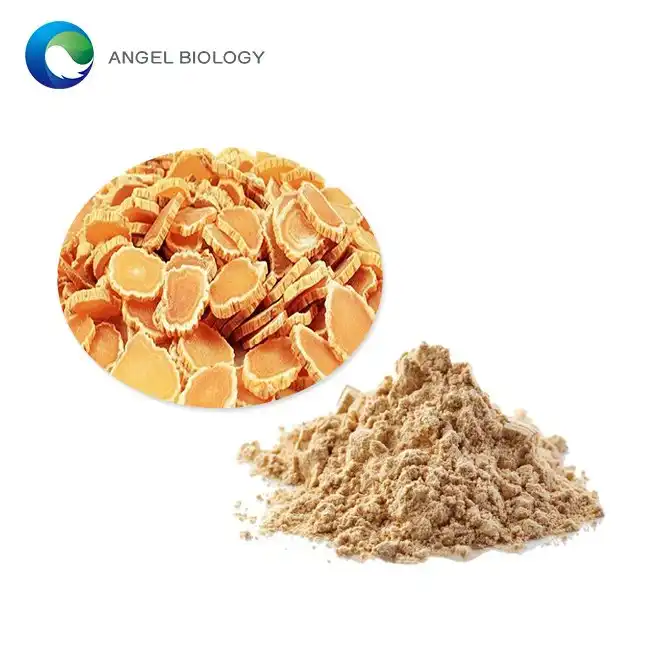
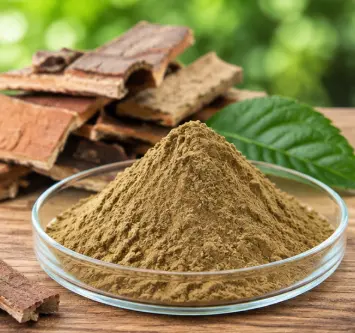
If comparing bark extract with leaf extract, remember that they are obtained from different plant parts and may have different characteristic compounds. Turmeric extract is a separate botanical ingredient, commonly characterized by curcuminoids and a distinct yellow color and flavor profile. Eucommia leaf extract powder is generally brown to yellowish-brown, although its appearance can vary with raw material and processing conditions. Selection should be based on marker compounds, appearance, flavor, formulation behavior, documentation, and intended product positioning.
Ratio, Standardized, and Organic Grades
A ratio extract may suit buyers who need a concentrated leaf ingredient and whose formulation does not require a defined marker level. A standardized grade may be more appropriate when R&D and quality teams need a specified marker range for raw material acceptance and batch comparison.
Standardization and organic certification serve different purposes. A standardized extract is defined by its specified marker content, while organic certification relates to the applicable production and sourcing requirements. One does not replace the other, and organic status alone does not establish that an extract is more suitable for a particular formulation. If organic sourcing is part of the brand's market positioning, confirm the certification scope and product coverage. If the formula requires a measurable marker level, select a grade with an agreed
analytical method and acceptance range. For specialized applications, a customized specification, such as a particular particle size or carrier system, may also be considered.
Supplier Evaluation Criteria
Supplier evaluation should cover botanical identity, consistency of analytical results, COA completeness, contaminant controls, and the ability to provide supporting documentation. Buyers should also assess manufacturing capacity, lead time, minimum order quantity (MOQ), export experience, packaging options, and technical responsiveness.
Request recent COAs from multiple batches where available and compare the reported marker values and other key parameters. Consistent results within the agreed specification can help buyers assess batch-to-batch performance. It is also better to compare total landed cost rather than unit price alone. Landed cost may include testing, packaging, freight, duties, and the potential cost of rejected or nonconforming lots. A supplier offering clear specifications, responsive technical support, and suitable batch documentation may provide better overall value than a lower-priced option with limited information.
Buying in Bulk: Pricing, Pitfalls, and Workflow
The final part of the guide focuses on the commercial considerations involved in bulk purchasing, from price factors to the first order.
Pricing and Packaging
The price of Eucommia leaf extract powder can vary according to marker standardization, extraction ratio, raw material availability, testing requirements, packaging, order volume, and customization. Request quotations that clearly separate product cost, packaging, testing, freight, and any additional services. Itemized quotations make it easier to compare suppliers and understand the total purchasing cost.
Common packaging options may include foil bags, fiber drums, cartons, and customized formats, subject to the supplier's available options and order requirements. Since extract powders may be affected by moisture, buyers should confirm the packaging material, inner liner, sealing method, and recommended storage conditions. Check shipping, palletizing, and handling arrangements before confirming the order. For OEM or private-label projects, clarify whether the supplier can support formulation discussions, finished-product processing, labeling, and the required documentation.
Common Sourcing Pitfalls
Incorrect plant-part identification is one of the most important risks to avoid. A product described as leaf extract may not match the buyer's requirement if it is actually bark extract, a mixture of plant materials, or an ingredient with an unclear botanical source. Clearly state the required plant part in the purchase specification and request appropriate identity information and testing records.
Differences in marker content between batches can also affect formulation consistency and the accuracy of finished-product specifications. Buyers should agree on assay methods, acceptance ranges, and batch-release requirements before ordering. Choosing a supplier based only on the lowest price may lead to gaps in documentation, testing, or traceability, creating additional costs later. Other points to check include unsupported product claims, unclear use-level recommendations, unsuitable packaging, moisture exposure, and insufficient stability information for the intended application.
A Practical Procurement Workflow
The following workflow can help B2B buyers organize supplier evaluation and purchasing decisions. Each step builds on the information collected in the previous stage.
1. Send a technical request specifying the botanical source, plant part, extract ratio, marker compounds, intended application, target market, order volume, packaging, and documentation requirements.
2. Screen potential manufacturers and compare their product specifications, available documents, production information, and commercial terms.
3. Evaluate samples for identity, marker content, appearance, odor, solubility or dispersibility, flowability, and compatibility with the intended formulation.
4. Confirm the final specification, inspection requirements, packaging, shipping arrangements, payment terms, and procedures for handling nonconforming goods.
5. Review batch documents, record product feedback and deviations, and periodically evaluate supplier performance.
Following these steps helps turn an initial sourcing inquiry into a clear purchasing specification and supply agreement. It also gives procurement and quality teams a consistent record for future orders and supplier reviews.
Conclusion
Eucommia ulmoides leaf extract powder is a botanical ingredient made from the leaves of Eucommia ulmoides. Its plant part, chemical profile, and processing characteristics distinguish it from bark extract and other botanical powders. Buyers should review quantitative marker data, extraction ratio, analytical methods, and a clear product specification before selecting a grade. Since raw material origin, harvest conditions, and extraction processes can influence composition, batch-specific documentation and sample evaluation are important parts of supplier qualification.
The ingredient may be considered for dietary supplement, functional food, sports nutrition, and personal care formulations, depending on the grade and applicable market requirements. Evaluating plant identity, documentation, formulation compatibility, and total landed cost can help reduce sourcing risks and support a more consistent supply. A clear technical request also enables suppliers to provide more relevant samples, specifications, and quotations.
FAQ
1. What is Eucommia ulmoides extract powder used for?
It is a botanical ingredient that brands may evaluate for dietary supplements, functional foods, sports nutrition products, botanical blends, and selected personal care formulations. Its suitability depends on the product grade, formulation requirements, available composition data, and regulations in the target market.
2. How is leaf extract different from bark extract?
They come from different parts of the same plant and have different characteristic chemical profiles and traditional uses. Buyers should treat them as separate ingredients and confirm that the plant part is clearly identified on the product specification and COA.
3. How should I store the powder?
Follow the supplier's product-specific storage instructions. In general, keep the powder tightly sealed in a cool, dry place away from direct light and moisture. Confirm the recommended storage temperature, humidity conditions, and shelf life for the specific grade.
4. What should I request before approving a supplier?
Request a current COA, product specification, botanical identity information, relevant contaminant test results, available compliance documents, raw material origin details, and product-specific shelf-life information. If the powder is intended for a finished formulation, also evaluate its dispersibility, taste, appearance, flowability, and compatibility through sample testing.
Request Eucommia Ulmoides Extract Powder Samples from Angelbio
Looking for a bulk supplier of Eucommia ulmoides leaf extract powder? Angelbio provides product information and sourcing support for buyers evaluating botanical ingredients for commercial formulations. To help our team identify a suitable grade, send your required plant part, extract ratio, target marker content, intended application, estimated order volume, packaging requirements, and destination market.
Contact angel@angelbiology.com to discuss product specifications, available batch documentation, sample evaluation, and a quotation. Providing your target requirements at the inquiry stage can help us respond with more relevant product information and purchasing details.

References
1. He, X. et al. (2014). "Eucommia ulmoides Oliv.: Ethnopharmacology, phytochemistry and pharmacology of an important traditional Chinese medicine." Journal of Ethnopharmacology.
2. Clifford, M. N. (1999). "Chlorogenic acids and other cinnamates – nature, occurrence and dietary burden." Journal of the Science of Food and Agriculture.
3. Pharmacopoeia of the People's Republic of China (2020). Monographs on Eucommiae Cortex and Eucommiae Folium.
4. United States Pharmacopeia–National Formulary (2023). General Chapter 561, Articles of Botanical Origin.
5. International Council for Harmonisation (2021). ICH Q3C(R8), Guideline for Residual Solvents.