



How to Choose Horse Chestnut Extract Powder for Supplements?
To choose horse chestnut extract powder for supplements, start with the finished product and check five key factors: the botanical name (Aesculus hippocastanum seed), the extraction ratio and method, the aescin content and its test method, purity and safety documentation, and the supplier's production and service capabilities. Compare COAs from recent batches, test a sample in your own capsule, tablet, or drink powder formula, and calculate the cost based on active content per kilogram rather than price per kilogram alone. These steps help your team compare suppliers using clear specifications and make an informed purchasing decision. Price does not tell the whole story. Suppliers may use different botanical sources, plant parts, extraction ratios, solvents, and aescin specifications. Some products on the market are simply milled seed powders rather than concentrated extracts. This guide helps supplement brands, formulators, purchasing managers, distributors, and OEM clients evaluate their options.
Define Your Product, Then Verify the Raw Material
Match the Ingredient to the Supplement Format
Different supplement formats, including capsules, tablets, sachets, drink powders, and herbal blends, have different ingredient requirements. Capsule production requires suitable powder flow and bulk density. Tablet formulations need appropriate compressibility, while drink powders require consideration of dispersibility, appearance, and taste. Before contacting suppliers, determine the intended market for your finished product. Ingredient specifications, labeling requirements, warnings, and permitted product claims may vary across the United States, Europe, and other regions. For products intended for the U.S. market, review the applicable dietary supplement manufacturing and labeling requirements. Then prepare a purchasing specification covering the plant part, species, extract ratio, solvent, target aescin content, quality limits, packaging, shelf life, MOQ, and delivery requirements.


Confirm Botanical Identity and Origin
Ask each supplier to provide the Latin name (Aesculus hippocastanum), plant part, country of origin, harvesting information, and raw material sourcing details. Different botanical materials may have similar common names, so the species should be clearly identified and supported by appropriate identity testing. Traceability is equally important. Each finished batch should be linked to its corresponding raw material lots so that your quality team can review the supply chain when needed. Changes in raw material sources may affect powder color, odor, and marker content, potentially creating differences between shipments. Consistent sourcing and documented batch records therefore support more reliable repeat production. Before selecting a supplier, ask for written answers and supporting documents for these points.
Understand Extraction Ratio, Solvent, and Drying
The extraction ratio indicates the amount of raw material used to produce a given quantity of extract. For example, a 4:1 ratio generally means that four kilograms of starting material are used to produce one kilogram of extract, while a 10:1 ratio indicates ten kilograms of starting material per kilogram of extract, subject to the supplier's calculation and reporting method. The ratio alone does not show how much aescin the finished powder contains or establish that one extract is better than another. The extraction solvent and drying method may affect the powder's composition, residual solvent profile, moisture level, flowability, and storage characteristics. Ask the supplier to disclose the extraction solvent, processing approach, and applicable residual-solvent testing method. Also confirm whether the product is a concentrated extract or simply milled seed powder. Both the extraction ratio and aescin content should be considered, but neither should be used alone as a measure of overall product quality.
Compare Aescin Standardization, Purity, and Safety Evidence
Read the Aescin Specification Closely
Aescin, also commonly spelled escin, is a group of triterpenoid saponins used as a marker for standardizing horse chestnut seed extract. Check whether the specification refers to total aescin, beta-aescin, or another defined component, and confirm the analytical method used. The reported percentage can vary depending on the method and the compounds measured. For example, a result obtained by UV spectrophotometry may not be directly comparable with an HPLC result because the methods differ in selectivity and measurement principles. Do not assume that two products with the same stated percentage have equivalent compositions unless their test methods and specifications are comparable. Standardized extracts can help formulators maintain a more consistent marker level across batches. Each batch should be supported by a product specification, a certificate of analysis, and appropriate botanical identity documentation.
Review Purity and Contaminant Testing
Check which parameters are covered by the supplier's testing program, including heavy metals, pesticide residues, residual solvents, microbial counts, yeast and mold, specified pathogens, mycotoxins, adulterants, and cross-contamination risks. Esculin is a naturally occurring coumarin glycoside associated with horse chestnut materials. Buyers should confirm the product's esculin specification and the suitability of the analytical method used to assess it. Angelbio reports using a chromatographic purification step during extraction and including an HPLC limit test for esculin in its COA. Buyers should request the current specification, representative batch results, and testing details to verify that these requirements are met for the material being purchased. Before preparing consumer-facing product information, review the intended use, ingredient specifications, and applicable labeling requirements. Product descriptions and claims should be appropriate for the target market and supported by relevant evidence.
Audit the Quality System Behind the Paperwork
A COA provides batch test results, but supplier evaluation should also cover the procedures and controls behind those results. Review the supplier's documented practices for personnel hygiene, facility cleanliness, pest control, batch release, complaint handling, deviation management, change control, and product recalls. Ask how customers are notified when specifications, raw material sources, or manufacturing processes change, and how long batch records are retained. Angelbio reports more than 18 years of independent research and testing experience and ongoing improvements to production controls and quality management. Buyers should verify company-specific information through current documents and, where appropriate, a site audit or detailed supplier questionnaire. This approach provides more useful evidence than relying on general marketing statements and makes supplier comparisons more objective.
Compare Product Formats and Supplier Capability
Powder, Capsule, or Liquid Extract
Horse chestnut extract powder is a bulk ingredient suitable for use in capsules, tablets, blended powders, and further processing. Powder formats offer flexibility in storage, transportation, dosage adjustment, and private-label formulation. Liquid extracts have different handling and processing requirements, and buyers should consider their solvent composition, packaging, shipping weight, and compatibility with the intended formulation. Finished capsules may be convenient for brands seeking ready-to-market products, but they generally offer less flexibility for changing the formula or ingredient specifications. Compare the required quantity, storage conditions, packaging format, shipping weight, and compatibility with your existing production process. Powder characteristics can vary with composition and moisture content. Use moisture-protective packaging, such as sealed inner liners where appropriate, and store the material under the conditions stated in the supplier's specification to reduce moisture exposure and caking.
Organic or Conventional Material
Both organic and conventional grades may suit different product positioning strategies. Do not assume that one is automatically better for every brand. Choose according to the target market, sourcing requirements, certification needs, raw material availability, and total purchasing cost. If you intend to make an organic claim, request the relevant certificate and verify its validity period, scope, issuing body, and whether the named product and supplier are covered. Ask for comparable technical and safety documents for both grades so that you can evaluate them fairly. A conventional extract with suitable specifications and testing may meet the needs of many formulations, while an organic option may be appropriate for brands with a defined organic sourcing strategy. Also confirm supply volume and replenishment lead times, as availability may vary by season and source.
Check Wholesale, OEM, and Private-Label Capability
Supplier capabilities can affect order fulfillment, project coordination, and consistency between repeat purchases. Evaluate monthly production capacity, minimum order quantity, pilot-batch availability, sample lead time, repeat-order support, packaging options, palletization, and export documentation. OEM and private-label projects may also require customized standardization, blending, capsule or tablet production, sachet filling, label preparation, regulatory document support, and multilingual materials. Ask suppliers to identify which services they provide directly and which are handled by external partners. Experience with international shipments is also valuable. A reliable supplier should be able to coordinate Incoterms, payment terms, certificates of origin, commercial invoices, packing lists, test reports, and shipment records for destinations such as the United States, Europe, and other regions. Request relevant examples or document templates before placing an order so that your team can assess the supplier's actual capabilities.
Score Suppliers, Validate Samples, and Choose the Best Fit
Build a Supplier Scorecard
A scorecard helps you evaluate horse chestnut extract powder suppliers objectively instead of choosing based only on price. Useful criteria include botanical identity, traceability, aescin consistency, purity, documentation, analytical capability, production capacity, supply continuity, regulatory support, customization, and landed cost. One possible weighting model is 25% for quality and safety documentation, 20% for active compound consistency, 15% for certification and supply continuity, and 25% for price, export support, and service. The remaining 15% can be allocated to technical support, customization, or other project-specific requirements. Adjust the weighting according to your product priorities. Review samples and documents together, assign scores in a shared evaluation matrix, and ask R&D, QA, and procurement teams to review the final supplier selection.
Validate Documents and Samples Before a Bulk Order
Collect and review the required documentation before approving a significant purchase. This may include product specifications, recent batch COAs, safety data sheets, allergen and non-GMO statements, organic certificates where applicable, contaminant test reports, stability information, and relevant manufacturing records. Next, evaluate a sample or pilot batch in your own formulation. Check mixing behavior, capsule filling, tablet compression, flowability, dispersibility, color, odor, and other sensory characteristics relevant to the finished product. Confirm the commercial terms as well, including MOQ, price tiers, lead time, packaging, storage conditions, transportation arrangements, payment terms, complaint handling, replacement procedures, and the process for approving specification changes. Written confirmation of these details helps prevent misunderstandings and supports smoother repeat orders.
Choose Based on Total Value
The best horse chestnut extract powder is the one that meets the technical, regulatory, and commercial requirements of your finished product. When batch consistency and repeat production are priorities, a standardized material with a clearly defined test method may be a suitable choice. Evaluate total value rather than unit price alone. For the same target aescin intake, a powder with a lower price per kilogram but half the aescin content may require twice as much material, depending on the verified assay results. Include testing costs, usable production yield, freight, customs, storage, potential supply delays, and technical support in your calculations. Final approval should confirm botanical identity, extraction details, aescin testing, purity, supplier controls, formulation performance, supply capacity, commercial terms, and suitability for the target market.
How a Qualified Horse Chestnut Extract Powder Manufacturer Can Support Procurement
Bulk Supply and Documentation
A capable manufacturer supports buyers with more than the supply of bulk ingredients. For wholesale and large-volume projects, Angelbio can discuss standardized horse chestnut extract powder specifications, packaging options, order quantities, delivery schedules, and documentation for quality review and import procedures. Angelbio supplies natural ingredients for health supplement, cosmetic, personal care, pharmaceutical, and flavor and fragrance applications. The company's ownership and research affiliations should be confirmed against current corporate records when required for supplier qualification. Share your estimated demand and purchasing schedule early so that the supplier can assess production planning and delivery arrangements in relation to your launch timeline.
Technical Support for Formulators
A technical team can help buyers compare extract ratios, aescin specifications, and analytical methods, as well as evaluate powder handling in capsules, tablets, drink powders, and blends. Provide your target serving size, intended dosage form, and formulation requirements so that the supplier can recommend a suitable specification for evaluation. Since UV spectrophotometry and HPLC results may not be directly comparable, agree on the analytical method before sample testing and pilot production. This helps align internal laboratory results with supplier COAs and gives formulators a consistent basis for comparing batches. Early technical communication can also reduce unnecessary adjustments during scale-up.
Export and Project Coordination
Export support may involve batch COAs, product specifications, samples, pilot orders, production schedules, and shipping documents such as commercial invoices, packing lists, and certificates of origin. Confirm the documents required by the destination market and the responsibilities of each party before shipment. Incoterms and payment terms can also be discussed according to the destination and order requirements, including projects for North America, Europe, and other regions. If you need additional test quantities or a staged supply plan, share your requirements so that the supplier can assess the appropriate arrangements. Clear and consistent documentation can make internal quality review and import coordination more efficient and help buyers plan repeat orders. Cooperation among procurement, manufacturing, technical support, and logistics teams is important for managing project requirements and reducing avoidable supply-chain delays.
Conclusion
Choosing horse chestnut extract powder for supplements requires matching the ingredient to the verified specifications of the finished product. Aescin standardization should be supported by a clearly identified analytical method, while botanical identity, extraction ratio, solvent, and drying method help define the material. Batch documentation, esculin specifications, and contaminant testing provide important information for evaluating ingredient suitability and consistency. Product format, sourcing preferences, and supplier capabilities also influence handling and purchasing decisions. A weighted scorecard, document review, and formulation trials can help buyers compare suppliers fairly. To assess value accurately, calculate cost in relation to verified active content, formulation yield, testing, and freight rather than relying on unit price alone.
FAQ
1. What is horse chestnut extract powder?
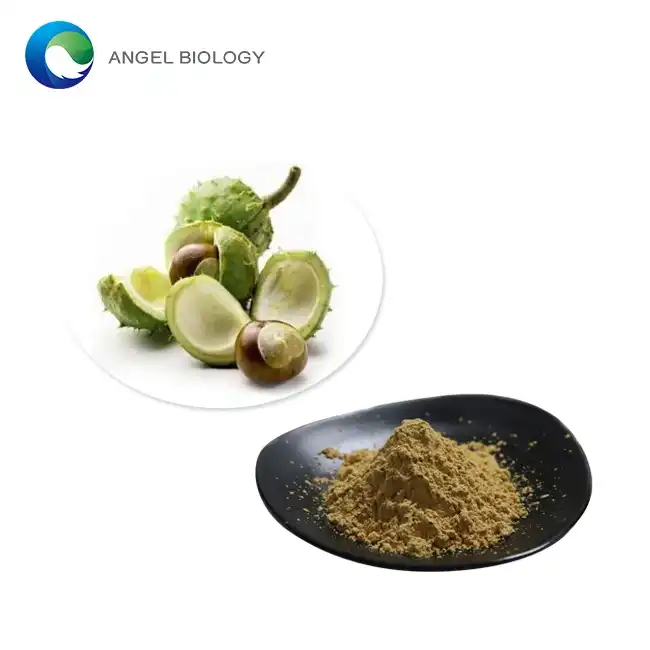
Horse chestnut extract powder is made from the seeds of Aesculus hippocastanum. It is commonly standardized by measuring aescin, a group of triterpenoid saponins. Its composition and concentration depend on the raw material and extraction process, which distinguish a concentrated extract from plain milled seed powder.
2. Which quality indicators matter most?
Start with the botanical identity, aescin content and its named test method, and the batch COA. Then review the supplier's documented quality controls, esculin specification, and contaminant testing. Standardized products with consistent specifications can make formulation and batch comparison more straightforward.
3. How is the dose determined?
There is no single amount suitable for every product. The formulation level depends on the verified aescin concentration, extract specification, intended product format, target market, and applicable requirements. Your formulator and regulatory advisor should determine the appropriate use level for each finished product.
4. Can I source bulk, OEM, or private-label products?
Bulk, OEM, and private-label arrangements may be available depending on the supplier's production and service capabilities. Before placing an order, verify the documentation, MOQ, customization options, production schedule, and export support. Angelbio can review these requirements with buyers once the project details are provided.
Request Horse Chestnut Extract Powder Samples From Angelbio
Angelbio reports more than 18 years of research and testing experience. If you are looking for a horse chestnut extract powder supplier, contact angel@angelbiology.com with your target aescin content, estimated order volume, destination market, preferred packaging, dosage form, and OEM or private-label requirements. Our team can discuss sample availability, product specifications, batch COA, MOQ, lead times, and quotations based on your project needs.
References
1. Cochrane Database of Systematic Reviews, "Horse Chestnut Seed Extract for Chronic Venous Insufficiency," 2012. This clinical reference is not used to support ingredient efficacy claims in this sourcing guide.
2. Pharmacological Research, "Aescin: Pharmacology, Pharmacokinetics and Therapeutic Profile," 2001. Use only as background reading; verify bibliographic details and relevance before publication.
3. Revista Brasileira de Farmacognosia, "Horse Chestnut: Efficacy and Safety in Chronic Venous Insufficiency: An Overview," 2015. This clinical overview is not used to substantiate supplement product claims.
4. ESCOP Monographs: The Scientific Foundation for Herbal Medicinal Products, 2003. Verify the relevant monograph and edition before citing specific technical information.
5. U.S. Food and Drug Administration, Dietary Supplement Labeling Guide, 2005. Check the current applicable labeling requirements before publication or market launch.