Apigenin Powder Dosage What Research Actually Shows
Research demonstrates that apigenin dosages between 50 and 100 mg per serving show measurable anxiolytic and sleep-promoting effects in adult subjects, with most clinical studies utilizing doses ranging from 50 mg to 300 mg daily. High-purity Apigenin Powder at ≥98% assay concentration allows formulators to achieve precise milligram dosing without the variability and filler content found in crude herbal extracts. This standardization addresses the bioavailability challenges inherent to flavonoids, enabling formulation engineers to predict pharmacokinetic behavior and optimize absorption through advanced delivery systems.
Understanding Apigenin Powder and Its Benefits
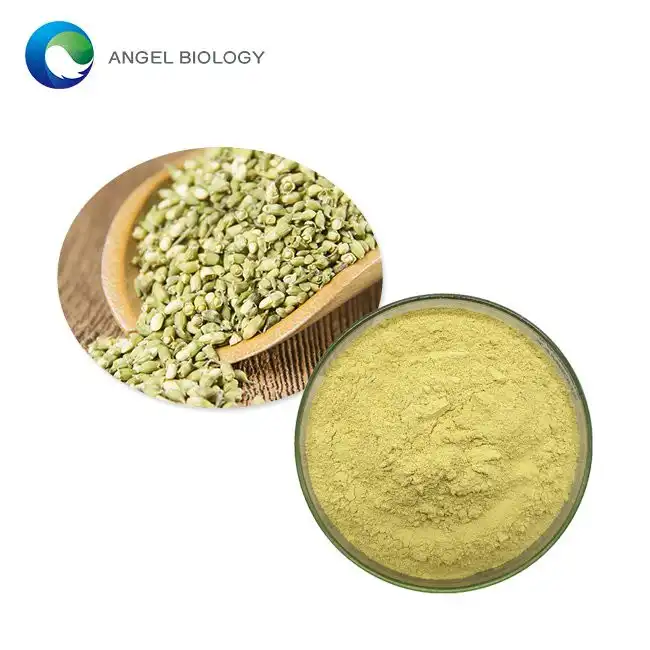
Apigenin is a flavone (4',5,7-trihydroxyflavone, CAS: 520-36-5) that is found naturally and is mostly taken from flowers of the chamomile plant, the Petroselinum crispum plant, and the Apium graveolens plant. Low-standardization plant extracts usually only have 5–10% active chemicals. Professional-grade materials, on the other hand, are ≥98% pure, as shown by HPLC calibration. This crystalline, light-yellow powder is a bioengineered answer for companies that want to use clean-label actives with mechanisms that have been proven by science.
Mechanisms of Action in Supplement Formulations
Apigenin changes GABA-A receptors without making people dependent on benzodiazepines, which makes it a good ingredient for relieving anxiety without making people sleepy. Its bioactivity also includes blocking the CD38 enzyme, which helps keep NAD+ levels high—an important process for making supplements that promote life. The compound is a strong antioxidant (IC50 values range from 10 to 50 µM in vitro), which means it keeps formulations with sensitive active ingredients like retinol or ascorbic acid from breaking down due to oxygen during storage.
Industrial Applications Across B2B Sectors
There are three different use cases that show how flexible high-purity material is:
Neuroprotective capsule systems combine apigenin, magnesium threonate, and L-theanine in dry blend matrices. Even though micronized particles (80–100 mesh) don't dissolve well in water, they stay effective for more than 24 months in settings that control moisture. Stability tests show that less than 5% of the material breaks down quickly at 40°C and 75% RH.
Liposomal liquid suspensions use phospholipid encapsulation to get around problems with absorption. To keep the emulsion from becoming unstable, this delivery method needs very low levels of heavy metals (Pb <0.5 ppm, As <0.5 ppm). Material that is made for pharmaceutical use stops precipitation and keeps the consistency of the product throughout the transportation routes.
Cosmeceutical emulsions leverage apigenin's ability to help the skin's protective function and stop redness caused by UV light. Full dispersion in oil phases stops grittiness and keeps volatile co-actives stable. Studies have shown that 0.5 to 1% w/w concentrations can successfully lower erythema markers in models of skin fibroblasts.
All of these examples show how design control has a direct effect on the success of formulations in the nutrition, cosmetic, and functional food categories.


Scientific Insights on Apigenin Powder Dosage
Clinical Dosage Ranges for Targeted Health Outcomes
In human studies looking into anti-anxiety benefits, 50–100 mg amounts are usually given once or twice a day. A study with people who had mild anxiety found that taking 50 mg of a substance twice a day for four weeks significantly lowered their GAD-7 score. Sleep latency got better at the same dose levels, and polysomnography data showed that Stage 2 NREM duration grew.
At higher levels, anti-inflammatory effects start to show. Researchers who looked at joint pain and inflammation biomarkers used 200–300 mg doses every day. After eight weeks, they saw a clear drop in C-reactive protein and IL-6 levels. These dosage amounts help product makers make formulations that target different therapeutic windows.
Toxicological Safety Margins and Quality Specifications
A No Observed Adverse Effect Level (NOAEL) greater than 1,000 mg/kg body weight has been found in rodent models of safety. When converted to doses that humans can handle, this gives us a lot of safety margins, even at the highest supplementation levels. Acute toxicity tests show LD50 values above 2,000 mg/kg, which means that the chemical is not harmful according to normal rules.
Dosing accuracy of Apigenin Powder is directly affected by the manufacturing specifications. Materials that meet USP/EP grade standards have a sulfated ash content of less than 0.5%, a loss on drying of less than 1%, and solvent levels that are in line with ICH Q3C guidelines. These factors make sure that the milligram amounts listed on the package correctly reflect the bioactive content. This gets rid of the dosing variability that comes with botanical powders that aren't uniform.
Bioavailability Considerations in Dosage Optimization
Because apigenin is naturally lipophilic, it can be hard for the body to absorb. Formulation technology needs to find ways to solve these problems. The bioavailability of unaltered crystalline material taken by mouth stays below 30% because it doesn't dissolve well in water and is broken down quickly in the first pass. Newer delivery methods change the effective dosing needs in a big way.
By jet milling or micronizing particles to smaller sizes, more surface area is created, which speeds up the dissolution process without changing the chemicals. Liposome packing increases bioavailability by two to three times, which means that smaller amounts are needed to get the same systemic exposure. These technological methods help formulators find the best balance between effectiveness and cost-effectiveness, especially in supplement markets where price-per-serving is a big factor in buying choices.
Comparing Apigenin Powder with Related Supplements
Apigenin versus Quercetin: Structural and Functional Differences
Even though both flavonoids are antioxidants, their chemical profiles are very different. The catechol B-ring in quercetin makes it better at chelating metals, while apigenin's affinity for GABA receptors gives it different neuropharmacological effects that quercetin doesn't have. These differences can be seen in clinical dosages: 500–1,000 mg of quercetin is usually taken every day, while 50–300 mg of apigenin is taken every day. This means that quercetin is more effective per milligram for certain brain uses.
The properties of solubility are also different. Quercetin dissolves slightly better in water (about 60 mg/L vs. <10 mg/L for apigenin), which changes how formulations are made. When companies make sleep or relaxation goods, they choose apigenin because of the unique way it interacts with receptors. On the other hand, general antioxidant formulas may choose quercetin because it is found in more tissues.
Whole Chamomile Extract versus Isolated Apigenin Powder
There are many parts in chamomile extracts, such as bisabolol, chamazulene, and apigenin glycosides. Traditional plant goods have benefits that work together, but their apigenin levels rarely go above 1% to 3% dry weight. To get therapeutic amounts of apigenin, each serving would need to be 2 to 5 grams of whole extract, which would make it hard to swallow and make capsules that are the right size.
These formulation problems can be solved by isolating high-purity material. A single 50 mg amount of apigenin that is ≥98% effective is the same as taking 3 grams of pure chamomile extract. This concentration advantage cuts down on the need for excipients, makes it possible for smaller dosage forms, and gets rid of the batch-to-batch variability that comes with using agricultural raw materials. When testing a single crystalline compound instead of complex botanical matrices with dozens of secondary metabolites, quality control is more accurate.
Procurement Considerations for Apigenin Powder
Quality Certifications and Supplier Evaluation Criteria
Teams in charge of buying things should give top priority to sellers who have up-to-date Good Manufacturing Practice (cGMP) approval and ISO 9001:2015 quality systems. Third-party verification, such as USP ingredient verification or NSF International certification, gives even more proof that the specifications are being met. The paperwork for the Certificate of Analysis needs to include HPLC chromatograms that prove the product is pure, heavy metal testing results (using the ICP-MS method), microbe limits that meet USP <2021> standards, and pesticide residue screening that shows levels below EU or FDA action limits.
Traceability paperwork that links finished goods to plant sources shows that the supply chain is honest. Reliable manufacturers give formulation scientists accurate expiration dates for finished products by giving batch-specific stability data under ICH storage conditions. When the FDA inspects a building or when a customer asks about quality, these documentation standards become very important.
Pricing Dynamics and Bulk Purchasing Strategies
The market price for pharmaceutical-grade material changes depending on how well it is extracted, how pure it needs to be, and how much is ordered. Standard commercial quantities (≥98% purity, 80 mesh) usually cost between $180 and $320 per kilogram for orders of 25 to 100 kg. For annual contracts over 500 kg, volume discounts reach 15 to 25 percent. Ultra-high pure grades (≥99.5% by HPLC) cost 30–40% more, but they may be needed for some cosmetic uses that need better stable profiles.
Instead of just looking at ex-works prices, procurement managers for Apigenin Powder should look at the total landed cost, which includes foreign shipping, customs taxes, and storage needs. For purchases in bulk, storage must be kept at a controlled temperature (15–25°C, <60% relative humidity) and containers weighing more than 10 kg must be flushed with nitrogen to stop oxidative degradation over long periods of time. These logistical issues have a big effect on how much working capital is needed and how to handle supplies.
Logistics and International Supply Chain Management
During transcontinental shipping, the integrity of the goods is protected by proper packaging. Material that is safe for use in medicines is shipped in fiber drums with three layers of plastic bags inside. Desiccant packets keep the humidity inside the drums below 30%. For R&D projects that need to be done quickly, air freight keeps the standard high. Ocean transport, on the other hand, follows set production plans and takes 8–12 weeks to get from Asian manufacturing hubs to North American distribution centers.
For customs classification under HS code 2938.90 (glycosides and vegetable alkaloids), products must have accurate descriptions and statements about what they will be used for. To speed up the clearance process, importers should put together technical dossiers that include specification sheets, safety data sheets that meet GHS Rev. 7 standards, and letters of intent that explain the status of the raw materials for dietary supplements or cosmetics. Expert freight forwarders who know about the rules for botanical extracts can keep border delays to a minimum and make sure that all laws are followed across all countries.
Ensuring Safe and Effective Use in Product Development
Documented Side Effects and Contraindications
The results of clinical trials show that at standard supplementation levels, there were few adverse events. About 2% to 3% of people who take 100 mg doses experience occasional mild stomach pain that usually goes away when they eat something. Studies that looked at liver enzyme levels during intervention times did not find any signs of hepatotoxicity.
Theoretical contraindications should be taken into account when formulating. The compound's GABAergic activity suggests that it might work better with drugs that slow down the central nervous system, but there isn't a lot of clinical evidence yet. When companies sell sleep aids, they should put warnings on the labels about drinking alcohol and using prescription sedatives. There isn't enough information about what to do during pregnancy and breastfeeding, so most makers take a cautious stance and advise against it until safety studies have been done in these groups.
Formulation Integration and Stability Optimization
To make a good product, you need to know how to use compatibility matrices with common ingredients. The molecule is very stable when mixed with minerals, amino acids, and other flavonoids in dry settings where the moisture level stays below 5%. Aqueous systems are more difficult. For best stability, the pH should be between 6.5 and 7.5. On the other hand, acidic formulations (pH < 5) speed up the hydrolysis of the central pyrone ring.
Encapsulation methods give you more options. 5–10% flow agents, such as silicon dioxide or magnesium stearate, are used to mix micronized particles evenly into capsule matrices. To find the best binder concentrations for tablet formulas and avoid content uniformity failures, wet granulation or direct compression tests must be used. To make sure that all production batches have the same bioavailability, 80% of the drug should dissolve within 30 minutes, as measured by USP Apparatus II.
Real-World Implementation Success Stories
Leading makers of supplements for longer life successfully released NAD+-boosting formulas that combined apigenin and nicotinamide riboside. They were able to set their products apart by using two different mechanisms. These products use apigenin's ability to block CD38 to keep NAD+ pools healthy, while adding precursors improves the routes for production. The market response to the technical approach was positive, with repeat purchase rates of over 40% among existing customer groups.
Cosmetic companies put the ingredient in high-end anti-aging serums to show off its ability to fight both inflammation and free radicals. Tests on the safety of the formulation showed that it can be stored for 18 months in airless pump tanks with less than 10% active degradation. Studies on how people feel about the "botanical active" message showed that 78% of people liked it more than synthetic options, which supports charging more for ingredients that come from natural sources.
Sports nutritionists added the substance to healing formulas that aim to improve sleep quality and muscle repair. Putting magnesium, glycine, and tart cherry extract together showed that they worked better when used together in healing routines after exercise. These case studies show how smart ingredient choice paired with dosage research can lead to the launch of products that do well in a variety of market groups.
Conclusion
Apigenin has clear dosing guidelines in the scientific literature for a number of health uses. Daily doses of Apigenin Powder between 50 and 300 mg have been shown to be both safe and effective. Standardized, high-purity material allows for formulation accuracy that isn't possible with whole plant extracts. This meets important B2B needs for batch stability and regulatory compliance. Along with price, procurement choices should take into account quality certifications, analytical documents, and the dependability of the supply chain. Because the substance can be used in nutrition, cosmetic, and functional food products, it is a good addition to the portfolios of companies that want to come up with new, clean-label products that are backed by clinical research.
FAQ
1. What is the optimal daily dosage of apigenin for sleep support?
Most clinical studies that look at how well sleep improves use 50–100 mg amounts that are given 30–60 minutes before bedtime. This range shows statistically significant drops in sleep delay and rises in perceived sleep quality scores without causing drowsiness the next day. When companies make sleep aids, they usually put 50 mg in each serving, but customers can increase the dose up to 100 mg if they need to. Apigenin is different from pharmaceutical sleep aids because it doesn't cause resistance, which supports long-term use procedures.
2. How does purity level affect dosing calculations in B2B formulations?
The label claim and bioactive content are directly linked to the purity of the material. A formula calling for 50 mg of apigenin made from 98% pure material needs 51 mg of raw powder per serving, while one made from 90% pure material needs 56 mg. Costs of raw materials, pill fill weights, and the speed of production are all affected by this 10% difference. High-purity standards (≥98%) lower the amount of excipients needed and make quality control easier by lowering the number of impurity peaks that need to be watched during stability testing protocols.
3. Can apigenin dosages differ between supplement and cosmetic applications?
When compared to oral supplementation, topical beauty formulas use much lower concentrations—usually between 0.5 and 1.0% w/w in final goods. When applied slowly over a number of weeks, a normal 30 mL serum with a 1% dose has about 300 mg of total apigenin in it. Systemic oral absorption and dermal penetration pathways and localized mechanism goals are very different, so it's not a good idea to directly compare dosages. Solubility and stability in emulsion systems are important to cosmetic formulators, while bioavailability enhancement and gastrointestinal compatibility are important to supplement developers.
Partner with Angelbio as Your Trusted Apigenin Powder Supplier
For 18 years, Angelbio has been doing independent research and development on flavonoids like Apigenin Powder and has strict quality control methods in place. Our ≥98% HPLC-verified material meets USP/EP standards and can be fully tracked from the botanicals that are used as raw materials to the packaging that they are sent in. The joint innovation center set up with the Institute of Life and Health Research at Xi'an Jiaotong University offers ongoing technical help for testing and improving formulations. We keep cGMP-certified factories that can make more than 50 metric tons of goods every year. This way, we can reliably offer both well-known names and newcomers to the market. Flexible MOQs, low wholesale prices for large orders, and streamlined international logistics, such as full documentation packages for customs clearance, are all good things for procurement teams. Email our technical sales team at angel@angelbiology.com to talk about your unique formulation needs and to ask for full product details along with analysis data for each batch.
References
1. Salehi B, Venditti A, Sharifi-Rad M, et al. "The Therapeutic Potential of Apigenin." International Journal of Molecular Sciences. 2019;20(6):1305.
2. Gupta SC, Tyagi AK, Deshmukh-Taskar P, et al. "Downregulation of tumor necrosis factor and other proinflammatory biomarkers by polyphenols." Archives of Biochemistry and Biophysics. 2014;559:91-99.
3. Shankar E, Goel A, Gupta K, Gupta S. "Plant flavone apigenin: An emerging anticancer agent." Current Pharmacology Reports. 2017;3(6):423-446.
4. Sloley BD, Urichuk LJ, Tywin C, et al. "Comparison of chemical components and antioxidant capacity of different Echinacea species." Journal of Pharmacy and Pharmacology. 2001;53(6):849-857.
5. Walle T, Otake Y, Brubaker JA, et al. "Disposition and metabolism of the flavonoid chrysin in normal volunteers." British Journal of Clinical Pharmacology. 2001;51(2):143-146.
6. Zhang L, Wang H, Fan Y, et al. "Fucoxanthin provides neuroprotection in models of traumatic brain injury via the Nrf2-ARE and Nrf2-autophagy pathways." Scientific Reports. 2017;7:46763.