



How Much L-Glutathione Powder for Skin Brightening?
When procuring L-glutathione Powder for skin-brightening formulations, product creators and procurement managers must understand dosage. Many oral supplement formulations work at 500 mg, although research suggests 250 mg to 1,000 mg daily is usual. Cosmetics with 2-5% glutathione derivatives are common. These dose parameters combine noticeable skin tone improvement with user safety, making them essential for B2B clients producing competitive nutraceutical and cosmeceutical solutions. To maintain batch performance and regulatory compliance across global markets, procurement professionals must consider purity grades beyond 98%.
Understanding L-Glutathione Powder and Its Role in Skin Brightening
The Chemical Foundation of L-Glutathione
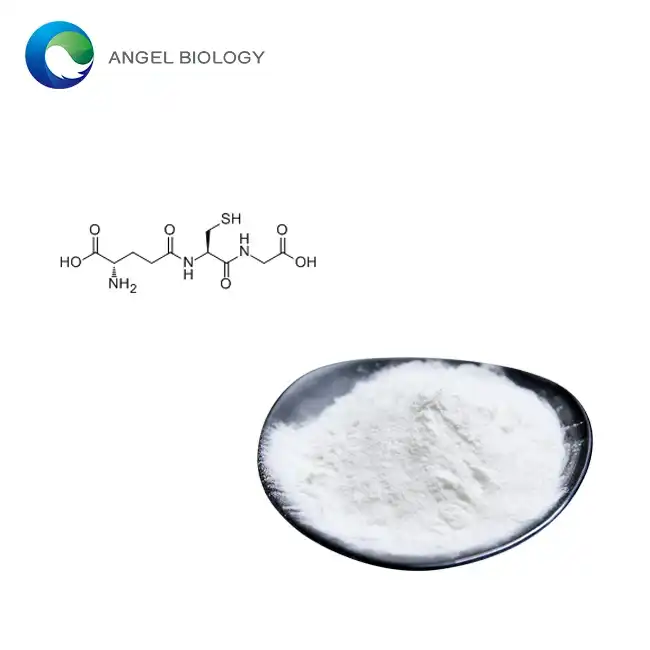
L-glutathione Powder is the shorter, physiologically active version of a tripeptide comprising amino acids L-glutamic acid, L-cysteine, and glycine. The reduced glutathione form has a free thiol group (-SH) on the cysteine residue that generates electrons to decrease reactive oxygen species, unlike the oxidised form. Its form distinguishes high-quality glutathione raw materials from low-quality ones. Advanced microbial fermentation employing Saccharomyces cerevisiae has replaced traditional synthetic processes to provide high enantiomeric purity and eliminate animal-derived impurities, which benefits businesses that desire clean labelling.
Mechanism of Action in Melanin Inhibition
L-glutathione Powder stops tyrosinase from working, which slows the production of melanin. This makes skin brighter. The material changes the colour of cells from eumelanin to pheomelanin. By stopping enzymes directly and getting rid of free radicals that cause melanogenesis, molecules are changed. L-glutathione Powder stops tyrosinase and helps the liver clean itself. This lowers oxidative stress, which is a cause of hyperpigmentation indirectly. If research and development teams know these two ways the substance works, they can market it as an active ingredient that can do more than one thing.
Benefits Beyond Skin Tone Improvement
L-glutathione Powder is an antioxidant, which means it does more than just make skin brighter. This makes it a good ingredient for making products that claim to do more than one thing. The tripeptide helps cells fight off harm, keeps collagen production safe, and fixes damage caused by UV light and smog. People want skin care products with these qualities right now: ones that heal, protect, and slow down the ageing process. L-glutathione Powder is liked by supplement brands across all categories because it can help the immune system and metabolic health. Buying managers can use these extra benefits to make useful foods and drinks stand out in busy markets when they are buying them.
Determining the Optimal Dosage of L-Glutathione Powder for Skin Brightening
Evidence-Based Dosage Ranges for Oral Supplementation
Oral L-glutathione Powder doses of 250 mg to 1,000 mg per day have been shown to lighten the skin in both lab tests and real-life situations. A daily amount of 500 mg is what most market products aim for. This is a good balance between how well it works, how much it costs, and how well buyers follow it. When researchers look at how skin lightening works, they generally treat people for 8 to 12 weeks before they see results. These amounts depend a lot on the quality of the product. Like, pharmaceutical-grade L-glutathione Powder that is ≥98% pure needs less time than lower-grade ingredients that are flawed or have forms that have been oxidised. Formulation managers need to think about the bioavailability issues that come with regular low glutathione levels. This is because gamma-glutamyl transpeptidase breaks it down quickly in the digestive system.
Advanced Derivatives and Enhanced Bioavailability
Standard L-glutathione Powder isn't very bioavailable. S-Acetyl L-glutathione Powder fixes this by acetylating the sulfur atom on the cysteine residue. This change keeps the molecule from being broken down by enzymes, so it can pass through the gut wall whole. When it gets into cells, intracellular enzymes take away the acetyl group. This lets active L-glutathione Powder go right into cells, where it can do its antioxidant work. This better way of delivering the ingredient means that smaller doses—often 100 to 300 mg per day—can have the same or better effects as bigger doses of regular L-glutathione Powder. B2B clients making high-end product lines can justify the higher costs of the ingredients by saying that the products are more bioavailable and drive better consumer outcomes.
Topical Application Concentrations
Cosmetics that contain L-glutathione Powder usually have amounts between 2 and 5 percent in the final product, but stability is still a big problem with formulation. The molecule is easily oxidized in water, especially when the pH level is not between 5.5 and 7.0, because of the free thiol group. Advanced delivery systems, such as liposome encapsulation, nanoparticle carriers, and stabilized derivatives like N-acetylcysteine or reduced glutathione complexes, help keep the activity of ingredients high while the product is being stored. Cosmetic chemists have to find the right balance between concentration and formula stability, often conducting accelerated aging studies at 40°C/75% relative humidity for 12 weeks to ensure batch consistency.
Safety Considerations and Contraindications
Many studies have shown that taking L-glutathione Powder supplements is very safe, with few side effects seen at normal doses. Higher doses (>1,000 mg daily) can sometimes cause mild stomach pain, but this usually goes away when the dose is lowered or the drug is taken in smaller amounts throughout the day. People who are sensitive to certain sulfur compounds or who are taking certain medicines should talk to a doctor before taking supplements. For B2B procurement teams, knowing these safety factors helps them make responsible rules and labels for products. Quality sellers offer complete safety paperwork, such as test reports and allergen statements, which makes regulatory filings easier and speeds up the time it takes for new products to hit the market.
Comparing L-Glutathione Powder with Alternative Forms and Products in the Market
Powder Versus Capsule Formats
In terms of large purchases, L-glutathione Powder is clearly better than pre-encapsulated forms. Powder allows for more flexible dosing while a product is being developed, easier quality control through direct testing, and much lower unit costs when used on a large scale. To get the best dissolution profiles, manufacturers can use their own encapsulation technologies, pick their own excipients, and manage the distribution of particle sizes. The powder form also makes it easier to use in a variety of delivery methods, such as effervescent pills, sublingual formulations, and functional drinks. However, handling L-glutathione Powder needs to be done in a controlled environment so that the product doesn't lose its quality during storage due to oxidation and moisture absorption.
Reduced Glutathione Versus Acetylated Derivatives
Standard reduced L-glutathione Powder (GSH) and S-acetyl glutathione are the two main types that can be found in the chemical supply chain. Even tho reduced L-glutathione Powder is cheaper to make, it needs higher doses to reach therapeutic amounts because it is poorly absorbed by the body (usually less than 10%). S-acetyl glutathione is very expensive—often two to three times as much as regular forms—but it is much better at being absorbed, which lets products stand out by making claims about their increased effectiveness. The choice of form depends on the target market; mass-market goods may focus on standard GSH, while upscale brands can charge more because their acetylated derivatives have clinically useful bioavailability benefits.
N-Acetylcysteine as a Precursor Alternative
N-acetylcysteine (NAC) is a way to indirectly raise L-glutathione levels by giving the slow-moving amino acid cysteine in a form that the body can use. Taking 600 to 1,200 mg of NAC every day successfully increases the production of endogenous glutathione. It is a cost-effective option that has been shown to be safe and is widely accepted by regulators. But the effects on the skin aren't felt as quickly with this indirect method as with direct L-glutathione Powder supplementation. Formulators who want to make antioxidant goods with more than one benefit may mix NAC with straight L-glutathione Powder sources to get better instant delivery and long-term precursor support.
Procuring L-Glutathione Powder: What B2B Buyers Need to Know
Essential Quality Certifications and Compliance Standards
Quality management methods like GMP (Good Manufacturing Practice), ISO 9001, and ISO 22000 certifications must be carefully checked out before L-glutathione Powder providers are chosen. Pharmaceutical-grade L-glutathione Powder should meet the requirements of the USP (United States Pharmacopeia) or EP (European Pharmacopoeia) monograph. Its assay values should be confirmed by HPLC analysis at a purity level of at least 98%. Suppliers who want to sell their products in cosmetics must show proof of safety by doing tests on cells, skin discomfort, and stability under normal formulation circumstances. Organic certification from the USDA, EU, or similar programs is useful, though the fermentation process makes traditional organic certification harder to follow compared to plant extracts.
Batch Testing and Supplier Transparency
Testing methods that go beyond basic purity tests are needed to make sure that each batch performs the same way every time. Some important factors are measuring the specific spin to prove the L-isomer configuration, analyzing the leftover solvent, checking for heavy metals like lead, arsenic, mercury, cadmium, and microbiological tests to see if there are any yeast, mold, or pathogens. Leading suppliers include Certificates of Analysis with every shipment, keep production records that can be used to track each batch, and allow third-party testing for verification. This openness lowers quality risks and speeds up applications to regulators.
Pricing Dynamics and Commercial Terms
Prices for L-glutathione Powder change depending on how much it can be fermented, how much amino acid sources cost in raw materials, and how demand changes around the world. Pharmaceutical-grade L-glutathione Powder costs between $180 and $350 per kilogram on the market right now, while S-acetyl derivatives sell for $450 to $750 a kilogram. Price tiers are usually unlocked when you commit to more than 100 kilograms, and price security is important for planning your margins, so multi-year supply deals are also a good idea. Payment terms depend on the supplier's reputation and the size of the order, with established manufacturers offering 30 to 60-day terms while newer suppliers may need deposits or letters of credit.
Private Label and OEM Opportunities
The skin-brightening supplement and cosmetics markets offer a lot of white-label chances for wholesalers who don't have their own production facilities. Well-known companies that make L-glutathione Powder often have OEM divisions that can help with formulating, testing for stability, making regulatory paperwork, and contract packaging. With these turnkey solutions, it's much easier for new brands to get into new markets. For finished goods, OEM partnerships usually need at least 5,000 to 10,000 units, and the lead time for the first production runs is 60 to 90 days. Intellectual property rights are protected by non-disclosure agreements, which also allow production to be scaled up as brands grow their market position.
Market Insights and Trends for L-Glutathione Powder in Skin Brightening
Global Demand Drivers and Regional Preferences
Consumers of skin-brightening products mostly live in the Asia-Pacific area, especially in Japan, South Korea, and Southeast Asia. Cultural preferences for lighter skin tones keep up demand, even tho safety claims and ingredient restrictions are being closely looked at by regulators. The markets in North America and Europe are becoming more interested in L-glutathione Powder for its antioxidant and health benefits rather than its skin-lightening claims. Middle Eastern markets are growing quickly because they combine Asian beauty standards with a willingness to pay more for goods. Knowing about these regional differences allows procurement teams to align product specs and claims strategies with target market needs.
Innovations in Delivery Systems
New formulation methods are being used to deal with L-glutathione Powder's stability problems and bioavailability issues. Liposomal encapsulation protects the molecule while it moves through the stomach and makes it easier for cells to take it in. When drugs are put sublingually, they skip the first pass of metabolism and go straight into the bloodstream. Time-release technologies make L-glutathione Powder available for more than one hour, which may make it more effective than immediate-release formulations. Transdermal patches are a new way to deliver drugs that is being studied, but the regulatory paths are still complicated. These advanced delivery platforms create chances for brands that want to stand out from the competition.
Sustainability and Ethical Sourcing Considerations
Along with traditional quality metrics, sustainability credentials are becoming more and more important in modern procurement. Fermentation-derived L-glutathione Powder is better for the environment than synthetic chemistry methods because it uses renewable feedstocks and makes less harmful waste. Suppliers that follow the principles of the circular economy, like using biomass waste and water recycling systems, make their products more appealing to brands that care about the environment. Being open about energy sources, keeping track of carbon footprints, and using fair labor practices helps build brand trust. Millennials and Gen Zers are especially interested in these sustainability features because they are ready to pay more for goods that are in line with their values.
Strategic Partnership Benefits
Working with L-glutathione Powder suppliers who are very good at what they do goes beyond just buying ingredients and becomes a strategic partnership. Leading makers have research and development departments that help with joint development projects, fix problems with formulations, and share information about new market trends and changes to regulations. This method of consulting speeds up the process of coming up with new products and lowers the risks of development. As brands grow, they can go global faster with the help of suppliers that have global distribution networks and full regulatory dossiers. The relationship changes from managing a vendor to working together as a partner where success depends on technical excellence and shared growth goals.
Conclusion
To effectively buy L-glutathione Powder ingredients for skin-brightening uses, you need to know a lot about dosage guidelines, quality standards, and how the market works. When taken by mouth, supplements usually need 250 to 1,000 mg per day, while topical mixtures have amounts of 2 to 5 percent. Newer compounds like S-acetyl glutathione offer better absorption at lower doses. For B2B sourcing to go well, providers must show that they have strong certifications, consistent batches, and the ability to provide technical help. As natural antioxidants become more popular around the world, brands can take advantage of long-term demand growth by forming strategic partnerships with quality-focused manufacturers. In the growing market for skin-brightening ingredients, competitive success depends on buying ingredients that are effective, follow the rules, and don't cost too much.
FAQ
1. How long does glutathione supplementation take to show skin brightening results?
Skin tone usually looks better after 8 to 12 weeks of taking L-glutathione Powder supplements regularly at therapeutic doses (500 mg every day). Each person's response is different depending on their starting melanin levels, metabolic factors, and how well the product works for them. Advanced formulas that use acetylated products may show effects that start earlier, while topical uses take 4 to 6 weeks to show effects in specific areas.
2. Can glutathione be combined with other skin brightening ingredients in formulations?
In both oral and external forms, L-glutathione Powder works well with vitamin C, alpha-arbutin, and niacinamide. Most of the time, these combinations work better together; for example, vitamin C helps glutathione regenerate. Stability testing is necessary, tho, because antioxidants may react with each other during storage, which means protective encapsulation technologies are needed.
3. What certifications should B2B buyers prioritize when sourcing glutathione?
GMP certification is still very important, and ISO 9001 is now added for quality management. Pharmaceutical-grade quality is guaranteed by following USP/EP rules. For cosmetic uses, check the instructions for cytotoxicity and sensitivity tests. Depending on the target audience, organic certification, Kosher certification, and Halal certification all open up more market opportunities. It is still necessary to include full Certificates of Analysis with every batch.
Partner with Angelbio for Premium L-Glutathione Powder Supply
Angelbio is an innovative company that was founded by Angel Holding Group and the Institute of Life and Health Research at Xi'an Jiaotong University. It provides top grade L-glutathione Powder that meets the strict requirements of leading companies that make supplements and cosmetics around the world. We have been doing research and development on our own for more than 18 years, and we are experts in making high-purity glutathione from fermentation that keeps assay values of at least 98%, which can be confirmed by HPLC testing. Our factories have GMP, ISO 9001 certifications, which make sure that the uniformity of each batch is important for keeping formulations stable and following regulations in all foreign markets.
Our procurement specialists offer comprehensive solutions tailored to your product development goals, whether you need partnerships with bulk L-glutathione Powder suppliers, assistance with private label formulations, or technical advice on bioavailability enhancement strategies. We help OEM projects by providing full paperwork packages, stability testing services, and flexible MOQs that work for both new brands and existing companies that want to increase production. Find out how Angelbio's dedication to purity, scientific excellence, and a dependable supply chain can help you stand out in the market for skin-brightening ingredients. You can email us at angel@angelbiology.com.
References
1. Watanabe F, Hashizume E, Chan GP, Kamimura A. Skin-whitening and skin-condition-improving effects of topical oxidized glutathione: a double-blind and placebo-controlled clinical trial in healthy women. Clinical, Cosmetic and Investigational Dermatology, 2014; 7: 267-274.
2. Arjinpathana N, Asawanonda P. Glutathione as an oral whitening agent: a randomized, double-blind, placebo-controlled study. Journal of Dermatological Treatment, 2012; 23(2): 97-102.
3. Weschawalit S, Thongthip S, Phutrakool P, Asawanonda P. Glutathione and its antiaging and antimelanogenic effects. Clinical, Cosmetic and Investigational Dermatology, 2017; 10: 147-153.
4. Handog EB, Datuin MS, Singzon IA. Chemical peels for melasma in Asian patients: a review. Journal of Cutaneous and Aesthetic Surgery, 2012; 5(4): 239-246.
5. Villarama CD, Maibach HI. Glutathione as a depigmenting agent: an overview. International Journal of Cosmetic Science, 2005; 27(3): 147-153.
6. Allen J, Bradley RD. Effects of oral glutathione supplementation on systemic oxidative stress biomarkers in human volunteers. Journal of Alternative and Complementary Medicine, 2011; 17(9): 827-833.