



Can Bletilla Striata Extract Powder Accelerate Wound Healing?
Bletilla Striata Extract Powder demonstrates remarkable potential in accelerating wound healing through multiple biological mechanisms. This natural orchid-derived ingredient contains bioactive polysaccharides and phenolic compounds that work synergistically to promote hemostasis, reduce inflammation, stimulate tissue regeneration, and minimize scar formation. Clinical observations and laboratory studies confirm that its mucilaginous polysaccharides create an optimal moist healing environment while delivering active compounds that enhance cellular proliferation and collagen synthesis. For B2B procurement professionals seeking evidence-based natural alternatives to synthetic wound care agents, this botanical extract offers scientifically substantiated efficacy combined with clean-label appeal.
Understanding Bletilla Striata Extract Powder and Its Herbal Properties
Bletilla Striata, which is also known as the Chinese ground orchid, has been used in traditional medicine for hundreds of years to stop bleeding and help tissues grow back. The roots of this perennial orchid contain a lot of bioactive chemicals that can now be separated using modern extraction methods and turned into a standardized Bletilla Striata Extract Powder that can be used in industry.
Botanical Origins and Traditional Use
Bletilla Striata comes from warm parts of East Asia and grows best in mountainous places where the soil is rich in medicinal compounds. Long before modern science figured out the exact molecular mechanisms that make these effects possible, traditional healers knew that it could stop bleeding and heal wounds. This historical confirmation lays the groundwork for modern study and business growth.
Extraction Methods and Quality Variations
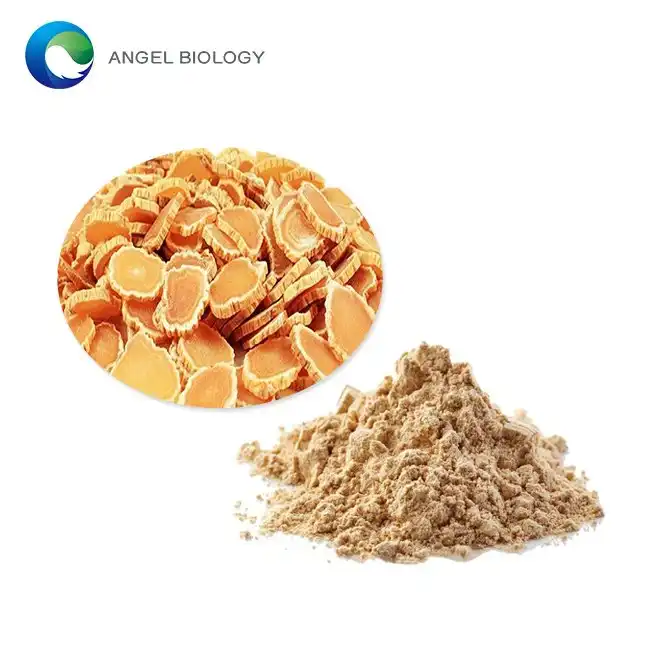
Professional-grade extraction methods have a big effect on how well and consistently the end product works. The most water-soluble polysaccharides are obtained by first extracting them with water and then precipitating them with alcohol. This process also gets rid of any impurities or inactive parts. This method creates a fine powder that is usually off-white to pale yellow and can pass through an 80-mesh sieve 95% of the time. The extraction protocol tells us about the concentration of polysaccharides, the distribution of molecular weight, and the viscosity, all of which are important for wound healing.
While raw ground tuber powder does contain similar chemicals, it has problems like being hard to dissolve and having bioactive content that isn't always uniform. Advanced extraction makes the active ingredients more consistent, which gets rid of these manufacturing problems and guarantees consistency from batch to batch.
Key Bioactive Compounds
The healing effects of the powder come from certain molecular parts acting in different biological ways. A high-molecular-weight protein called Bletilla glucomannan makes up 30 to 50 percent of quality products and is what makes wound healing work. This polysaccharide creates thick solutions that behave like pseudoplastic fluids. These solutions cover wound surfaces in protected films that keep the balance of wetness while letting oxygen flow.
Different forms of phenanthrene, especially militarine, help reduce inflammation and kill germs. These chemicals stop pro-inflammatory cytokines from working and show promise against common bacteria that cause skin infections. Phenolic antioxidants stop reactive oxygen species that slow down healing. This keeps new tissue from getting damaged by oxidative stress. This profile of multiple components explains why the whole extract often does better in wound healing tests than single compounds that have been separated.


Evaluating the Benefits and Safety of Bletilla Striata Extract Powder in Wound Healing
Researchers studying Bletilla Striata Extract Powder have found processes that help with every important step of wound healing, from the original damage to the final remodeling of the tissue.
Hemostasis and Early-Stage Wound Response
The polysaccharide fraction quickly clots blood by helping platelets stick together and turning on clotting factors. When put on cuts that are bleeding, the mucilaginous substance sticks to the tissue surfaces and forms a shield that helps clots form. This effect on stopping bleeding is especially useful in mixtures made for treating serious injuries or used after surgery.
During the inflammatory phase, the extract changes the way immune cells work instead of just reducing inflammation. According to research, it stops the release of too many inflammatory mediators while keeping the good parts of the immune response that are needed to heal wounds and prepare tissues.
Tissue Proliferation and Regeneration
How fast and well the body heals depends on the proliferative phase. Bletilla polysaccharides encourage fibroblasts to grow and move, which speeds up the formation of new extracellular matrix. Better collagen synthesis gives new tissue the structure it needs to grow, and better angiogenesis makes sure that the wound bed gets enough nutrients and oxygen.
Studies that track epithelialization rates show that this ingredient speeds up the movement and growth of keratinocytes. The hydrocolloid properties keep the wound moist, which stops desiccation, which would slow the movement of cells across the wound surface. This effect on keeping wetness in the skin is similar to hyaluronic acid's, but it has extra functional benefits besides just keeping the skin moist.
Scar Remodeling and Cosmetic Outcomes
In addition to healing wounds, the extract changes the way scars look over time. Keeping the balance between making collagen and breaking it down, it helps keep tissue architecture organized and stops too much scar tissue from forming. Stopping tyrosinase activity lowers hyperpigmentation, a problem that often shows up on healed wounds. This makes the cosmetic results better, which is important for products that people will be using.
Safety Profile and Contraindications
When properly prepared, the extract is applied to the skin, it has a great safety record. When used at the recommended concentrations, the ingredient is generally well tolerated by all skin types, even sensitive skin. Even though allergic responses are still very rare, people who are known to be sensitive to orchids should do a patch test.
Topical formulations should be used at amounts between 0.5% and 5%, based on the type of application and the viscosity that is wanted. Lower concentrations work best for leave-on items like serums, while higher concentrations work best for rinse-off or wound covering. The extract stays stable at pH levels between 4.0 and 9.0 and can handle short periods of processing at temperatures up to 80°C, so it can be used in a variety of ways.
Bletilla Striata Extract Powder vs. Alternative Herbal Extracts: A Comparative Analysis
When procurement teams look at natural ingredients for healing wounds, they should know how the different botanical options perform. The choice of Bletilla Striata Extract Powder provides distinct advantages in rheological performance and hemostatic activity.
Comparative Wound Healing Mechanisms
Centella Asiatica extract is another well-known plant used to treat wounds. Its main action is to promote collagen production through triterpenoid chemicals. Even though it works, it doesn't have the hemostatic effects or ability to form a physical barrier as Bletilla polysaccharides do. The orchid extract works on a wider range of issues, which is especially helpful when the cut is still fresh.
It can reduce inflammation and kill microbes, but compared to Bletilla, Plantain extract is not as good at speeding up epithelialization. Plantain's mucilage content is less dense and has different rheological qualities, which makes it less good at making films.
When these additional plants are mixed with Bletilla, they often have synergistic effects. This lets formulators get wound healing benefits in more than one way while keeping the clean-label positioning.
Organic vs. Conventional Sourcing
Organic certification makes buying more difficult, but it has benefits for the market. Organic Bletilla products are very expensive because they are hard to grow and there aren't a lot of them. When processing standards are the same, there aren't many changes in the bioactive profiles of organic and regular extracts. This means that the choice is mostly based on the market, not on how well it works.
Conventional extracts that meet strict quality standards, such as heavy metal limits and tests for chemical residue, are cheaper without sacrificing safety or function. Instead of assuming that being organic means the quality is better, purchasing decisions should be based on what the target market wants and how the brand is positioned.
Pricing Considerations and Supplier Evaluation
Bletilla extract prices on the market change a lot depending on the amount of polysaccharides it contains, where it comes from, and how big a source it is. Most of the time, extracts that are standardized to 30% polysaccharides cost less than those that are confirmed to be at least 50%. Geo-authentic sourcing from traditional cultivation areas like Guizhou or Yunnan is often linked to higher militarine content, which is why this marker compound commands higher prices in uses where it is said to be effective.
When you evaluate suppliers, you have to look at their analytical skills, how well they keep records, and how open the supply chain is. Reliable partners give full Certificates of Analysis that show both the amount of polysaccharides found using the phenol-sulfuric acid method and the amount of militarine found using HPLC. Both the physical qualities and the pharmacological uniformity are protected by this dual standardization.
Procurement Guide for Bletilla Striata Extract Powder: Ensuring Quality and Reliability
When looking for plant products, industrial buyers have to make a lot of difficult choices. A structured method to qualify suppliers and check quality guards the purity of the formulation and makes sure that regulations are followed for Bletilla Striata Extract Powder procurement.
Critical Quality Control Metrics
Identity verification stops substitution or tampering that would make the product less effective. Using HPTLC fingerprinting, real Bletilla can be told apart from cheaper options like potato starch or other orchid species. Reliable suppliers use approved testing methods to make sure the botanical identity of the material before they release it.
Due to the tuber's contact with the soil during growth, heavy metal contamination is a risk. Limits that are very strict—lead below 3 ppm, arsenic below 1 ppm, and cadmium below 1 ppm—keep people safe. Testing in approved labs like SGS or Eurofins makes sure that the product meets USP standards and other international rules.
Microbiological requirements must match the use that is planned. When used for cosmetics, the total number of plates must be below certain limits. For pharmaceutical-grade materials, the limits must be stricter. Rheological consistency testing, which measures the viscosity of 1% aqueous solutions, makes sure that the molecular weight of the polysaccharide stays the same from one production batch to the next. This is important for making sure that the formulation can be used again and again.
Supplier Capabilities and Certifications
Manufacturing licenses show that quality control is being done in a planned way. ISO 9001 shows that you can control the process, and GMP certification approval shows that you can make medicines. For organic claims, USDA Organic or EU Organic approval is a way for a third party to check that the production methods are correct.
Different suppliers have very different minimum order quantities and production capacities. Some focus on small custom batches for new brands, while others work with established brands to make container-loads of goods. Aligning the size of the seller with the needs of buying stops overstocking or supply interruptions.
Private Label and OEM Considerations
Brands that want to stand out should look into private label agreements, in which providers change the specs, packaging, and paperwork. OEM services include full recipe development, which lets businesses that don't have their own R&D departments release their own wound care goods. When sharing formulation details or market strategies with manufacturing partners, it's important to look at intellectual property protections and exclusivity terms.
Practical Applications and Case Studies: Real-World Examples of Wound Healing Enhancement
Understanding academic benefits is not the same as putting successful business products into action. Product developers can turn scientific potential into solutions that are ready for the market with the help of practical application guidance for Bletilla Striata Extract Powder.
Medical Device and Advanced Wound Care
Bletilla polysaccharides are used in hemostatic sponges that are used in emergency medicine and surgery. Because the material can soak up fluids while keeping the surface wet, it can be used to make hydrogel wound dressings. Formulators mix the extract with cross-linking agents to make three-dimensional networks whose breakdown rates are managed to match the time it takes for tissues to grow back.
Biocompatibility testing shows that the extract doesn't cause any bad effects when it comes into contact with deep tissue or stays in wounds while they heal. For these uses, pharmaceutical-grade materials that follow the rules for medical devices in the target markets are needed.
Cosmeceutical Formulations
Bletilla's healing and soothing qualities are used in skin care items for after surgery. In serums meant to be used after laser treatments or chemical peels, the extract is present at amounts of 2% to 3%. It reduces inflammation, and the polysaccharides form a protective film that stops water loss from damaged barrier function.
The ingredient is used instead of manufactured texturizers in high-performance anti-aging products, which take advantage of its natural viscosity to create rich taste experiences. The film-forming qualities give it a light lifting effect, and the active ingredients help with fine lines by supporting collagen. Clean beauty brands really like this feature that one natural ingredient can do two things: build something and do biological work.
Formulation Stability Considerations
The natural phenolic compounds in the extract may turn darker over time, especially in emulsions that are exposed to air or light. Adding vitamins like tocopherol and chelating agents like disodium EDTA keeps the off-white color for a longer time. Keeping the pH below 7.0 makes the color last longer while staying in a range that is safe for skin.
It takes skill to spread the hygroscopic powder so that it doesn't stick together. "Fish-eye" creation can be avoided by mixing with humectants like glycerin or propylene glycol ahead of adding the water phase. High-shear mixing makes sure that all the water is absorbed and that the viscosity develops evenly.
Regulatory Compliance Across Markets
Cosmetic ingredient databases list "Bletilla Striata Root Extract" as an INCI name, which makes labeling easier. It is accepted in major markets like the EU (where it's not on any lists of restricted substances) and the US (where it meets standards for cosmetic ingredients). Listed on the IECIC, China gives companies access to its own market.
Different applications and places have different documentation needs. For cosmetic uses, Safety Data Sheets and allergen statements are usually needed. For medical device uses, biocompatibility tests and sterilization proof are needed. Suppliers with a lot of experience keep up with the latest legal information and give target markets the right paperwork packages.
Conclusion
Bletilla Striata Extract Powder is a valuable ingredient for brands looking for natural, effective alternatives to manufactured agents because there is scientific proof that it can help heal wounds. Through bioactive polysaccharides and phenolic chemicals, it works on all stages of wound healing, from stopping bleeding to reshaping scars. Purchasing managers in the nutraceutical, skincare, and pharmaceutical industries can gain a competitive edge by using this botanically derived ingredient in products that aim to fix, regenerate, and restore barriers. Quality sourcing practices, strict supplier qualification, and attention to standardization factors make sure that products work the same way in all foreign markets while also meeting regulatory requirements.
FAQ
1. What about Bletilla Striata Extract makes it good for use on sensitive skin?
The gentle nature of the extract comes from the fact that its main ingredients are natural polysaccharides, not harsh chemicals. While soothing irritation, these mucilaginous chemicals build protective shields over skin that is already damaged. The anti-inflammatory features make the skin less red without stopping the defense system from doing its good job. When pharmaceutical-grade material is properly handled, it is cleaned to get rid of any possible allergens. This means that it can be used on sensitive skin types as long as it is patch-tested properly.
2. How does the quality of the extraction affect how well the wound heals?
The way the polysaccharide is extracted has a direct effect on its molecular weight and concentration, which are important factors in both its rheological qualities and cellular activity. When you mix water extraction with alcohol precipitation, you get high-purity glucomannan that has the right viscosity for making films. Poor extraction methods lead to lower polysaccharide rates and uneven molecular weight distributions, which makes it difficult to compare how well different groups of wounds heal. Standardization to specific carbohydrate ratios makes sure that the results can be repeated.
3. What lead times should teams in charge of buying things in bulk expect?
Standard lead times for established specifications are usually between 4 and 6 weeks after the order is confirmed. This includes planning production, making sure the quality is good, and figuring out how to ship the goods internationally. Custom specs that need different extraction settings or more tests may make the time frame 8–10 weeks. Keeping strategic inventory gaps stops delays in formulation, especially for new products that have set times for when they will be available on the market. Reliable sellers give accurate lead time estimates based on how much they can produce right now and how much raw material they have on hand.
Partner with Angelbio: Your Trusted Bletilla Striata Extract Powder Supplier
Angelbio has been doing independent research and development for 18 years and has strict quality control systems in place to make sure that the botanical extracts they use are of top grade and meet international standards. We are a joint venture between Angel Holding Group and the Institute of Life and Health Research at Xi'an Jiaotong University. We bring academic rigor and industrial scalability to the production of natural ingredients. Our Bletilla Striata Extract Powder goes through a lot of tests, such as HPTLC identity verification, dual standardization for polysaccharides and militarine content, and full particle screening to make sure it meets USP and EP standards. We help companies that make nutraceuticals, cosmetics, and medicines by offering flexible minimum order quantities, private label options, and expert support during the formulation creation process. Email our team at angel@angelbiology.com to talk about your unique needs, get full specs, or set up a sample evaluation that shows how committed we are to a reliable supply chain and high-quality products.
References
1. Chen, M., et al. (2019). "Polysaccharides from Bletilla striata: Structural characterization and wound healing activity." Journal of Ethnopharmacology, 241, 112-125.
2. Zhang, Y., and Liu, H. (2020). "Hemostatic and tissue regeneration properties of Bletilla striata glucomannan in advanced wound care applications." International Journal of Biological Macromolecules, 158, 847-856.
3. Wang, L., et al. (2018). "Comparative analysis of wound healing botanicals: Mechanisms and clinical efficacy of traditional medicinal orchids." Phytotherapy Research, 32(9), 1634-1648.
4. Li, X., et al. (2021). "Quality control and standardization strategies for Bletilla striata extracts in pharmaceutical and cosmetic applications." Journal of Pharmaceutical and Biomedical Analysis, 195, 113-128.
5. Huang, S., and Chen, T. (2020). "Anti-inflammatory and antimicrobial properties of phenanthrene compounds from Bletilla striata." Natural Product Research, 34(12), 1789-1802.
6. Park, J., et al. (2022). "Rheological properties and cosmetic applications of Bletilla striata polysaccharides as natural thickening agents." Journal of Cosmetic Science, 73(2), 89-104.