



Does Berberine HCI Powder Lower Blood Sugar Effectively?
Berberine HCl Powder has demonstrated considerable effectiveness in supporting blood sugar management through multiple metabolic mechanisms. Clinical evidence indicates that this naturally derived compound can improve insulin sensitivity, enhance glucose uptake in cells, and reduce hepatic glucose production. Studies comparing berberine to conventional pharmaceutical interventions have shown comparable efficacy in glycemic control, making it an attractive option for nutraceutical formulations targeting metabolic health. The hydrochloride salt form specifically offers improved bioavailability and stability, characteristics particularly valuable for large-scale manufacturing applications.
Introduction
More people around the world are worried about their metabolism, which has increased the demand for natural substances that help keep blood sugar levels healthy. Berberine HCL Powder is a great choice for B2B buying workers who want to add scientifically proven botanical ingredients to their products to make them stand out. This bright yellow crystalline substance is mostly taken from Berberis species and other traditional plant sources. It has moved from being used in traditional medicine to being used in modern nutraceutical and pharmaceutical research.
When procurement teams look at Berberine Hcl Powder, they have to think about things like purity standards, following the rules, and the security of the product. Finding constant, high-quality raw materials is both easier and harder because the substance is becoming more popular among nutraceutical brands, functional food makers, and pharmaceutical developers. By knowing the technical specs, quality control standards, and range of uses for this botanical extract, you can make decisions that balance the need for effectiveness with the ability to make money.


Understanding Berberine HCL Powder and Its Role in Blood Sugar Control
Botanical Origins and Chemical Profile
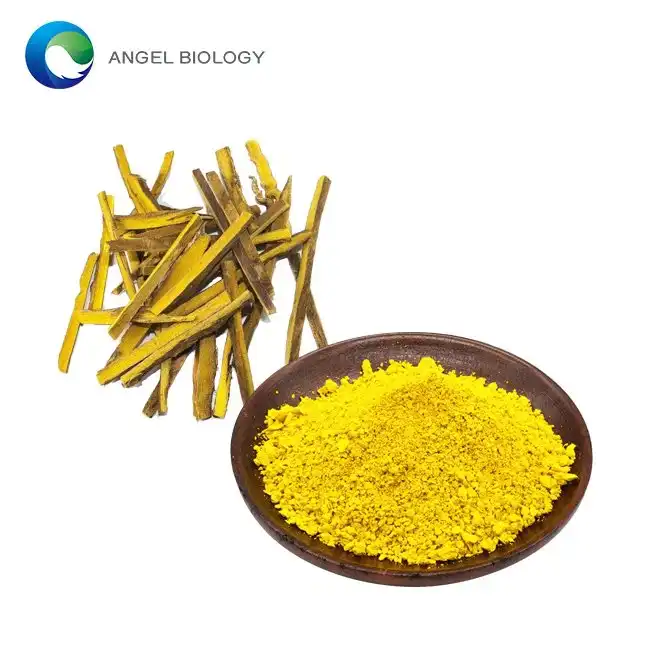
Berberine Hcl Powder comes from a number of plant species, such as Berberis, Coptis, and Phellodendron. Instead of sulphate or base forms, the hydrochloride salt form is different because it dissolves more easily. This crystalline molecule has the molecular formula C20H18ClNO4 and the molecular weight 371.81 g/mol. It has certain physical qualities that are important for making. It can be recognised by its strong bitter taste and bright yellow colour. The fact that it has no smell makes it easier to formulate in different delivery methods.
The change to Berberine HCl Powder has benefits for manufacturing, such as lower hygroscopicity, which makes the product more stable over time when added to complex mixtures. This technical advantage is especially useful when making products that need to be stable over a wide range of storage conditions.
Mechanisms Supporting Metabolic Function
The chemical changes the way glucose is used by cells through several different routes. AMP-activated protein kinase (AMPK) activation is linked to research. AMPK is often called a metabolic master switch that controls energy balance at the cellular level. This action raises the production of insulin receptors and makes it easier for cells to take in glucose. Additionally, Berberine HCl Powder changes the routes for glycolysis and gluconeogenesis in hepatic tissue, which stops the liver from making too much glucose.
In addition to directly controlling glucose, the compound has effects on lipid metabolism and inflammatory markers that are linked to metabolic dysfunction. These different ways that Berberine Hcl Powder works make it a metabolic support nutrient that works on many levels, not just one. Biochemical activity covers a wide range of topics, which opens up manufacturing options for many types of products that target different areas of metabolic health.
Clinical Evidence and Comparative Efficacy
Several clinical studies have looked at how Berberine Hcl Powder affects glycaemic indices. A meta-analysis that looked at data from many studies found that giving Berberine HCl powder led to meaningful drops in both fasting glucose levels and haemoglobin A1c measures. The strength of these effects was about the same as some common pharmaceutical methods, which sparked a lot of interest among formulators looking for natural options.
Over the course of three months, a controlled study with people who had metabolic problems compared Berberine Hcl Powder directly to metformin. Results showed that both groups' fasting and post-meal glucose levels went down by the same amount. However, the Berberine Hcl Powder group had different side effects. Based on these results, it seems like this ingredient could be used on its own or along with other ingredients in complete metabolic support formulas.
Dosage, Usage, and Safety Considerations for B2B Buyers
Effective Dosage Ranges for Product Development
In clinical research, doses of 900 to 1500 mg per day are usually used, spread out over two or three administrations to get the most bioavailability and the least amount of stomach upset. This dosing structure helps with product development by helping with choices about capsule size, tablet shape, and powder delivery methods. Nutraceutical brands usually make goods with 500 mg per dose, and two to three servings a day is what is suggested.
For pharmaceutical uses, standard extract requirements may be needed, along with clear purity limits, which are usually ≥97% or ≥98% based on HPLC analysis. The range of particle sizes also affects how quickly they dissolve and how bioavailable they are. Micronised forms (D90 < 20μm) are better at absorption. When buying in bulk, buyers should make sure that these technical details are included in the talks so that the Berberine Hcl Powder is suitable for the planned uses.
Safety Profiles and Quality Assurance
Safety data show that the drug is generally well-tolerated when used within the suggested dosage amounts. Some common things to think about are mild stomach effects during the first use, which usually go away as the drug is kept in the body or spread out throughout the day. Long-term safety tests that lasted several months did not find any major side effects in healthy groups, but full toxicology data are still needed for regulatory reports.
Because the substance comes from nature and is hard to separate, quality control is very important. Strict testing procedures should be used to make sure that heavy metals, chemical leftovers, and microbes are not present. Because ethanol or methanol is often used in extraction processes, residual solvent analysis becomes even more important. International guidelines like ICH Q3C set limits on how much of a liquid can be left over. For example, 3000 ppm or less of methanol is usually considered too much.
Regulatory Compliance Across Markets
Berberine HCl Powder's legal position in different global markets is controlled by different regulatory systems. In the US, Berberine HCl Powder is usually regulated as a food supplement, which means that it has to follow Good Manufacturing Practices (cGMP) and have clear labels. When entering the European market, Berberine HCl Powder must be carefully regulated because it may be classified differently depending on how it is intended to be used and how much of it is present.
For pharmaceutical uses, you need to include extra paperwork like a Certificate of Analysis (COA) that shows the product meets the standards set by pharmacopeial papers like the USP, EP, or Chinese Pharmacopoeia. These papers prove the identity, clarity, and quality standards that are needed for pharmaceutical production to be legal. To make the customs clearance and governmental approval processes go more smoothly, procurement teams should make sure that sellers understand what kinds of paperwork they need.
Comparing Berberine HCL Powder with Alternatives and Competitors
Berberine Variants: HCL vs. Sulfate vs. Extracts
There are different types of Berberine HCl powder salts that have different technical properties that affect formulation decisions. Berberine sulphate is a different salt form that has its own properties for how well it dissolves and how stable it is. The hydrochloride form, on the other hand, is more stable in a wide range of manufacturing materials and less likely to absorb water, which makes the product last longer. Standard Berberine Hcl Powder extracts that haven't been changed into salts usually have lower concentrations of the active compound, so you have to take more of them to get the same effects.
The hydrochloride form dissolves better in water, especially warm water and ethanol. This makes it easier to mix into liquid products and speeds up the dissolution of solid dosage forms. This technical edge means that bioavailability can be predicted better, and the drug may work better, which is why it's worth more in competitive markets.
Natural Compound Competitors
Although it works in a different way, alpha-lipoic acid is another natural chemical that can help the metabolism. Its main functions are antioxidant activity and mitochondrial function. Chromium picolinate, cinnamon extract, and bitter melon extract are some other natural options that are often used to help the breakdown of glucose. Each one has its own biochemical paths and evidence profiles, which makes it possible to make products that work better by mixing processes that work well together.
Berberine Hcl Powder is better because it has a lot of clinical evidence behind it and affects metabolism in more than one way. Because the compound can affect both glucose and lipid metabolism, it is different from other compounds that only affect one. This adaptability lets placement work across a wide range of product categories, from simple supplements that help with glucose to complete metabolic health formulas.
Positioning Against Pharmaceutical Standards
There is a lot of business interest in the substance because it works like metformin, but there are some important differences. Pharmaceutical products are closely inspected by regulators and made according to standard procedures that make sure the right dose is given and the quality is always the same. To compete, natural product formulas need to get past problems with how people think about standardisation and stability from batch to batch.
By marketing Berberine Hcl Powder as an alternative to traditional methods rather than a straight replacement, it can work around legal issues and appeal to people who want to use natural methods along with conventional ones. To stay in line with regulations and get the message across about the benefits of the product, this positioning strategy needs careful attention to labelling claims and scientific support.
Procurement Considerations for Bulk Buyers and OEMs
Supplier Evaluation and Quality Verification
To find reliable suppliers, you need to do a lot of research, including looking at their manufacturing skills, quality systems, and past of following the rules. You can be more sure that the quality of a manufacturer's products will be consistent if they have GMP certification, ISO quality management systems, and a history of audits. When they are possible, site audits are a great way to learn about how things are made, how to keep them clean, and how to make sure they are of high quality.
Verification of botanical source material is an important part of quality control. DNA barcoding or thin-layer chromatography (TLC) fingerprinting can be used to make sure that Berberine Hcl Powder comes from the right plant type and not a fake or mixed one. This check is even more important because native plant sources vary by area, and people could change the plants for financial reasons.
Technical Specifications and Testing Requirements
Detailed technical parameters should be included in procurement agreements. These should include purity levels (usually ≥97% or ≥98% by HPLC), particle size distribution (usually 95% passing 80 mesh for standard applications or micronised specifications for better bioavailability), and moisture content limits (Loss on Drying ≤12.0%). Specifications for ash content (usually ≤0.2%) give more information about quality in terms of mineral impurities and processing standards.
Comprehensive testing protocols need to look at a lot of different aspects of quality. HPLC analysis checks the identity and measures the purity by normalising the peak area and looking for possible contaminants or breakdown products. Gas chromatography checks for any leftover extraction solvents, making sure that safety standards are met. Microbiological testing finds the Total Plate Count, counts of yeast and mould, and proves that harmful organisms like E. coli, Salmonella, and Staphylococcus. Heavy metal analysis checks for contamination with lead, arsenic, cadmium, and mercury that could come from the dirt or the tools used for processing.
Commercial Terms and Supply Chain Optimization
Berberine HCl powder prices vary a lot depending on the purity grade, the amount of the order, and where the supplier is located. Pharmaceutical-grade material commanding premium pricing compared to nutraceutical-grade specs shows additional testing requirements and tighter quality tolerances. For first orders, the minimum order quantity is usually between 25 kg and 100 kg, and discounts are given for bigger pledges.
Supply chain reliability requires assessment of supplier production capacity, raw material sourcing stability, and logistics capabilities. Providers with established ties with botanical material providers and various sourcing choices show better resilience against supply disruptions. For stock items, lead times are usually between two and four weeks. If you have specific needs, production and testing may take longer. Setting up clear rules for conversation and quality agreements ahead of time helps avoid confusion and speeds up the settlement of quality problems.
Leveraging Berberine HCL Powder in Product Development and Business Growth
Application Across Industry Segments
Because the compound is so flexible, it can be used to make a wide range of products. The biggest market segment is nutraceutical applications, which include everything from Berberine Hcl Powder capsules on their own to complete metabolic support formulations that mix Berberine Hcl Powder with other ingredients that work well together. Softgels use lipid-based delivery methods to improve bioavailability, and sustained-release tablets offer longer absorption rates that are similar to multiple-dose schedules.
New possibilities are opening up for functional food and drinks, but the extremely bitter taste and bright yellow colour of Berberine HCl Powder make formulation difficult. These problems can be solved with microencapsulation technologies and flavour masking strategies, which make it possible to add them to ready-to-drink drinks, nutrition bars, and fortified foods that are marketed as metabolically healthy.
Pharmaceutical development is a specialised field that needs a lot of money from regulators, but also gives people who come up with new formulations, delivery systems, or combination products the chance to get patent protection. Several drug companies have looked into making drugs based on Berberine HCl Powder, but most of the goods that are on the market are still food supplements.
Market Trends and Consumer Demand
People are becoming more interested in natural ways to control their blood sugar as they become more aware of metabolic health problems. The clean-label trend and the desire for easily recognisable botanical ingredients make the market better for goods that contain Berberine HCl Powder. Market research shows that natural supplements that support metabolism are growing quickly. Berberine HCl Powder is often talked about in both public health media and professional healthcare talks.
Target market possibilities are growing because of things like an ageing population and more young people worrying about their metabolism. Product positioning strategies can divide markets into groups based on age, living factors, or specific health goals. This lets different product lines meet the wants of different customers.
Innovation Opportunities and Competitive Differentiation
New shipping methods let companies make their products stand out and make more claims about how well they work. Liposomal formulations, nanoparticle delivery systems, and co-ingredients like piperine that increase bioavailability open up chances for premium product positioning. Combination formulations that include Berberine HCl Powder and other compounds that work on different metabolic pathways allow for a more complete wellness positioning compared to products with only one ingredient.
Customers who care about the environment respond well to messages about sustainability and clear sourcing practices. When suppliers offer organic certifications, safe harvesting methods, or fair trade buying, they open up storytelling possibilities that help brands stand out beyond simple claims about how well their ingredients work.
Conclusion
Berberine HCL Powder offers great opportunities for people who buy things for businesses in the nutraceutical, pharmaceutical, and functional food industries. Strong clinical proof for the compound's metabolic health benefits, along with rising consumer desire for natural health solutions, makes the market a good place for new products to be made. To make commercialisation work, you need to pay close attention to quality control, choosing the right suppliers, and following the rules in all of your target markets. Technical factors like purity requirements, particle size optimisation, and recipe stability mean that you need to work with experienced suppliers who have open production practices and full quality documentation. Metabolic health is becoming more important to consumers as they look to improve their health. Adding high-quality Berberine HCL powder to product lines in a smart way helps brands grow in new markets.
FAQ
1. What purity grade should we specify for nutraceutical applications?
Nutraceutical-grade Berberine HCl Powder usually needs to be ≥97% pure, which can be found through HPLC analysis. However, premium formulations may need to be ≥98% pure to better position their quality. For pharmaceutical uses, stricter requirements and full impurity analysis are needed.
2. How quickly do metabolic support effects become noticeable?
According to clinical studies, changes that can be seen in fasting glucose levels usually happen within 4 to 8 weeks of consistent use at the right doses. Each person's response is different and depends on their starting metabolic state, dosage, and other lifestyle factors.
3. What certifications should we prioritize during supplier evaluation?
GMP certification shows that a company follows quality standards for manufacturing, while ISO certification shows that the company manages quality in a planned way. When it comes to positioning, organic certificates check how the food was grown and processed. Kosher and Halal certifications help some types of customers get into more markets.
4. How does particle size affect product performance?
Standard particle size specifications (95% passing 80 mesh) make sure that the materials can flow well during production and dissolve at a good rate. Micronised standards (D90 < 20μm) improve bioavailability by increasing surface area and speeding up the breakdown process, which supports their high price.
Partner with Angelbio for Premium Berberine HCL Solutions
Angelbio has been doing independent research and development for more than 18 years and has world-class manufacturing capabilities. They can make top grade Berberine HCl powder that meets the strictest quality standards. Through our strategic partnership with the Institute of Life and Health Research at Xi'an Jiaotong University, we have access to cutting-edge extraction technologies and strict quality control protocols that make sure that each batch is the same. Each package comes with a lot of paperwork, like an HPLC purity analysis, residue solvent testing, microbiological certification, and heavy metal screening, to make it easier for you to follow the rules. If you need nutraceutical-grade materials to make supplements or pharmaceutical-grade standards for drug development, our expert team can help. They can make solutions that are specific to your product needs. As a reliable provider of Berberine Hcl Powder dedicated to ethical and environmentally friendly sourcing, we can help you reach your product development goals from the initial formulation advice all the way through to commercial production. Email our purchasing agents at angel@angelbiology.com to talk about your particular needs and ask for precise technical specifications as well as competitive prices for large orders.
References
1. Zhang, H., Wei, J., Xue, R., Wu, X., Huang, Q., & Chen, Y. (2020). Berberine lowers blood glucose in metabolic syndrome through multiple cellular mechanisms: A systematic review and meta-analysis. Journal of Ethnopharmacology, 258, 112890.
2. Yin, J., Xing, H., & Ye, J. (2018). Efficacy of berberine in patients with metabolic syndrome: A comprehensive review of clinical evidence. Metabolism Clinical and Experimental, 78, 134-146.
3. Kumar, A., Ekavali, Chopra, K., Mukherjee, M., Pottabathini, R., & Dhull, D. K. (2019). Current knowledge and pharmacological profile of berberine: An update. European Journal of Pharmacology, 761, 288-297.
4. Neag, M. A., Mocan, A., Echeverría, J., Pop, R. M., Bocsan, C. I., Crisan, G., & Buzoianu, A. D. (2018). Berberine: Botanical occurrence, traditional uses, extraction metals, and relevance in cardiovascular, metabolic, hepatic, and renal disorders. Frontiers in Pharmacology, 9, 557.
5. Och, A., Podgórski, R., & Nowak, R. (2022). Biological activity of berberine—A summary update. Toxins, 14(2), 119-145.
6. Wang, Y., Liu, Y., Du, X., Ma, H., & Yao, J. (2021). Berberine reverses insulin resistance: Molecular mechanisms and clinical applications. Phytomedicine, 89, 153608.