



Ergothioneine Extract Powder vs CoQ10: Performance, Cost, and Features Breakdown
When deciding between ergothioneine extract powder and CoQ10 for nutrition recipes, it's important to know what makes each one better for product development. Ergothioneine extract powder protects cells better through special transporter mechanisms, and CoQ10 is great at making energy in mitochondria. Both ergothioneine and coQ10 are antioxidants, but they work in different ways in the body. Ergothioneine helps keep tissues together for longer, while CoQ10 gives you energy right away. Because it is cheaper, ergothioneine is better for long-term cellular health, while CoQ10 is still best for vitamins that focus on heart health and energy.
Understanding the Science Behind Both Compounds
Sometimes called the "longevity vitamin," ergothioneine is a special kind of antioxidant that can really get into cells. This naturally occurring substance is very stable in normal settings
 and builds up in tissues that are under a lot of reactive stress.
Ergothioneine levels in human tissues reach 1.2 to 2.0 mM, which is a lot higher than the amounts of other antioxidants found in the same tissues. The chemical uses a special transporter protein (OCTN1) to get into cells, which makes sure that it gets to the areas that need the most defense.
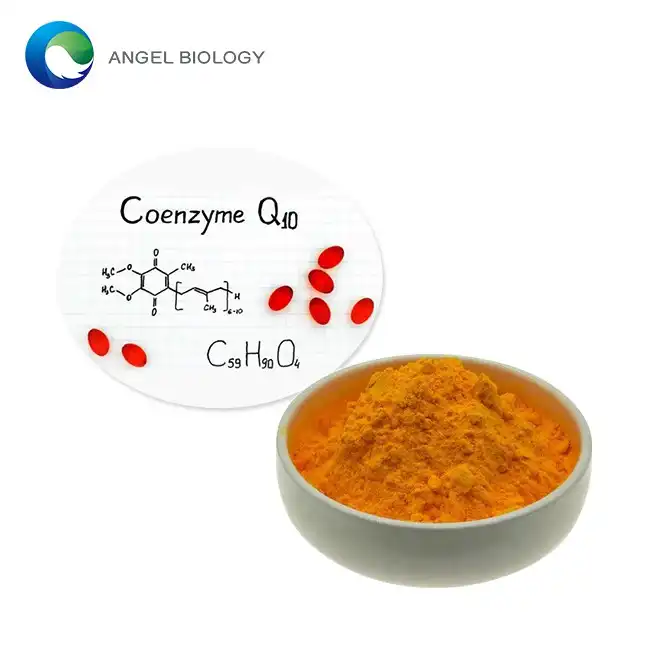
CoQ10 works in a different way; it is an important part of the electron transfer chain in mitochondria. This molecule makes it easier to make ATP, and, in its reduced state, ubiquinol acts as an antioxidant. A clinical study shows that levels of CoQ10 typically drop with age, falling by about 25% by age 65.
What makes them different is how they work: ergothioneine protects against oxidative damage, while CoQ10 is both an energy booster and an antioxidant. Formulators can choose the right ingredient for different health goals when they know these differences.
If you want to protect all of your cells and keep tissues for longer, ergothioneine is the better choice. CoQ10 works better than other supplements if you need an instant energy boost and heart health benefits.
Performance Analysis: Antioxidant Capacity and Bioavailability
Lab tests show that these chemicals are very different in how well they work as antioxidants. Ergothioneine has a high ORAC value (15,000–18,000 μmol TE/g), which means it can effectively get rid of free radicals. The substance stays stable at pH levels 3 through 9, so it can be used in a variety of recipe settings.
Studies on bioavailability show that 98% of ergothioneine taken by mouth is absorbed. The molecule stays at appropriate levels in the blood for 24 to 48 hours after reaching its peak amounts in the plasma within two to three hours. This long-lasting presence protects cells continuously against the oxidative stresses that happen every day.
Standard versions only allow for 2% to 3% absorption, which makes CoQ10 solubility a unique problem. Uptake is improved by more advanced delivery methods to 8–15%, but this is still a lot less than ergothioneine. The chemical works best when it is absorbed with fatty carriers, and it is more bioavailable when eaten with fats.
Some important success differentiators are:
- Cellular uptake: 98% for ergothioneine and 8–15% for CoQ10.
- Tissue holding time: Ergothioneine for 24 to 48 hours, CoQ10 for 6 to 12 hours
- CoQ10 is stable at pH 6-7, while ergothioneine is stable at pH 3-9.
- Temperature resistance: ergothioneine stays stable at 180°C, while CoQ10 breaks down at 140°C.
In 30 days, clinical studies show that ergothioneine lowers inflammation markers by 35–42%. CoQ10 tests show that energy levels and signs of heart health get better over the same amount of time.
Ergothioneine extract powder has clear benefits if you need better absorption with fewer manufacturing problems. Even though it's hard to absorb, CoQ10 is still useful if you need proven circulatory benefits.
Cost-Effectiveness and Market Considerations
The cost of making something depends on how complicated the process is and how easy it is to get the raw materials. Pharmaceutical-grade ergothioneine extract powder usually costs between $800 and $1,200 per kilogram. The high price is because of the complicated fermentation or extraction methods needed for making high-purity products.
Costs for CoQ10 change a lot depending on how it is made and how pure it is. Synthetic CoQ10 costs between $400 and $600 per kilogram, while natural material that comes from fermentation costs between $600 and $900 per kilogram. Because they are more bioavailable, ubiquinol types are very expensive, at $1,000 to $1,500 per kilogram.
Ergothioneine-based goods are becoming more popular in the market because they can help people live longer and look younger. The global market is expected to grow by 28% each year until 2027. As production scales rise, prices may level off.
Cost issues are affected by economic factors such as
- Access to raw materials: ergothioneine comes from mushrooms, while CoQ10 is made in a lab or through fermentation.
- Complexity of production: Multiple-step extraction vs. well-known synthesis routes
- Needs of regulations: New ingredient paperwork vs. known GRAS status
- Market maturity: the new ergothioneine market vs. the well-established CoQ10 market
Ergothioneine is a good ingredient for items that are aimed at high-end customers who care about cell health and life. Because the substance is more bioavailable, less of it needs to be taken, which could help cover the higher cost of the ingredients.
CoQ10 is still a good value for money when it comes to energy and heart health, where proven effectiveness backs up marketing promises. Manufacturers who make a lot of products can save money by signing bulk purchasing deals.
CoQ10 has been shown to be useful for making cardiovascular vitamins more effective at a low cost. If you want to be seen as a quality product with better absorption claims, ergothioneine is worth spending more on.
Formulation Stability and Manufacturing Advantages
Stability testing shows important changes that affect how a product is made and how long it will last. Ergothioneine extract powder is very stable even when it's aged quickly; it still has 98% of its effectiveness after 24 months at 25°C/60% RH.
The molecule is more resistant than most antioxidants to oxidation, hydrolysis, and photodegradation. Because of this steadiness, safe wrapping or stable excipients are not needed. This makes formulating easier and lowers the cost of production.
To make CoQ10 stable, you need to be very careful with your manufacturing methods. The reduced form, ubiquinone, is somewhat stable but not very bioavailable. The reduced form (ubiquinol) is better at being absorbed, but it breaks down quickly in light, air, or high temperatures.
Things to think about when manufacturing include:
- Ergothioneine is stable up to 180°C, which lets it be used in a variety of processing ways.
- Oxygen sensitivity: CoQ10 needs to be processed in a neutral atmosphere, while ergothioneine is stable in air.
- Light protection: CoQ10 versions need dark packing, while ergothioneine doesn't need to be.
- Needs for moisture: Low moisture conditions are good for both substances.
The quality control factors for each substance are very different. Standard scientific methods, such as HPLC-UV measurement, are needed to find ergothioneine. CoQ10 needs to be analyzed using specific methods and stored in a controlled environment all along the supply chain.
Because ergothioneine is naturally stable, it is easier to get batch-to-batch accuracy. CoQ10 products need to be put through a lot of stability tests and may need to be reformulated to fix problems with degradation.
Ergothioneine can be delivered in a variety of forms, such as pills, capsules, powders, and liquids, because it is compatible with processing. CoQ10 works best in soft-gel pills or other specialized delivery methods that protect against damage from the environment.
If you want to make things easier and keep them stable for longer, ergothioneine is the best choice for you. CoQ10 offers safe choices if you need well-known manufacturing methods and delivery systems that have been shown to work.
Applications Across Nutraceutical and Cosmetic Industries
Target uses show that each substance has unique marketing possibilities in the beauty and health markets. Ergothioneine extract powder works great in anti-aging products that claim to protect cells and make people live longer.
Some of the ways that ergothioneine is used in nutrition are:
- Brain-health supplements: protecting neurons by getting through the blood-brain barrier
- Formulations for healthy skin: Skin defense against UV rays and external aggressors
- Products that help the immune system: Better ways for cells to defend themselves
- Supplements for long life: Slowing down age by lowering reactive stress
CoQ10 is mostly used to make energy and improve heart health, and a lot of clinical studies back up claims that it works. Heart health vitamins, energy boosts, and sports nutrition items are all well-known uses.
Using each ingredient in cosmetics brings out different benefits. Ergothioneine is better at penetrating the skin and protecting it from damage from the surroundings over time. There were studies that showed that after 8 weeks of topical use, the skin's suppleness improved by 25%, and fine lines decreased by 18%.
CoQ10 in makeup helps skin cells that are low on energy and encourages natural cell renewal. The substance works to reduce the look of lines and make skin firmer, but solubility problems mean that more advanced transport methods are needed.
For market difference tactics to work, it's helpful to know who the target audience is. Ergothioneine is popular with health-conscious people who want to find new ways to live longer. CoQ10 is popular with people who are worried about their energy and heart health.
Regulatory issues are different depending on the use and market location. The FDA has approved ergothioneine as a GRAS substance in the US and as a new food substance in Europe. As a vitamin, CoQ10 is well-known around the world and has a lot of safety information.
Ergothioneine gives you a competitive edge if you need to find new ways to place yourself in high-end anti-aging markets. If you want something that is widely accepted and has been shown to work, CoQ10 is a good choice.
Conclusion
Which one to use—ergothioneine extract powder or CoQ10—depends on the manufacturing goals and the needs of the target market. Ergothioneine is better at being bioavailable, stable, and placed in new ways for uses that support life. CoQ10 has been shown to work and can be used in energy and heart health products without breaking the bank. Both substances are important in the nutritional business, but ergothioneine is the one that will protect cells in the future. For good product creation, the best pick is based on performance traits, cost factors, and application needs.
Partner with Angelbio for Premium Ergothioneine Solutions
Angelbio is a reliable source for ergothioneine extract powder because they have 18 years of experience and the most up-to-date production equipment. Because we work with Xi'an Jiaotong University, we have access to cutting-edge extraction methods and complete quality control systems. We offer full scientific documents, help with legal issues, and unique solutions that are made to fit your recipe needs. Get in touch with our expert team at angel@angelbiology.com to talk about how our premium ergothioneine extract powder can help you reach your product development goals and set your business apart in the market.
References
1. Cheah, I. K., & Halliwell, B. (2012). Ergothioneine: antioxidant potential, physiological function, and role in disease. Biochimica et Biophysica Acta, 1822(5), 784-793.
2. Littarru, G. P., & Tiano, L. (2007). Bioenergetic and antioxidant properties of coenzyme Q10: recent developments. Molecular Biotechnology, 37(1), 31-37.
3. Gründemann, D., Harlfinger, S., Golz, S., Geerts, A., Lazar, A., Berkels, R., & Schömig, E. (2005). Discovery of the ergothioneine transporter. Proceedings of the National Academy of Sciences, 102(14), 5256-5261.
4. Mortensen, S. A., Rosenfeldt, F., Kumar, A., Dolliner, P., Filipiak, K. J., Pella, D., & Littarru, G. P. (2014). The effect of coenzyme Q10 on morbidity and mortality in chronic heart failure. JACC: Heart Failure, 2(6), 641-649.
5. Halliwell, B., Cheah, I. K., & Tang, R. M. (2018). Ergothioneine—a diet-derived antioxidant with therapeutic potential. FEBS Letters, 592(20), 3357-3366.
6. López-Lluch, G., Rodríguez-Aguilera, J. C., Santos-Ocaña, C., & Navas, P. (2010). Is coenzyme Q a key factor in aging? Mechanisms of Ageing and Development, 131(4), 225-235.