



From Synthesis to Finished Powder: How PQQ Bulk Ingredients Are Made
Different steps are involved in producing PQQ bulk ingredients. First, manufacturers select qualified raw materials and carry out a synthesis or fermentation process, depending on the production route. The resulting material is then purified to obtain pyrroloquinoline quinone disodium salt, followed by drying, milling, and sieving to produce PQQ powder. Before release, each batch is evaluated for identity, assay, impurities, heavy metals, and microbiological parameters. The results are recorded in a batch-specific certificate of analysis (COA). This guide is designed for buyers who want to understand the manufacturing stages, review a COA with confidence, and ask suppliers more informed questions before placing a bulk order.
What Is PQQ Powder and Why Does the Manufacturing Route Matter?
PQQ Powder as a Bulk Active Ingredient
Pyrroloquinoline quinone (PQQ) is a quinone compound that has attracted scientific interest because of its biochemical properties. In 2003, Kasahara and Kato published research in Nature discussing PQQ as a potential vitamin-like factor. In commercial supply, however, PQQ powder is a bulk raw material rather than a finished capsule, tablet, or supplement. Brands typically purchase it in kilogram quantities and incorporate it into their own products through blending, encapsulation, tableting, or other formulation processes.
Scientific studies have examined PQQ in relation to cellular processes, including mitochondrial function and redox activity. For example, a 2010 study published in the Journal of Biological Chemistry reported changes in mitochondrial-related markers in experimental cell models following PQQ exposure. Such laboratory findings should not be interpreted as proof that every commercial PQQ ingredient or finished supplement produces the same effects in humans. They are research findings, not automatic product claims. Brands should review the available evidence and consult regulatory professionals before preparing consumer-facing statements.
The Disodium Salt Form and Specification Details
Most commercial bulk PQQ is supplied as pyrroloquinoline quinone disodium salt, with the molecular formula C14H4N2Na2O8 and a molecular weight of approximately 374.17 g/mol. It is generally supplied as a crystalline powder with a reddish-brown to dark-brown appearance and measurable water solubility. Its moisture behavior should also be considered during handling and storage.
Suppliers may use different names and descriptions for their products. Before requesting samples, specify the chemical name, CAS number, salt form, and required specification. Then confirm that the chemical form stated on the COA matches the form listed in the quotation and product specification. The free acid and disodium salt are different forms, so confusing them can affect assay interpretation and formulation calculations.
Why a "99% Purity" Number Is Only the Starting Point
A purity or assay percentage represents a result obtained using a particular analytical method. It does not independently describe the production route, moisture content, particle size, packaging, or storage performance. In a beverage premix or tablet blend, two batches with similar assay results may still behave differently during processing.
Manufacturing, purification, drying, particle-size control, testing, and storage all influence the final material. When R&D teams understand these stages, they can better assess potential differences between batches and request the documents needed for formulation work. The following sections explain how PQQ moves from raw materials to a finished bulk powder.
From Raw Materials to a Purified PQQ Bulk Ingredient
Qualified Raw Materials and Traceability
Consistent production begins before the main reaction takes place. Manufacturers should purchase raw materials from evaluated suppliers, inspect incoming materials against defined specifications, and record the lot numbers used in each finished batch. This traceability allows a buyer or quality team to review the source of a batch when needed, particularly if changes in raw materials are associated with differences in color, composition, or impurity profiles.
For dietary supplement ingredients intended for the U.S. market, buyers should review the applicable requirements for ingredient identity and supplier qualification. Supplier documentation may form part of the buyer's own qualification records, so it is important to confirm how the supplier verifies incoming materials and maintains batch traceability. At the beginning of a supplier evaluation, request a manufacturing flow chart and a written description of the traceability process.
Synthesis and Fermentation Routes at a High Level
Technical literature and commercial materials describe more than one route for producing PQQ powder. Microbial fermentation is one documented approach, and Hyphomicrobium denitrificans is among the microorganisms discussed in PQQ production research. Chemical synthesis is another possible route. Since manufacturers may use proprietary reaction conditions and process controls, there is no single production procedure that applies to every supplier.
Buyers can still evaluate the information available about process control. Temperature, pH, reaction time, and other process parameters may influence reaction performance, yield, and the formation of process-related impurities. These factors can also affect the purification work required later. Ask each supplier to identify the production route in a written source or process declaration. Claims such as "fermentation-derived," "synthetic," or "natural" should be supported by appropriate documentation rather than marketing descriptions alone.
In-Process Controls That Protect Reproducibility
Manufacturers may collect samples at different production stages to assess reaction progress and determine whether the material is ready for further processing. Depending on the manufacturing route, process records may include chromatographic results, temperature data, pH measurements, and other relevant production parameters. Reviewing these records across batches can help identify process variation and support more consistent production outcomes.
Buyers may not have direct access to the production equipment, but they can ask practical questions. Does the manufacturer conduct in-process testing? Are key production stages documented? Who reviews the results before a batch moves to purification? Clear procedures, traceable records, and defined approval responsibilities provide useful evidence of manufacturing control. If the answers are unclear, request further explanation before proceeding with supplier approval.
Purification, Drying, and Milling: Turning PQQ into Finished Powder
Purification and Salt Form Control
After the reaction, the process material may contain by-products, residual salts, unreacted starting materials, and other process-related substances. Depending on the production route, filtration, precipitation, crystallization, and washing may be used to separate the target compound and improve its composition. Analytical results for assay, related substances, appearance, and other specified parameters help buyers evaluate the final material.
At this stage, pH adjustment, salt-form control, and moisture management may also be important for obtaining the intended disodium salt. Buyers should request method-specific solubility data rather than relying on general descriptions. Any solubility value should be accompanied by the concentration, temperature, solvent, pH, and test method used. A statement such as "highly soluble" is not sufficient for making formulation decisions.
Drying Methods and Moisture Control
Purified PQQ must be dried before it can be supplied as a powder. Vacuum drying can support moisture removal under controlled temperature conditions, while tray drying may be used for suitable crystalline materials. Spray drying may also be used in some processes, but buyers should confirm whether carriers or processing aids are included in the final ingredient. If the requirement is pure PQQ disodium salt without carriers, this should be clearly stated in the specification and verified through the relevant documentation.
Regardless of the drying method, moisture, light, oxygen, and temperature should be considered during subsequent handling and storage. The moisture behavior of PQQ disodium salt can influence its packaging and storage requirements. Ask for the specified moisture limit and the analytical method used, such as Karl Fischer titration or loss on drying. These methods measure moisture-related parameters differently, so the reported result should always be interpreted in the context of the stated method.
Milling, Sieving, and Particle Size
Milling and sieving are used to control particle size distribution. Particle size can influence powder flow, mixing behavior, dust generation, and processing performance in capsule or tablet production. A finer grade may disperse differently in a beverage base, while a coarser grade may behave differently during powder feeding and filling. The appropriate particle-size range depends on the intended application and should be confirmed through formulation trials.
This stage also helps distinguish pure PQQ from blends containing carriers or other ingredients. A blend contains a different amount of PQQ per gram than a pure ingredient, so the product description, specification, and assay results must clearly identify the material being supplied. Ask about moisture, particle size, appearance, assay, and batch uniformity. Then evaluate whether the grade is suitable for your intended format, such as capsules, tablets, drinks, sachets, or premixes.
Testing Before Release and Reading a PQQ Powder COA
The Testing Package Expected Before Shipment
A batch release package should provide relevant evidence of identity, assay, related substances, heavy metals, residual solvents where applicable, degradation-related impurities where specified, and microbiological parameters. Additional testing, such as pesticide residues, allergen information, or other elemental impurities, may be needed depending on the raw materials, manufacturing route, target market, and intended application.
Stability studies and packaging evaluations provide information about the material's suitability for its proposed storage period. Packaging and storage conditions are part of the overall product specification because PQQ powder may be affected by moisture, light, oxygen, and unsuitable temperatures. A purity figure alone cannot provide a complete picture of product quality or storage suitability.
Essential COA Fields and Batch Match
A useful COA should include the product name, chemical form, batch number, manufacturing date where available, specification, test results, analytical methods, approval status, and release date. One of the simplest but most important checks is batch identification: the number on the COA should match the number on the drums or packaging received.
A COA without a batch number may be a sample document rather than evidence for a specific shipment. Suppliers should support claims such as "high purity" or "99% PQQ" with a current, batch-specific COA. Compare the stated specification with the listed analytical methods, since a result is difficult to evaluate without knowing how it was obtained. If any required parameter is missing, ask the supplier to clarify whether it is tested routinely or available upon request.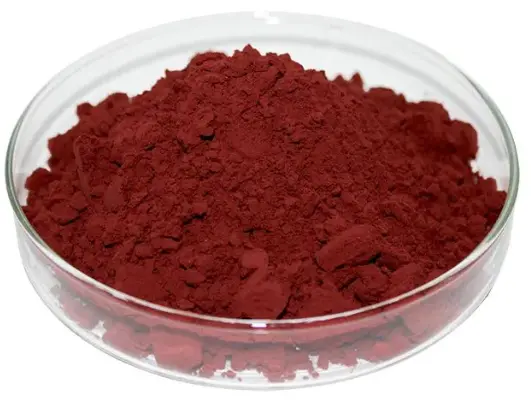
Supplier Quality Package and Independent Testing
The COA is only one part of supplier evaluation. Buyers may also request product specifications, safety data sheets, allergen statements, manufacturing flow charts, traceability procedures, relevant ISO certificates where applicable, and other supporting technical documents. Together, these records help buyers understand the supplier's production controls and documentation practices rather than relying on the results from one batch alone.
Independent laboratory testing can support supplier qualification, incoming material verification, or the investigation of a quality concern. It should complement, rather than replace, a supplier's own documented testing and batch review procedures. Many buyers independently test initial batches and then establish an incoming inspection schedule and periodic verification plan after the supplier has demonstrated consistent performance.
Comparing, Choosing, and Buying PQQ Powder in Bulk
Pure PQQ Powder, Blends, and Related Ingredients
Procurement teams often compare pure PQQ powder with blends containing CoQ10, ubiquinol, vitamins, minerals, carriers, or combinations of these ingredients. The differences affect labeling, dosage calculations, formulation flexibility, and cost per active ingredient. PQQ is chemically distinct from CoQ10 and ubiquinol, so these ingredients should not be treated as interchangeable.
Similar considerations apply when comparing finished capsules with bulk powder. Bulk powder usually provides greater flexibility for formulation and packaging, but buyers should confirm the minimum order quantity (MOQ), available packaging options, and production lead time. For finished capsules or other finished products, clarify which party is responsible for formulation decisions, label review, finished-product testing, and market-specific documentation.
Qualifying a Supplier or Manufacturer
I evaluate suppliers based on their production capability, documented manufacturing controls, batch consistency, technical support, relevant certifications, traceability, export documentation, available capacity, lead time, and communication. Direct manufacturers, contract manufacturers, distributors, and trading companies may differ in pricing, MOQ, technical access, and responsibility for handling complaints. Buyers should identify the actual production site and clarify which organization reviews and approves the final batch documentation.
A straightforward qualification process can help. First, define the product format, target market, and estimated annual demand. Prepare a written specification, identify potential suppliers, and review their documentation. Then test representative samples for identity, assay, solubility, flowability, and formulation compatibility as relevant. After approval, maintain incoming inspection, change notification arrangements, and periodic supplier reviews to support repeat purchasing.
Pricing, MOQ, Samples, Private Label, and Dosage Boundaries
A supplier quotation should clearly state the chemical form, assay or purity specification, order volume, testing package, packaging, delivery terms, available capacity, and lead time. Compare the price per kilogram alongside documentation, supply continuity, and technical support to understand the total purchasing value. Request samples with the corresponding product specification and available batch COA. Also confirm whether the supplier can support formulation discussions, encapsulation, tableting, labeling, OEM, or ODM services.
A bulk ingredient specification should not be used by itself to determine the consumer serving size. Formulation levels depend on the product type, target market, local requirements, formula design, and available evidence. In-vitro solubility does not establish human absorption or a particular effect in the finished product. Consumer-facing dosage and claims should be reviewed by qualified scientific, medical, and regulatory professionals.
Conclusion
The quality of bulk PQQ powder depends on a series of connected manufacturing and testing stages rather than a single laboratory result. Raw material selection, synthesis or fermentation, purification, drying, milling, and specification control all contribute to the characteristics of the disodium salt supplied to formulators. Testing for identity, assay, impurities, heavy metals, and microbiological parameters, together with a batch-matched COA, provides essential information for evaluating the material. Its performance in drinks, capsules, and tablets may also depend on moisture, particle size, packaging, and storage conditions. Differences between pure powder and blends, supplier type, documentation, MOQ, and sample evaluation all influence purchasing decisions. Dosage and consumer-facing claims should be reviewed by qualified professionals. With clear process information and suitable batch documentation, buyers can compare suppliers more effectively and plan formulations with greater confidence.
FAQ
1. What form of PQQ is commonly supplied in bulk?
Most commercial bulk PQQ is supplied as pyrroloquinoline quinone disodium salt, with the molecular formula C14H4N2Na2O8. Specify the chemical name, salt form, and required specification when requesting quotations or samples.
2. What affects the water solubility of PQQ powder?
Solubility results may depend on the chemical form, pH, temperature, concentration, particle characteristics, and analytical method. Request test data that identifies these conditions so that the results can be evaluated consistently.
3. What should a PQQ powder COA include?
Review the product identity, chemical form, assay, moisture, related substances, heavy metals, microbiological results, batch number, and analytical methods. The COA should correspond to the actual batch supplied.
4. Can I order private-label or contract-manufacturing support?
Some suppliers offer OEM or ODM services, but the available scope varies. Ask whether they can support formulation, encapsulation, tableting, packaging, and labeling, and clarify which services are provided directly or through partners.
Request a PQQ Powder Quote from Angelbio
Angelbio reports more than 18 years of research and testing experience in natural ingredients. If you need a PQQ powder manufacturer to review your specifications, provide samples and COA information, or discuss OEM and ODM requirements, contact angel@angelbiology.com. Include your target market, application, required chemical form and assay, estimated annual volume, and packaging preferences. Our team can discuss available specifications, sample arrangements, batch documentation, MOQs, lead times, and quotations based on your project requirements.
References
1. Nature (2003): "A new redox-cofactor vitamin for mammals," Kasahara and Kato.
2. Journal of Biological Chemistry (2010): "Pyrroloquinoline quinone stimulates mitochondrial biogenesis through cAMP response element-binding protein phosphorylation and increased PGC-1α expression," Chowanadisai et al.
3. Journal of Nutritional Biochemistry (2013): "Dietary pyrroloquinoline quinone (PQQ) alters indicators of inflammation and mitochondrial-related metabolism in human subjects," Harris et al. This study should be treated as research background, not as proof of benefits for every commercial ingredient or finished supplement.
4. Bioscience, Biotechnology, and Biochemistry (2016): "Recent progress in studies on the health benefits of pyrroloquinoline quinone," Akagawa, Nakano, and Ikemoto. Verify the article details and use it only where relevant to the technical discussion.
5. Alternative Medicine Review (2009): "Potential physiological importance of pyrroloquinoline quinone," Rucker, Chowanadisai, and Nakano. Verify the bibliographic details before publication.