



Ginger Extract Powder vs Fresh Ginger: Which Is Better?
When evaluating ingredient options for your formulation needs, the answer depends on your specific manufacturing requirements. Ginger Extract Powder delivers concentrated ginger constituents, defined specifications, extended storage potential, and more predictable performance across batches—making it a strong option for nutraceutical, cosmetic, and functional food applications requiring consistency and scalability. Fresh ginger offers distinctive sensory appeal and whole-food positioning but generally requires more careful handling, storage, and processing.
Introduction
Ginger has become an important ingredient in many business-to-business (B2B) areas around the world. The plant rhizome can be used to meet a wide range of technical needs, from making food supplements to making cosmetics and functional drinks. Procurement teams often face an important choice: should they buy concentrated extract powders or fresh ginger rhizomes?
This study looks at both types through the lens of how they are used in industry. We'll discuss how extraction technology, botanical standardization, quality control, and supply-chain logistics affect product development and procurement decisions. There are important differences between these options when it comes to quality specifications, regulatory documentation, storage, and cost-per-serving calculations.
By understanding these differences, R&D directors, formulation managers, and procurement teams can choose ingredients that fit their manufacturing capabilities, storage facilities, product positioning, and supply strategies. Standardized powders are increasingly attractive for commercial applications because they can simplify handling and provide more defined specifications at production scale.
Understanding Ginger Extract Powder and Fresh Ginger
What Defines Ginger Extract Powder
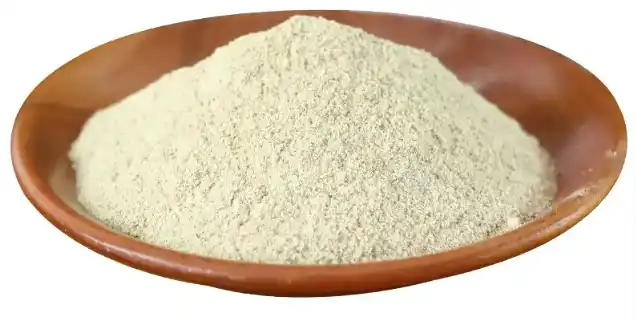
Ginger Extract Powder is a processed botanical ingredient made from Zingiber officinale rhizomes. Depending on the manufacturing process, selected constituents such as gingerols and shogaols can be concentrated using extraction technologies including ethanol-based or other suitable extraction systems.
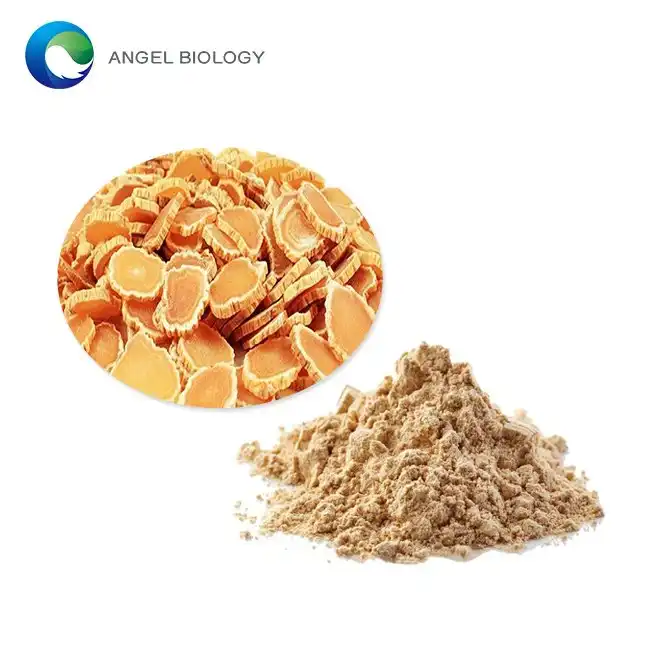
The end result is typically a fine, yellowish-brown powder, with particle-size specifications established according to the supplier and intended application. Some manufacturers offer standardized products based on gingerol content, with specifications varying according to extraction technology, raw-material quality, and testing method.
Standardization can help address several challenges associated with raw agricultural materials, including natural variation in constituent levels and differences between harvest batches. Powder formats can also simplify transportation, storage, blending, and dosing compared with fresh rhizomes.
Packaging may include fiber drums, food-grade bags, or moisture-barrier packaging depending on the product specification and storage requirements.
Characteristics of Fresh Ginger
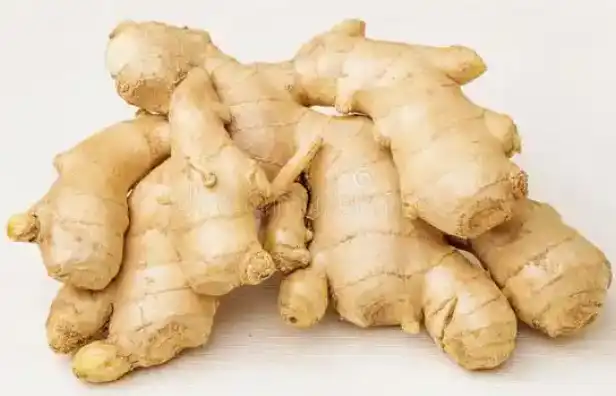
Fresh ginger enters the supply chain as whole rhizomes and is produced in several major growing regions, including China, India, Thailand, and other agricultural markets. Different growing regions and harvest conditions can influence flavor, pungency, moisture, and naturally occurring ginger constituents.
Fresh produce also creates additional procurement considerations. Storage life depends on temperature, humidity, handling, and packaging conditions, while seasonal availability can influence supply planning and price stability.
Ginger constituent levels can naturally vary between harvest batches due to factors such as cultivar, soil conditions, maturity, harvest timing, and post-harvest handling. For formulations requiring tightly defined marker specifications, this natural variability may require additional testing and process control.
Key Differences Between Ginger Extract Powder and Fresh Ginger
Potency and Standardization
The difference in concentration between these ingredient formats can significantly affect formulation design. Some commercial ginger extracts are produced at extract ratios such as 10:1 or 20:1, but extract ratios should not be interpreted as direct equivalents of finished-product potency.
For example, a 10:1 extract indicates that a specified amount of extract was produced from approximately ten times that amount of starting botanical material under the stated manufacturing process. It does not automatically mean that 1 gram of extract provides exactly the same chemical profile or biological activity as 10 grams of fresh ginger.
For B2B formulation, the more useful specification is often the actual concentration of the selected marker compounds, such as gingerols, confirmed by an appropriate analytical method.
Fresh ginger contains naturally occurring gingerols and other constituents, but their concentrations can vary substantially between sources and harvests. Standardized extract specifications can therefore provide better batch-to-batch control when a formulation requires a defined marker level.
The term “pharmaceutical-grade” should only be used when supported by the actual product classification, manufacturing standards, and applicable regulatory documentation. For most ingredient procurement projects, buyers should instead focus on the specific assay, purity, contaminant limits, and quality certifications supplied with the material.
Shelf Life and Stability Considerations
The storage requirements for these two ingredient formats are substantially different.
Ginger Extract Powder can generally offer a longer storage period than fresh rhizomes when manufactured, packaged, and stored according to its validated specifications. Actual shelf life should always be confirmed from the supplier's stability data and product specification rather than assuming a universal 24- to 36-month period.
Appropriate storage may include a cool, dry environment protected from excessive moisture, heat, oxygen, and direct sunlight, depending on the ingredient grade and packaging.
Fresh ginger is considerably more sensitive to storage conditions. Moisture loss, quality deterioration, sprouting, and microbial growth can occur during extended storage if temperature and humidity are not properly controlled.
For procurement teams, the longer storage potential and lower handling requirements of a powder can simplify inventory planning and reduce some of the operational challenges associated with fresh agricultural materials.
Application Versatility Across Industries
Different manufacturing applications require different ingredient characteristics.
For dietary supplements, concentrated powders can be useful where controlled serving sizes, defined marker levels, and convenient handling are important. Standardized extracts allow manufacturers to specify the amount of selected ginger constituents per serving based on the actual analytical specification.
In tablet compression, capsule filling, and stick-pack applications, a dry powder format can also simplify processing compared with high-moisture fresh material.
Cosmetic formulators may evaluate ginger extract powder for anhydrous and emulsion-based products, depending on the ingredient's purity, particle size, solvent system, color, odor, and compatibility with the formulation.
Functional beverage manufacturers can consider water-dispersible or water-soluble ginger extract grades where appropriate. However, solubility, sedimentation, flavor, color, pH stability, and processing conditions should be evaluated using the actual commercial ingredient.
Fresh ginger remains valuable when fresh aroma, pungency, texture, or whole-food positioning is an important part of the finished product.
Cost-Efficiency and Total Ownership Analysis
To compare prices effectively, procurement teams should evaluate total cost rather than purchasing price alone.
Fresh ginger may appear less expensive per kilogram, but the calculation can change after considering moisture content, trimming or peeling losses, preparation labor, refrigeration, transportation, and potential spoilage.
Extract powders may have a higher price per kilogram because of extraction, concentration, testing, and processing costs. However, their lower moisture content and concentrated format can reduce shipping volume and simplify storage.
For B2B procurement, a more meaningful comparison is often:
Cost per standardized marker compound or cost per finished-product serving
rather than simply price per kilogram.
The actual cost advantage depends on the extract specification, application, order volume, packaging, and manufacturing process. Buyers should therefore request a project-specific quotation and compare materials on an equivalent specification basis.
Health Benefits and Functional Properties
Bioactive Compounds and Mechanisms
Both fresh ginger and ginger extracts contain naturally occurring compounds such as gingerols and shogaols, although their relative concentrations can change with processing and storage.
6-Gingerol is one of the characteristic constituents of fresh ginger, while drying and thermal processing can influence the formation and relative abundance of shogaol compounds.
These compounds have been widely investigated in laboratory and nutritional research for antioxidant, digestive, and other biological activities. However, findings from in vitro, animal, or mechanistic studies should not automatically be presented as confirmed clinical benefits in humans.
For B2B applications, the practical advantage of an extract is primarily its ability to provide a more defined concentration of selected constituents, making it easier for formulators to develop products around a consistent raw-material specification.
Efficacy in Targeted Applications
Ginger has been investigated in human studies, particularly in relation to digestive comfort and nausea-related applications. However, clinical findings generally depend on the specific ginger preparation, dose, population, duration, and study design.
Therefore, clinical doses reported for dried ginger should not automatically be converted into an equivalent dose for every commercial ginger extract.
For formulation development, the appropriate inclusion level should instead be determined from the extract's:
- Standardization level
- Extraction ratio
- Marker-compound profile
- Available safety data
- Intended application
- Finished-product format
- Target-market regulations
This approach allows manufacturers to develop products around measurable ingredient specifications without making unsupported therapeutic claims.
Quality Factors and Supplier Considerations
Certification and Compliance Standards
Quality assurance systems for fresh agricultural materials and processed botanical extracts are different.
Qualified extract manufacturers may maintain certifications such as GMP, ISO 9001, HACCP, or applicable organic certifications, depending on their facility and target markets.
Fresh ginger suppliers may provide agricultural certifications or good agricultural practice documentation, but buyers may still need additional testing depending on the intended application and destination market.
For extract procurement, useful quality documentation may include:
- Certificate of Analysis
- Botanical identification
- Gingerol assay
- Heavy-metal testing
- Pesticide-residue testing
- Microbiological testing
- Moisture
- Particle size
- Residual-solvent testing where applicable
These documents help R&D and procurement teams qualify materials more efficiently and establish batch-specific specifications.
Evaluating Potential Suppliers
When selecting a ginger extract supplier, price should not be the only consideration.
Buyers should evaluate: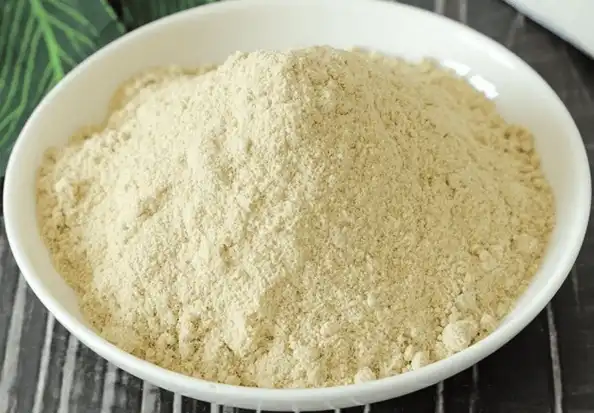
- Raw-material sourcing
- Botanical authentication
- Extraction technology
- Standardization capability
- Testing methods
- Manufacturing capacity
- Certifications
- Batch traceability
- Lead time
- MOQ
- Packaging
- Technical support
Supplier audits can provide additional confidence by allowing buyers to evaluate manufacturing facilities, storage conditions, quality-control laboratories, and documentation systems.
Rather than assuming that extract suppliers always offer lower MOQs or faster delivery, buyers should confirm actual capacity and lead times for the required specification.
Making the Right Choice for Your Business Needs
Matching Ingredient Form to Application Requirements
The choice between ginger extract powder and fresh ginger depends on the requirements of the finished product.
Extract powders are generally well suited to production environments where batch consistency, controlled marker levels, convenient storage, and scalable processing are priorities.
Nutraceutical manufacturers producing capsules, tablets, sachets, and powdered blends may benefit from the dry, concentrated format.
Cosmetic manufacturers can evaluate extracts when controlled ingredient specifications and convenient handling are important.
Fresh ginger is more appropriate when its fresh flavor, aroma, texture, or whole-food identity is central to the product.
For beverages and specialty foods, fresh ginger can therefore remain an attractive option despite the additional handling requirements.
Strategic Procurement Recommendations
Finding the right ginger ingredient requires balancing quality, application requirements, supply reliability, and total cost.
Before selecting a material, procurement teams should:
- Define the required gingerol or other marker specification.
- Confirm whether an extract ratio or standardized assay is more appropriate.
- Review the supplier's batch-specific CoA.
- Evaluate storage and stability requirements.
- Compare cost per standardized active or finished serving.
- Confirm MOQ and lead time.
- Check destination-market documentation requirements.
- Conduct sample and formulation testing before bulk purchasing.
A practical B2B qualification path is:
Sample Request → Specification Review → CoA Verification → Formulation Trial → Commercial Quotation → Trial Order → Bulk Supply
This approach gives R&D and procurement teams a clearer basis for supplier comparison and reduces the risk of selecting an ingredient solely on price.
Conclusion
Ultimately, the choice between Ginger Extract Powder and fresh ginger comes down to your manufacturing goals and available production capabilities.
For industrial applications where defined marker levels, batch consistency, storage convenience, and scalability are priorities, standardized ginger extracts can offer significant practical advantages.
Fresh ginger remains valuable for products where sensory authenticity, fresh aroma, pungency, or whole-food positioning are central to the product concept.
For B2B buyers in nutraceutical, cosmetic, and functional food industries, the most important comparison is not simply “extract versus fresh.” It is whether the selected ingredient can meet the required specification, quality documentation, formulation requirements, regulatory expectations, cost targets, and supply volumes.
Selecting suppliers based on analytical testing, certification, traceability, sample performance, and supply capabilities can create a stronger foundation for long-term product development and procurement.
FAQ
1. Can I completely replace fresh ginger with extract powder in my formulation?
Not always.
The suitability of replacement depends on the purpose of ginger in the finished product.
When controlled marker content, dry processing, compact serving formats, and batch consistency are priorities, an extract powder may be more convenient.
However, when fresh aroma, pungency, fibrous texture, or whole-food positioning is important, fresh ginger may remain preferable.
Some formulations may also use both forms to balance sensory characteristics and standardized ingredient content.
2. What dosage of extract powder equals fresh ginger in supplement manufacturing?
There is no universal conversion.
A 10:1 extract ratio describes the relationship between starting botanical material and extract production, but it does not necessarily mean that the finished extract has an identical chemical composition or biological effect to the original fresh rhizome.
For accurate formulation calculations, buyers should review the actual extract ratio, gingerol standardization, analytical method, moisture content, and supplier specification.
If clinical research is being used to support a finished-product claim, the formulation should be evaluated against the specific preparation and dose used in the relevant research rather than assuming direct equivalence.
3. How do I authenticate organic Ginger Extract Powder suppliers?
Start by requesting current organic certification documents from recognized certification bodies applicable to the target market.
Then confirm that:
- The certificate is valid.
- The specific product is covered.
- The raw-material supply chain is compatible with the certification.
- Batch-specific CoAs are available.
- Pesticide-residue testing is provided where appropriate.
- Traceability documentation is maintained.
For larger procurement programs, supplier audits or independent third-party verification can provide an additional level of confidence.
Partner with Angelbio for Premium Ginger Extract Powder Supply
Angelbio provides Ginger Extract Powder solutions for B2B customers developing nutraceutical, cosmetic, functional food, and beverage products.
Our ingredient-sourcing and quality-control approach is designed to support customers looking for defined gingerol specifications, reliable batch documentation, formulation flexibility, and scalable supply.
Depending on project requirements, customers can discuss:
- Gingerol standardization
- Extract ratio
- Particle size
- Packaging requirements
- COA
- Sample quantities
- MOQ
- Annual demand
- Custom specifications
Rather than selecting a ginger ingredient based solely on price per kilogram, our technical team can help customers evaluate the specification that best fits their application and procurement objectives.
For new projects, customers can start with a sample evaluation, confirm the required specification and documentation, and then move toward quotation and bulk supply.
Whether you are developing capsules, functional beverages, cosmetic formulations, or powdered food products, a properly specified ginger extract can help simplify ingredient qualification and production planning.
Contact Angelbio at angel@angelbiology.com to discuss samples, specifications, bulk sourcing, and customized Ginger Extract Powder requirements.
References
- Grzanna R, Lindmark L, Frondoza CG. Ginger—an herbal medicinal product with broad anti-inflammatory actions. Journal of Medicinal Food. 2005;8(2):125-132.
- Palatty PL, Haniadka R, Valder B, Arora R, Baliga MS. Ginger in the prevention of nausea and vomiting: a review. Critical Reviews in Food Science and Nutrition. 2013;53(7):659-669.
- Semwal RB, Semwal DK, Combrinck S, Viljoen AM. Gingerols and shogaols: Important nutraceutical principles from ginger. Phytochemistry. 2015;117:554-568.
- Bartley J, Jacobs AL. Effects of drying on flavour compounds in Australian-grown ginger. Journal of the Science of Food and Agriculture. 2000;80(2):209-215.
- Stoilova I, Krastanov A, Stoyanova A, Denev P, Gargova S. Antioxidant activity of a ginger extract. Food Chemistry. 2007;102(3):764-770.
- Rahmani AH, Shabrmi FM, Aly SM. Active ingredients of ginger as potential candidates in the prevention and treatment of diseases via modulation of biological activities. International Journal of Physiology, Pathophysiology and Pharmacology. 2014;6(2):125-136.