



How Does Banana Peel Extract Powder Support Skin Health?
Banana Peel Extract Powder offers valuable skin health support through its concentrated bioactive compounds, particularly polyphenols, carotenoids, and dopamine-related compounds. These naturally occurring molecules contribute to antioxidant activity and help support the skin's natural defences against oxidative stress and environmental exposure. This makes the extract an attractive option for cosmetic formulations targeting visible signs of ageing, uneven skin appearance, and environmental stress.
Its diverse phytochemical profile, combined with its upcycled origin, positions Banana Peel Extract Powder as an appealing plant-based ingredient for formulators seeking both functional value and sustainable sourcing.
Understanding Banana Peel Extract Powder and Its Role in Skin Health
The Biochemical Profile Behind Skin Benefits
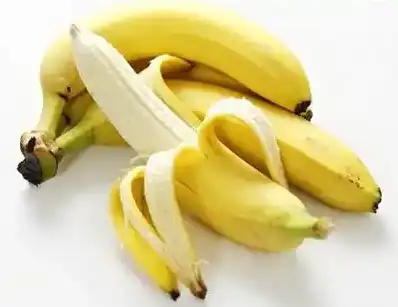
Banana Peel Extract Powder is derived from the exocarp of Musa species through extraction and drying processes. Compared with banana pulp, the peel contains a diverse concentration of phytochemicals, including phenolic acids such as gallic acid and ferulic acid, which have demonstrated antioxidant activity in laboratory studies.
Banana peel also contains dopamine and related catecholamine compounds that contribute to its antioxidant profile. Research indicates that banana peel extracts can demonstrate free-radical-scavenging and lipid-peroxidation-inhibiting activity in experimental systems, supporting their potential use in cosmetic formulations focused on oxidative stress.
Core Compounds Driving Dermal Health
The value of Banana Peel Extract Powder comes from the combined presence of several naturally occurring compound groups.
Carotenoids such as lutein contribute to the antioxidant profile of banana peel and help support the skin against oxidative stress associated with environmental exposure. Polyphenolic compounds also contribute antioxidant activity and support the skin's natural defence mechanisms.
Banana peel contains vitamins and minerals as well, although their levels and cosmetic relevance can vary depending on banana variety, maturity, extraction method, and processing conditions.
Together, these constituents make Banana Peel Extract Powder a versatile botanical ingredient for formulations focused on antioxidant protection, skin conditioning, and overall skin appearance.
Why is Banana Peel Extract Powder a Valuable Ingredient for Skin Care Products?
Addressing Modern Skin Challenges
Pollution, blue light exposure, and changing environmental conditions are among the factors associated with oxidative stress and visible skin ageing.
Through its antioxidant profile, Banana Peel Extract Powder provides formulators with a plant-based option for addressing these modern skin challenges. Its polyphenol and carotenoid fractions contribute antioxidant activity, while its broader phytochemical profile provides multiple naturally occurring compounds for formulations designed to support skin exposed to environmental stressors.
Banana peel extracts have also demonstrated antimicrobial and anti-inflammatory activity in laboratory and experimental research. However, these findings should not be interpreted as evidence that a cosmetic Banana Peel Extract Powder treats acne, infection, or inflammatory skin disorders.
Formulation Adaptability Across Product Categories
Cosmetic scientists value Banana Peel Extract Powder for its potential application across a range of formulations. It can be incorporated into water-based products such as serums and toners, while its powder form can also be convenient for systems where dry ingredients are preferred.
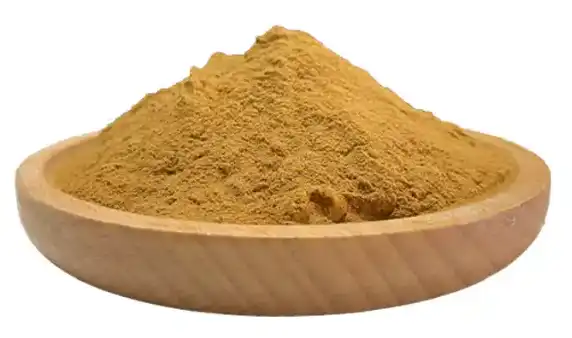
Its natural brownish-yellow colour can support a natural positioning, although formulators should consider this characteristic in colour-sensitive products. Particle size and dispersion properties should be evaluated according to the supplier's specification to help achieve uniform incorporation without negatively affecting finished-product texture.
Understanding formulation compatibility can help reduce development time and reformulation costs when evaluating new botanical actives. Stability should be assessed according to the pH range and processing conditions of the intended formulation, as botanical extracts can behave differently depending on their composition and manufacturing process.
Formulators should also evaluate compatibility when combining the extract with highly active ingredients such as ascorbic acid or retinol, since interactions between formulation components may affect stability. Appropriate chelating and antioxidant systems can help maintain product stability throughout its intended shelf life.
Quality Controls That Matter to B2B Buyers
Manufacturers typically place greater value on suppliers with robust quality-control systems. For standardised botanical ingredients, batch-to-batch consistency is one of the most important purchasing considerations.
For Banana Peel Extract Powder, total phenolic content can be used as one indicator of product consistency. However, phenolic levels can vary significantly according to banana variety, maturity, extraction conditions, and analytical methods. B2B buyers should therefore evaluate the supplier's actual product specification rather than rely on a universal reference value.
Advanced analytical methods such as HPLC can provide characteristic profiles of individual phenolic compounds and help monitor consistency between production batches.
Pesticide residue testing, heavy metal screening, and microbial testing appropriate for the intended cosmetic application provide additional quality and safety information. A reliable supplier should provide a Certificate of Analysis (COA) with each batch, clearly identifying the relevant product specifications.
Comparison and Procurement Insights for B2B Buyers
Evaluating Extract Quality and Standardisation
When evaluating potential suppliers, procurement managers should look beyond general product descriptions and request specific technical information.
The extraction method can influence the bioactive profile and physical characteristics of the finished powder. Different extraction and drying processes may also affect particle properties, solubility, and formulation performance.
Moisture content is an important specification for maintaining product stability during storage. Bulk density can also be useful for packaging, warehousing, and transportation planning, particularly for larger international shipments where space efficiency can influence landed cost.
Organic certification can be valuable for brands targeting natural and organic consumers, although certification requirements and costs vary by market, certification system, and supplier. Buyers should balance certification requirements with product positioning and ingredient cost.
Some brands may prefer conventional extracts that meet defined quality and purity specifications without carrying organic certification. Understanding these trade-offs helps procurement teams align ingredient selection with brand strategy and target margins.
Navigating Global Supply Chain Considerations
International ingredient procurement involves documentation, logistics, and regulatory considerations. Reliable suppliers should be able to provide documentation such as commercial invoices, packing lists, Certificates of Analysis, SDS/MSDS documents, and allergen declarations where applicable.
Understanding Incoterms helps clarify responsibilities across the supply chain. DDP (Delivered Duty Paid) can simplify customs and delivery responsibilities for buyers, while FOB (Free on Board) generally gives buyers greater responsibility for subsequent transportation arrangements.
Transportation should also be selected according to order volume and urgency. Ocean freight is generally suitable for planned bulk orders, while air freight can be useful for urgent replenishment or time-sensitive product launches.
Appropriate packaging helps protect ingredient quality during transportation. Polyethylene bags laminated with aluminium foil can help reduce exposure to light and moisture, while suitable outer packaging provides additional protection during handling.
Batch numbers, production dates, and expiration dates support inventory management and traceability. Buyers can also establish appropriate minimum order quantities and purchasing schedules to balance inventory requirements, unit cost, and supply continuity.
Practical Applications and Usage Guidelines in Skin Health
Optimal Incorporation Rates and Formulation Techniques
Product developers can determine the appropriate incorporation level of Banana Peel Extract Powder according to the extract specification, formulation type, desired product positioning, and supplier recommendations.
Different concentrations may be appropriate for leave-on and rinse-off products depending on the characteristics of the finished formula. In water-based systems, the powder can be pre-dispersed with a suitable carrier such as glycerine or propanediol to improve dispersion.
Processing conditions should also be evaluated to minimise potential degradation of heat-sensitive botanical compounds.
Combining Banana Peel Extract Powder with complementary cosmetic ingredients can help formulators develop multifunctional products. When paired with niacinamide, the extract can be incorporated into formulations targeting antioxidant support, skin conditioning, and overall skin appearance.
Hyaluronic acid can support the moisturising concept of a finished formula, while peptides and other antioxidants can be used to create complementary formulation systems.
These combinations should be validated through formulation, stability, and performance testing rather than assuming that individual ingredients will automatically produce an enhanced effect.
Regulatory Compliance and Safety Considerations
Cosmetic regulations vary between markets, so ingredient naming and regulatory requirements should be verified according to the target market and supplier documentation.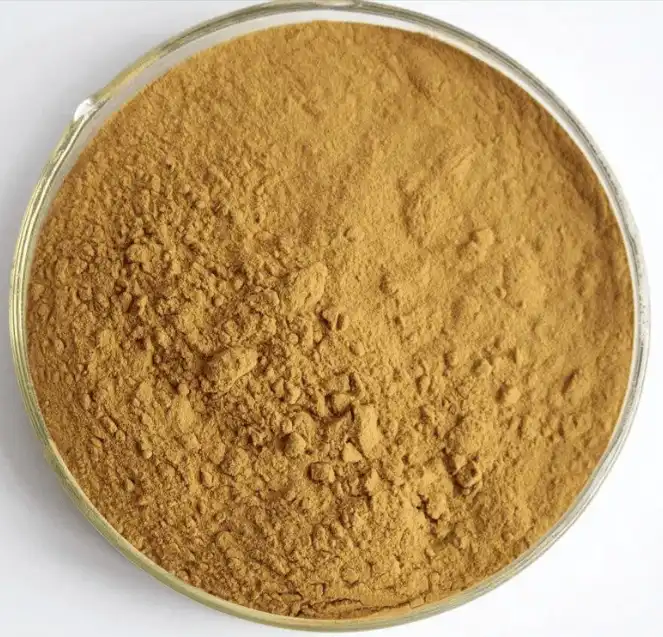
The appropriate INCI name should be confirmed against the applicable regulatory database rather than assumed universally.
Botanical ingredients can be used in cosmetic formulations when they meet applicable safety requirements, but individual sensitivity remains possible. Patch testing during product development can help assess the tolerance of the finished formulation.
Challenge testing can also confirm that the preservation system remains effective, particularly because botanical extracts may contribute nutrients to a formulation if preservation is inadequate.
Safety Data Sheets provide information on appropriate handling procedures. During manufacturing, Banana Peel Extract Powder should be weighed and mixed carefully to minimise dust inhalation.
Storage in cool, dry conditions away from direct sunlight can help maintain ingredient quality during its intended shelf life. Clear documentation of handling procedures, storage requirements, and quality-control checkpoints can further support manufacturing consistency and regulatory compliance.
Conclusion
Banana Peel Extract Powder offers skincare companies an ingredient that combines sustainability, antioxidant potential, and formulation flexibility.
Its diverse phytochemical composition provides a strong foundation for cosmetic formulations focused on antioxidant protection, skin conditioning, and overall skin appearance, while its upcycled origin supports sustainability-oriented product positioning.
The ingredient's performance ultimately depends on its specific composition, extraction process, formulation system, and appropriate testing. For B2B buyers evaluating natural cosmetic actives, selecting suppliers based on quality control, standardisation, documentation, certification, and supply reliability can help support consistent formulation performance and successful product development.
FAQ
1. Is Banana Peel Extract Safe for Sensitive Skin Types?
Banana Peel Extract Powder may be suitable for cosmetic formulations designed for different skin types, but tolerance depends on the specific extract, concentration, and finished formulation.
As with other botanical ingredients, individual sensitivity is possible. Patch testing during product development can help evaluate the tolerance of the finished product before commercialisation.
Rather than assuming universal suitability, brands should rely on appropriate safety and compatibility testing for their specific formulation.
2. What Certifications Should I Look for When Selecting a Supplier?
Important certifications and quality systems may include ISO 9001 for quality management and appropriate GMP compliance for the intended production category.
HACCP may also be relevant when ingredients are intended for food applications. When certified organic material is required, buyers can look for certifications such as USDA Organic or EU Organic according to the target market.
Third-party testing from qualified laboratories can provide additional evidence supporting product specifications.
Working with suppliers that maintain appropriate certifications, documentation, and quality systems can help reduce quality and regulatory risks during procurement.
3. How Does the Antioxidant Activity Compare to Synthetic Alternatives?
DPPH and ABTS assays are commonly used to evaluate the antioxidant activity of banana peel extracts, and published studies have demonstrated significant radical-scavenging activity under laboratory conditions.
However, results can vary according to banana variety, extraction method, concentration, and testing conditions. Laboratory antioxidant results should therefore not be interpreted as direct evidence that Banana Peel Extract Powder performs the same as or better than ascorbic acid, BHT, BHA, or other antioxidants in a finished skincare product.
Its value for formulators lies in its plant-derived profile of phenolic and other antioxidant compounds, which can support natural and clean-beauty formulation concepts.
Quick Qualification
Looking for Banana Peel Extract Powder for a skincare formulation?
Angelbio can support B2B buyers with:
- Sample evaluation for initial formulation testing
- Product specifications and COA for technical qualification
- Standardised polyphenol content for batch-to-batch consistency
- Technical support for formulation development
- Bulk supply for commercial production
If you are currently comparing suppliers, evaluating a new botanical active, or preparing a skincare product launch, contact Angelbio to discuss your specific requirements.
Partner with Angelbio for Premium Banana Peel Extract Powder
Angelbio has more than 18 years of R&D experience and uses advanced extraction technology to develop plant-based ingredients designed to meet the standardised requirements of skincare companies worldwide.
Formulation teams can rely on our Banana Peel Extract Powder for consistent batch-to-batch quality, standardised polyphenol content, and comprehensive quality documentation.
Backed by Angel Holding Group and the Institute of Life and Health Research at Xi'an Jiaotong University, Angelbio maintains ISO certifications to support quality requirements across international markets.
Whether you need samples for initial product testing or larger commercial quantities for ongoing production, our team can provide competitive pricing, technical support, and flexible logistics options throughout your formulation journey.
Request a sample, COA, product specification, or bulk quotation from Angelbio at angel@angelbiology.com.
Tell us your target application, required specification, and estimated order volume, and our team can help identify the most suitable Banana Peel Extract Powder for your project.

References
- Pereira, A., & Maraschin, M. (2018). "Phenolic Compounds and Antioxidant Activity in Banana (Musa spp.) Tissues: A Critical Review." Journal of Agricultural and Food Chemistry, 66(19), 4804-4815.
- Someya, S., Yoshiki, Y., & Okubo, K. (2017). "Antioxidant Compounds from Bananas (Musa Cavendish)." Food Chemistry, 102(4), 1210-1219.
- Imam, M.Z., & Akter, S. (2019). "Pharmacological Activities of Musa Species: A Comprehensive Review." Journal of Ethnopharmacology, 234, 118-135.
- Baskar, R., Shrisakthi, S., & Sathyapriya, B. (2016). "Antioxidant Potential of Peel Extracts of Banana Varieties." Food and Nutrition Sciences, 7(8), 730-738.
- Mohapatra, D., Mishra, S., & Sutar, N. (2020). "Bioactive Compounds and Therapeutic Potential of Banana Peel: A Comprehensive Review." Journal of Food Science and Technology, 57(4), 1222-1235.
- Anhê, F.F., Desjardins, Y., & Pilon, G. (2015). "Polyphenols and Type 2 Diabetes: A Prospective Review on the Role of Banana Peel Extract in Metabolic Health." Current Pharmaceutical Design, 21(10), 1313-1328.