



How much sodium hyaluronate?
When making high-tech skin care or health goods, "How much sodium hyaluronate?" Sodium Hyaluronate? " is a very important question that affects how well the product works and how well it does in the market. Although the ideal concentration relies on the molecular weight, product type, and desired benefits, sodium hyaluronate dosage usually runs from 0.1% to 2% in topical formulations. Different types with lower molecular weight get deeper into the skin, while types with higher molecular weight form protected bands on the skin's surface. Understanding how these concentration changes affect each other helps R&D teams find the best balance between hydration intensity, texture, and cost-effectiveness while still meeting the needs of consumers who want clean labels and the standards set by regulators around the world.
Understanding Sodium Hyaluronate: Basics and Benefits
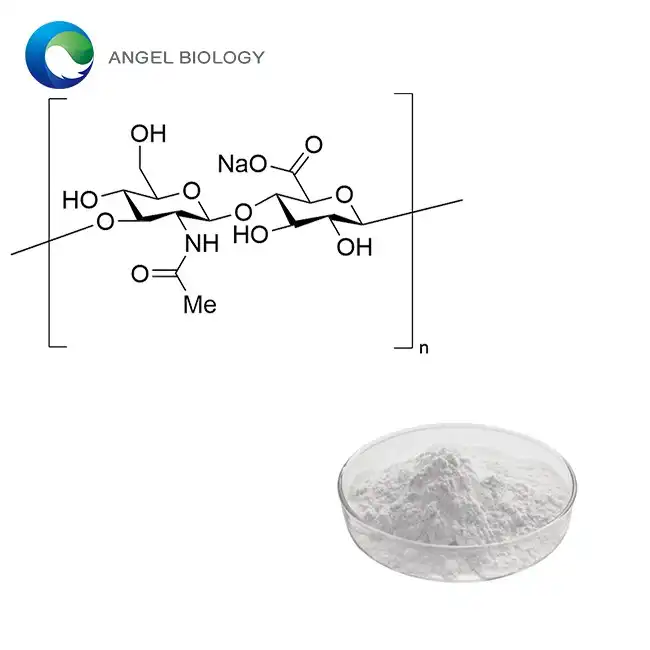
Hyaluronic acid is a naturally occurring glycosaminoglycan made up of repeating disaccharide units. Sodium Hyaluronate Powder is the sodium salt form of hyaluronic acid. Instead of using animals, modern industrial production depends on bio-fermentation with Streptococcus zooepidemicus. This eliminates the risk of cross-species contamination and helps vegans follow the rules. For pharmaceutical and skincare uses, this way of making sure regular purity levels and molecular weight distribution are very important.
What Makes Sodium Hyaluronate Different from Hyaluronic Acid?
The difference in chemicals is very important for the safety and efficiency of the formulation. Sodium hyaluronate dissolves better in water and has a smaller molecular structure than its acid form. This makes it easier for cells to access and more resistant to oxidative degradation. The structure of the sodium salt stays stable over a bigger pH range, which solves common formulation problems that happen in acidic or basic settings. Because of this structural advantage, formulators can confidently mix it with retinol, vitamin C, and peptides without affecting the quality of the ingredients.
Core Benefits for Product Development
The molecule can hold up to 1,000 times its own weight in water, which leads to great soaking results. This trait is used in cosmetics to instantly plump up the skin and keep moisture in for a long time, successfully treating trans-epidermal water loss. Its viscoelastic qualities are used in pharmaceutical formulations to make drug delivery systems and wound-mending tools. Nutraceutical products use it to help keep joints healthy by taking advantage of its role in the composition of synovial fluid. Safety ratings show that it doesn't cause acne, sensitivity rates stay low across all age groups, and the FDA, EMA, and other foreign regulatory bodies have approved it.
How Much Sodium Hyaluronate Is Needed? Dosage and Concentration Insights?
To get the exact concentration, you have to balance a lot of technical and business factors. For noticeable hydration without leaving a sticky film, cosmetic serums usually use 0.5% to 1.5% amounts. Along with occlusives and emollients, moisturizers contain 0.1% to 0.5% of these ingredients. Eye creams need to be compatible with 0.3% to 0.8% of delicate skin. Dietary supplements, which are taken by mouth and aim to improve joint or skin health from the inside out, range from 80 mg to 200 mg per serving.
Molecular Weight Impact on Performance
The molecular weight of sodium hyaluronate has a big effect on the depth of penetration and the function. Ultra-low molecular weight versions (below 10 kDa) get into the skin layers and speed up the processes of making collagen and fixing cells. Low molecular weight (10–100 kDa) strikes a good mix between surface and deep hydration for a wide range of products. High molecular weight (above 1,000 kDa) makes protective surface films that are great for fixing barriers and making things smooth right away. Multi-molecular weight blends work best on all layers of skin and are becoming more and more popular in high-end formulas that aim for all-around anti-aging results.
pH and Formulation Considerations
Most makeup formulas work well in stability windows that are between pH 5.0 and 8.0. Lower pH settings might need buffering systems to stop things from breaking down over time. Because of how sensitive it is to temperature during production, it needs to be added during cooling times below 40°C. The compatibility of the preservative with phenoxyethanol, ethylhexylglycerin, and other standard systems is still very good. Proper dispersion methods improve solubility and stop fish-eye clumping by slowly hydrating the material while moderately stirring it.
Comparing Sodium Hyaluronate with Other Hydrators and Actives
To place a product in the market, you need to know what makes it better than other humectants. Glycerin is a cheaper and more reliable way to keep skin moist, but it doesn't have the complex multi-layer penetration profile. Ceramides are great at repairing barriers, but they aren't as good at holding water. Peptides help with signaling without directly keeping water in the body. Strategic mixtures make products that work better together. For example, sodium hyaluronate provides basic hydration, while additional actives address specific issues like dark spots or firmness.
Synergy with Active Ingredients
Compatibility testing shows that ingredients from different types can go well together. When mixed with retinol, it lessens the dryness and soreness that come with using retinoids while still working well. When sodium hyaluronate keeps the right amount of moisture in the surroundings, vitamin C products stay stable longer. Niacinamide agreements work on both barrier function and water at the same time. AHA and BHA exfoliant formulas become easier for people to tolerate by delivering extra moisture, which increases the range of products that people will accept.
Product Format Considerations
People who are interested in treatments like serum delivery systems because they make it easier for ingredients to be concentrated and absorbed. Cream grids offer occlusive protection and more satisfying physical experiences that are good for people with dry skin. Gel textures are light options for people who live in wet places or have oily skin. Powder supplements work to hydrate the body from the inside out by absorbing through the digestive system. These are growing market areas in beauty-from-within categories. Sheet masks provide intense hydration bursts for specific skin care practices.
Procurement Guide: How to Source Quality Sodium Hyaluronate?
Product quality consistency and supply chain resilience depend on partnerships with reliable suppliers. To properly evaluate possible sources, you need to look at them from technical, legal, and business points of view. For cosmetic use, ingredients must be more than 95% pure, while for medicinal use, they must be at least 98% pure. Food-grade standards cover a range of contaminant levels that are safe for oral consumption. Standards for documentation, such as Certificates of Analysis, Safety Data Sheets, and allergen declarations, are things that can't be changed.
Essential Supplier Evaluation Criteria
Manufacturing licenses show how well a business is run and how committed the company is to quality. ISO 9001 shows basic quality management systems, and ISO 22716 talks about cosmetic GMP compliance in more detail. HACCP approval means that the process can be food-grade for nutraceutical uses. Analytical tools like HPLC, GPC, and microbial tests make sure that each run of sodium hyaluronate is the same. Traceability systems that keep track of where fermentation substrates come from all the way to the final packaging back up claims of clean labels and help with regulatory audits. Talks about capacity planning show that providers can increase their output to meet rising demand without lowering quality standards.
Pricing Dynamics and Market Positioning
Prices around the world are based on molecular weights, levels of purity, and certifications. Depending on their molecular weight profiles, materials made for cosmetics cost between $150 and $400 per kilogram. Pharmaceutical-grade varieties are more expensive, costing between $500 and $1,200 per kilogram. When you buy more than 100 kilograms in bulk, you can usually get deeper discounts. Freight, taxes, and storage costs are all added to the total cost of purchase, which is affected by regional transportation issues. Long-term supply deals usually get better prices and make sure that supplies are distributed even when there aren't enough supplies.
Best Practices for Using Sodium Hyaluronate in Your Products
Formulation optimization starts with choosing molecular weights that are in line with how the product is positioned and what benefits are wanted. Multi-weight blends are becoming more and more the standard in the industry because they work on all three levels at the same time: hydrating the skin's top, keeping wetness in the mid-layer, and stimulating the deep dermis. Concentration testing using consumer perception studies finds the best levels that balance how well they work with how nice they look. Protocols for stability check how ingredients interact with each other, how well packing works with the product, and how long it lasts under conditions that speed up the aging process.
Integration Techniques for Maximum Efficacy
Using the right dispersion technique stops accumulation and makes sure that the spread is uniform. During the hydration steps, letting the material grow for 30 to 60 minutes before homogenization makes the texture more consistent. Keeping processes below 40°C through temperature control protects molecular structure during production. Changing the pH after the polysaccharide structure is fully hydrated keeps it from being stressed out for no reason. After the product has fully swollen, a preservative is added to make sure that the antibacterial properties are spread out evenly throughout the finished product.
Quality Control and Batch Consistency
Testing incoming raw materials for sodium hyaluronate makes sure that suppliers meet standards before committing to production. Gel permeation chromatography confirms the molecular weight of sodium hyaluronate, which makes sure that the composition designs are followed. Purity assessment finds possible contaminants that could change stability or safety profiles. Testing for microbes shows that there is no bioburden above what is allowed in cosmetics or medicines. The finished product is tested by measuring its stickiness, checking its pH, and having a taste panel rate it. This makes sure that the product can be made again and again and meets brand standards and customer expectations.
Conclusion
Figuring out how much sodium hyaluronate your formula needs is a balance between what scientists know and what businesses want to do. Topical products with concentrations between 0.1% and 2% have been shown to moisturize when matched to the right molecular weights. To be successful at procurement, you need to find suppliers who can provide regular quality, detailed paperwork, and production capacity that can be increased or decreased as needed. Mastering formulation means paying close attention to techniques for dispersion, adjusting pH, and putting together active ingredients that work well together. Differentiating the market comes from carefully choosing molecular weights and coming up with new ways to deliver products that meet changing consumer tastes for effective, clean-label skin care products.
FAQ
1. Can Sodium Hyaluronate Be Used Safely Across All Skin Types?
There is clinical evidence that it is well tolerated by all skin types, even sensitive, acne-prone, and older skin. The non-comedogenic makeup keeps pores from getting clogged, and the anti-inflammatory qualities calm skin that is overly sensitive. When adding a new ingredient, patch testing is still recommended, even though sensitivity reactions are very rare with high-purity materials.
2. How Does Molecular Weight Affect Dosage Requirements?
For deep entry to work, low molecular weight variants need lower amounts (0.1% to 0.5%), while high molecular weight variants need higher levels (1% to 2%) to get the same level of surface hydration. Most multi-weight formulas use a total concentration of 0.5% to 1.5% spread out over a range of molecular weights.
3. What Distinguishes Sodium Hyaluronate from Standard Hyaluronic Acid in Formulations?
The sodium salt form dissolves better, stays stable across a wider pH range, and has a smaller molecular structure that lets it penetrate the skin better. Compared to the acid form, these benefits make the preparation process easier and improve the performance of the end product.
Partner with Angelbio for Premium Sodium Hyaluronate Supply
Angelbio has been doing great research and development for more than 18 years and uses cutting-edge bio-fermentation technology to make sodium hyaluronate that is safe for use in medicine and cosmetics and meets the highest international standards. Angel Holding Group and Xi'an Jiaotong University's Institute of Life and Health Research back us as a reliable producer. We offer full technical support, custom molecular weight specs, and a supply chain that works as it should. Our production facilities are multi-certified, so the quality of each batch is always the same. We also offer full paperwork packages and reasonable pricing that is good for businesses that want to add more natural ingredients to their inventory. Our formulation consultation services, sample programs, and flexible order numbers help procurement teams find a reliable sodium hyaluronate provider. Email our team at angel@angelbiology.com to talk about your specific needs and get detailed product specifications that are made to fit your application.
References
1. Stern R, Maibach HI. Hyaluronan in skin: aspects of aging and its pharmacologic modulation. Clinics in Dermatology, 2008; 26(2): 106-122.
2. Bukhari SNA, Roswandi NL, Waqas M, et al. Hyaluronic acid, a promising skin-rejuvenating biomedicine: A review of recent updates and preclinical and clinical investigations on cosmetic and nutricosmetic effects. International Journal of Biological Macromolecules, 2018; 120(Pt B): 1682-1695.
3. Pavicic T, Gauglitz GG, Lersch P, et al. Efficacy of cream-based novel formulations of hyaluronic acid of different molecular weights in anti-wrinkle treatment. Journal of Drugs in Dermatology, 2011; 10(9): 990-1000.
4. Goa KL, Benfield P. Hyaluronic acid: a review of its pharmacology and use as a surgical aid in ophthalmology and its therapeutic potential in joint disease and wound healing. Drugs, 1994; 47(3): 536-566.
5. Necas J, Bartosikova L, Brauner P, Kolar J. Hyaluronic acid (hyaluronan): a review. Veterinarni Medicina, 2008; 53(8): 397-411.
6. Kasetvatin C, Rujivipat S, Tiyaboonchai W. Comparative studies of hyaluronic acid and its derivative-stabilized polyelectrolyte multilayer films. European Journal of Pharmaceutics and Biopharmaceutics, 2013; 85(3): 689-695.