



How to Choose Polygonum Cuspidatum Extract Powder for Supplements?
If you want to select Polygonum cuspidatum extract powder for supplements, start with your finished product requirements and work backward. Define the dosage form and target market first. Then confirm botanical identification, trans-resveratrol content, and carrier ingredients. Review the HPLC results, contaminant data, solubility, and stability because these factors influence how the powder performs in capsules, tablets, or liquid formulations. Finally, evaluate the supplier through batch-specific documentation, representative samples, and transparent commercial terms. A powder that matches your formulation requirements and comes with consistent documentation offers more value to your brand than one selected only for its price or headline assay.
This guide is designed for R&D directors, formulation managers, procurement teams, supplement brands, distributors, and OEM customers. Japanese knotweed root extracts may look similar on a quotation sheet, but they can differ in standardization, extraction methods, carrier content, and analytical testing. The following steps follow a practical sourcing process, from defining product requirements to placing the first purchase order.
Define Your Application and Understand the Ingredient
Match the Powder to Your Product Format
Start with the finished product. Capsule and tablet manufacturers often focus on batch consistency, flowability, moisture, bulk density, and assay. Beverage and sachet developers usually pay more attention to dispersibility, color, flavor, and sedimentation. Your target market is equally important. For products intended for the United States, review the applicable dietary supplement identity, labeling, and quality requirements. If you also sell in the EU, UK, Canada, or Australia, assess the relevant ingredient status, labeling rules, and market-specific requirements at an early stage.
Include these requirements in a single inquiry sheet so that all suppliers quote against the same specifications. This makes offers easier to compare and reduces misunderstandings about ingredient grades, testing methods, documentation, and delivery conditions.


Know What Is Inside the Extract
Polygonum cuspidatum extract powder is commonly produced from the dried roots and rhizomes of Polygonum cuspidatum, also known as Reynoutria japonica or Japanese knotweed. A review published in the Journal of Ethnopharmacology in 2013 describes the plant's phytochemical profile, including stilbenes such as resveratrol and polydatin, as well as anthraquinones such as emodin.
For supplement manufacturers, it is important to understand that a botanical extract is not necessarily an isolated single compound. Its composition depends on the plant material, extraction process, purification steps, and standardization target. Ask for a comprehensive specification sheet that identifies the botanical source, plant part, marker compounds, assay method, and batch information. These details help determine whether the ingredient matches your formulation and labeling requirements.
Choose the Right Assay Specification
First, clarify whether your formulation requires total resveratrol or trans-resveratrol (CAS 501-36-0, C14H12O3). These terms should not be treated as interchangeable without checking the analytical definition. Confirm the specified assay, test method, and whether the reported result is calculated on an as-is or dry basis.
Commercial grades may contain different proportions of trans-resveratrol and other botanical constituents. Lower-standardized extracts may have a darker yellow or brown appearance, while highly purified resveratrol grades are often off-white to white. However, color alone cannot establish purity, oxidation status, or product authenticity. Unusual color changes should be investigated through appropriate analytical testing rather than visual judgment alone.
Also ask about the emodin specification and whether the limit is appropriate for your product and target market. The acceptable level should be established according to applicable requirements and the intended product specification, not assumed to be identical for every application. Finally, review the HPLC method carefully. Different laboratories may report different results when they use different sample preparation procedures, reference standards, or calculation methods.
Evaluate Manufacturing, Quality, and Purity
Check How the Extract Is Made
The manufacturing process has a direct influence on the characteristics of Polygonum cuspidatum extract powder. Raw-material documentation should identify the botanical species, plant part, geographical origin, and traceability information. Typical production stages may include washing, drying, grinding, extraction, filtration, concentration, purification, drying, sieving, and packaging.
Each stage can influence assay, color, odor, moisture, and residual solvent levels. Ask whether the product is a concentrated botanical extract or a spray-dried powder containing a carrier such as maltodextrin. Carrier content affects the actual amount of marker compound delivered per gram of powder and should be clearly disclosed in the specification.
Request an overview of the manufacturing process, raw-material identification procedures, batch records, and relevant quality-control checks. For US-bound dietary supplements, buyers should also understand the applicable requirements for verifying the identity of dietary ingredients. Clear process and testing records make supplier evaluation more efficient and help your quality team assess whether the material is suitable for commercial use.
Compare Purity Beyond the Label Percentage
A high trans-resveratrol assay is only one part of ingredient evaluation. Buyers should also review carrier content, residual solvents, microbiological results, heavy metals, pesticide residues, and mycotoxins where relevant to the raw material and intended market.
Standardized extracts can offer more predictable marker-compound levels between batches, while less concentrated botanical extracts may suit formulations that require a broader plant profile. The right choice depends on the finished product concept and its ingredient specifications. Organic status is another separate purchasing consideration: certification describes the production and sourcing status under a particular standard, but it does not automatically indicate a higher resveratrol assay or better analytical quality.
It is also important to distinguish isolated resveratrol powder from Japanese knotweed root extract. These are different ingredient types. The specification should clearly state the scientific name, plant part, extract characteristics, marker content, and any declared carriers so that buyers can compare like with like.
Verify Natural Origin and Identity
Brands developing plant-derived products may need to establish the botanical origin of their resveratrol. HPLC can identify and quantify resveratrol, but it cannot independently prove whether the compound originated from a plant or was produced synthetically.
Carbon isotope analysis, including radiocarbon testing where appropriate, may provide additional information about carbon origin. However, this method should be interpreted alongside botanical authentication, raw-material sourcing records, manufacturing information, and batch traceability. No single test should be treated as a complete substitute for a documented supply chain.
Request botanical identification records, production details, retained-sample information, and traceable batch numbers. Together, these records provide a more reliable basis for supplier assessment, customer documentation, and quality reviews than a simple natural-origin statement on a product label.
Assess Solubility, Stability, and Formulation Performance
Plan for Low Water Solubility
Trans-resveratrol has low water solubility, commonly reported at less than 0.03 mg/mL under certain test conditions. Its solubility can vary with temperature, pH, solvent composition, and experimental method. Research has also described its solubility in solvents such as ethanol and DMSO, as well as under certain alkaline conditions.
A 2015 pre-formulation investigation by Robinson et al. examined resveratrol's formulation characteristics. For beverages, liquid shots, and sachets, buyers should not assume that a standard extract will dissolve completely in water. Ask whether the supplier offers micronized Polygonum cuspidatum extract powder, or whether a suitable dispersion or delivery system is available. A particle-size target such as D90 below 10 microns may be considered for evaluation, but it should be confirmed against the actual grade and application rather than treated as a universal requirement.
Cyclodextrin-based systems, including hydroxypropyl beta-cyclodextrin (HPBCD), may also be explored where formulation requirements justify their use. Conduct dispersion, precipitation, and storage tests in your own product base before approving a material for commercial production.
Protect Stability from Light, Heat, and Moisture
Packaging and storage conditions are important considerations when handling trans-resveratrol. Research has shown that light exposure, pH, and temperature can influence its stability and may contribute to changes in the trans/cis isomer profile. The findings reported by Zupančič et al. (2015) highlight why storage and formulation conditions should be evaluated together.
The melting point of highly purified trans-resveratrol is commonly reported at approximately 253–255°C. However, melting point alone does not establish stability during routine processing or long-term storage. For bulk powder, consider light-resistant foil bags with suitable inner liners and follow the supplier's recommended storage conditions. A cool, dry environment below 25°C may be used as an initial handling reference when consistent with the product specification.
Ask each supplier for shelf-life information, retest recommendations, packaging details, and available stability data. Long-term and accelerated testing principles can help structure a stability program, but the test conditions and acceptance criteria should be appropriate for the ingredient and finished supplement. Do not assume that pharmaceutical stability conditions automatically establish the shelf life of a botanical supplement ingredient.
Test Powder Flow and Blend Behavior
A suitable assay does not automatically guarantee smooth manufacturing. For tablets and capsules, test flowability, bulk density, moisture, compressibility, and particle-size distribution before committing to a bulk order. Fine or micronized powders may behave differently from regular grades during feeding, blending, and filling.
Check blend uniformity with the intended excipients, particularly when the amount of extract per unit is relatively low. Conduct a pilot batch and compare the finished-product assay with the target specification. Record the supplier lot number, processing conditions, and test results so that future batches can be evaluated against the same criteria.
This practical trial helps determine whether the powder is compatible with your equipment and formulation. It also gives your production team useful information for setting incoming-material acceptance limits and reducing avoidable scale-up problems.
Build a Supplier Checklist and Compare Commercial Terms
Request the Documents That Prove Quality
The following documentation is useful when evaluating a supplier before approving a sample or placing a bulk order.
Batch-specific Certificate of Analysis: Request botanical identification, trans-resveratrol assay by HPLC, moisture, microbiological results, heavy metals, residual solvents, and pesticide results where appropriate. Ask for COAs from several production batches rather than relying on a single report. Multiple records help you evaluate assay variation and batch consistency.
Specification Sheet and Test Method: Confirm the assay range, particle size, appearance, carrier ingredients, shelf life, and storage recommendations. The document should identify the analytical technique and relevant method information so your quality team can assess whether the result can be independently verified.
Compliance and Safety Statements: Obtain the SDS, allergen statement, non-GMO declaration, and any certifications claimed by the supplier, such as organic, Kosher, or Halal. Confirm that each certificate applies to the actual producing site and product, and check its validity period. Keep the relevant documents in your supplier qualification file.
A complete documentation package helps shorten technical reviews, supports purchasing decisions, and provides a more organized basis for your own product records.
Judge Supplier Capability and Support
Documentation shows what a supplier can demonstrate; production and supply records show whether it can meet your requirements over time. Ask about manufacturing capacity, raw-material sourcing, batch traceability, change-control procedures, complaint handling, and product recall arrangements. You may also request information about factory audits, analytical capabilities, delivery schedules, and export experience.
Evaluate how quickly the technical team responds to specific questions about assay, emodin limits, carriers, analytical methods, and formulation requirements. Angelbio's company information describes its investment background involving Angel Holding Group and the Institute of Life and Health Research of Xi'an Jiaotong University, together with more than 18 years of independent R&D and testing experience. Buyers should request current company and product documentation when these details are relevant to supplier qualification.
Brands looking for a long-term partner can also discuss private-label, OEM, ODM, and customized packaging services. A supplier that understands both ingredient specifications and commercial requirements can make communication and purchasing coordination more efficient.
Compare Price, MOQ, and Landed Cost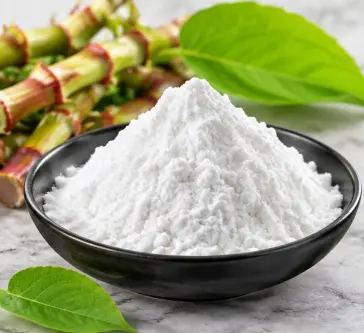
The price per kilogram does not tell the whole story. The quotation for Polygonum cuspidatum extract powder may vary according to trans-resveratrol specification, assay, carrier content, testing scope, packaging, order quantity, destination, and delivery terms.
To compare the cost per unit of trans-resveratrol, divide the raw-material price by the actual trans-resveratrol content on a consistent assay basis. A 98% grade may have a higher price per kilogram than a 50% grade, but the cost per gram of the specified marker compound may be more competitive. Make sure that the comparison also accounts for carrier content and any differences in analytical specifications.
For each quotation, request the sample size, pilot quantity, MOQ, volume-based pricing, lead time, payment terms, Incoterms, packaging details, documentation, and quotation validity. Then calculate the landed cost, including freight, duties, and additional testing expenses. A slightly higher quotation may still provide better overall value if it offers more consistent batches, suitable documentation, and dependable delivery.
Decision Matrix, Common Mistakes, and Procurement Steps
Score Suppliers With a Decision Matrix
A decision matrix turns subjective supplier comparisons into a more structured evaluation. List your requirements in rows, including botanical traceability, trans-resveratrol assay, emodin specification, contaminant control, solubility, stability, certifications, COA transparency, pricing, MOQ, production capacity, export experience, and OEM support.
Assign each factor a weight based on your business priorities. Supplement brands may place greater emphasis on documentation and batch consistency. Formulators may focus more on dispersibility and processing behavior. Distributors may prioritize shelf life, stock availability, and repeat-order reliability.
Compare a low-cost non-standardized supplier, a standardized extract manufacturer, and an integrated OEM/ODM partner using the same scoring criteria. The results help purchasing, R&D, and quality teams understand the trade-offs between price, technical support, and long-term supply capability.
Avoid Common Purchasing Mistakes
It is natural to have questions before placing a first order, but many purchasing problems can be avoided through a structured evaluation. Some buyers accept a high resveratrol claim without reviewing the analytical method. Others treat the extract ratio as a direct indicator of quality or overlook carriers such as maltodextrin. Some place bulk orders before conducting formulation trials or approve a supplier based on only one COA.
These oversights may lead to differences in active content, unexpected dispersion behavior, labeling adjustments, or rejected batches. A better approach is to request batch-specific evidence, review several lots, test representative samples, evaluate relevant excipients, and define acceptance criteria in the purchasing agreement. For repeat orders, also establish supplier-change notification requirements and a process for reviewing specification updates.
Follow a Step-by-Step Procurement Process
A practical procurement process can be organized into five steps.
First, submit a complete inquiry that includes the botanical name, plant part, required assay, extract ratio where applicable, organic status if needed, intended application, target market, documentation requirements, MOQ, and packaging preference.
Second, evaluate representative samples for appearance, odor, color, solubility or dispersibility, flow properties, assay, and relevant microbiological parameters.
Third, review the COA, specification sheet, SDS, allergen statement, non-GMO declaration, applicable certificates, and available manufacturing and traceability documentation.
Fourth, establish incoming-material inspection criteria and retain a reference sample from the first approved batch.
Fifth, review several deliveries to confirm consistency, documentation quality, and logistics performance before increasing order volume.
This step-by-step approach connects technical evaluation with purchasing decisions and helps ensure that each stage is supported by documented information.
Conclusion
Choosing Polygonum cuspidatum extract powder for supplements requires matching ingredient specifications with the intended product format and target market. Buyers should first confirm botanical identification, plant part, trans-resveratrol assay, emodin specification, carrier content, and the analytical methods used to verify them. Low water solubility and sensitivity to light and environmental conditions should also be considered when selecting a grade, packaging format, and formulation approach.
Batch-specific COAs, clear specifications, contaminant testing, and traceability records help distinguish suppliers with documented quality procedures from those offering only a price. To avoid common purchasing mistakes, compare the cost per unit of verified trans-resveratrol, evaluate multiple production lots, use a supplier decision matrix, and follow a structured sample-approval process. The most suitable option is the powder that consistently meets your finished-product specifications and comes with the documentation and supply support your business requires.
FAQ
Q1: What is the difference between Polygonum cuspidatum extract and isolated resveratrol powder?
A: Polygonum cuspidatum extract is a botanical ingredient produced from the plant and standardized to a marker such as trans-resveratrol. Depending on the extraction and purification process, it may contain other plant-derived constituents. Isolated resveratrol powder is a more purified single compound. Check the specification for the scientific name, plant part, carrier content, and assay before comparing products.
Q2: Which documents should I request before ordering?
A: Request a batch-specific COA, specification sheet, SDS, allergen and non-GMO declarations, relevant contaminant test results, and applicable certificates. Reviewing COAs from multiple batches can provide a better understanding of assay variation and supply consistency.
Q3: Why does the powder dissolve poorly in water?
A: Trans-resveratrol has low water solubility, which can make it difficult to formulate in conventional aqueous beverages. Micronized grades or suitable cyclodextrin-based formulation systems may be considered to improve dispersion or formulation performance. Always test the selected ingredient in your own product base.
Q4: Does color indicate quality?
A: Color can provide a preliminary visual reference, but it cannot independently confirm assay, purity, or oxidation status. Lower-standardized botanical extracts may be yellow or brown, while highly purified resveratrol grades are often off-white to white. Any unusual color should be evaluated alongside the COA and appropriate analytical testing.
Request a Polygonum Cuspidatum Extract Powder Sample and Specification
Are you ready to compare ingredient grades and production batches? Angelbio provides botanical ingredient information and technical support for customers evaluating Polygonum cuspidatum extract powder. Buyers can request current product specifications, batch-specific COAs, and samples to assess whether the material meets their formulation and purchasing requirements.
If you are looking for a Polygonum cuspidatum extract powder supplier, share your target market, intended application, required trans-resveratrol assay, packaging preference, and estimated order volume. The Angelbio team can provide available grade information, sample arrangements, MOQ, lead time, and a bulk quotation. Contact angel@angelbiology.com to discuss your sourcing requirements.

References
1. Peng W, Qin R, Li X, Zhou H. "Botany, phytochemistry, pharmacology, and potential application of Polygonum cuspidatum Sieb. et Zucc.: A review." Journal of Ethnopharmacology, 2013.
2. Robinson K, Mock C, Liang D. "Pre-formulation studies of resveratrol." Drug Development and Industrial Pharmacy, 2015.
3. Zupančič S, Lavrič Z, Kristl J. "Stability and solubility of trans-resveratrol are strongly influenced by pH and temperature." European Journal of Pharmaceutics and Biopharmaceutics, 2015.
4. Walle T, Hsieh F, DeLegge MH, Oatis JE, Walle UK. "High absorption but very low bioavailability of oral resveratrol in humans." Drug Metabolism and Disposition, 2004.
5. International Council for Harmonisation. "ICH Q1A(R2): Stability Testing of New Drug Substances and Products", 2003. This reference may provide general background on stability-study design; its pharmaceutical scope should not be treated as a direct requirement for every botanical supplement ingredient.