



Why Is Dendrobium Stem Extract Known as the “Herbal Elixir of Longevity”?
Dendrobium stem extract is known as the "herbal elixir of longevity" because Dendrobium species have been valued in traditional Chinese herbal culture for generations. The name reflects historical use and cultural appreciation rather than scientific proof that the ingredient can extend human lifespan. Today, Dendrobium officinale extract powder provides a concentrated and measurable form of compounds naturally present in the plant stem, particularly polysaccharides and other phytochemicals. Researchers continue to investigate these constituents through laboratory and preclinical studies, while evidence from human studies remains limited. This guide is designed for supplement brands, beverage manufacturers, distributors, and OEM customers who want to understand the ingredient's composition, evaluate product quality, and identify a reliable sourcing partner.
What Is Dendrobium Officinale Extract Powder?
Before comparing suppliers, it is important to understand the botanical source, the difference between an extract and raw plant powder, and the specifications that define a commercial ingredient.
Botanical Origin and Dendrobium Stem Source
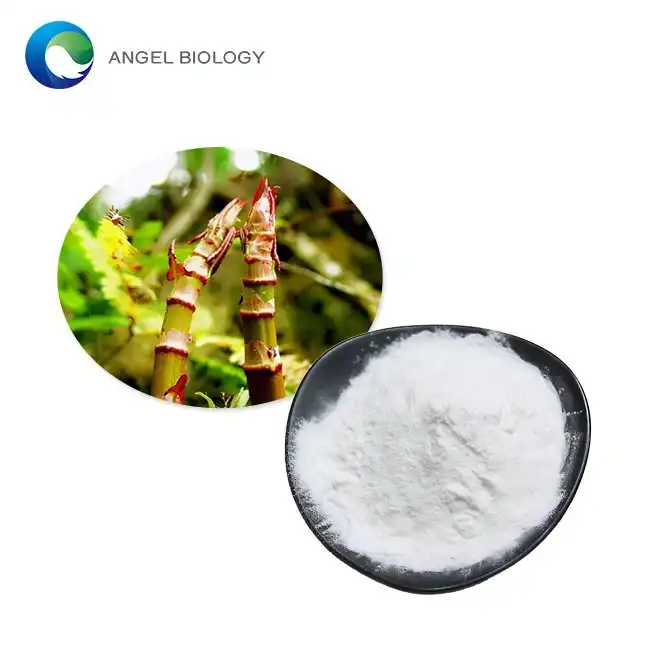
Dendrobium officinale Kimura et Migo is an orchid species also known in Chinese as Tie Pi Shi Hu. The stem is the primary plant part used in commercial extracts. Buyers sometimes confuse it with related species such as Dendrobium nobile, but these plants have different botanical identities and chemical profiles. Therefore, a complete product specification should identify the Latin name, plant part, geographical origin, and authentication method.
Methods such as thin-layer chromatography (TLC), HPLC fingerprinting, and DNA barcoding may be used for botanical identification, depending on the sample and testing objective. The supplier should explain which method is applied and provide relevant supporting records. Clear botanical identification helps buyers distinguish similar-looking materials, maintain consistent product specifications, and support accurate ingredient labeling.


Dendrobium Officinale Extract Powder Versus Raw Powder
Raw Dendrobium stem powder is produced by drying and grinding the plant material. It retains much of the original plant structure, including fiber, and its constituent levels may vary with the source material and processing conditions. An extract, by comparison, is generally produced through water or water-based solvent extraction, followed by filtration, concentration, and drying, often using spray-drying equipment.
This process can concentrate selected constituents, such as polysaccharides, and produce a powder with a more defined specification. The extract may also be easier to incorporate into capsules, sachets, granules, and beverage mixes, depending on its particle size and physical properties. Its taste, color, and dispersibility can differ from those of raw stem powder.
For products positioned around whole-herb ingredients, raw powder may still be suitable. For products requiring a defined marker-compound level or a more concentrated ingredient, an extract may be a better option. The final selection should depend on the intended product format, formulation requirements, and labeling objectives.
Common Product Specifications Buyers Should Review
The phenol-sulfuric acid method, commonly used with UV-Vis measurement, is one approach for determining total polysaccharide content. Commercial Dendrobium officinale extracts may be offered at different specification levels, for example, from approximately 10% to 50%. However, the reported value depends on the analytical method, reference standard, sample preparation, and calculation basis. Buyers should not compare percentages without confirming that the same or comparable methods have been used.
Other specifications worth reviewing include bulk density, particle-size distribution, moisture, ash, extract ratio, carrier content, and microbiological limits. A specification such as 95% passing through an 80-mesh sieve may be used for a particular grade, but it should be confirmed with the supplier rather than treated as a universal requirement. Moisture limits should also be established according to the product's hygroscopicity, packaging, and storage conditions.
Because polysaccharide-rich powders may absorb moisture and form lumps during storage, packaging and moisture control are important. Ask the supplier to identify the test method used for each specification. Comparing products on a consistent analytical and commercial basis makes supplier quotations more meaningful.
Why Is Dendrobium Stem Extract Associated With Longevity and Vitality?
The traditional nickname becomes easier to understand when cultural history, plant chemistry, and current scientific evidence are considered separately.
Traditional Uses of Dendrobium Officinale
Traditional Chinese herbal literature includes Dendrobium, commonly referred to as shihu, among valued botanical materials. Historical records and traditional practices describe its use in herbal preparations and tonics, often within the traditional concept of nourishing yin. Dendrobium stems have been prepared in decoctions and other traditional formulations for generations.
This history helps explain why the plant is associated with vitality and the cultural expression "herbal elixir of longevity." However, traditional use documents historical practices rather than proving that a commercial extract can extend lifespan or deliver a specific health outcome. For modern product development, the nickname is best treated as a cultural reference. Marketing language should focus on botanical origin, traditional background, ingredient composition, and verified product characteristics.
Dendrobium Officinale Polysaccharides and Other Active Compounds
Polysaccharides are among the most widely studied constituent groups in Dendrobium officinale stems. Some are glucomannan-type polysaccharides, which contain mannose and glucose units in varying proportions. Their molecular structure and composition can influence properties such as solution viscosity and formulation behavior.
The stem also contains other phytochemical groups, including flavonoids, alkaloids, and bibenzyl compounds such as gigantol. The levels of these constituents can vary with botanical source, growing conditions, harvest stage, extraction parameters, and drying methods. As a result, two powders sold under the same ingredient name may have different chemical profiles and physical properties.
For buyers, total polysaccharide content and monosaccharide composition can provide useful information about the extract. A mannose-to-glucose ratio may be included in a more detailed specification, but the ratio should be interpreted according to the analytical method and the expected botanical profile. A single ratio or threshold should not be used as universal proof of authenticity or quality. Request the method, chromatographic data where available, and batch-specific results before comparing suppliers.
What Current Research Can and Cannot Confirm
Scientific reviews published in journals such as Evidence-Based Complementary and Alternative Medicine and Phytochemistry Reviews discuss the chemical composition and biological activities of Dendrobium polysaccharides. Some laboratory and animal studies have examined areas such as antioxidant activity and immune-related responses. These findings provide research context, but they do not establish that every commercial extract produces the same effects in people.
Human clinical evidence specifically involving standardized Dendrobium officinale extract powder remains limited. Brands should distinguish traditional-use information, laboratory findings, animal research, and human clinical evidence when preparing technical documents or marketing materials. For products sold in the United States, any structure/function claim should be supported by appropriate substantiation and reviewed against applicable labeling and notification requirements. Before launch, have product claims assessed by a qualified regulatory professional familiar with the destination market.
Potential Benefits and Functional Uses of Dendrobium Officinale Extract Powder
For product developers, the most practical way to evaluate this ingredient is to focus on its measurable composition, processing characteristics, and suitability for different product formats.
Dendrobium Officinale Extract Powder Benefits for Formulators
From a formulation perspective, a standardized extract offers several practical advantages. A defined polysaccharide specification allows manufacturers to monitor marker content and compare incoming batches. A suitable powder grade may also provide consistent appearance, particle size, moisture, and bulk density, helping formulators manage blending and filling operations.
The powder's color may range from light tan to yellowish-brown, depending on the extract concentration and processing method. Flowability and bulk density can influence capsule filling and powder handling, while dispersibility and viscosity are important for beverage applications. These properties should be confirmed through the supplier's specification and tested in the actual formulation.
The botanical background may also be relevant to brands developing products around traditional plant ingredients. However, the extract should not be presented as a significant source of vitamins, minerals, or macronutrients unless its nutritional composition has been independently established. Product descriptions should focus on verified ingredient characteristics rather than unsupported nutritional or performance claims.
Dendrobium Officinale Powder Uses Across Product Categories
Different product formats place different demands on the ingredient. Ready-to-drink beverages and instant mixes require suitable dispersibility, appearance, and control of sediment formation. The viscosity of polysaccharide-rich extracts may influence mouthfeel and the finished beverage's texture, so testing should take place in the intended drink base.
Capsules and granules, including formulas that combine Dendrobium with botanical ingredients such as American ginseng, require attention to bulk density, particle size, blend uniformity, and the declared polysaccharide content. These factors can influence filling accuracy and the consistency of finished units.
Dendrobium-derived ingredients may also be evaluated in cosmetic formulations such as serums and masks. In these applications, formulators should assess solubility or dispersion, color, odor, viscosity, pH compatibility, and stability in the finished base. Gummies, wellness shots, and nutrition bars offer additional formulation possibilities, but their moisture content, processing temperature, texture, and shelf-life requirements need to be considered.
The most reliable approach is to test the ingredient in the actual product matrix rather than relying on a simple water-solubility test.
Dendrobium Officinale Extract Powder Nutrition and Label Considerations
Before preparing a Supplement Facts panel or other product label, review the supplier's current specification and relevant compositional data. Avoid relying on generic nutritional values because calories, carbohydrates, serving size, carrier ingredients, and allergen information may differ between grades and suppliers.
Since polysaccharides are carbohydrate-based compounds, their analytical content should be interpreted alongside the full ingredient composition. A total polysaccharide assay does not automatically provide the complete nutritional profile of the powder. If carriers such as maltodextrin are present, their proportion should be clearly identified and considered when calculating the finished product's composition.
The label should accurately identify the botanical name, plant part, ingredient form, and any relevant extract information in accordance with the target market's requirements. Product claims should remain within the scope of applicable rules and available evidence. For dietary supplements sold in the United States, manufacturers and brand owners should review the relevant FDA dietary supplement identity, labeling, and quality requirements, including the provisions in 21 CFR Part 111.
How to Choose a High-Quality Dendrobium Officinale Extract Powder
A structured evaluation checklist helps purchasing teams compare products based on measurable specifications rather than marketing descriptions alone.
Key Quality Metrics for Purchasing Managers and Product Developers
Begin with botanical identity, then evaluate chemical composition, contaminants, and physical properties. Botanical identification may involve TLC, HPLC fingerprinting, or DNA barcoding, depending on the material and testing purpose. Total polysaccharide content and the mannose-to-glucose profile can provide additional information about the extract's composition when supported by appropriate analytical methods.
Heavy-metal limits should be specified according to the applicable market, product category, and customer requirements. Lead and arsenic results should be reviewed against the relevant limits rather than relying on a single set of figures for every product. Pesticide residues, residual solvents, microbiological counts, and other contaminants should also be assessed according to the raw material, extraction process, and intended application.
For ethanol-extracted products, request residual solvent results and confirm that they meet the relevant specification. Physical tests may include moisture, particle-size distribution, bulk density, flowability, and hygroscopicity. These parameters help predict how the material will behave during transportation, storage, blending, and filling.
Request a batch-specific COA rather than relying solely on a sample report or generic specification sheet. Where possible, compare results from several batches to assess consistency over time.
Standardized, Organic, and High-Polysaccharide Options
When a supplier describes an ingredient as "high polysaccharide," the term should be supported by a defined specification, test method, and declared content range. Different suppliers may use the same marketing term for grades with different polysaccharide levels. Therefore, buyers should ask for the actual percentage, analytical method, and calculation basis.
If Dendrobium officinale extract powder is marketed as organic, request the relevant certification and confirm that it covers the actual product and producing site. Organic status is a separate sourcing attribute and does not automatically indicate a higher polysaccharide content or better physical properties.
Higher assay grades are not necessarily suitable for every application. They may differ in price, taste, viscosity, dispersibility, and formulation behavior. A lower-concentration grade may be more economical for some product formats, while a higher-standardized grade may be appropriate when a more defined marker level is required. Choose according to your product concept, specification, processing needs, and target price.
Water-Soluble Dendrobium Officinale Extract Powder
Water-based Dendrobium extracts may disperse or dissolve in aqueous systems, but their behavior depends on polysaccharide content, molecular characteristics, particle size, extraction method, and drying process. Long-chain glucomannan-type polysaccharides can increase solution viscosity, so even a well-dispersed powder may make a beverage thicker.
Ask the supplier whether an agglomerated or instantized grade is available if rapid wetting and reduced clumping are important. Test the powder in your actual formulation at the intended pH, temperature, sweetener level, and mixing conditions. Check for sediment, changes in viscosity, and appearance after storage.
Water alone is not a sufficient test for beverage or cosmetic applications. Since laboratory mixing conditions may differ from commercial production, conduct a pilot batch before approving the ingredient for large-scale use. Document the mixing procedure and acceptance criteria so that future batches can be evaluated consistently.
Supplier and Procurement Guide for Dendrobium Officinale Extract Powder
Early supplier qualification can reduce sourcing risks and save time during product development. A clear checklist also makes technical and commercial comparisons more efficient.
How to Evaluate a Dendrobium Officinale Extract Powder Supplier
First, identify the supplier's business model: integrated manufacturer, direct producer, distributor, or trading company. Then review the botanical sourcing information, production capacity, quality-control procedures, export experience, and technical response capabilities.
According to its company information, Angelbio has an investment background involving Angel Holding Group and the Institute of Life and Health Research at Xi'an Jiaotong University. The company also describes more than 18 years of independent R&D and testing experience involving natural ingredients for food, supplements, cosmetics, personal care, and flavor and fragrance applications. Buyers should request current company and product documentation when these details are relevant to supplier qualification.
A supplier with suitable analytical capabilities should be able to explain its specifications, testing methods, and batch results clearly. Evaluate whether its technical team can answer questions about botanical identity, polysaccharide assay, monosaccharide composition, moisture, contaminants, and formulation behavior. Clear technical communication is an important factor when establishing a long-term ingredient supply relationship.
Documents to Request Before Placing a Bulk Order
Before discussing a large order, prepare a document checklist. Request the product specification, batch-specific COA, relevant contaminant test results, applicable certificates, stability information, packaging details, traceability records, and export documents.
Shelf-life information should be supported by suitable stability data for the actual grade and packaging. Avoid relying only on a general shelf-life statement without understanding the storage conditions and supporting records. Before approving the first order, obtain a representative sample and test it in your intended application.
Keep each batch's COA and inspection records together with your purchasing documents. This makes it easier to compare repeat orders, respond to customer questions, and maintain consistent incoming-material records.
Pricing, MOQ, Lead Time, and OEM Support
The price per kilogram of Dendrobium extract depends on several factors, including raw-material origin, polysaccharide specification, extract ratio, extraction and drying methods, carrier content, packaging, and analytical requirements. Higher-standardized grades may cost more because of differences in raw-material use, extraction, or purification.
MOQ and lead time may vary according to the selected grade, production schedule, and packaging format. Share your estimated annual demand early so the supplier can provide a more suitable quotation and supply plan.
For private-label, OEM, and customized projects, define the dosage form, target market, ingredient specification, packaging, and documentation requirements at the beginning. A low quotation may not represent the best value if the specification is unclear or the supplier cannot provide consistent batch records. Compare each quotation based on the actual ingredient content, supporting documentation, and delivery terms.
Conclusion
The expression "herbal elixir of longevity" reflects the traditional and cultural value of Dendrobium officinale rather than scientific proof that the plant can extend human lifespan. Dendrobium officinale extract powder is a concentrated botanical ingredient containing polysaccharides and other naturally occurring compounds, with potential applications in beverages, capsules, granules, and selected cosmetic formulations.
For commercial sourcing, quality evaluation should begin with confirmed botanical identity, a clearly defined polysaccharide specification, an appropriate analytical method, moisture control, and contaminant testing. The mannose-to-glucose profile may provide additional compositional information, but it should be interpreted alongside the full analytical record. Laboratory and animal research offers useful background for further investigation, while claims about human outcomes require appropriate evidence and careful review.
Formulation performance should be assessed in the actual product matrix, with attention to dispersion, viscosity, stability, and packaging. Buyers can compare grades, extraction methods, and commercial terms more effectively when each supplier provides batch-specific COAs, clear specifications, stability information, and traceability records. The most suitable ingredient is the one that consistently meets your product requirements and comes with reliable technical and supply support.
FAQ
1. Is Dendrobium Officinale Extract Powder the Same as Raw Dendrobium Powder?
No. Raw powder is made by grinding dried stems and retains more of the original plant material, including fiber. Extract powder is produced through extraction, filtration, concentration, and drying. Depending on the manufacturing process, it may provide a more concentrated and standardized polysaccharide specification. The two forms should be selected according to the intended application and product requirements.
2. Is Dendrobium Officinale Extract Powder Water-Soluble?
Some water-based extracts disperse or dissolve in aqueous systems, but performance varies with polysaccharide content, particle size, extraction method, and formulation conditions. Certain grades may require controlled mixing because of their viscosity or tendency to form lumps. Always test the ingredient in the intended product matrix.
3. What Is the Typical Shelf Life of Dendrobium Officinale Extract Powder?
Shelf life depends on the extract grade, moisture content, packaging, and storage conditions. Because polysaccharide-rich powders may absorb moisture, moisture-barrier packaging and proper sealing are important. Request the supplier's storage recommendations and supporting stability information before setting a finished-product shelf life.
Request Dendrobium Officinale Extract Powder Samples From Angelbio
Angelbio supplies Dendrobium officinale extract powder for customers evaluating botanical ingredients for supplement and other product applications. Buyers can request current product specifications, batch-specific COA, and samples to assess the material against their formulation requirements.
If you are comparing Dendrobium officinale extract powder suppliers, share your target polysaccharide specification, intended dosage form, estimated annual volume, and packaging requirements. The Angelbio team can provide available grade information, sample arrangements, MOQ, lead time, and a bulk quotation. Contact angel@angelbiology.com to discuss your sourcing requirements.

References
1. Evidence-Based Complementary and Alternative Medicine, 2017. “Dendrobium officinale Kimura et Migo: A Review on Its Ethnopharmacology, Phytochemistry, Pharmacology, and Industrialization.”
2. Applied Microbiology and Biotechnology, 2017. “The Medicinal and Pharmaceutical Importance of Dendrobium Species.”
3. Phytochemistry Reviews, 2013. “Chemistry, Bioactivity and Quality Control of Dendrobium, a Commonly Used Tonic Herb in Traditional Chinese Medicine.”
4. Aging and Disease, 2017. “Dendrobium: Sources of Active Ingredients to Treat Age-Related Pathologies.”
5. Pharmacopoeia of the People's Republic of China, 2020. Chinese Pharmacopoeia Commission.
6. Code of Federal Regulations, Title 21, Part 111, 2007. “Current Good Manufacturing Practice in Manufacturing, Packaging, Labeling, or Holding Operations for Dietary Supplements.”