



How to Choose the Right Ambroxide Supplier for Your Business?
How good your product smells, how well it meets government standards, and how stable the supply chain is will all depend on which Ambroxide Supplier you choose. A reputable supplier will always give you Ambroxide that is very pure (>99%), made in an eco-friendly way (e.g., through bio-fermentation or Sclareol), and their certifications (e.g., ISO, REACH, and IFRA compliance) will always be easy to see. Being with someone you can trust gives you more than just chemistry. For quality control from batch to batch, they also offer GC-MS analysis, technical help during formulation trials, flexible MOQs for testing phases, and reliable logistics that work with your production schedules. This way, you can be sure that your brand will meet the needs of the market.
Understanding Your Ambroxide Procurement Needs
It's better not to waste time and money buying things that don't meet your needs if you know exactly what you need. To get Ambroxide, you need to be clear about a number of things that affect both the success of the formulation and the smooth running of operations.
Defining Purity and Olfactory Standards
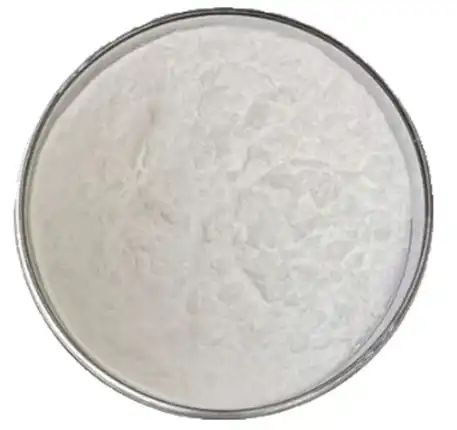
The way Ambroxide is made chemically lets you know if it will work in your formula. If it's more than 99% pure, it has a refined woody, amber-like scent with few off-notes. This makes it perfect for high-end perfumes and personal care products. Less pure grades may include impurities like gamma-dihydroionone, which can make the smell less classy. When you ask potential suppliers about purity levels, make sure they give you full GC-MS reports that show the isomeric composition. Color-stable batches (low APHA values) are often given more weight by cosmetics formulators so that clear formulations don't turn yellow.
Determining Volume and Delivery Timing
If you know how much you use, you can avoid both overstocking and stopping production. Start-ups that are making fragrance prototypes may need samples that range in size from 100g to 1kg and can be sent quickly. Home care companies that have been around for a while, on the other hand, order 25kg drums or bulk containers every three months. Making delivery times fit with your production and R&D testing times will help you save money on storage and keep your goods fresh. Businesses at different stages of growth can work with suppliers that can work with them because they can handle different batch sizes.
Core Criteria for Evaluating Ambroxide Suppliers
You need to think about more than just how many products Ambroxide Supplier they have when picking an Ambroxide Supplier. Strategic evaluation helps you find business partners whose goals and ways of doing things are similar to yours.
Assessing Manufacturing Capabilities and Quality Systems
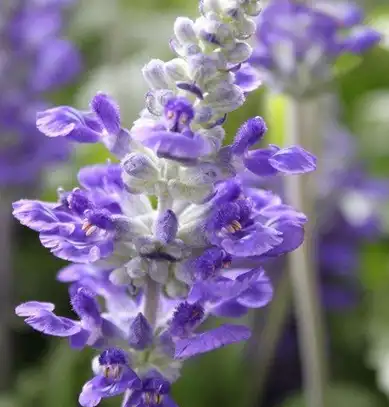
Being good at making things is directly related to having consistent products and supplies. Elite suppliers use green chemistry pathways that begin with Sclareol, which is taken from Clary Sage (Salvia sclarea). These pathways are better for the environment than pathways that come from oil. Bio-fermentation methods are new technologies that keep enantiomeric purity high while using less land for farming. It's very important to have quality systems. To give you an idea, ISO 9001 certification means that a process is being managed in a planned way, and ISO 22716 sets rules for creating cosmetic raw materials. During supplier audits, find out if the facilities use trained sensory panels along with analytical equipment for testing the taste and smell of the food. Even if GC-MS can't find them, small impurities can still change the smell of something in a way that you can tell.
Evaluating Technical Support and Formulation Assistance
Because they know about technology, strategic partners are different from transactional vendors. Suppliers with a lot of experience know that Ambroxide can absorb a small amount of water and then crystallize again when it is very concentrated and cold. Beforehand, they tell you the best way to dilute the solution—often 10% in either dipropylene glycol (DPG) or ethanol—and how to keep it clear while you store it. If you want to make functional fragrances for cleaning fabrics, suppliers who know about the uses can help you improve the substance. Because Ambroxide doesn't like water, they can use it to make fragrances last longer on fabrics through washing cycles. With this teamwork method, coming up with a solution takes less time and costs less than expensive testing by trial and error.
Comparing Leading Ambroxide Suppliers: Key Factors to Consider
By comparing potential partners in a structured way, you can see which ones have the most competitive advantages and are most likely to meet your needs.
Geographic Presence and Market Experience
The location of a supplier affects both how they get goods to customers and how well they know the market. When a company needs to place a lot of small orders or help with rapid prototyping, it's best to work with US suppliers because they can usually deliver faster and make the customs process easier. International companies, especially those with a good name for botanical extraction and semi-synthesis, may be able to offer low prices by using economies of scale. They may be able to do this while still maintaining high-quality standards. This balance is shown very well by Angelbio, which was created by Angel Holding Group and the Institute of Life and Health Research at Xi'an Jiaotong University. After 18 years of great research and development, it has a deep understanding of what people around the world need. Their technical background lets them control synthesis in a lot of different ways, and their experience working in different countries makes sure that documentation and compliance meet the needs of all sorts of places.
Certification Portfolio and Regulatory Compliance
A third party's certification shows that a supplier is qualified and the product is safe. You should get the basic ISO 9001 quality management certification, but you should also look for more specific certifications that fit the needs and markets you want to serve. The product has been registered with REACH, which means it is ready for sale in Europe. It has also been approved by the FDA, which means it can be used for flavoring in food-safe areas. More people will buy from you if you work with suppliers who are certified as kosher or halal. It's also important to have clear rules for testing. Following ICH Q3C guidelines, reliable suppliers do batch-specific residual solvent analysis. This gets rid of any hexane or toluene that might be present during the crystallization process. Ask for recent Ambroxide Supplier audit reports and analytical certificates to back up what people say, instead of taking their word for it.
How to Make the Final Decision: Step-by-Step Supplier Selection Process
Making decisions in a structured way reduces subjective bias and ensures that all important factors are taken into account.
Establishing Weighted Evaluation Criteria
So that they can get the best deals, different companies and product lines need different evaluation frameworks. You should make a scoring matrix and give each factor a weight that makes sense for your strategy. In high-end perfumery, consistency in quality might be worth 40% of the score. On the other hand, cost-effectiveness might be worth 35% for mass-market fabric softeners. Other things that are looked at are how reliable delivery is, how quick technical support is, and how complete the regulatory documentation is. It is possible to compare candidates in a fair way by using standardized scales (1–10 ratings) to measure subjective factors. The criteria should be made with help from people from different departments, such as R&D chemists, quality assurance teams, and finance managers. This will help make sure that everyone has the same goals and keep things running smoothly during implementation.
Conducting Sample Testing and Performance Validation
Testing it in the real world makes sure that what the supplier says is true and that it works with your formulas. If you want samples, make sure they come with full analytical reports that use GC-MS to show how pure they are, how much solvent is left over, and heavy metal testing. Compare them to your current supplier or reference standards side by side, and use trained panels to find out how the smell profiles are different. To see if samples are thermally stable, quickly age them in a way that is similar to how long a product will last on the shelf. Before you buy a lot, you can find out if there are any compatibility issues by testing how the solubility works in the formulation matrices you use. Write down all of your observations in a planned way. In this way, you can pick a supplier based on facts that can stand up to scrutiny within the company. It will also help you explain your choices to management.
Case Studies: Successful Ambroxide Supplier Partnerships
You can see how strategic Ambroxide Supplier selection can help your business in many different fields by looking at real-life examples.
European OEM Achieving Production Consistency
The European company that made high-end home fragrances had issues with quality control, which made customers unhappy because the scents of different batches didn't match. They looked at five suppliers and picked the one that had both analytical quality control and strict testing by a panel of five senses. The supplier they chose set up separate production campaigns for each account. This way, there were no risks of cross-contamination that come with making more than one product at the same time. Changes in smell were kept below detectable levels by paying close attention to process control. This made the client trust you again, which led to a lot of money-making contract renewals every year. It turned into collaborative new product development (NPD), and the perfumers at the supplier helped come up with scents for new products.
U.S. Boutique Perfumery Leveraging Customization
A perfume brand that was getting bigger wanted to stand out by telling Ambroxide Supplier stories about ingredients that were good for the environment. Their chosen supplier gave them detailed traceability paperwork and carbon footprint calculations for bio-fermented Ambroxide. This lets brands tell interesting stories about being good to the environment. With private labeling services, the perfumery could market their ingredient as unique, which would make it seem more private. Being able to change the minimum order quantities during the launch phase saved the company money and helped people learn about the brand. This partnership showed that a supplier can do more than just deliver goods. These skills can help position a brand and support marketing strategies in competitive luxury markets.
Multi-Regional Distributor Streamlining Compliance
An international distributor that works with perfumeries in Asia, Europe, and North America needed a supplier that could deal with the complicated rules of more than one country. Their chosen partner had all the necessary licenses, including REACH registration, FDA compliance for flavor applications, and kosher certifications. By sending packages of market-specific paperwork, less work had to be done on internal regulatory translation, and customs clearance went more quickly. The distributor can promise fast delivery to customers further down the chain because they have a strong logistics infrastructure and regional warehousing. This gives them an edge over their competitors. This case shows how a supplier's knowledge of rules and the infrastructure needed for logistics can help companies that deal with distribution grow their markets.
Conclusion
The quality of the product, the level of competition in the market, and the smooth running of the business all depend on choosing the best Ambroxide Supplier. A good procurement process strikes a balance between the need for purity and the ability to make things, between following the rules and saving money, and between short-term needs and the chance to build a long-term relationship. If you want to find partners who can help your business grow, you should carefully look at their technical know-how, quality systems, supply chain resilience, and business flexibility. Claims are checked with sample testing, and frameworks for structured negotiation are set up that work for everyone. It's not enough to just get a chemical compound; you also need to be able to access knowledge, dependability, and new ideas that can help you improve your formulations and make your position in the market stronger.
FAQ
1. What synthesis route should my Ambroxide supplier use?
They either use a method called semi-synthesis, which starts with Clary Sage oil called Sclareol, or they come up with new bio-fermentation pathways. Instead of using petroleum-based synthesis, these green chemistry methods make the desired (-)-isomer more accurately. They also deal with worries about the environment. Sclareol is used to make Ambroxide, which keeps the same smells. However, fermentation processes make farming less reliant on it. Make sure that the way your supplier synthesizes meets your brand's goals for quality and sustainability.
2. How does certification affect Ambroxide suitability for my application?
When you get something certified, you know that it is safe and legal to use in all places. As long as it meets IFRA standards, it can be used for fine fragrances with no dosage limits. It can also be used for flavorings because it meets FEMA GRAS standards. Cosmetics sold in Europe must be registered with REACH, and getting kosher or halal certifications can help you reach certain types of customers. ISO 22716 talks about the quality of the raw materials used to make cosmetics. Make sure the certifications your supplier offers are right for the products and markets you want to reach. If they aren't, you may have to make changes that cost a lot of money or wait longer to get into a new market.
3. What testing should I conduct on Ambroxide samples?
GC-MS should be used to check the purity and isomeric composition. The (-)-Ambroxide enantiomer should be the main one. To do an organoleptic evaluation, trained panels compare scent profiles to standards and look for off-notes that are caused by small impurities. Check to see if it dissolves in the carriers you're using and how stable it is at high temperatures, which will make it age faster. Make sure that the amount of solvent left over meets ICH Q3C standards and that the color stays the same (APHA values) for clear formulations. Make a list of all the things you find to help you decide which suppliers to go with.
Partner with Angelbio—Your Trusted Ambroxide Supplier and Manufacturer
18 years of top-notch research and development and top-notch production have helped Angelbio make Ambroxide, an Ambroxide Supplier that can handle the toughest jobs. We have cutting-edge systems for quality control and synthesis at our joint investment foundation with Angel Holding Group and the Institute of Life and Health Research at Xi'an Jiaotong University. We sell Ambroxide with full certification packages that include ISO standards, REACH registration, and compliance documents that are tailored to the people you want to sell to and how they will use the product. It is the job of our technical team to help with formulations and make sure that fragrances, cosmetics, and functional uses have the best stability and performance. You can always get what you need from us, whether you need a few samples to make a prototype or a lot of them for mass production. Our MOQs are flexible, and our logistics are reliable. Feel free to email angel@angelbiology.com right away to talk about your needs and get full technical details. It will make a difference if you work with an Ambroxide Supplier that cares about quality, sustainability, and your success.
References
1. Sell, Charles S. (2010). "The Chemistry of Fragrances: From Perfumer to Consumer." Royal Society of Chemistry Publishing, Cambridge, 2nd edition.
2. Kraft, Philip and Fráter, György (2001). "Enantioselectivity of the Musk Odor Sensation." Chirality in Natural and Applied Science, Blackwell Science, Oxford.
3. Bauer, Karl; Garbe, Dorothea; Surburg, Horst (2008). "Common Fragrance and Flavor Materials: Preparation, Properties and Uses." Wiley-VCH Verlag, Weinheim, 5. Aufl.
4. European Chemicals Agency (2018). "Guidance on Registration Requirements under REACH Regulation." Publications Office of the European Union, Luxembourg.
5. International Fragrance Association (2021). "IFRA Standards and Guidelines for Fragrance Ingredients." IFRA Analytical Methods and Safety Assessment, Brussels.
6. Curtis, Tony, and Williams, David G. (2001). "Introduction to Perfumery." Micelle Press, Weymouth, 2nd edition.