



How To Make Best Apigenin Powder?
To make the best Apigenin Powder, you need to know a lot about the science behind extracting plants from plants, keep an eye on quality, and use advanced processing methods. To make good Apigenin Powder, which is also known as 4', 5, 7-trihydroxyflavone (CAS: 520-36-5), you need to start by getting the best parts of chamomile or parsley stems. For high-quality production, you need standardized extraction methods that get to ≥98% purity through HPLC calibration. After this, precise steps of cleaning, like chromatography and crystallization, are taken. In the last step, micronization, the particles are made sure to be the right size (D90 < 20 microns) to make them more bioavailable. If you put the assay in the right packaging, it will stay intact during its shelf life because it will keep it safe from light and oxidation.
Understanding Apigenin Powder and Its Production Challenges
Apigenin Powder is a complex bioactive flavonoid concentrate that is being used in more and more beauty and health products. This natural compound is very pure and crystalline, and it fills a lot of important needs in modern supplement, sleep aid, and anti-aging product lines. We know this because we've worked with R&D directors and formulation managers from many different industries. They are always worried about how different the raw materials can be and how consistent the extraction process needs to be.
Raw Material Variability and Quality Inconsistency
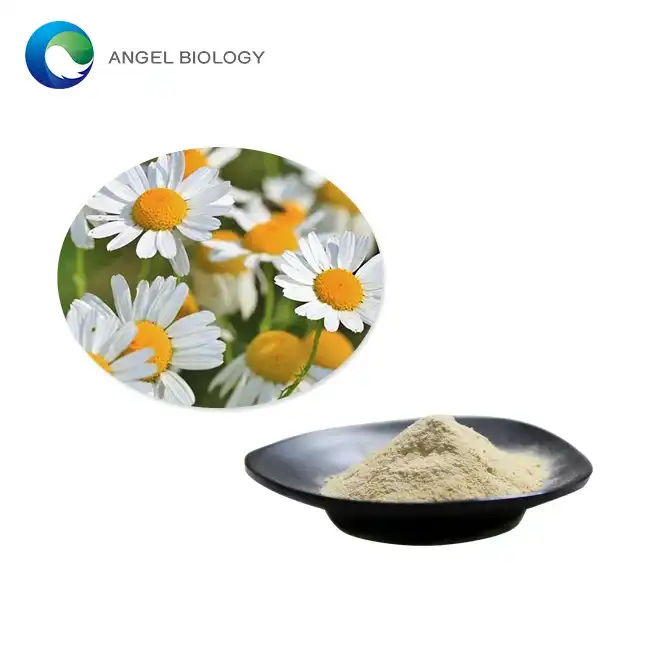
Apigenin is mostly taken from chamomile flowers and parsley. The quality of these plants changes a lot depending on the season and where they grow. What kinds of flavonoids are in a plant depend on how it was grown, when it was picked, and how it was handled afterward. Matricaria chamomilla, which is grown organically and picked when it is at its fullest flowering level, usually has between 1.2 and 3.5% Apigenin. Different sources, on the other hand, might have much lower concentrations. When the weather, the soil, or the way crops are grown change, it creates uncertainty that directly impacts how well extraction works and how uniform the end product is.
Extraction Efficiency and Purity Maintenance
Solvent-based extraction methods aren't always able to achieve the level of purity that high-end nutraceutical formulations need. It is cheap to extract with ethanol, but it often gets rid of chemicals that aren't wanted, like chlorophyll, waxes, and other flavonoids that make the next step of purification harder. Lipophilic means that Apigenin doesn't mix well with water. However, it does mix well with DMSO and hot ethanol. This makes it harder to do isolation processes. To get extraction yields that are consistent and pure enough for pharmaceutical use, you need complex equipment and process optimization, which is something that many suppliers can't always provide.
Stability Concerns During Processing and Storage
It is very easy for oxidation, light, and high temperatures to damage the chemical Apigenin during processing. The compound can't melt below 350°C (345°C), so it stays stable at high temperatures while being encased. That being said, heat can damage the bioactive properties during the drying and milling steps, which come between the other steps. Because microbes could get into the powder during the powder formation stages, the manufacturing environments need to be controlled and meet GMP standards. Because of these stability issues, the medicine needs to be packed in a special way, Apigenin Powder, so that it stays effective for 24 months. Vacuum-sealed, clear containers are often used in these solutions.


Step-by-Step Process to Make the Best Apigenin Powder
To make good Apigenin Powder, you need to pay close attention to every step, from picking the plants to putting them in the package. The whole process described below is based on the best practices in the field and guarantees consistent quality, following the rules, and the best functionality for end-use applications.
Raw Material Selection and Pre-Treatment
To get good Apigenin, the first thing you need to do is pick plants that are of good quality. It is easier to find certified organic chamomile flowers that were grown in places with clear rules about how to do so. This makes it less likely that they contain pesticide residues. When you pick the flowers is very important because the flowers that are picked when they are in full bloom have the most flavonoids. The food is carefully dried at low temperatures (below 40°C) after it is picked so that the compounds don't break down. After that, it is milled to make sure that all of the particles are the same size. This makes the extraction surface area bigger. There is no chance of fraud when botanical identification and preliminary HPLC screening are used to check the raw materials before a lot of money is spent on processing.
Advanced Extraction Technologies
There are better ways to get better yields and purity profiles than the old solvent methods used for extraction. What makes traditional and advanced methods very different from each other is how well they work:
- Supercritical CO2 extraction operates at certain temperatures and pressures that can separate Apigenin from other parts of the plant that you don't want. This method gets rid of any organic solvents that are still there. It also makes extracts that are cleaner and need less cleaning in the future. This helps clean-label brands reach their sustainability goals. Even though capital equipment costs more, the better extraction and lack of solvents often make the investment worth it for large-scale production.
- Ultrasonic-assisted extraction breaks down plant cell walls through cavitation effects, which speeds up the transfer of mass. This gets the job done in minutes instead of hours and increases the yield by 15 to 30 percent compared to the old way of maceration. You don't need a lot of money to get started with this technology, and it's easy to connect to solvent systems that are already in place.
- Conventional ethanol extraction remains viable when properly optimized, particularly for mid-range purity applications. Good results can be achieved with temperature-controlled reflux systems, the best solvent-to-material ratios (10:1 to 15:1), and long extraction cycles (4-6 hours). However, these systems need to be cleaned up much more thoroughly afterward.
Purification and Standardization Processes
After the first extraction, Apigenin that is not fully refined goes through a number of steps to make it safe for use in medicine. Column chromatography separates Apigenin from flavonoids and plant metabolites that were taken out at the same time because their polarities are different. With the help of silica gel stationary phases and improved mobile phase gradients, high-purity fractions can be made. When you recrystallize the substance in hot ethanol or ethyl acetate, the impurities stay in solution, and Apigenin crystals form, making it even purer. This process is done again and again until HPLC testing shows that the product is at least 98% pure, which is the standard for high-end beauty and supplement products. Standardization protocols use mixing methods that keep the amount of Apigenin in each batch within very strict limits. This makes sure that every batch is the same.
Powder Formation and Particle Engineering
It is important to think about what the powder will be used for when turning pure Apigenin crystals into it. When you spray dry something, you get fine, free-flowing powders with controlled particle size distributions that are great for making tablets and capsules directly. The inlet temperature (160–180°C), feed rate, and atomization pressure all have a direct effect on the shape of the particles and the amount of moisture that stays in the system. Because it is done at low temperatures that stop thermal degradation, freeze drying keeps the most bioactivity. This makes very porous particles that are great at reconstituting and work well in liquid formulations and topical applications. However, the costs of the equipment and running the business are much higher than with spray drying. The problem of Apigenin not dissolving well in water can be fixed by using jet mills or ball mills to break up the particles into D90 < 20 microns pieces. This makes the Apigenin more bioavailable. Because smaller particles have more surface area, they may dissolve more easily in stomach acid. This could make absorption rates two to three times higher than with crystalline material that has not been milled. While particle engineering tries to make particles more bioavailable, it also has to deal with problems in manufacturing, such as the need to handle dust and particles' electrostatic properties.
Quality Control and Assurance for B2B Procurement
If procurement professionals follow strict quality control rules, they can avoid problems with the supply chain and formulation failures. The Apigenin Powder is tested carefully to make sure it meets the needs before it is added to the production process. The supplier qualification processes also make sure that the powder will work well for a long time.
Critical Quality Parameters and Testing Methods
When testing for Apigenin, High-Performance Liquid Chromatography (HPLC) is the best way to find out how much is in a sample. The amount of Apigenin is found using approved Apigenin Powder analytical methods that involve measuring with UV light at 337 nm and using approved standards. Premium grades are ≥98% pure, and reputable suppliers will give you a Certificate of Analysis (COA) to prove it. Lead (< 2 ppm), cadmium (< 1 ppm), arsenic (< 2 ppm), and mercury (< 0.5 ppm) are some of the potentially harmful heavy metals that ICP-MS scans for. This makes sure that the safety limits set by the FDA and EU are met. There were no pesticide residues found in the plant-based materials, so they met the requirements for either organic certification or conventional farming. Brands don't break the law or put customers' health at risk when they use multi-residue analysis to check for more than 200 compounds. Testing for pathogens like E. coli, Salmonella, and Staphylococcus, yeast and mould counts, and total plate count are all ways to look for microbes and make sure that the processing areas stay clean. There are quality indicators that show how well a product works in manufacturing that can be seen in its appearance, particle size distribution, bulk density, and moisture content (which is usually less than 5%). How much the tablet can flow helps decide whether it can be compressed directly or needs to be granulated in water.
Certifications and Regulatory Compliance
Teams that buy things give more weight to suppliers who have certifications that are recognized around the world and show they manage quality in a structured way. Certification for Good Manufacturing Practice (GMP) shows that factories have controlled environments, written procedures, and trained workers who can make goods consistently. An ISO 9001 quality management system certification shows that a business wants to keep getting better and making sure its customers are pleased. Organic labels, such as USDA Organic and EU Organic, prove that plant-based goods follow strict farming rules that don't allow synthetic pesticides and fertilizers. Because they are religiously or culturally different, Kosher and Halal certifications help brands reach more people. Tests done by independent labs and NSF International certification give premium suppliers more credibility and set them apart from commodity vendors. It is easier to get through customs and send in regulatory paperwork when you have safety data sheets (SDS), allergen declarations, BSE/TSE certificates, and import permits that are specific to your country. Buying groups don't have to do as much paperwork when suppliers offer full documentation packages. This speeds up the buying process.
Supplier Auditing and Traceability Protocols
Setting up programs to qualify suppliers helps keep quality and the supply chain from going wrong. Quality assurance experts with a lot of experience check out manufacturing plants in person to see things like how documentation is done, how equipment maintenance plans are kept up to date, and how employee training systems work. Audit results are used to make supplier rating systems that help people decide what to buy and how to improve things. It is possible to track finished powder batches all the way back to where the raw materials came from, how they were cleaned, and how they were extracted. If there are problems with the quality, this lets them be looked into quickly and helps with the recall process if needed. Botanical ingredient supply chains now use blockchain-based traceability platforms to make sure that everyone can see correct records that can't be changed. Processing records, analytical test results, and stability data at the batch level gives procurement professionals the information they need to make sure they choose the right place to get goods.
Comparing Apigenin Powder with Alternative Flavonoid Products
Finding out how Apigenin Powder compares to other ingredients in the same group can help you make smart sourcing decisions that help you reach your product development goals. There are pros and cons to each flavonoid that change how well it works in formulations, how much it costs, and where it stands in the market.
Apigenin Versus Quercetin
Apigenin and quercetin are both flavonoids that work as antioxidants, but they are not the same in important ways that affect how they are used. Because quercetin is found in higher amounts in foods like apples, onions, and berries, it is less expensive to get it from those foods. It usually costs 30–40% less than Apigenin of the same purity. There is more research on quercetin that supports its different health claims. This means that marketing stories can be based on stronger evidence. The unique way that Apigenin works with receptors sets it apart from other supplements on the market. The unique way it can change GABA receptors opens up new ways to make sleep aids that are different from quercetin's position. It is harder to get Apigenin out of plants and costs more because it is not naturally found in large amounts. But this can help a product stand out as a high-end choice. When people decide what to buy, they look at how much it will cost to meet certain functional goals and make brands stand out.
Apigenin Powder Versus Chamomile Extract
There are many kinds of phytochemicals, essential oils, and flavonoids in the chamomile extract of different types. Plant chemicals like Apigenin are one of these. There are different amounts of Apigenin, chamazulene, bisabolol, Apigenin Powder and apigenin-7-glucoside in standardized chamomile extracts. The amounts are usually between 1.2 and 3%. This bigger group of chemicals works together in ways that are useful for traditional herbal uses, but it makes formulation unpredictable when exact Apigenin dosing is needed. This is because isolated Apigenin Powder doesn't have the variations that come with complex plant extracts. This means that supplements can be made with the exact milligram amounts needed to make claims about their effectiveness. When chamomile is cleaned, allergenic compounds that could make sensitive people sick are taken out of the whole plant. When it comes to price, chamomile extract is the better raw material. If you need high levels of flavonoids, though, pure powder is often a better value because it has more functional Apigenin content per dollar.
Powder Versus Capsule or Tablet Formats
One of the many things that needs to be thought about when buying something is the best way to deliver it. Manufacturers have the most formulation options when they use bulk Apigenin Powder. They can make their own blends, finetune dosing, and pick excipients that meet their specific needs for stability or release. Powder economics supports bigger production by buying in bulk and keeping the costs of processing low. It is easier to use capsules or tablets that have already been made. This is especially true for brands that don't have a lot of space for production or are testing market ideas before buying expensive equipment. If you hire contract manufacturers to give you finished dosage forms, you don't have to buy your own encapsulation or tableting equipment. However, the cost per unit is much higher than when you buy powder in bulk. Format differences in bioavailability are not due to the format itself, but to the ingredients used and the way the product is made.
Procurement Strategies for Bulk Apigenin Powder
Supplier Qualification and Selection Criteria
To find good Apigenin suppliers, you should first look at their licenses and see how much they can make. It is better to pay more attention to suppliers who say they follow GMP, have organic certifications, or use ISO quality systems. How trustworthy a supplier is will depend on how much they can produce compared to how much you need. When orders only make up 10–30% of a supplier's capacity, they usually do a good job without working too hard. Premium suppliers offer expert support, setting them apart from basic providers. Teams that help with regulatory issues, testing for stability, and formulation add value on top of just providing raw materials. Where the suppliers are located affects both the lead times and the costs of moving goods. Asian suppliers, for instance, often have lower prices, but it's harder to work with them because of long shipping times and trouble communicating. North American and European suppliers, on the other hand, are closer but charge more.
Cost Analysis and Value Optimization
How much you order, the purity grade, and where you get it all affect the price of Apigenin Powder. Material that is at least 98% pure and used in medicine usually costs between 800 and 1500 USD per kilogram for orders less than 50 kg. When you order 100 kg or more, the price goes down by 15 to 25 percent. You can use nutraceutical grades, which are 90–95% pure, for tasks that don't need the purest materials. They cost 20–30% less than pharmaceutical standards. Prices for small orders (MOQ) start at 1 kg and go up to 25 kg, depending on the supplier's size and type of business. It is clear that the purity grades are not all the same when you compare the real cost per gram of active Apigenin to the price of the bulk powder. If you pay 900 USD for 95% purity, you get more active ingredient than if you pay 1,200 USD for 98% purity. When you compare prices, the total landed cost tells you everything you need to know. This cost includes freight, insurance, customs duties, and payment terms.
Logistics and International Procurement Considerations
When you buy from other countries, things get trickier and need to be handled with more care. The best shipping methods balance speed and price. Ocean freight takes 4–6 weeks but costs 70%–80% less than air freight. For example, air freight gets there in 5–7 days but costs more. You can avoid expensive quality problems by properly packaging the product and keeping it safe while it's being shipped. Suppliers who have worked with international shipping before know what climate-controlled containers need to do and how to keep moisture out. Customs forms must be filled out and shipped with commercial invoices, certificates of analysis, phytosanitary certificates, and import permits that are specific to the country. The duty rates are based on how the goods are classified under the Harmonized System (HS). Apigenin is usually put in the HS 2938.90 group, which is for plant alkaloids and glycosides. When you work with skilled customs brokers, the process goes faster, and you don't have to deal with costly delays or rejections. Payment terms can help both buyers and sellers. Buyers can get the cash they need (Net 30-60 terms), and sellers can manage their risk (Letter of Credit requirements). The payment method you choose changes the cost of the transaction by 2–5%.
Conclusion
If you want to make the best Apigenin Powder, you need to know a lot about plants, use cutting-edge technology for extraction, and keep quality in mind the whole time. A lot of things are used to judge suppliers by procurement professionals, like how pure their products are, if they have the right certifications, and how open they are about their supply chains. It is easier to choose sources that will help with product development when you know the technical differences between Apigenin and other flavonoids, as well as the format issues. To make procurement work well, there needs to be a balance between cutting costs and making sure quality. To do this, they form partnerships with their suppliers that help the business grow over the long term. Working with nutraceutical companies, cosmetic formulators, and international distributors has taught us that to successfully source Apigenin, you need both technical know-how and strategic relationship management that goes beyond simple transactions to build long-term value.
FAQ
1. What is the recommended dosage of apigenin powder in supplement formulations?
In dietary supplements, the amount of Apigenin Powder in a serving is usually between 50 mg and 200 mg, but this can change depending on how the product is marketed and what it claims to do. Most sleep aids use 100–150 mg doses, and they are often mixed with other ingredients that work well with them, like L-theanine or magnesium. Formulation managers should look at past studies to find dose ranges that work, but they should keep in mind that Apigenin is less bioavailable because it is lipophilic. Starting with low doses and testing for stability makes sure that the product works the way it says it will and is safe.
2. How can buyers verify apigenin powder purity and authenticity before bulk purchasing?
One reliable way to check the purity is to ask for a validated HPLC analysis from labs that are not connected to the manufacturer. There should be chromatogram traces, information about the reference standard, and the testing lab's credentials on the Certificates of Analysis (COA). A smart way to manage risk is to test samples before placing a large order. Samples usually cost between USD 50 and USD 200, depending on how many you need. Suppliers who are open about how they extract botanicals, the plants they use, and their willingness to let facility audits happen show that they are real, which boosts procurement confidence.
3. Are there documented concerns associated with apigenin powder usage?
Apigenin Powder has been studied and found to be generally safe at doses that are common in dietary supplements. Teams that buy things should make sure that suppliers give all the safety information that is needed for the applications that will be used. It is still very important to make sure that any botanical ingredient is free of contamination and tampering. Regulatory compliance paperwork and the right way to label goods keep both customers and brands safe.
Partner with Angelbio for Premium Apigenin Powder Supply
Angelbio is the place to go if you need Apigenin Powder. They have been doing their own research and development for 18 years, with help from the Institute of Life and Health Research at Xi'an Jiaotong University. Our top grade Apigenin Powder is ≥98% pure because we use advanced methods to extract and clean it. Several tests, including HPLC, heavy metals screening, and microbial analysis, have shown this to be true. We make sure that our production facilities are ISO-certified. This makes sure that the consistency between batches meets international rules set by the EU and the FDA. We are an integrated manufacturer, which means we handle the whole supply chain, from getting the herbs to packing the powder. This makes things clear and easy to track for B2B buyers. You can email our purchasing agents at angel@angelbiology.com to talk about the Apigenin Powder you need, get technical information, or set up supplier qualification audits that show how serious we are about quality.
References
1. Salehi, B., Venditti, A., Sharifi-Rad, M., et al. (2019). "The Therapeutic Potential of Apigenin." International Journal of Molecular Sciences, 20(6), 1305.
2. Shankar, E., Goel, A., Gupta, K., & Gupta, S. (2017). "Plant Flavone Apigenin: An Emerging Anticancer Agent." Current Pharmacology Reports, 3(6), 423-446.
3. Zhao, L., Wang, J.L., Liu, R., et al. (2013). "Neuroprotective, Anti-amyloidogenic and Neurotrophic Effects of Apigenin in an Alzheimer's Disease Mouse Model." Molecules, 18(8), 9949-9965.
4. Miean, K.H. & Mohamed, S. (2001). "Flavonoid (Myricetin, Quercetin, Kaempferol, Luteolin, and Apigenin) Content of Edible Tropical Plants." Journal of Agricultural and Food Chemistry, 49(6), 3106-3112.
5. Chaves, N., Santiago, A., & Alías, J.C. (2020). "Quantification of the Antioxidant Activity of Plant Extracts: Analysis of Sensitivity and Hierarchization Based on the Method Used." Antioxidants, 9(1), 76.
6. Batiha, G.E., Beshbishy, A.M., Ikram, M., et al. (2020). "The Pharmacological Activity, Biochemical Properties, and Pharmacokinetics of the Major Natural Polyphenolic Flavonoid: Quercetin." Foods, 9(3), 374.