



How to Use Vitamin A Acetate Powder Safely: Dosage Guidelines Explained
You must know the strength, dosing ranges, and handling instructions to safely use Vitamin A Acetate Powder. This fixed retinyl ester is stable at room temperature and quickly absorbed in food, cosmetics, and supplements. Makers of retinyl acetate products must follow legal guidelines and ensure that the finished products have optimum functional advantages and fulfill standardized potency requirements of 325,000 to 1,000,000 IU/g.
Understanding Vitamin A Acetate Powder: Composition and Benefits
What Makes Retinyl Acetate Different from Other Vitamin A Forms
Vitamin A Acetate Powder advances technology over unstable retinol combinations. The ester derivative C22H32O2 (CAS No. 127-47-9) is microencapsulated in gelatin, starch, or gum acacia. Encapsulation prevents pure retinol from oxidizing when exposed to air, UV radiation, or high temperatures.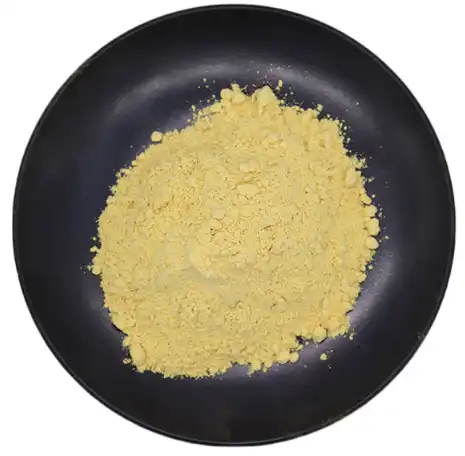
A volatile lipophilic liquid can be transformed into a freely moving solid-state substance by microencapsulation. This improvement gives it a longer shelf life without losing efficacy, especially in dry premixes, and heat resistance when compressing tablets or adding vitamins to beverages. Manufacturers want powder that doesn't separate like liquid vitamin additives.
Technical Specifications and Quality Markers
Usually evaluated by HPLC at 325,000, 500,000, or 1,000,000 IU/g, Vitamin A Acetate Powder has normal potency. The beads are pale yellow to brownish and move smoothly. Spray-drying and beadlet cross-linking produce particles dispersible in cold water, which has physical benefits. The vitamin core is hydrophobic, yet this engineering uniformly distributes the particles in water.
Pharmacopeial standards from the USP, EP, and FCC must be observed. To prevent caking and hydrolysis, quality control uses a loss on drying below 5%. Adjust particle size distribution (typically 30–80 mesh) to prevent finished product mixes from separating. These criteria affect formulation accuracy and manufacturing speed.
Safe Dosage Guidelines and How to Use Vitamin A Acetate Powder
Recommended Dosage Ranges for Supplement Formulations
Take the recommended daily allowance and tolerable upper intake of dietary supplements. Most adult formulae include 750–900 mcg RAE (2,500–3,000 IU) in each dosage. Many prenatal supplements include 770 mcg of RAE to help the baby grow safely. Sports nutrition may boost immunity and expedite recovery in comparable ways.
Manufacturers must consider the strength of Vitamin A Acetate Powder while calculating production. A 3,000 IU per serving recipe using 500,000 IU/g powder requires 6 mg per dosage. The label claims 100%; however, expert formulators add 10–15% to allow for processing losses and maintain strength over shelf life.
Take special caution while giving youngsters vitamins. Based on age, pediatric versions include 300 to 600 mcg RAE, with special care to avoid overdose. Manufacturers serving this demographic must utilize tight quality control and clear labeling to prevent overdoing.
Application Guidelines for Cosmetic Products
Topical cosmetics absorb differently from oral vitamins. Retinyl acetate in skincare products is generally between 0.1 and 1.0%, balancing efficacy and comfort. Higher quantities may work faster, but they may irritate delicate skin.
Cosmetic scientists must consider dissolution while adding this component. In water-based systems, microencapsulated powder can spread, but lipophilic portions in emulsified solutions keep it safe. Tocopherol, BHT, and retinyl acetate should be added to recipes to prevent oxidation.
Things like pH impact stability and activity. Formulations with a pH between 5.5 and 7.0 keep chemicals stable and perform well with skin. Extremely acidic (below pH 4.0) and basic (above pH 8.0) environments might accelerate ester breakdown and disrupt the protective matrix structure.
Comparing Vitamin A Acetate Powder With Other Vitamin A Forms
Stability Analysis: Acetate vs. Palmitate vs. Retinol
Vitamin A product chemical stability affects manufacturing decisions. Retinyl acetate resists oxidation better than retinol because an ester protects the volatile alcohol group. This structural alteration reduces free radical damage and maintains cellular function throughout metabolic fluctuations.
Retinyl palmitate, which is stable like acetate but less fat-soluble, is another prominent ester. The larger palmitic acid portion makes the molecule more lipophilic, affecting its dissolution and bioavailability. Some formulators utilize palmitate for oil-based delivery and acetate for water-based or hybrid usage.
Pure retinol is the gold standard for skin-care products, despite its difficulty to create. It requires sophisticated packaging and stabilization procedures because to its light, oxygen, and heat sensitivity. To use "retinol" instead of ester variants in their ingredient listings, some clean-label firms will address these issues.
Bioavailability and Conversion Efficiency
Enzymes are needed to absorb retinyl esters via the intestines. Pancreatic lipases and intestinal esterases break the ester bond, letting enterocytes absorb free retinol. Normal digestion has a conversion rate above 70–80%. Personal changes in enzyme activity and fat consumption might alter findings.
The main provitamin A pigment is beta carotene. The metabolic pathway involves beta-carotene 15,15'-oxygenase splitting it up. Individual conversion rates vary, although they are normally 3:1 to 28:1 by weight relative to Vitamin A Acetate Powder production. This makes provitamin A less effective for shortages. However, it doesn't produce hypervitaminosis A, making it safer.
Topical retinyl acetate diffuses over the stratum corneum and is converted to retinoic acid by living epidermis and dermis enzymes. Unlike administering retinoic acid directly, this multi-step procedure has gradual, long-lasting activity that produces less discomfort while still being beneficial.
Procuring Vitamin A Acetate Powder: What B2B Buyers Need to Know
Essential Supplier Qualifications and Certifications
One method dependable providers demonstrate compliance is via quality management badges. ISO 9001 and ISO 22000/FSSC 22000 certifications demonstrate quality control and food safety, respectively. Pharmaceutical suppliers should follow GMPs for their target markets.
Batch-specific Certificates of Analysis are crucial for quality assurance. These papers should include potency tests utilizing authorized HPLC techniques, heavy metal screening, microbiological testing, and physical property measurements. Buyers should verify that testing techniques meet USP, EP, or other pharmacopoeial requirements.
Material Safety Data Sheets provide guidelines for handling, storing, and responding to emergencies. In addition to satisfying legal standards, detailed MSDS documents demonstrate professionalism and customer service. Experienced vendors provide extensive technical data sheets with MSDS information and ideas for use and content.
Evaluating Quality, Consistency, and Traceability
Manufacturers with high-quality requirements value batch-to-batch homogeneity. Suppliers should provide statistical process control data showing acceptable strength differences across several manufacturing batches. Request at least six months of COA data to find consistency.
Traceability systems enforce laws and speed up quality problem resolution. Premium suppliers have complete manufacturing records and samples to follow each lot from raw ingredients to final items. This documentation helps during product checks and quality issues after the sale.
Shelf-life and storage recommendations are supported by stability data. Suppliers should provide quick and real-time stable experiments showing medication strength maintenance under certain storage settings. This data might help buyers rotate products and notify customers of their space needs.
Best Practices and Case Studies for Using Vitamin A Acetate Powder in Industry
Successful Formulation Examples from Leading Manufacturers
Retinyl acetate was added to a popular sports nutrition brand's top multivitamin to stabilize the two-piece gelatin capsules. Previously, retinol-based treatments lost over 15% efficacy after 18 months. After switching to microencapsulated retinyl acetate, breakdown was reduced to less than 5%, reducing waste and improving cost-effectiveness while meeting label commitments.
A new skin care company produced an anti-aging serum using ceramides, plant vitamins, and 0.5% Vitamin A Acetate Powder. In clinical trials, twice-daily use for eight weeks reduced fine wrinkles and improved skin smoothness. The combo was popular because it provided sensitive skin the advantages of retinoids without the irritation of higher-potency retinoic acid products.
A business that creates healthy drinks added retinyl acetate to a protein shake. The cold-water-dispersible grade dissolved well in their water-based formulation without further procedures. The fortified product sold 25% faster in retailers than the unenriched control. This demonstrates people want healthier products.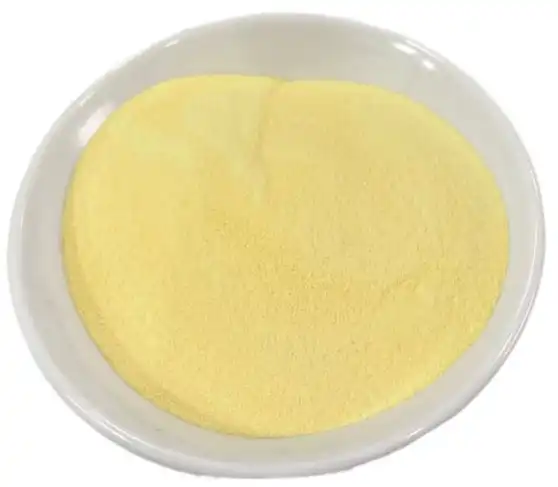
Common Manufacturing Challenges and Solutions
Potency loss during processing remains a major issue. Encapsulated vitamins can break down if tableting or high-shear mixing instruments are heated above the recommended. Manufacturers should monitor process temperatures and employ cooling equipment or process adjustments to keep them below 60°C during critical activities.
Small levels of retinyl acetate in large batches might cause uniformity issues. Mixing part of the excipients with the vitamin powder ahead of time makes the final mix more uniform. Geometric dilution, which adds base material, ensures batch strength.
Small quantities of rust or natural changes in protective matrix components might change colors across production runs. These variances seldom influence how things operate, yet they might make consumers assume quality is inferior. The appearance is consistent between batches due to stricter raw material restrictions and color-stabilizing antioxidants.
Conclusion
In conclusion, find the perfect balance between efficacy and dose management for several purposes to utilize Vitamin A Acetate Powder safely. Industrial manufacturing requires stability, and microencapsulated vitamin A maintains absorption levels equivalent to less stable versions. Understanding retinyl acetate's chemical intricacies, regulatory restrictions, and dose guidelines for varied usage helps formulators exploit its benefits while reducing safety hazards. This adaptable element adapts to new markets as delivery technologies improve and sustainability concerns increase. In the competitive nutritional, cosmetic, and pharmaceutical sectors, procurement personnel who prioritize supplier quality, implement tight testing processes, and keep current are successful.
FAQ
1. What is the maximum safe daily intake of Vitamin A Acetate?
All sources provide up to 10,000 IU (3,000 mcg RAE) of synthetic vitamin A per day for adults. TUL is Tolerable Upper Intake Level. Chronically exceeding this level can cause hypervitaminosis A, which destroys the liver, bones, and central nervous system. Pregnant women should reduce the dose to avoid teratogenic consequences. Always calculate your vitamin A intake from diet and supplements while creating things.
2. How does retinyl acetate differ from retinol in cosmetic applications?
Enzymes in the skin convert retinyl acetate to retinoic acid. This is gentler and lasts longer than retinol. This modification reduces discomfort while maintaining anti-aging advantages, including collagen stimulation and cell turnover. Retinol acts more quickly but has greater adverse effects. Retinyl acetate is often utilized in sensitive skin products or for first-time users.
3. Can Vitamin A Acetate Powder be used in vegan formulations?
Traditional Vitamin A Acetate Powder is covered with gelatin, making it unsuitable for vegan products. Certain varieties fulfill vegan demands by using plant-based encapsulation technologies with modified starches or cellulose. Ask for plant-based encapsulation and make sure the merchant has animal-free ingredient papers for vegan clearance.
Partner with a Trusted Vitamin A Acetate Powder Supplier
Medical Vitamin A Acetate Powder is sold by Angelbio. The firm has 18 years of R&D and thorough quality control. Each batch of our standardized retinyl acetate formulae, which vary from 325,000 to 1,000,000 IU/g, meets USP, EP, and FCC criteria and includes COA paperwork. Our unique startup was supported by Angel Holding Group and Xi'an Jiaotong University's Institute of Life and Health Research. We combine academic research with large-scale industrial facilities. Our cold-water-soluble kinds can be employed in cosmetic, functional, and nutritious food items. They withstand processing and storage well. We can assist you in building your product with dependable bulk supplies, specific potency formulations, or professional formulation support. Contact our procurement specialists at angel@angelbiology.com to discuss your demands and acquire complete technical details for our Vitamin A Acetate Powder producers.
References
1. Institute of Medicine (US) Panel on Micronutrients. Dietary Reference Intakes for Vitamin A, Vitamin K, Arsenic, Boron, Chromium, Copper, Iodine, Iron, Manganese, Molybdenum, Nickel, Silicon, Vanadium, and Zinc. Washington (DC): National Academies Press, 2001.
2. Mukherjee S, Date A, Patravale V, Korting HC, Roeder A, Weindl G. Retinoids in the treatment of skin aging: an overview of clinical efficacy and safety. Clinical Interventions in Aging, 2006; 1(4): 327-348.
3. United States Pharmacopeia. Vitamin A Monograph. USP 43-NF 38. Rockville, MD: United States Pharmacopeial Convention, 2020.
4. European Food Safety Authority (EFSA). Scientific Opinion on Dietary Reference Values for vitamin A. EFSA Journal, 2015; 13(3): 4028.
5. Biesalski HK, Nohr D. New aspects in vitamin A metabolism: the role of retinyl esters as systemic and local sources for retinol in mucosal epithelia. Journal of Nutrition, 2004; 134(12 Suppl): 3453S-3457S.
6. Tang G. Bioconversion of dietary provitamin A carotenoids to vitamin A in humans. American Journal of Clinical Nutrition, 2010; 91(5): 1468S-1473S.