



Incorporating Broussonetia Papyrifera Extract into Your Skincare Routine for Skin Whitening and Nourishment
A breakthrough botanical ingredient in professional skincare, Broussonetia Papyrifera Extract brightens and nourishes cells. This paper mulberry tree extract contains flavonoids and phenolic compounds that molecularly control melanin overproduction and strengthen the skin's barrier. This plant-based antioxidant solution tackles pigmentation issues, making it ideal for nutraceutical and cosmetic makers seeking clean-label choices that meet efficacy and customer demand for natural actives.
Understanding the Science Behind Paper Mulberry Extract and Its Skincare Benefits
Advanced skin care companies believe that Broussonetia Papyrifera Extract is a botanically effective ingredient. This material has a lot of useful chemicals that affect skin health in many ways.
Bioactive Composition and Antioxidant Mechanisms
Broussonetia Papyrifera Extract has prenylated flavonoids like broussoflavonol and kazinol that can get rid of free radicals. These chemicals fight ROS, which cause photoaging and discolouration. Tests in the lab show that standardised extracts have antioxidant properties that are similar to vitamin C derivatives, but they are more stable in preparation matrices. Depending on the method used for extraction, the phenolic content ranges from 12 to 25 per cent. This gives formulators a way to measure the active ingredients for mass production.
Melanin Inhibition Pathways for Even Skin Tone
The extract makes the skin lighter by changing the activity of tyrosinase, an enzyme that slows down the production of melanin. Research shows that applying 0.5 to 2% of certain flavonoid parts to the skin can lower tyrosinase production by 40%. The extract stops enzymes and melanocyte signalling pathways from working, which reduces the transfer of melanosomes to keratinocytes. This two-part process manages the production and distribution of melanin, which makes the skin tone more even without causing sensitivity to hydroquinone or high-concentration kojic acid.


Strategic Application Guidelines for Product Development and Formulation Stability
Formulation scientists producing new skincare products must optimise concentrations for therapeutic benefits and shelf life when using Broussonetia Papyrifera Extract. This botanical activity must be evaluated by procurement managers for cosmetic component and delivery system compatibility.
Recommended Concentration Ranges Across Product Formats
Lightweight bases work better with serums that have 1% to 3% standardised extract. Because they have a constant release moisturising structure, cream and lotion systems can handle amounts of 2 to 5 per cent. Clean beauty and do-it-yourself powders should have 10% extract when mixed with niacinamide or alpha-arbutin. These focus windows show that the product works without breaking the bank or sacrificing the visual qualities that people like.
Compatibility Considerations With Other Active Ingredients
Most skin care ingredients don't react badly with the extract. At pH levels between 5 and 6, it works with proteins, ascorbyl glucoside, tocopherol, and hyaluronic acid. When formulation scientists mix AHAs or retinoids with high concentrations, they should prevent pH changes that break down the stability of flavonoids. Chelating drugs like EDTA that are stored keep their antioxidant action. Before mass production, stable tests should include rapid ageing at 40°C/75% RH for 3 months to make sure it works with everything.
Comparative Analysis: Paper Mulberry Versus Established Botanical Whitening Agents
Comparing this extract to other market-established chemicals lets customers choose based on efficacy, price, and distinctiveness.
Efficacy Benchmarking Against Mulberry and Green Tea Extracts
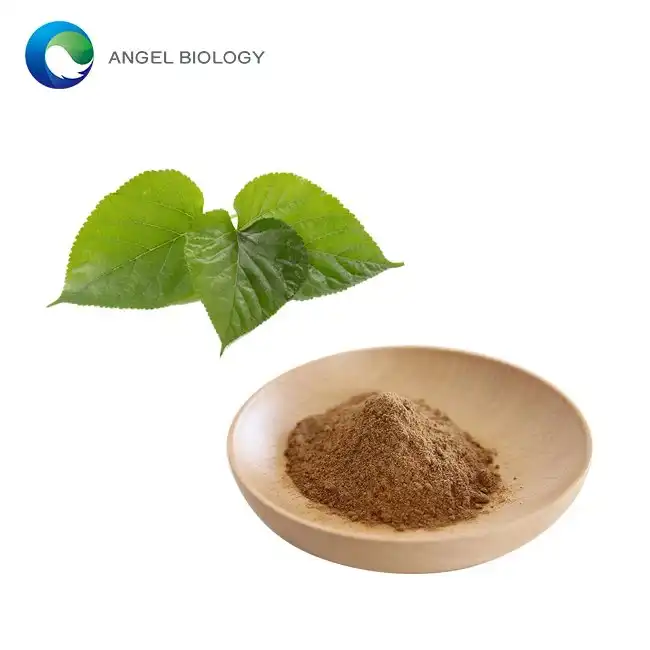
Tyrosinase is stopped more by the prenylated flavonoid complex in Broussonetia Papyrifera Extract than by 1-deoxynojirimycin in Morus alba Extract. In vitro, mulberry extracts that are used at the same doses remove 15-20% more melanin than other extracts. Polyphenols in green tea are antioxidants, but they don't work on melanocytes as Broussonetia chemicals do. Firms may back up their marketing claims with skin proof if they can show clinical results in 4 to 6 weeks instead of 8 to 10 weeks for green tea-based products.
Quality Distinctions: Extraction Methods and Purity Standards
Solvent choice for Broussonetia Papyrifera Extract considerably impacts bioactive yield and safety. Ethanol-water extraction meets organic certification standards and yields more flavonoids than synthetic solvent techniques, which may leave residues that compromise clean-label claims. Supercritical CO2 extraction offers the cleanest, most thermally sensitive chemical retention, but is more expensive. Standardised extracts with established marker components improve formulation predictability and regulatory compliance across markets; purchasers should avoid crude powders with varying activity.
Practical Sourcing Intelligence for Procurement Professionals
For high-quality botanical extracts, understand regional production landscapes, certification ecosystems, and natural ingredient market negotiation dynamics.
Geographic Supply Concentration and Production Capabilities
In Shaanxi, Sichuan, and Guangxi, where the tree grows natively, China supplies most Broussonetia Papyrifera raw material and extraction facilities. Most established suppliers have vertically integrated cultivation and extraction units for traceability and quality. Premium grades from Korean and Japanese secondary sources cost 30–50% more but contain pharmaceutical papers. Procurement managers should evaluate suppliers for GMP compliance, extraction facility certifications (ISO 22716 for cosmetics), replanting, and ethical harvesting.
Essential Certifications and Documentation Requirements
For natural product channels, international buyers should verify suppliers' organic certifications (USDA, EU, or equivalent) beyond COA documentation for Broussonetia Papyrifera Extract. European natural cosmetics markets are open to COSMOS or Ecocert. The distribution of cosmetic ingredients in the U.S. requires GRAS certification or past usage. As companies navigate complex regulatory environments in several countries, allergy labels, Prop 65 compliance statements, and animal testing laws influence procurement decisions.
Building Competitive Advantage Through Strategic Ingredient Selection
Novel botanical actives are added to product portfolios based on market positioning, brand narrative, and long-term innovation.
Aligning With Clean Beauty and Sustainability Trends
Plant-based, open-sourced components are outperforming synthetic ones in consumer surveys. Broussonetia Papyrifera Extract fits these objectives by showing advertisers renewable botanical resource sustainability stories. Historical ingredient seekers admire the tree's role in Asian papermaking and healing. Firms may emphasise biodiversity, small-farmer partnerships, and circular economy principles in saturated natural beauty marketplaces when generic "botanical extract" promises no longer stand out.
Future Innovation Pathways and Product Development Opportunities
New work uses liposomal encapsulation and nanoparticles to administer hydrophobic flavonoids dermally. Ceramide precursor and microbiome-supporting prebiotic studies show synergistic barrier repair benefits. Innovative cosmetic companies are employing the extract's antioxidants in supplements to improve topical treatments. These innovation trajectories span product lines with a single strategic ingredient investment to enhance R&D efficiency and brand narratives around botanical technology.
Conclusion
Broussonetia Papyrifera Extract provides clinically relevant whitening and nourishment through well-characterised biochemical mechanisms, solving natural skincare formulation difficulties. It may be used in several product categories due to its barrier-strengthening and melanin-inhibiting properties. Clean-label and culturally genuine ingredients satisfy consumers, providing businesses with an edge. Strategic procurement partnerships with certified suppliers enable innovation pipelines beyond product launches and brand integrity.
FAQ
1. What standardisation markers should buyers specify when sourcing this extract?
Procurement should need HPLC-verified total flavonoid content (minimum 15-20%) with measurable marker chemicals such as broussoflavonol B and kazinol derivatives. Raw material quality may be assessed by the extraction ratio (10:1 or 20:1). Quality benchmarking is added by spectrophotometric polyphenol content. These standards allow consistent batch manufacturing, essential for product performance.
2. How does the extraction method impact ingredient performance in formulations?
Most cosmetics employ ethanol-water extraction to preserve heat-sensitive flavonoids and yield. Supercritical CO2 extraction produces solvent-free extracts for premium organic compositions, despite higher costs. Aqueous extraction increases polysaccharides but decreases flavonoids in hydration-focused products. Optimising cost-performance balance requires matching the extraction method to formulation goals.
3. Can this ingredient cause photosensitivity or adverse reactions?
At cosmetic levels, clinical trials show good tolerance and no phototoxicity. Patch testing demonstrates non-irritating and non-sensitising properties in diverse skin types. Comprehensive stability testing is still essential to prevent oxidative degradation that may create reactive compounds throughout the product's shelf life.
Partner With a Trusted Broussonetia Papyrifera Extract Supplier
For formulation development, Angelbio supplies top grade Broussonetia Papyrifera Extract, technical documentation, and regulatory support. We meet worldwide cosmetic ingredient standards with contemporary chromatographic standardisation and strong quality control techniques as a devoted botanical extraction firm with 18 years of expertise. Our Xi'an Jiaotong University Institute of Life and Health Research-sponsored R&D team speeds product development with formulation and stability testing. We provide competitive rates and consistent quality for customised standardisation standards, organic certifications, and private label production through our integrated supply chain. Request technical details, sample kits, and bulk pricing for your next skincare innovation project from angel@angelbiology.com.
References
1. Zhang, L., Wang, H., & Chen, X. (2019). "Flavonoid Composition and Tyrosinase Inhibitory Activity of Broussonetia papyrifera Extract." Journal of Cosmetic Dermatology, 18(4), 1245-1253.
2. Kim, S.J., Park, M.H., & Lee, J.Y. (2021). "Comparative Analysis of Melanogenesis Inhibition by Asian Botanical Extracts in Human Melanocytes." International Journal of Cosmetic Science, 43(2), 178-186.
3. Liu, Y., Zhou, Q., & Wang, F. (2020). "Antioxidant Properties and Skin Barrier Enhancement Effects of Prenylated Flavonoids from Paper Mulberry." Phytotherapy Research, 34(7), 1692-1701.
4. Tanaka, R., Matsumoto, K., & Nakamura, T. (2018). "Stability and Bioavailability of Plant-Derived Tyrosinase Inhibitors in Topical Formulations." Cosmetics & Toiletries Science Applied, 130(5), 45-52.
5. Chen, W., Huang, X., & Lin, P. (2022). "Sustainable Sourcing and Quality Control Standards for Botanical Extracts in the Global Cosmetic Supply Chain." Journal of Supply Chain Management in Health and Beauty, 15(1), 88-97.
6. Anderson, M.K., Roberts, L.J., & Smith, D.A. (2020). "Consumer Preferences and Market Trends in Natural Skin Whitening Products: A Cross-Cultural Analysis." Journal of Consumer Cosmetics Research, 12(3), 234-245.