



How to Verify Ceramide Purity on Cosmetic COAs Before Formulating
When purchasing ceramide powder for cosmetic formulations, one of the most important quality documents is the Certificate of Analysis (COA). A COA provides information about assay or purity, contaminants, moisture content, and analytical methods—all of which help determine whether an ingredient meets your formulation specifications. Learning to interpret these documents can help procurement teams and formulation scientists reduce the risk of costly reformulations and support quality documentation. This guide takes you through the key checks for evaluating ceramide COAs before making a bulk purchase.
Why Ceramide Purity Matters More Than You Think
Ceramide powder is a lipid-based ingredient containing ceramides, a class of sphingolipids naturally present in the stratum corneum. Ceramides are important components of the skin's outer lipid matrix, where they contribute to its structure and moisture-barrier properties. In a finished cosmetic product, ingredient quality is one of several factors that influence formulation performance, alongside concentration, delivery system, compatibility, and processing conditions.
Natural vs. Synthetic Ceramide Variants
Plant-derived ceramide ingredients, often referred to as phytoceramides, may be obtained from sources such as wheat, rice bran, or konjac. Synthetic or biotechnologically produced ceramides can be designed to match specific ceramide structures, including Ceramide NP, Ceramide AP, and Ceramide EOP. The appropriate quality specifications depend on the ceramide subtype, production method, intended application, and supplier grade. Lower-purity materials may contain other lipids or process-related impurities that influence formulation behavior, including dispersion and compatibility in emulsions or anhydrous systems.
Raw material quality can affect sensory characteristics, batch reproducibility, and the documentation required for product development. That is why purity verification should begin before the ingredient reaches your laboratory.
Core Elements to Analyze on a Ceramide COA
A well-structured COA contains analytical data that helps buyers evaluate identity, composition, and quality. Knowing which parameters are relevant to your application can make supplier screening more efficient.
The criteria to review on each ceramide COA include:
Assay / Purity – This indicates the measured content of the specified ceramide or ceramide mixture. Do not assume that 95% is a universal minimum or that 98–99% is necessary for every application. Confirm the agreed specification and check whether the analytical method can distinguish the relevant ceramide subtype from related compounds.
Loss on Drying – Moisture and other volatile components can influence powder handling and storage stability. Rather than applying a universal limit of less than 2%, compare the result with the product specification and the supplier's supporting stability data.
Residual Solvents – Where solvents are used during production, appropriate analytical testing, such as gas chromatography, can help verify residual levels against the agreed specification and applicable requirements for the intended use of ceramide powder.
Heavy Metals – Arsenic, lead, cadmium, and mercury should be evaluated against relevant cosmetic ingredient specifications and applicable market requirements. Pharmaceutical guidance such as ICH Q3D or USP elemental-impurity standards should not automatically be treated as universal cosmetic acceptance criteria.
Melting Point – Thermal properties may help characterize a specific ceramide material, but results depend on its subtype, composition, and test method. Do not use a single melting-point range as a definitive test for identity or adulteration without a suitable reference specification.
Particle Size Distribution – Particle size may influence dispersion, processing, and uniformity in a formulation. Evaluate it according to the intended application and processing requirements rather than assuming that the finest powder is always the best option.
Together, these characteristics help determine whether a ceramide ingredient is suitable for its intended purpose. If a COA omits important parameters or reports results without identifying the analytical method, contact the supplier for clarification and supporting documentation.
After reviewing individual parameters, compare COAs from multiple batches supplied by the same vendor. Consistent results across several batches can help demonstrate reproducibility, although they should be considered alongside specifications, test methods, and broader supplier quality documentation.
Step-by-Step Process to Evaluate a Ceramide COA
A systematic review process helps identify gaps before they affect formulation development or procurement decisions. The following steps provide a practical framework for purchasing professionals:
Check Supplier Credentials: Review relevant quality-management certifications, manufacturing information, and documentation for the intended cosmetic application. Confirm the scope and validity of any certificates rather than assuming that certification alone guarantees ingredient quality.
Evaluate Testing Methodology Transparency: A useful COA should identify the analytical method used for each reported parameter. HPLC may be suitable for assay when the method is validated for the specified ceramide, while GC may be used for residual solvents and ICP-MS for elemental analysis where appropriate. A statement such as “conforms” without supporting results or a clear reference specification may require further clarification.
Cross-Check Batch Consistency: Request COAs from two or three recent batches, where available, and compare assay results, moisture levels, and impurity profiles. Significant differences warrant follow-up to determine whether they reflect raw material variability, analytical differences, or changes in processing.
Ask for Third-Party Lab Verification: Supplier COAs provide baseline quality information. Independent testing of a received ceramide powder sample can provide additional verification, particularly for large-volume orders, new supplier relationships, or ingredients with critical specifications.
Connect COA Data to Your Formulation Goals: A ceramide ingredient with a high assay may behave differently depending on the emulsion type, carrier system, dispersion method, and processing conditions. Make sure the documented specifications and available technical information match your formulation requirements before placing a bulk order.
Common Challenges When Reviewing Ceramide COA
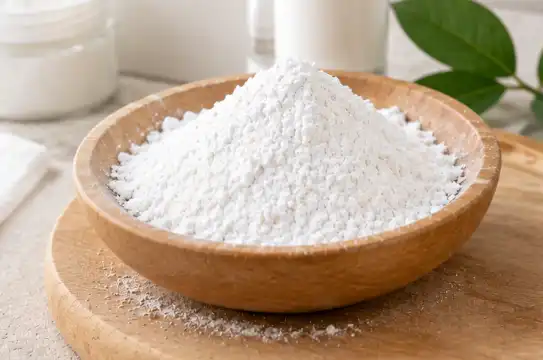
One common procurement issue is incomplete identification of the ceramide subtype. Ceramide NP, Ceramide AP, and Ceramide EOP have different molecular structures and may behave differently in formulations. A COA that identifies only “ceramide,” without sufficient information to establish the ingredient's identity, may not provide enough detail for technical qualification.
Impurities should also be assessed in context. Other lipids or process-related residues may affect compatibility, appearance, or stability, depending on their identity and concentration. Request relevant impurity data and test methods rather than relying on a headline purity figure alone.
If questions remain about a COA, contact the supplier's technical team directly. A qualified ceramide powder supplier should be able to explain its specifications and analytical methods and, where available, provide additional characterization data or method documentation.
Strategic Tips for Bulk Ceramide Powder Procurement
Ingredient procurement requires balancing cost, quality, and formulation requirements. A higher-assay ceramide powder may carry a higher unit price, but the actual cost-in-use depends on the required inclusion level, formulation design, processing efficiency, and finished-product specifications. Evaluate the overall formulation economics rather than assuming that a higher assay will always reduce cost.
When screening suppliers, look for documented supply-chain traceability covering raw material origin and relevant production stages. For phytoceramide materials, confirming the botanical source can help with ingredient declarations, allergen assessment, and vegan or clean-label positioning where applicable. Claims should be supported by appropriate source documentation.
Storage and shipping conditions also matter for ingredient quality. Ceramide powder should be kept in suitable sealed packaging and protected from excessive moisture, heat, and direct light as specified by the supplier. Ask for storage recommendations and available stability data relevant to your expected transportation, warehouse, and production conditions.
Conclusion
The ability to interpret a ceramide COA helps protect formulation investments and supports more informed purchasing decisions. By reviewing assay methods, residual solvent data where relevant, moisture content, ingredient identity, and batch consistency, procurement teams sourcing ceramide powder can make decisions based on documented evidence rather than assumptions. Partnering with a supplier that provides transparent specifications, traceability, and responsive technical support can make ingredient sourcing a more reliable part of product development.

FAQ
1. What purity level should I require for cosmetic-grade ceramide powder?
There is no single assay threshold that applies to every cosmetic ceramide ingredient. The appropriate requirement depends on the ceramide subtype, ingredient composition, intended application, and agreed specification. Rather than automatically requiring 95% or 98% purity, confirm how the assay is defined, which method is used, and whether the material is suitable for your formulation.
2. Is a supplier COA sufficient, or do I need third-party testing?
A supplier COA is an important starting point for evaluating an ingredient. Independent testing of the received batch can provide additional assurance, particularly for a new supplier, large-volume purchases, or specifications that are critical to the finished product. The decision should reflect your risk assessment and quality procedures.
3. How do impurities in ceramide affect formulation stability?
The impact depends on the type and concentration of the impurities and the formulation system. Other lipids or process-related residues may influence dispersion, compatibility, appearance, or stability in some formulations. Reviewing relevant impurity information and conducting compatibility and stability tests can help identify potential issues before scale-up.
4. What is the difference between Ceramide NP and Ceramide AP on a COA?
Ceramide NP and Ceramide AP are distinct ceramide subtypes with different molecular structures. Their formulation behavior may vary with the surrounding lipid system, solvent or carrier, processing method, and concentration. Confirming the subtype on the COA helps formulation teams select the appropriate ingredient and evaluate its suitability for the intended product.
Partner with Angelbio for Verified High-Purity Ceramide Powder
Angelbio, supported by over 18 years of R&D experience and collaboration involving Xi'an Jiaotong University's Institute of Life and Health Research, supplies ceramide powder for cosmetic and nutraceutical manufacturers. We provide relevant COA documentation and technical information to help buyers evaluate ingredient identity, assay, and application suitability. Whether you are qualifying a new supplier, comparing ceramide specifications, or planning bulk procurement, our team can discuss your documentation and formulation requirements. Request a sample or contact us at angel@angelbiology.com.

References
1. Coderch, L., et al. "Ceramides and Skin Function." American Journal of Clinical Dermatology, 2003.
2. Elias, P.M. "Stratum Corneum Defensive Functions: An Integrated View." Journal of Investigative Dermatology, 2005.
3. Meckfessel, M.H., & Brandt, S. "The Structure, Function, and Importance of Ceramides in Skin and Their Use as Therapeutic Agents in Skin Care Products." Journal of the American Academy of Dermatology, 2014.
4. ICH Harmonised Guideline Q3D: Elemental Impurities. International Council for Harmonisation of Technical Requirements for Pharmaceuticals for Human Use, 2019.
5. United States Pharmacopeia. USP <232> Elemental Impurities — Limits. USP–NF, 2023.
6. Rawlings, A.V., & Matts, P.J. "Stratum Corneum Moisturization at the Molecular Level: An Update in Relation to the Dry Skin Cycle." Journal of Investigative Dermatology, 2005.