



HPLC Testing for Berberine HCl Powder: What the COA Must Show
When sourcing high-purity berberine hydrochloride for nutraceutical, cosmetic, or functional food applications, understanding HPLC testing and Certificate of Analysis (COA) documentation is essential. Berberine HCl Powder requires appropriate analytical verification to confirm that it meets the specified purity threshold established by the buyer and intended application. A comprehensive COA paired with High-Performance Liquid Chromatography data provides useful evidence for assessing identity, purity, potential impurities, batch consistency, and applicable quality requirements. This guide equips procurement professionals with the technical knowledge to evaluate supplier documentation confidently, reduce supply chain risks, and select ingredients that meet defined formulation and quality specifications.
Understanding HPLC Testing for Berberine HCl Powder
High-Performance Liquid Chromatography is an important analytical tool for evaluating alkaloid content in B2B ingredient sourcing. HPLC is more specific than visual inspection or basic chemical screening because it uses mobile-phase solvents, stationary-phase columns, and detection systems to separate and quantify compounds in berberine hydrochloride samples.
Why HPLC Is the Industry Standard
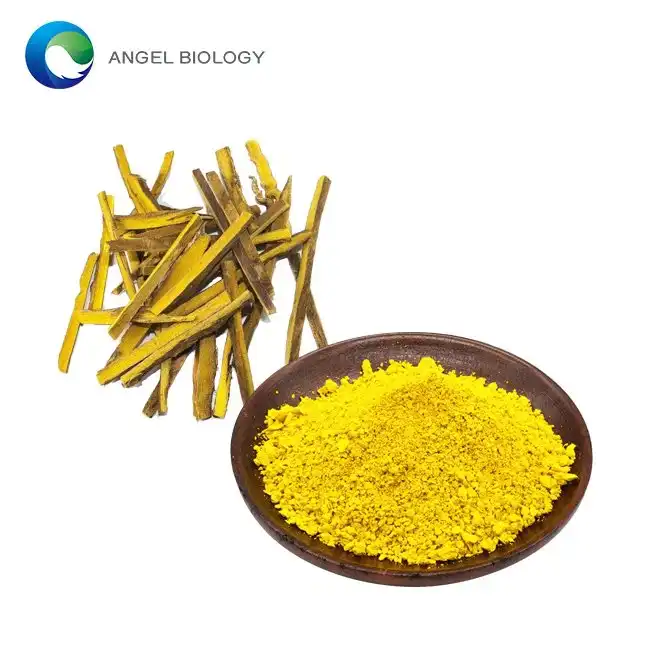
The method works by dissolving the powder in a suitable solvent and passing the prepared sample through a chromatographic column containing a stationary phase. On the chromatogram, different compounds have different retention times because they interact with the column to different degrees. The resulting peaks provide information about the berberine component and may also reveal related alkaloids such as palmatine, coptisine, or jatrorrhizine, which can naturally occur in botanical sources such as Coptis chinensis or Phellodendron amurense.
A properly developed and validated method should produce a clear berberine peak at a retention time established by that specific analytical procedure. Retention time is method-dependent and should not be treated as a universal 8–12 minute specification. Additional peaks or elevated background signals may indicate related compounds, matrix components, or analytical issues that require further investigation. For procurement teams, chromatographic data can therefore provide a more detailed basis for comparing standardized berberine hydrochloride materials and supplier quality documentation.
Key Parameters Measured Through HPLC
Several important measurements can be obtained from HPLC analysis. The reported purity or assay value indicates the amount of berberine hydrochloride measured according to the supplier's defined method and calculation basis. Depending on the application and specification, buyers may require ≥97.0% or ≥98.0%. Impurity profiling can identify and quantify relevant related compounds when the analytical method is designed for this purpose. Peak symmetry, resolution, system suitability, and other chromatographic parameters help demonstrate that the method is performing appropriately and that the reported result is supported by acceptable analytical conditions.
Different testing methods serve different purposes. Spectrophotometry can be useful for rapid screening but may have lower specificity when other absorbing compounds are present. Thin-layer chromatography can support identity or qualitative screening but generally provides less quantitative information than a validated HPLC method. Procurement teams should therefore confirm that the analytical method used by the supplier is appropriate for the product specification and, where relevant, aligned with applicable Chinese Pharmacopoeia, European Pharmacopoeia, United States Pharmacopeia, or customer-specific requirements.


What the COA Must Show for Berberine HCl Powder
A well-prepared Certificate of Analysis converts analytical results into practical purchasing and quality-control information. Understanding its main components helps buyers assess raw-material consistency, verify specifications, and identify documentation gaps before approving a supplier.
Mandatory COA Elements
Every COA should begin with clear batch information, including the product name, lot or batch number, manufacturing or production date, testing date, retest or expiry information where applicable, and the applicable specification. This information makes it possible to connect analytical results with a specific production lot, which is important for incoming inspection, stability programs, traceability, and quality audits.
In the HPLC section, buyers should look for both numerical results and, where available, supporting chromatographic evidence. The purity test should identify the analyte and specification, such as "Berberine Hydrochloride: ≥97.0% (HPLC)," together with the actual result, test date, and analytical method or reference method. On a chromatogram, the x-axis normally represents retention time and the y-axis represents detector response. The berberine peak should be clearly identified according to the validated method. Peak-area calculations are then used within the analytical method to determine the reported concentration or assay value.
In addition to alkaloid testing, a complete COA may include relevant safety parameters. Heavy-metal testing can cover lead, mercury, cadmium, and arsenic according to the requirements of the target market or customer specification. Microbial testing may include total plate count, yeast and mold, and specified pathogens where relevant to the intended application. Residual-solvent testing should be included when applicable to the manufacturing process and customer requirements. Acceptance limits should be based on the relevant regulatory, pharmacopeial, or product-specific specification rather than applying one universal limit to every application.
Interpreting Chromatogram Data
Visual inspection of Berberine HCl Powder chromatograms can provide useful information that may not appear in a single reported purity number. A suitable chromatogram should show a clearly identified berberine peak with an appropriate baseline and separation under the stated analytical conditions. Broad or tailing peaks can result from column condition, sample preparation, or method parameters and should be assessed in the context of system-suitability criteria. Additional significant peaks may indicate related compounds or other sample components and should be interpreted according to the method and specification.
The method should also demonstrate suitable repeatability when the same analytical procedure and conditions are used. Retention time should remain within the laboratory's established system-suitability or method-validation criteria. A fixed 0.2-minute tolerance should not be assumed as a universal requirement because acceptable variation depends on the analytical method, equipment, column, and operating conditions.
Certification and Accreditation Markers
Laboratory accreditation such as ISO/IEC 17025 can provide evidence that a testing laboratory operates under an established competency and quality-management framework for its accredited activities. Manufacturing certifications such as GMP, HACCP, or FSSC 22000 may also indicate that the supplier has implemented defined quality and food-safety systems, depending on the scope of certification. Procurement teams should review the actual certificate, scope, validity period, and issuing organization rather than relying on logos displayed on a COA. This verification helps distinguish current, relevant certifications from incomplete or outdated documentation.
How HPLC Testing Supports Procurement Decision-Making
Analytical transparency can turn supplier discussions from broad quality claims into measurable specifications. Using HPLC data systematically allows procurement and technical teams to compare vendors using documented analytical results rather than relying only on marketing statements.
Building Supplier Trust Through Data Transparency
Suppliers that can provide complete COAs, relevant chromatograms, and analytical-method information make it easier for technical teams to evaluate whether reported specifications are supported by appropriate testing. Where confidentiality permits, this documentation can support remote quality reviews and reduce uncertainty before a supplier is approved. Vendors that provide only summary figures or cannot explain their testing procedures may require additional verification before qualification.
Comparing historical COAs can also help assess batch-to-batch consistency. Buyers may request documentation from several recent production batches and compare purity, related compounds, moisture, and other relevant parameters. Rather than applying a universal 0.5% variation limit, procurement teams should establish acceptable ranges based on the agreed product specification, analytical variability, and application requirements. Consistent results across multiple lots provide useful evidence of process control.
Application-Specific Quality Matching
HPLC testing helps buyers match the raw material to the requirements of the intended application. Products intended for nutraceutical, cosmetic, food, or research use may have different specifications for purity, contaminants, physical properties, documentation, and regulatory compliance. For formulations involving berberine, buyers should define the required assay, impurity profile, particle characteristics, and safety specifications according to the target market rather than assuming that one purity level is suitable for every application.
Different grades may also differ in their manufacturing controls, testing scope, and documentation. Lower-cost materials may not provide the same level of analytical characterization or quality documentation required for commercial consumer products. However, price differences should be evaluated against the complete specification, testing package, traceability, and intended use rather than assuming that a small difference in HPLC purity automatically represents a specific difference in contamination or finished-product performance.
Vetting Supplier Testing Capabilities
In addition to reviewing COAs, buyers should determine whether suppliers conduct HPLC testing in-house, use qualified contract laboratories, or combine both approaches. In-house analytical capability can support faster routine testing and communication, while qualified external laboratories can provide independent verification when appropriate. Ask suppliers about laboratory equipment, method validation or verification, reference standards, calibration, and analyst qualifications. Facility audits can provide additional insight into laboratory controls and quality systems.
Ask specific questions about testing frequency. Does the manufacturer test every commercial batch or operate a defined sampling program? What circumstances trigger retesting? Are additional tests performed after process changes, raw-material changes, or customer complaints? Clear answers can help procurement teams understand how analytical control is integrated into the supplier's quality system.
Advantages of Insisting on HPLC-Tested Berberine HCl Powder for Your Supply Chain
Making chromatographic verification an important purchasing criterion can provide benefits beyond routine quality checks. It can support supplier qualification, batch comparison, documentation control, and more predictable raw-material management.
Risk Mitigation and Regulatory Compliance
Quality failures can create significant costs through rejected batches, production interruptions, customer complaints, or recalls. HPLC testing can help verify berberine content and identify certain chromatographically detectable components before material enters production. However, HPLC does not replace testing for every possible contaminant. Parameters such as pesticides, heavy metals, residual solvents, and microbiological quality require appropriate dedicated analytical methods.
Regulatory requirements vary between markets and product categories. Dietary supplement manufacturers in the United States, for example, must follow applicable dietary supplement cGMP requirements, including specifications and appropriate identity testing. European and other international markets have their own regulatory frameworks. An HPLC-supported COA can strengthen technical documentation, but it does not by itself guarantee regulatory approval or eliminate the need for other required assessments.
Fostering Strategic Supplier Relationships
Consistent quality of Berberine HCl Powder can make production planning and incoming quality control more predictable. When suppliers consistently deliver material within agreed specifications, manufacturers can reduce unnecessary adjustments and improve raw-material planning. Batch consistency should therefore be considered alongside price when evaluating long-term supply value.
Strong supplier partnerships based on analytical transparency also make technical problem-solving easier. If a finished product shows unexpected changes in stability or physical performance, detailed ingredient documentation can help teams determine whether raw-material variation, formulation conditions, processing, packaging, or storage contributed to the issue. This evidence-based approach supports faster root-cause analysis.
Embracing Technological Innovation
Digital tools can complement conventional COA systems. Digital certificates, electronic batch records, and QR-code access can make quality documents easier to retrieve and associate with specific lots. Some supply chains may also use tamper-evident or traceable digital systems to improve document integrity. These technologies can reduce administrative work and strengthen audit trails, although they should complement rather than replace laboratory verification and established quality systems.
Best Practices for Purchasing Berberine HCl Powder in Bulk
Systematic review procedures help protect procurement investments and establish consistent quality expectations across suppliers.
Independent COA Verification Strategies
Do not rely solely on supplier documentation when the raw material is critical to product quality. Periodic third-party testing by a qualified laboratory can provide independent confirmation of selected parameters. The appropriate testing frequency and sampling plan should be based on supplier history, risk assessment, purchase volume, and the criticality of the ingredient rather than applying a universal 10–15% shipment-testing rule. Differences between supplier COAs and independent results should be investigated promptly and documented through the supplier's quality process.
Train relevant team members to recognize basic chromatogram characteristics. Simple reviews can identify issues such as unexplained additional peaks, unusual baselines, inconsistent labeling, or missing analytical information. Full interpretation requires appropriate analytical expertise, but basic familiarity allows procurement staff to ask more informed questions and identify documentation that requires technical review.
Negotiation Leverage Points
Quality agreements should define testing frequency, acceptance criteria, allowable analytical variation, documentation requirements, and procedures for resolving specification disputes. Buyers can request that each commercial batch be tested according to the agreed HPLC specification and that a corresponding COA be provided before shipment where commercially practical. Contracts should also define the actions required when material fails to meet agreed requirements, including investigation, replacement, retesting, or other mutually agreed remedies.
Sampling methods should also be discussed in detail. Composite samples that combine material from multiple containers can provide a broader representation of a lot but may mask localized variation. Randomly selected container testing can provide a different level of verification but may increase testing cost. Sampling plans should therefore balance ingredient criticality, lot size, supplier history, and the buyer's quality-risk tolerance.
Holistic Quality Assurance Integration
HPLC data represents one aspect of overall raw-material quality. Combine chromatographic purity testing with physical and safety parameters relevant to manufacturing, such as particle-size distribution, moisture content, bulk density, appearance, microbiological quality, heavy metals, residual solvents, and other applicable contaminants.
Target markets should also align with the supplier's certification package. Organic certification may be important for certified-organic products, while Kosher or Halal certification can support specific market requirements. Non-GMO documentation may also be requested depending on product positioning and customer specifications. A supplier able to provide a complete and current documentation package alongside appropriate HPLC testing can make qualification and ongoing quality review more efficient.
Logistics and Storage Considerations
Quality control extends beyond production into distribution and storage. Before shipment, verify that the COA corresponds to the correct batch and that testing dates and document status meet the agreed requirements. Berberine hydrochloride should be stored according to the supplier's recommended conditions, with appropriate protection from excessive heat, light, and humidity. Transport conditions should be defined according to product stability data and the shipment route. Temperature-controlled shipping should be considered when justified by the product specification, climate, or stability requirements.
When goods arrive at a warehouse, they should be inspected according to the receiving procedure, documentation should be reviewed, and the lot can be placed under quarantine until the required quality checks are completed. Clear acceptance criteria allow receiving teams to identify damaged packaging, missing documents, labeling discrepancies, or other obvious quality concerns before material enters production.
Conclusion
Using HPLC testing together with detailed COA documentation for Berberine HCl Powder provides an important quality foundation for purchasing standardized botanical ingredients. Procurement professionals can navigate complex supply chains more confidently when they understand chromatographic principles, review essential COA elements, and use systematic verification procedures. HPLC data can help distinguish materials based on measured assay and chromatographic profiles, while complementary testing is needed to evaluate other safety and quality parameters. As quality expectations continue to increase, companies that prioritize transparent analytical documentation, batch consistency, traceability, and supplier quality systems can build more reliable sourcing programs. This approach supports predictable raw-material specifications and strengthens confidence throughout product development and supply-chain management.
FAQ
1. What purity level should I expect from premium Berberine HCl Powder?
Material intended for commercial nutraceutical, cosmetic, or other applications should meet the purity specification agreed for its intended use and target market. Suppliers may offer specifications such as 97.0% or 98.0% and above when measured using an appropriate HPLC method. A higher assay value alone does not necessarily mean that a material is better for every application, so buyers should also review impurity profile, safety testing, physical properties, documentation, and batch consistency.
2. Can COAs guarantee product performance in metabolic health formulations?
No. COAs document selected characteristics of the raw material, such as identity, assay, purity, and specified safety parameters, but they cannot guarantee the performance of a finished formulation. Finished-product performance depends on formulation design, dosage, processing, stability, packaging, storage, and other application-specific factors. A well-documented COA reduces uncertainty about the incoming raw material but should be considered one part of the overall product-development process.
3. What should I do if a supplier refuses to provide detailed chromatograms?
Ask the supplier to explain what analytical information can be shared and whether confidentiality or proprietary-method concerns are involved. A supplier may reasonably protect certain method details while still providing sufficient evidence of testing and compliance with agreed specifications. If a supplier repeatedly refuses to provide adequate quality documentation or independent verification without a reasonable explanation, procurement teams should consider additional qualification steps or alternative suppliers with stronger documentation transparency.
Partner With Angelbio for HPLC-Verified Berberine HCl Powder
Angelbio provides standardized berberine hydrochloride supported by HPLC testing and quality documentation for applicable commercial requirements. With more than 18 years of experience in botanical ingredient manufacturing and R&D, Angelbio applies defined production and quality-control procedures to Berberine HCl Powder. The company works with quality systems and certifications including Kosher, ISO, and Halal, subject to applicable certification scope. Through collaboration with the Institute of Life and Health Research at Xi'an Jiaotong University, Angelbio also supports technical development and ingredient optimization.

For procurement and quality teams, available documentation can include COA, chromatographic data, heavy-metal testing, microbial results, and third-party verification options where required. Product specifications can be discussed according to purity, application, market, packaging, and documentation requirements. Contact angel@angelbiology.com to request sample COA, discuss specification requirements, or explore bulk supply options for Berberine HCl Powder.

References
- Chinese Pharmacopoeia Commission. (2020). Pharmacopoeia of the People's Republic of China. China Medical Science Press.
- European Pharmacopoeia Commission. (2022). European Pharmacopoeia 10th Edition. Council of Europe.
- U.S. Food and Drug Administration. (2021). Dietary Supplements: Current Good Manufacturing Practice Rule. FDA.
- American Herbal Products Association. (2019). Botanical Identity Testing Guidelines. AHPA.
- European Food Safety Authority. (2021). Guidance on Safety Assessment of Botanicals. EFSA Journal.
- United States Pharmacopeia. (2023). USP-NF General Chapter 1226: Verification of Compendial Procedures. USP.