



Ivy Leaf Extract: Extraction Methods and Quality Control
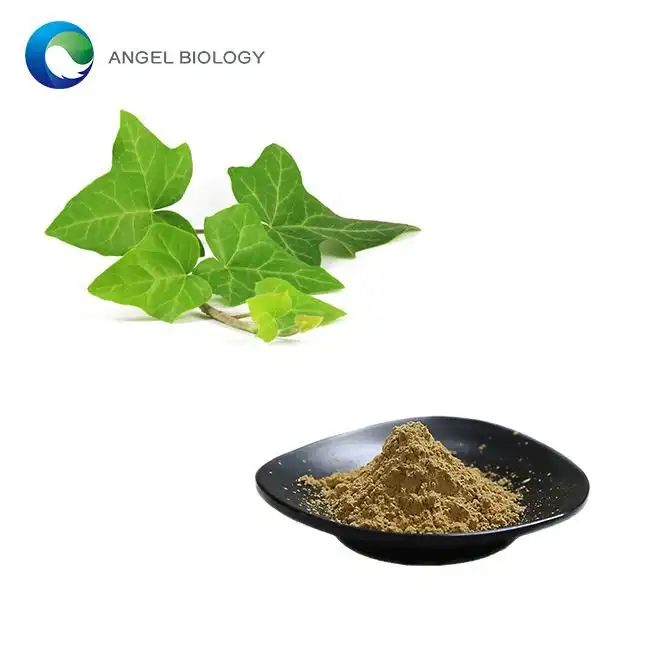
Leaves of the Hedera helix plant are used to produce ivy leaf extract, a botanical ingredient valued for its triterpenoid saponin profile. The quality of the final extract is closely related to how the raw material is selected, collected, inspected, and documented. Water and hydroethanol are two commonly used extraction systems for recovering saponins, but each can influence extraction yield, solubility, and product stability differently. Quality control then verifies whether each batch meets its defined requirements, including botanical identity, hederacoside C content, moisture, contaminants, and shelf-life specifications. For buyers and formulators, understanding these steps makes it easier to compare suppliers, evaluate technical documents, and request specifications that match their intended applications.
Why Raw Material and Active Compounds Decide Ivy Leaf Extract Quality
Why Consistency Matters
Ivy leaf extract can be incorporated into different product formats, including syrups, capsules, tablets, granules, and other botanical formulations. Its commercial and technical value is closely associated with triterpenoid saponins, particularly hederacoside C and alpha-hederin. However, natural origin alone does not guarantee a consistent chemical profile across batches. Growing conditions, harvest maturity, drying, storage, and extraction parameters can all influence the saponin content, color, taste, and odor of the resulting ingredient. They may also affect how easily a powder or liquid extract blends with other formulation components.
For product developers and procurement teams, repeatable specifications are essential. A well-defined quality-control process helps manufacturers monitor these variables and maintain consistent product characteristics. It also provides regulatory and quality teams with relevant documentation, such as botanical identification, plant-part traceability, contaminant test results, and batch production records.


Hederacoside C and Related Saponins
Hederacoside C is commonly used as a marker compound for evaluating ivy leaf extract. Alpha-hederin and other related saponins provide additional information about the ingredient's chemical profile. Hederacoside C can be converted into alpha-hederin through the removal of part of its sugar structure, which is why both compounds may appear in technical and analytical discussions.
However, a single marker assay does not describe the entire composition of an extract. Buyers may therefore request chromatographic fingerprints and additional botanical identity tests to obtain a more complete profile. Ivy leaves also contain flavonoids, including rutin and kaempferol, which can provide further compositional information. The actual levels of these constituents should be confirmed through suitable analytical methods rather than assumed from the plant source alone.
Selecting and Authenticating Hedera helix Raw Material
Quality control begins with the raw material. Suppliers should verify the botanical species, confirm that the plant part is the leaf, and maintain records of harvest time, drying conditions, and storage practices. Geographic origin, seasonal conditions, and harvest maturity may influence the chemical profile, making raw-material supplier qualification an important part of purchasing.
Buyers seeking certified organic ivy leaf extract should request valid certification documents and relevant sourcing records. Botanical identification, supplier documentation, and traceability records can help establish the origin and consistency of the starting material. References such as the World Health Organization (WHO) guidelines for cultivating and collecting medicinal plants may also provide useful background for reviewing agricultural sourcing practices. When records can connect a raw-material lot to its source, quality teams can respond more efficiently to documentation requests and supplier assessments.
Main Ivy Leaf Extraction Methods and Post-Extraction Steps
After the leaves have been inspected and approved, the extraction process determines the composition and physical characteristics of the resulting ingredient. Different extraction choices can produce different profiles and processing requirements.
Water and Hydroalcoholic Extraction
Water and mixtures of ethanol and water are two common solvent systems used in botanical extraction. Hydroalcoholic systems are frequently evaluated for their ability to recover triterpenoid saponins with a consistent profile. Some standardized ivy leaf extracts described in technical literature use ethanol concentrations of approximately 30% (m/m), although the appropriate solvent composition depends on the extraction process and target specification.
Water-based extraction may be suitable when a water-compatible ingredient is required or when the intended formulation places particular importance on aqueous processing. Each solvent system can influence the extract's color, taste, composition, and subsequent processing requirements. Residual solvent testing may also be relevant when ethanol or another processing solvent is used.
Before purchasing, buyers should ask suppliers which solvent system was used, what extract ratio is specified, and whether relevant residual solvent data are available. These details help procurement and formulation teams evaluate process suitability and compare products on a consistent technical basis.
Maceration, Percolation, Reflux, and Ultrasound
Maceration involves soaking leaves in a selected solvent for a defined period and is generally considered a straightforward extraction approach. Percolation allows fresh solvent to pass through a bed of plant material, which may support more continuous extraction. Reflux uses controlled heating to maintain solvent contact with the raw material, while ultrasound-assisted extraction applies ultrasonic energy to support solvent penetration and mass transfer.
Each method has different requirements in terms of processing time, energy consumption, temperature management, extraction efficiency, equipment investment, and scalability. No single method is automatically suitable for every ivy leaf extract specification. The choice should depend on the target saponin profile, desired product format, process capacity, and commercial requirements.
A single laboratory result is not enough to demonstrate that an extraction method will perform consistently at production scale. Comparative testing, pilot-scale trials, and evaluation of multiple batches can provide more useful evidence of process suitability and repeatability.
Filtration, Concentration, and Drying
After extraction, the liquid is generally filtered to remove insoluble plant material and then concentrated, often under reduced pressure. The concentrated extract may subsequently be converted into a powder. Spray drying is a commonly used drying method, while freeze drying may be selected for projects with different processing requirements. Carriers or agglomeration steps may also be considered to improve powder handling and flow properties.
These operations can influence moisture content, solubility, flowability, stability, and shelf life. Ivy leaf extract powder may absorb moisture from its surroundings, so suitable drying conditions and moisture-resistant packaging are important considerations. Physical properties should be evaluated alongside the marker assay because powder clumping during handling or settling in a liquid formulation can affect production efficiency and finished-product consistency.
Standardization and Quality Control Testing for Ivy Leaf Extract
Extraction establishes the ingredient's initial profile, while analytical testing determines whether the finished batch meets its specifications. The following sections explain how buyers can translate general supplier descriptions into measurable quality requirements.
How to Standardize Ivy Leaf Extract
Standardization establishes measurable targets that allow buyers to compare batches and suppliers objectively. Hederacoside C is commonly selected as the primary marker. Depending on the application and target market, buyers may also specify total saponins, chromatographic fingerprints, or multiple marker compounds.
HPLC or UPLC methods should be evaluated for suitability, including specificity, linearity, accuracy, precision, and detection capability. ICH Q2(R2) provides guidance on analytical procedure validation and can serve as a technical reference when assessing relevant methods. A complete certificate of analysis should identify the batch number, analytical method, specification, test result, and testing date.
Specifications should also reflect the intended product format. Powdered extracts, liquid bulk extracts, syrups, capsules, tablets, and beverages may require different evaluations, particularly for solubility, dispersibility, and carrier content. Buyers should agree on these requirements before sample approval and commercial production.
Routine Ivy Leaf Extract Quality Control Tests
A quality-control program generally covers product identity, marker content, physical properties, microbiological quality, contaminants, and packaging suitability. Botanical identification may involve macroscopic examination, microscopy, and chromatographic profiling, depending on the raw material and product stage. The ivy leaf monograph in the European Pharmacopoeia can provide a reference for relevant identity and quality assessments.
Routine tests may include hederacoside C or total saponin content, moisture, ash, particle size, bulk density, pH, solubility, and dispersibility. Depending on the target market and intended product format, additional testing may cover microbiological limits, heavy metals, pesticides, mycotoxins, residual solvents, and foreign matter.
Testing requirements and acceptance limits can vary across regions and product categories. Buyers should therefore align the test list with the regulations and technical requirements of the destination market. A batch-specific report is more useful than a generic laboratory statement because it connects the reported results to the actual material being supplied.
Stability Studies and Shelf Life
Stability data help determine whether an extract maintains its specified quality characteristics during storage. Depending on the product, studies may monitor marker content, appearance, moisture, and microbiological quality under accelerated and long-term storage conditions. In-use testing may also be relevant for liquid extracts or ingredients used in opened containers.
ICH Q1A(R2) describes stability-testing approaches for pharmaceutical substances and products; it should not automatically be treated as a universal requirement for every food or botanical ingredient. The appropriate study design depends on the product category, packaging, storage conditions, and target market.
Powdered ivy leaf extract generally requires protection from excessive moisture, heat, oxygen, and light. Liquid extracts may need additional temperature and microbiological controls. Because an extract used in a syrup may behave differently from a powder used in capsules, buyers should request stability information that matches the intended product format. Packaging selection should also be reviewed together with the available stability data.
From Laboratory to Commercial Production and Supplier Selection
A promising laboratory result has commercial value only when the process can be reproduced at a larger scale. This section covers process consistency, scale-up considerations, and practical ways to compare suppliers.
Scaling Up an Extraction Process
A successful scale-up process links each production parameter to a defined quality attribute. Solvent volume, extraction temperature, contact time, concentration endpoint, and spray-drying conditions may all influence yield, saponin profile, moisture, flowability, and product stability.
A structured development route typically progresses from laboratory testing to pilot trials, process optimization, engineering batches, and routine production. Each stage provides an opportunity to review process performance and identify differences before larger commercial quantities are produced. Skipping intermediate evaluations may increase the risk of batch variation or unexpected processing issues.
Angelbio reports more than 18 years of experience in research and testing, with a focus on technology development and supply-chain integration. This background supports a step-by-step approach to product development and process evaluation. Buyers should review current company information and relevant project documentation when assessing supplier capabilities.
Keeping Batch-to-Batch Consistency
Consistent production depends on several connected controls: qualified raw-material suppliers, defined process ranges, appropriate blending, in-process testing, final product release checks, retained samples, and complete production records.
Each measure addresses a different source of variation. Supplier qualification helps control the quality of the starting leaves. Defined process ranges support repeatable extraction conditions. In-process checks help identify deviations during manufacturing, while retained samples allow quality teams to investigate questions about previously supplied batches.
Global B2B buyers often request specifications, certificates of analysis, stability information, relevant certifications, and traceability documents. Organizing these materials into a clear documentation package can make supplier evaluation more efficient for importers, distributors, product developers, and regulatory teams.
Comparing Ivy Leaf Extract Suppliers and Manufacturers
Supplier selection should involve more than comparing prices and product brochures. Buyers should review raw-material sourcing, extraction capabilities, standardization methods, laboratory testing, production capacity, export experience, and technical support. It is also important to establish whether a prospective supplier operates as a trader, distributor, extraction facility, or integrated manufacturer.
Next, compare the hederacoside C specification, extract ratio, solvent system, carrier composition, analytical method, microbiological limits, residual solvent data, minimum order quantity (MOQ), lead time, packaging, and storage conditions. For private-label, OEM, or ODM projects, buyers should also clarify formula ownership, sample approval procedures, label requirements, change management, and regulatory documentation before requesting a final quotation.
A supplier that can provide clear specifications and batch-specific records makes it easier to assess product suitability, manage procurement risks, and plan repeat orders.
Matching Ivy Leaf Extract to Applications and Procurement Steps
Application-Specific Specifications
The appropriate specification depends on both the product format and the destination market. For syrup production, manufacturers may evaluate stability, pH, dispersibility, taste, color, viscosity, and compatibility with other formulation ingredients, including preservatives.
For capsules and tablets, formulation teams generally focus on assay uniformity, powder flow, bulk density, moisture sensitivity, and compatibility with excipients. In functional beverage development, prototypes may be assessed for sedimentation, flavor masking, acidity, thermal processing conditions, and color stability.
Projects intended for regulated herbal product categories may require additional technical evidence, production documentation, and registration-related records. Before selecting a standardized extract, buyers should define the dosage form, proposed product claims, target country, and expected production scale. These details help suppliers recommend a suitable specification and identify any additional testing needs.
Common Procurement Mistakes
Several common purchasing mistakes can be avoided through a more detailed technical review. The lowest-priced extract may have a lower marker content, higher carrier proportion, higher moisture level, or less complete documentation. Extract ratio and standardization are not interchangeable. A high raw-material-to-extract ratio does not necessarily indicate a high hederacoside C content.
Buyers should also be cautious of undated certificates, missing batch numbers, generic laboratory reports, and test results that cannot be linked to the supplied lot. These issues make it difficult to verify whether the delivered material meets the agreed specification.
It is also important to review the requirements of the intended destination market early in the procurement process. These may include ingredient status, labeling, product claims, and contaminant limits across Europe, North America, Asia-Pacific, and other regions.
A Practical Quality-Control Workflow
A practical purchasing workflow begins by defining the intended application, dosage form, target country, and relevant regulatory pathway. Buyers can then prepare a technical specification covering the botanical name, plant part, marker compound, extraction solvent, standardization target, physical properties, contaminant limits, packaging, and proposed shelf life.
The next step is to request supplier samples, batch-specific analytical documents, relevant certifications, and export references where applicable. Sample evaluation should be followed by formulation or pilot testing before a commercial order is placed. Depending on the intended application, the finished prototype can be assessed for solubility, taste, appearance, stability, and marker retention.
For commercial orders, buyers should agree on batch-specific certificates, incoming inspection criteria, release requirements, retained samples, and timely notification of relevant product or process changes. This workflow helps reduce specification misunderstandings and supports more predictable purchasing decisions.
Conclusion
The quality of ivy leaf extract is determined well before the powder is packed. Correct identification of Hedera helix leaves, a clearly defined marker such as hederacoside C, and a suitable extraction system all contribute to the final saponin profile. Subsequent filtration, concentration, and drying influence physical characteristics such as flowability, solubility, and moisture content.
Batch evaluation should include appropriate HPLC or UPLC assays, physical testing, microbiological assessments, contaminant screening, and stability information. Complete production records and controlled scale-up procedures also help suppliers maintain consistent specifications across commercial batches.
By using measurable criteria for different product formats, buyers can compare suppliers and select an extract that matches the requirements of syrups, capsules, tablets, or beverages. Keeping extract ratio, marker content, and overall standardization clearly distinguished allows procurement teams to make decisions based on verifiable technical information.
FAQ
1. How is ivy leaf extract made?
After the leaves of the Hedera helix plant are dried and inspected, they are extracted using water or a mixture of water and ethanol. The resulting liquid is filtered and concentrated before being dried, commonly through spray drying. Each processing stage can be monitored against the agreed product specification.
2. What is the main marker in ivy leaf extract?
Hederacoside C is commonly measured by HPLC or UPLC and is frequently used as a marker for ivy leaf extract. Buyers may also request chromatographic fingerprints, alpha-hederin, or total saponin content to obtain additional information about the ingredient's composition.
3. Is one extraction method best?
No single extraction method is suitable for every project. The choice depends on the target saponin profile, product format, processing requirements, production scale, and cost. Pilot testing and comparative analysis can help determine which method best meets the required specification.
4. How should ivy leaf extract be stored?
Keep the extract in a tightly sealed package and protect it from excessive moisture, heat, oxygen, and light. Liquid extracts may require additional temperature and microbiological controls. Buyers should follow the storage conditions and shelf-life information provided for the specific product grade.
Request Ivy Leaf Extract Samples and Specifications from Angelbio
Angelbio is supported by Angel Holding Group and the Institute of Life and Health Research at Xi'an Jiaotong University. The Institute reports more than 18 years of independent research and testing experience. If you are looking for an ivy leaf extract supplier, email angel@angelbiology.com with your intended application, product format, target market, and estimated annual volume.
Our team can discuss sample evaluation, available product specifications, batch-specific documentation, and technical requirements for your project. Contact Angelbio to request product information and evaluate whether the available ivy leaf extract grade is suitable for your formulation and procurement needs.

References
1. Herba Polonica, 2010. "Hedera helix as a Medicinal Plant."
2. Biochemistry, 2009. "Alpha-Hederin, but Not Hederacoside C and Hederagenin from Hedera helix, Affects the Binding Behavior, Dynamics, and Regulation of Beta 2-Adrenergic Receptors."
3. European Pharmacopoeia, 11th Edition, 2022. Monograph on Ivy Leaf.
4. ICH Q2(R2), 2023. Validation of Analytical Procedures.
5. ICH Q1A(R2), 2003. Stability Testing of New Drug Substances and Products.
6. WHO Guidelines on Good Agricultural and Collection Practices (GACP) for Medicinal Plants, 2003.