



Ivy Leaf Extract vs N-Acetylcysteine for Cough Formulas: Which Fits?
Ivy leaf extract and N-acetylcysteine (NAC) serve different roles in cough-formula development. Ivy leaf extract may suit products built around botanical ingredients, such as herbal syrups and multi-botanical formulations. NAC is a defined chemical ingredient often considered for powders, sachets, effervescent tablets, and capsules. Neither is automatically the better choice for every product.
For B2B buyers, the decision should reflect the intended product category, target market, dosage form, sensory requirements, ingredient specifications, and supporting documentation. This guide compares the two ingredients to help R&D, procurement, and regulatory teams assess their suitability before pilot production.
Ivy Leaf Extract and NAC: What Are They?
What Ivy Leaf Extract Is
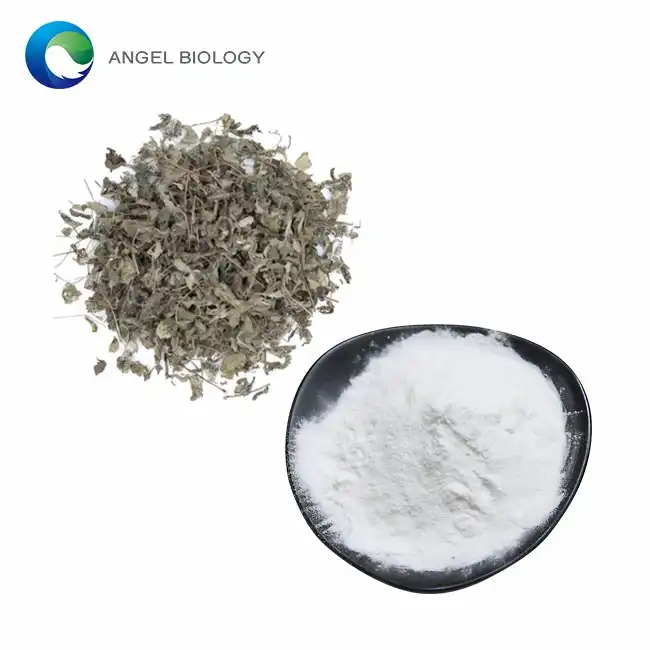
Hedera helix L., commonly known as English ivy, is an evergreen plant in the Araliaceae family. Ivy leaf extract is produced from its leaves through an extraction process that may use water, ethanol, or a specified combination of solvents. The extract can then be concentrated and dried into a powder.
Ivy leaf extracts contain several plant constituents, including triterpene saponins such as hederacoside C and alpha-hederin. These compounds are commonly referenced when describing the composition of ivy leaf ingredients. However, their levels depend on the plant material, extraction method, solvent system, and product specification.
Some commercial extracts are standardized to a specified hederacoside C content and may include a defined drug-to-extract ratio (DER). Values such as 10% hederacoside C or a DER of 4:1 to 8:1 should be treated as product-specific specifications rather than universal characteristics of all ivy leaf extracts.
The powder may range from yellow-brown to brown, depending on the extraction and drying processes. Its color, odor, moisture content, particle size, and dispersibility should be evaluated for the intended formulation. Buyers should request a batch-specific certificate of analysis (COA) and technical data sheet to verify the actual material rather than relying on a general product description.


What NAC Is
N-acetylcysteine (NAC) is a derivative of the amino acid L-cysteine. Its molecular structure contains a sulfur-containing thiol group, which contributes to its characteristic sulfur-like odor.
NAC is used in various product categories, including certain pharmaceutical preparations and nutritional or other formulated products where permitted by local regulations. Its potential applications depend on the intended use, market classification, dosage form, and applicable requirements.
Unlike a botanical extract, NAC is a defined chemical compound. Quality assessment generally focuses on identity, assay, related substances, moisture, residual solvents where applicable, elemental impurities, and other parameters specified for the intended grade.
NAC can be considered for capsules, tablets, powders, sachets, and effervescent formulations, subject to formulation compatibility and regulatory review. Buyers should also confirm its permitted status in the target market before finalizing product development, particularly when evaluating dietary supplement applications in the United States.
Why Botanical and Chemical Ingredients Need Different Controls
Ivy leaf extract is a complex botanical mixture, whereas NAC is a defined chemical compound. This distinction affects how each ingredient is identified, standardized, tested, and documented.
For ivy leaf extract, relevant information may include the botanical name, plant part, extraction solvent, DER, marker-compound content, analytical method, and contaminant testing. These details help buyers assess the identity and consistency of the botanical material.
For NAC, the main focus is usually the compound's identity, assay, purity, related substances, and other specification requirements. Its characteristic odor and potential interactions with formulation ingredients should also be considered during development.
The two ingredients may have different regulatory classifications and documentation requirements across markets. Treating them as interchangeable raw materials can therefore create unnecessary formulation, labeling, and compliance work. Early review of the target market and intended product category can help reduce these risks.
How Ivy Leaf Extract and NAC Fit into Cough Formulas
Ivy Leaf Extract: Botanical Positioning
Ivy leaf preparations have been investigated for use in products intended for cough associated with respiratory conditions. Some research has explored the potential roles of ivy constituents, including alpha-hederin, in biological pathways relevant to respiratory function. These laboratory findings help explain scientific interest in the ingredient but should not be presented as proof of a specific benefit from every commercial extract.
A 2021 systematic review of ivy leaf preparations for acute upper respiratory tract infections identified clinical studies but noted limitations in study quality and the clinical significance of the reported effects. Results from a particular preparation should not automatically be applied to extracts with different compositions, extraction methods, or doses.
For product developers, ivy leaf extract may be relevant to botanical product concepts where the ingredient's identity, composition, and applicable regulatory status align with the formulation brief. The specific extract, finished-product format, and intended claims should be evaluated separately.
Suppliers should provide sufficient technical information to support ingredient selection, including marker-compound specifications, extraction details, and available quality documentation. This information is especially useful when comparing materials from different sources.
NAC: Defined-Ingredient Positioning
NAC contains a thiol group that can participate in chemical reactions involving disulfide bonds. This mechanism is associated with its established use as a mucolytic ingredient in certain medicinal products. However, the presence of this mechanism alone does not establish the effectiveness of every NAC-containing product or justify a particular claim in every market.
For formulators, NAC offers a defined chemical identity and measurable assay specifications. These characteristics can simplify certain aspects of raw-material testing and help establish a consistent quantity per serving. They do not eliminate the need for finished-product testing, stability assessment, or regulatory review.
The sulfur-like odor is an important formulation consideration. Depending on the dosage form, developers may need to assess flavor systems, encapsulation, packaging, or other suitable approaches to improve sensory acceptability. Any masking strategy should be tested for compatibility and stability rather than selected solely on the basis of the initial taste or odor.
NAC's permitted uses and labeling requirements vary by jurisdiction and product category. Confirm the relevant requirements before selecting the ingredient for a consumer-facing formulation.
Side-by-Side Comparison
The following table summarizes practical considerations for ingredient selection.
| Factor | Ivy leaf extract | NAC |
|---|---|---|
| Ingredient type | Complex botanical extract | Defined chemical compound |
| Main specification focus | Botanical identity, extraction details, marker compounds, DER | Identity, assay, purity, related substances |
| Product positioning | Botanical and herbal concepts, where permitted | Defined-ingredient formulations, where permitted |
| Sensory considerations | Plant-derived color, odor, and taste | Characteristic sulfur-like odor and potential taste challenges |
| Potential dosage forms | Syrups, powders, capsules, and tablets, subject to testing | Sachets, powders, effervescent tablets, capsules, and tablets, subject to testing |
| Key development priority | Extract consistency and compatibility | Chemical quality, sensory management, and compatibility |
| Regulatory review | Depends on extract, product category, and market | Depends on intended use, product category, and market |
Use this comparison as an initial screening tool rather than a ranking of clinical outcomes. The suitability of either ingredient depends on the specific material, finished formulation, intended claims, and applicable regulations.
Ivy Leaf Extract vs NAC: Which Cough Formula Is the Better Fit?
When Ivy Leaf Extract Fits
Ivy leaf extract may be a suitable candidate when a brand is developing a product with a botanical identity. Depending on the extract specification and local requirements, possible formats for evaluation include herbal syrups, capsules, tablets, and multi-ingredient botanical products.
Its practical suitability should be determined through formulation testing. Do not assume that a powder will dissolve completely in water or perform consistently in every syrup. Dispersibility, solubility, sedimentation, viscosity, color, taste, and stability can vary with the extract and the other ingredients in the formula.
For liquid formulations, assess the effects of pH, preservatives, sweeteners, flavor systems, and storage conditions. Sugar-free and honey-flavored concepts may be considered where appropriate, but their suitability depends on the complete formulation and target consumer requirements.
For capsules and tablets, evaluate powder flow, particle size, bulk density, compressibility, and compatibility with excipients. These parameters can influence manufacturing performance and finished-product consistency.
The botanical source, extraction method, marker-compound range, and supporting documentation may also be important to a brand's product story. However, terms such as “natural” or “clean label” should accurately reflect the product and applicable labeling rules. Ingredient documentation should support the description used in marketing materials.
When NAC Fits
NAC may be worth evaluating when a formulation requires a defined chemical ingredient with a specified assay and a measurable quantity per serving. Potential dosage forms include capsules, tablets, sachets, and effervescent products, provided that the intended use is permitted in the target market.
Its chemical identity can support precise raw-material specifications, but the development process still needs to account for manufacturing variation, compatibility, packaging, and finished-product stability.
Sensory management is particularly important in powders, drinks, and effervescent formulations because the sulfur-like odor may affect consumer acceptance. Flavor systems, protective packaging, or other suitable formulation approaches can be assessed during pilot trials.
Before selecting NAC, verify the ingredient's regulatory status, allowable product category, labeling requirements, and any applicable restrictions in the intended market. A formulation that is suitable in one jurisdiction may require a different approach elsewhere.
Combining the Two Ingredients
Combining ivy leaf extract and NAC may be considered as a separate formulation project, but their inclusion together should not be assumed to provide additional benefits. The decision requires a clear product rationale and evidence appropriate to the proposed claims.
A combination may introduce additional challenges involving taste, odor, pH, solubility, ingredient compatibility, processing, and packaging. The botanical extract's composition and the chemical characteristics of NAC should both be considered when establishing specifications and evaluating stability.
Before moving beyond the initial concept, prepare a small-scale prototype and assess its physical, chemical, and sensory properties. Review the proposed labeling and regulatory classification for the combination as a whole, not just for each ingredient individually.
In some cases, separate product lines may be more practical. For example, a brand could evaluate an ivy leaf extract product for a botanical range and a NAC-based product for a defined-ingredient range. Each product should be developed and assessed according to its own formulation, target market, and supporting documentation.
Product Format, Dosage, and Regulatory Considerations
Syrups vs Capsules and Powders
For an ivy leaf extract syrup, assess color, taste, odor, viscosity, dispersion or dissolution behavior, microbial quality, and batch consistency. The required testing depends on the extract specification and finished-product category. A powder's behavior in water should be verified experimentally rather than inferred from its appearance.
For capsules and tablets, assess particle size, bulk density, flowability, moisture, and compatibility with suitable excipients. Colloidal silicon dioxide or other processing aids may be considered where appropriate, subject to formulation requirements and applicable regulations.
For NAC powders, beverages, and effervescent products, pay particular attention to odor, taste, moisture control, packaging compatibility, and stability. Pilot-scale sensory assessment can help identify formulation issues before production is scaled up.
Both ingredients require testing under conditions relevant to the intended shelf life and packaging. The final choice should reflect the performance of the actual material in the finished product rather than a general assumption about its suitability for a dosage form.
Dosage and Claims Are Market-Specific
A serving level established for one extract or finished product should not automatically be applied to another. Ivy leaf extracts can differ in DER, marker-compound content, extraction solvent, and overall composition. These factors need to be considered when reviewing technical specifications and any proposed use level.
NAC formulation levels likewise need to be established in line with the intended product category, ingredient specification, applicable requirements, and supporting technical or scientific information.
Claims and labeling language must be reviewed for the target market. The regulatory treatment of botanical preparations and NAC can differ between countries and between food supplements and medicinal products. Qualified regulatory and formulation specialists should review the proposed product classification, serving instructions, warnings, and marketing language before commercialization.
Scientific publications and regulatory monographs can provide useful background, but their conclusions should be interpreted within their stated scope. Evidence for a specific medicinal preparation does not automatically establish the performance or permitted claims of a different commercial ingredient or finished product.
Quality Documents to Request
For ivy leaf extract, request documentation covering the botanical name, plant part, extraction method and solvent, DER, marker-compound specification, analytical method, batch-specific COA, microbiological limits, contaminant testing, and relevant stability information. Confirm which additional declarations and documents are required for the target market.
For NAC, request the material's identity, assay, purity, related-substance profile, moisture specification, applicable residual-solvent and elemental-impurity results, packaging information, and batch-specific COA. The precise document set should match the product specification and intended application.
Buyers should also review the supplier's quality-management documentation, traceability procedures, change-control practices, and export documentation where relevant. Confirm that the specification supplied for evaluation matches the material intended for commercial shipment.
Do not assume that specifications remain unchanged across suppliers or production batches. Establish acceptance criteria and agree on how specification changes will be communicated. These measures help procurement and quality teams assess consistency and reduce avoidable issues during scale-up.
Procurement Checklist and Development Workflow for B2B Buyers
Supplier Checklist
Begin with a clear product brief covering the dosage form, target market, product category, ingredient specifications, proposed serving level, packaging, estimated order volume, delivery schedule, and any customization requirements.
Then compare suppliers using the documents and technical support relevant to the project. These may include technical data sheets, batch-specific COAs, quality-system documentation, contaminant-testing information, stability data, traceability records, export documents, and available manufacturing or customization capabilities.
For ivy leaf extract, ask about the hederacoside C specification, DER, extraction solvent, moisture control, analytical methods, and batch consistency. For NAC, clarify the assay, related-substance limits, odor management considerations, packaging options, and compatibility with the intended dosage form.
Request samples for evaluation before making a commercial commitment. Confirm minimum order quantities, lead times, packaging sizes, sample availability, and the scope of technical assistance. Supplier capabilities should be verified against the actual project requirements rather than assumed from a general product listing.
Common Mistakes to Avoid
Several common purchasing mistakes can increase development costs or delay a product launch.
Comparing only the price per kilogram. Testing costs, usable yield, specification requirements, packaging, and supply consistency can affect the total cost of a project.
Accepting unverified marketing descriptions. Terms such as “natural,” “organic,” or “pharmaceutical-grade” should be used only when the material and supporting documentation justify them.
Leaving sensory testing until late development. Color, taste, bitterness, and sulfur-like odor should be evaluated during early formulation trials.
Applying the same serving level or claims across markets. Product category, ingredient specifications, and local requirements may differ.
Overlooking documentation and change control. Incomplete records or uncommunicated specification changes can create avoidable quality and compliance problems.
A supplier that can provide clear specifications, suitable documentation, samples, and responsive technical support may be a more useful long-term partner than a supplier selected on price alone.
Recommended Development Workflow
A structured workflow can help B2B teams make decisions efficiently.
First, define the intended product category, target market, dosage form, sensory objectives, packaging, and proposed product claims. Determine whether ivy leaf extract, NAC, or a different formulation approach is appropriate for that brief.
Second, identify the applicable regulatory requirements and establish preliminary raw-material specifications. Request supplier samples, COAs, technical data sheets, and other relevant documentation for review.
Third, conduct pilot trials to assess ingredient compatibility, processing behavior, taste, odor, color, pH where relevant, and other formulation-specific parameters. Develop an appropriate stability-testing plan based on the product and packaging.
Finally, review the finished-product specifications, label language, supporting documents, supply terms, and change-control arrangements before commercial production. Confirm that each proposed claim and product description is supported and permitted in the target market.
Following these steps in sequence helps teams identify potential issues early and make more informed sourcing and formulation decisions.
How Angelbio Supports Ivy Leaf Extract Projects
Angelbio can be considered as a potential raw-material supplier for projects involving ivy leaf extract. For a specific project, buyers should confirm current product availability, the applicable specification, and the documentation that can be provided for the intended market.
When evaluating a standardized ivy leaf extract, useful discussion points include the Hedera helix plant material, extraction method, DER, hederacoside C specification, analytical methods, and batch documentation. The appropriate specification will depend on the product brief and the requirements agreed upon for the project.
For B2B inquiries, share the intended dosage form, target market, preliminary specification, estimated order quantity, and any customization requirements. This information helps the supplier assess whether the available material is a suitable candidate and clarify the next steps for sample evaluation and quotation.
Conclusion
Ivy leaf extract and NAC offer different ingredient profiles for cough-related product development, and neither is the universal choice for every formulation.
Ivy leaf extract is a botanical mixture derived from Hedera helix leaves. Its identity, extraction process, DER, and marker-compound specification are important when comparing suppliers and assessing formulation suitability. It may fit botanical product concepts where the intended use and claims are permitted.
NAC is a defined chemical compound whose quality assessment focuses on identity, assay, purity, and other relevant specifications. Its characteristic sulfur-like odor and the regulatory requirements of the target market should be considered during product development.
For both ingredients, the best choice depends on the intended product, formulation performance, supporting evidence, quality documentation, and market requirements. Buyers should evaluate actual samples and specifications, test the finished formulation, and review claims before commercialization. When both ingredients are being considered, compare them against the same product brief rather than assuming they are interchangeable or that a combination will necessarily offer an advantage.
FAQ
Q1: Can ivy leaf extract and NAC be used in the same cough formula?
They may be evaluated together, but the combination requires a clear formulation rationale and separate compatibility, stability, sensory, and regulatory assessments. The suitability of each ingredient should be confirmed for the target market and intended product category.
Q2: Which ingredient is easier to formulate into a syrup?
Neither ingredient can be assumed to be easier in every formulation. Ivy leaf extract may contribute botanical color and flavor, while NAC may present a sulfur-like odor and taste challenge. Actual solubility or dispersibility, pH compatibility, stability, and sensory performance should be evaluated in pilot trials.
Q3: What documents should a supplier provide?
Request a batch-specific COA, technical data sheet, ingredient identity and specification information, relevant analytical results, and supporting quality and traceability documentation. For ivy leaf extract, review the plant part, extraction solvent, DER, and marker-compound specification. For NAC, review identity, assay, purity, and related substances. Additional documents depend on the target market and intended application.
Talk to Angelbio About Ivy Leaf Extract for Your Formula
If you are evaluating standardized ivy leaf extract for a new product or an existing formulation, contact Angelbio to discuss the available specifications and project requirements.
Please share your intended dosage form, target market, preferred specifications, estimated order quantity, and customization needs. These details can help clarify sample evaluation, documentation requirements, and quotation options.
Email: angel@angelbiology.com
References
1. European Medicines Agency (EMA). Hederae helicis folium: Herbal medicinal product information.
2. Sierocinski E, Holzinger F, Chenot J-F. “Ivy leaf (Hedera helix) for acute upper respiratory tract infections: an updated systematic review.” European Journal of Clinical Pharmacology. 2021;77:1113–1122.
3. “α-Hederin, but not hederacoside C and hederagenin from Hedera helix, affects the binding behavior, dynamics, and regulation of β2-adrenergic receptors.” Biochemistry. 2009.