



Ultimate Guide to Kudzu Hair and Skin Care
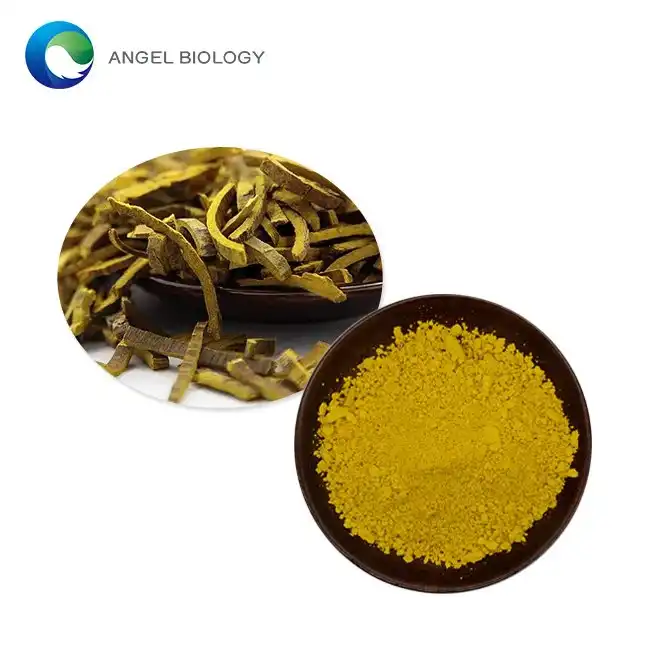
Kudzu root extract powder has quietly become one of the more interesting botanical ingredients in modern hair and skin care formulations. Derived from the dried roots of Pueraria lobata, this standardized concentrate delivers a defined profile of isoflavonoids — primarily Puerarin, Daidzin, and Daidzein — that can support scalp-care positioning, skin-conditioning concepts, and antioxidant-oriented formulation strategies. For B2B buyers, OEM manufacturers, and nutraceutical brands navigating the clean-label movement, understanding this ingredient's technical profile and sourcing landscape is a genuine competitive advantage.
What Makes Kudzu Root Extract Unique for Hair and Skin?
The Bioactive Profile Behind the Results
This plant extract is useful because it contains a range of isoflavones. Using HPLC measurement, the Puerarin specification may vary according to the individual product grade and manufacturing process. Kudzu root extract powder contains Puerarin, with the molecular formula C₂₁H₂₀O₉. Since it has a melting point of about 187°C and a molecular weight of 416.38, these properties are relevant when evaluating processing conditions. As a compound with reported antioxidant activity in laboratory research, Puerarin can contribute to the antioxidant profile of formulations containing kudzu root extract powder, although finished-product performance should be evaluated separately.
From Root to Powder: The Extraction Advantage
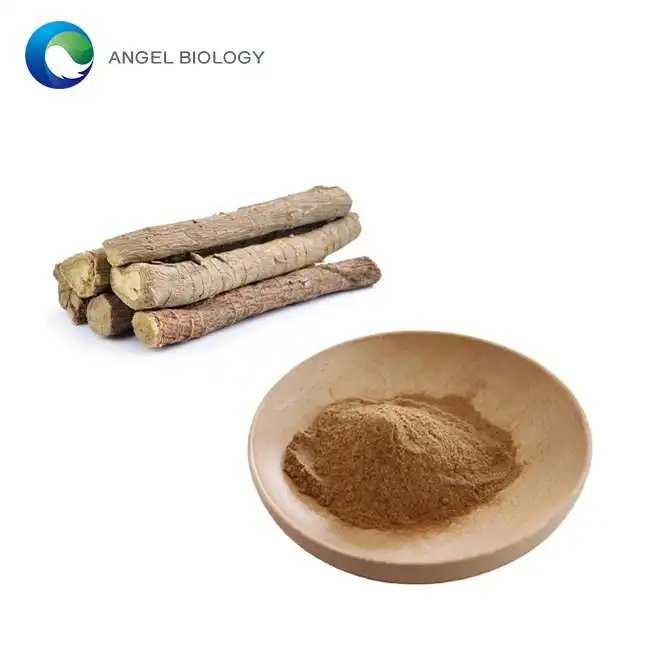
It's harder to formulate directly with raw kudzu root because it contains substantial fiber and phytochemical variation that can depend on raw-material source and processing. Modern extraction methods may use water-ethanol systems and macroporous resin processing to concentrate selected constituents. These methods can produce a more standardized, fine-grained powder with defined physical specifications such as bulk density and particle size, depending on the supplier's product grade. In the end, they provide an ingredient that can be evaluated for cosmetic formulation use in serums, masks, and topical products, subject to appropriate compatibility and safety testing.


Key Benefits for Hair and Skin Formulations
Scientists continue to investigate Puerarin and other isoflavones because of their potential relevance to skin and hair-related formulation research. A study from 2021 in the journal Phytomedicine discussed the antioxidant and biological properties of Puerarin in skin-related research. These findings may be useful background for companies developing cosmetic formulations containing kudzu root extract powder, but they should not be interpreted as proof of a specific finished-product effect.
These are the main useful characteristics that the buying and design teams often look at first:
- Scalp formulation support: Isoflavones have been investigated in relation to estrogen-receptor-related pathways and provide a botanical option for shampoos and serums designed for scalp and hair care formulations. Their suitability for a specific cosmetic claim should be established through finished-product testing.
- Skin appearance and formulation support: Because Puerarin has reported antioxidant activity, kudzu root extract powder can contribute to formulations designed around skin appearance and conditioning. This gives skin care companies a plant-based ingredient for products positioned around skin appearance and formulation quality.
- Skin tone formulation: Daidzein is an isoflavone that can be incorporated into formulations designed around skin tone and overall skin appearance. This gives formulators a plant-derived option for cosmetic products focused on appearance-related positioning.
- Moisture-related formulation: Isoflavone glycosides are hydrophilic, which means they interact with water and can contribute to the moisture-related characteristics of skin care formulations. Because of this, kudzu extract may be evaluated in skin care products designed for a moisturizing feel.
Because of these characteristics, botanical actives produced from kudzu can be a flexible element in products built around different cosmetic positioning concepts. This is particularly relevant in the personal care market, where brands need differentiated botanical ingredients supported by clear specifications and documentation.
How to Incorporate It Into Your Product Line?
Topical Formulation Guidelines
Most skin and hair care products may use inclusion levels within a supplier-defined range, but the appropriate level depends on the extract specification, formulation system, and intended cosmetic claim. If you mix a 40% total-isoflavone grade with water and alcohol, it may be suitable for evaluating toners, essences, and leave-in products. For capsules or dry formulations, suppliers may offer grades with different marker specifications or higher concentrations depending on the intended application.
Oral and Supplement Delivery
When companies use kudzu extract in functional drinks or supplement products positioned around hair and skin nutrition, they typically select grades with consistent specifications and defined isoflavone content. Thermal stability should be confirmed through supplier data and finished-product testing before using the ingredient in spray-drying or hot-filling processes.
Storage and Handling
The powder can absorb moisture, so it should be stored according to the supplier's recommended temperature, humidity, and packaging conditions. Moisture-resistant inner bags inside sealed fiber drums can help protect the powder from humidity exposure, caking, and contamination during shipping and storage.
Kudzu Extract vs. Competing Botanical Actives
Supply managers look at different botanical options for isoflavones that can be used in hair and skin formulations and assess which ones best match their requirements. Kudzu root extract powder contains a defined isoflavone profile that can provide a distinctive botanical positioning. EGCG in green tea extract has also been extensively studied for antioxidant activity, but its phytochemical profile and formulation positioning differ from kudzu. Ginseng root extract has a different composition and application profile, while cost and sourcing conditions can vary substantially by grade and supplier.
In general, a standardized extract can provide greater compositional consistency than raw kudzu root powder, although powder flow and dispersion may still vary between batches. Organic kudzu extract can strengthen clean-label positioning when supported by valid certification and traceability documentation. This is what makes qualified suppliers different from sellers offering less-documented materials.
Procurement Guide: Sourcing with Confidence
You need to look for more than a cheap unit price in a plant extract that is intended for supplements or cosmetics, like kudzu root extract powder. The following are traits of a highly capable supplier:
- Standardization documentation: HPLC-verified test reports that show the specified Puerarin and total isoflavone levels for each batch.
- Regulatory compliance: Applicable GMP manufacturing practices, ISO quality systems, and export documentation can help support supplier qualification for different target markets.
- Non-GMO verification: When non-GMO status is required, appropriate supplier declarations, raw-material records, and third-party testing such as PCR analysis can be requested according to the sourcing program.
- Ingredient documentation: Product documentation covering the raw material source, processing conditions, specifications, and batch information.
- Supply chain traceability: Full tracking of the supply chain, from raw-material origin to finished packaging. This is a useful requirement for buyers of high-end cosmetics and personal care ingredients.
If you follow these criteria, you can strengthen formulation control and maintain consistent documentation throughout the product development process. This is especially helpful for brands preparing products for regulated or documentation-intensive markets.
Maximizing Product Value Through Strategic Positioning
Putting kudzu root extract powder into skin and hair care products can provide an additional botanical positioning opportunity. This ingredient has a long history of use in Traditional Chinese Medicine, while modern phytochemical research continues to investigate its constituent profile and potential applications. This combination of traditional identity and modern ingredient standardization can provide a useful product story for both professional buyers and consumers.
Niacinamide, ceramides, and hyaluronic acid are some active ingredients that can be evaluated alongside kudzu extract. Combining ingredients may help formulators develop a more comprehensive formulation concept, but compatibility and finished-product performance should be validated rather than assumed. Brands that invest in product testing, including in vitro evaluation or customer perception studies, can build stronger technical support for their marketing claims and product positioning.
Conclusion
Kudzu root extract powder is a practical botanical option for companies developing skin care, hair care, and selected functional food products because of its defined phytochemical profile and flexible formulation potential. Its suitability for different applications depends on the extract specification, processing characteristics, and intended product format. A consistent isoflavone profile, documented quality, and appropriate formulation testing can help brands build products that align with current interest in scientifically positioned and plant-based ingredients. This plant active can support the development of a new product line or the reformulation of an existing one. Long-term product consistency depends in part on the selected supply partner. A qualified partner should provide reliable quality systems, botanical expertise, and documentation appropriate to the target market.

FAQ
1. What is the difference between Pueraria lobata and Pueraria thomsonii extracts?
Lobata is commonly recognized as a source of Puerarin and other isoflavones, while the phytochemical profiles of different Pueraria species can vary. The appropriate source depends on the target specification, intended application, and market requirements rather than assuming that one species is universally better for every product.
2. Is kudzu extract water-soluble?
Very pure Puerarin has limited solubility in cold water. Some standardized grades, including certain 40% isoflavone products, may be developed with physical or formulation characteristics that improve dispersion in water-based products such as toners and functional drinks. Actual solubility should be confirmed with the supplier's technical specification.
3. How is non-GMO status verified?
If you want to buy Pueraria roots from Angelbio, the supplier can provide sourcing and quality documentation according to the specific material. Where non-GMO status is required, PCR testing, supplier declarations, or relevant third-party documentation may be requested to support verification.
4. Does the extract contain common allergens?
Pure kudzu extract may not inherently contain common allergens such as gluten or soy, but allergen status depends on raw-material sourcing and manufacturing controls. A batch-specific quality statement and allergen declaration should therefore be reviewed to confirm the status of the actual product.
Partner with Angelbio for Premium Kudzu Root Extract Powder Supply
Angel Holding Group and the Institute of Life and Health Research at Xi'an Jiaotong University are working together on research and development. Angelbio has more than 18 years of independent R&D experience and supplies kudzu root extract powder to the health and beauty industries worldwide. Available grades can be supported by HPLC testing, quality documentation, and GMP-based manufacturing systems according to the applicable product requirements. The team can also provide technical and export documentation to support different sourcing projects. Please email our team at angel@angelbiology.com to request a sample, specification, or quotation for your project.

References
- Phytomedicine — Puerarin and its pharmacological effects on skin and oxidative stress pathways, 2021.
- Journal of Ethnopharmacology — Bioactive isoflavonoids of Pueraria lobata: traditional use and modern applications, 2019.
- International Journal of Cosmetic Science — Plant-derived isoflavones in topical skin care formulations: efficacy and stability review, 2020.
- Food & Function — Standardization and bioavailability of kudzu root isoflavones in functional food matrices, 2022.
- Journal of Natural Products — Puerarin: isolation, structural characterization, and biological activity, 2018.
- Molecules — Antioxidant and anti-inflammatory properties of Pueraria lobata root extracts in dermal cell models, 2023.