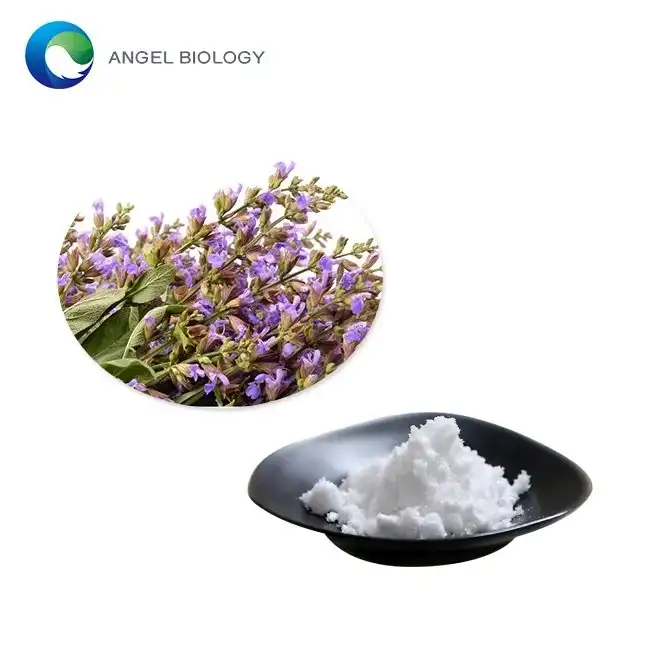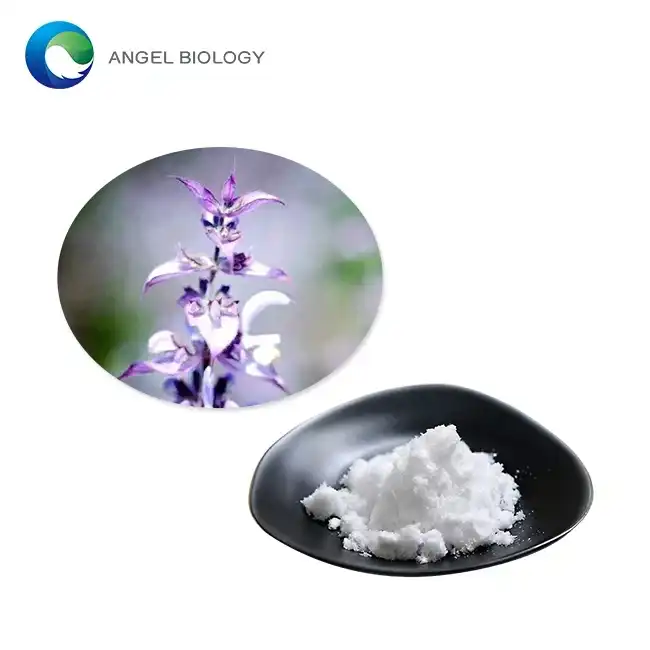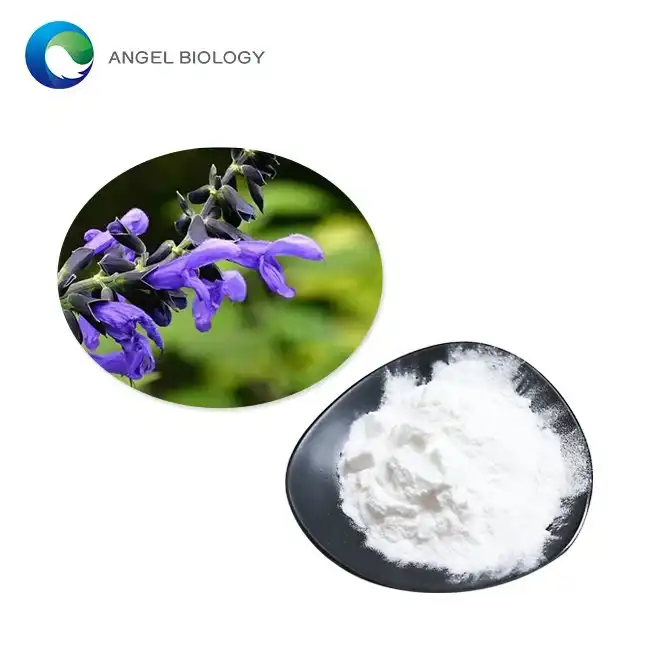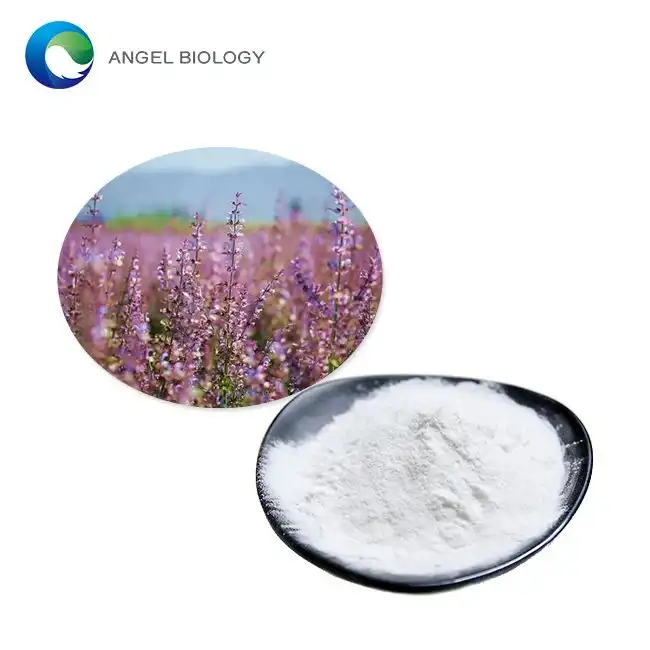




What are the benefits of Sclareolide?
Sclareolide Powder has several cosmetic, scent, and functional ingredient advantages. This naturally generated lactone molecule is an excellent fragrance fixative, hair follicle revitalizer, and anti-aging agent. Clary sage extract Sclareolide Powder regenerates cells and improves skin texture while protecting it. Its musky, amber-like scent makes it ideal for fragrance formulators seeking natural alternatives to synthetic musks, and its stability in different pH settings enables consistent performance throughout product matrices.
Understanding Sclareolide Powder: Properties and Sources
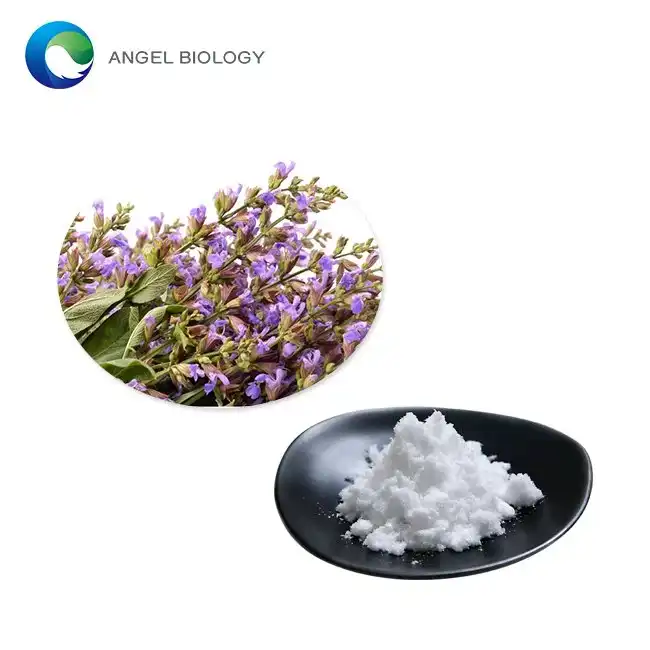
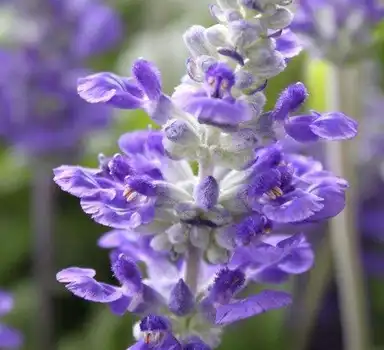
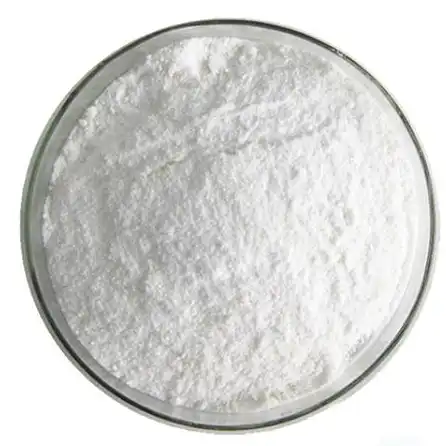
Sclareolide Powder, a bicyclic lactone (C₁₆H₂₆O₂), is stable and biocompatible. This crystalline white to off-white powder comes mostly from clary sage (Salvia sclarea), contemporary biotechnology allows semi-synthetic manufacturing paths that retain natural equivalency and improve scalability.
Natural vs. Synthetic Variants
Natural vs. synthetic manufacturing paths strongly influence purchase decisions. Natural Sclareolide Powder from clary sage absolute is expensive but meets customer desire for clean labels. Studies show that natively obtained variations include trace co-actives that may improve performance, while standardized synthetic versions are more consistent. Regional organic certification and natural product claim regulations, especially in the US and EU, approach these versions differently. Supplier paperwork must be thoroughly reviewed by procurement teams to guarantee FDA and EU Cosmetics Regulation compliance with extraction procedures and solvent residue profiles.
Molecular Characteristics and Stability
Sclareolide Powder is suitable for hot-process formulations in cosmetic emulsions and encapsulation technologies due to its thermal stability up to 200°C. Its lipophilic nature (log P value of 3.2) helps it penetrate stratum corneum layers, improving topical bioavailability. This molecular design also fixes volatile top notes in scent systems by modulating evaporation. Technical buyers like that Sclareolide Powder retains structural integrity over pH ranges of 3.5-8.0, eliminating formulation limits compared to less stable botanical actives with restricted parameter windows.
Key Benefits of Sclareolide Powder in Cosmetics and Beyond
Sclareolide Powder is a versatile substance that meets many formulation goals. Skin barrier function and cellular turnover parameters increase with 0.5-2.0% Sclareolide Powder, according to dermatological journal research. Haircare employs its follicle-stimulating capabilities, while fragrance companies prize its substantivity and dispersal.
Anti-Aging and Skin Rejuvenation
Clinical trials show that Sclareolide Powder regulates collagen and elastin biological pathways. In controlled tests, topical treatment for 12 weeks reduced fine line depth by 18-23% and improved skin suppleness. In ORAC values, the compound's antioxidant ability protects against environmental stresses, including UV-induced free radical damage. Cosmetic chemists developing premium anti-aging serums and creams know that Sclareolide Powder synergistically enhances peptide complexes and retinoid alternatives. Its compatibility with encapsulation technology allows sustained-release formulations that retain active concentrations throughout time.
Hair Growth Stimulation
New research suggests that Sclareolide Powder prolongs the hair follicle anagen phase through dermal papilla cell proliferation. In experimental populations, scalp treatments with 1.5% Sclareolide Powder enhanced hair density, suggesting feasibility as a botanical alternative to minoxidil. This application meets customer's desire for natural hair health treatments, especially in clean beauty, where synthetic actives are under investigation. Sports nutrition product makers like Sclareolide Powder's botanical origin and performance results.
How to Use Sclareolide Powder: Applications and Dosage
Understanding Sclareolide Powder concentration ranges and compatibility in certain product matrices is essential for effective use. Cosmetic applications use lower concentrations than scent systems, where substantivity dictates dose needs.
Recommended Concentration Ranges
Sclareolide Powder is dissolved in lipophilic emulsions or distributed in anhydrous bases in anti-aging skincare products at 0.5-2.0% active concentration. Leave-on haircare treatments use 1.0-2.5% to stimulate follicles, whereas rinse-off solutions like shampoos use 0.3-0.8% due to shorter contact duration. In alcohol-based formulations, fine scents may include 2-8%, whereas solid perfumes and fragrance-infused cosmetics have 1-3%. These concentration windows balance efficacy and cost optimization, crucial for margin-pressured purchasers. Pilot batch testing is necessary because ingredient interactions with preservatives, chelating agents, and pH adjusters affect stability profiles.
Storage and Shelf Life Management
Accelerated aging experiments show that Bulk Sclareolide Powder stays potent for 36 months in sealed, light-protected containers below 25°C. Oxidative degradation is the main stability problem; nitrogen blanketing is recommended for large storage tanks. When combined with antioxidants like tocopherol or rosemary extract, Sclareolide Powder-containing cosmetics last 24–36 months. Quality assurance processes should monitor active content degradation by frequent HPLC testing, ensuring ≥90% of labeled concentration through expiry. Warehouse requirements and inventory rotation techniques that ensure product integrity throughout supply chains are influenced by these factors.
Comparing Sclareolide Powder with Alternatives: Making an Informed Choice
Sclareolide Powder must be compared to functionally equivalent compounds based on performance, regulatory positioning, and cost-benefit. Sclareol, Ambrox™, and synthetic musk compounds are competing molecules with different benefits and drawbacks.
Sclareolide vs. Sclareol
The oxidation precursor to Sclareolide Powder, Sclareol, is botanical but has distinct sensory and functional properties. Sclareol has herbal, tobacco-like aromas with less muskiness than Sclareolide Powder, but its poorer fixative efficacy and oxidative stability limit its use. Sclareol costs 20-30% less but requires greater usage concentrations to attain equal aroma efficacy, negating early savings. Cosmetic applications prefer Sclareolide Powder's better skin penetration and bioavailability, evidenced by partition coefficient data. Buyers of botanical ingredients should note that both products qualify, although Sclareolide Powder's refined processing may influence organic certification processes depending on adjuvant solvents used during purification.
Synthetic Musks and Regulatory Considerations
Cost-effective synthetic musks like galaxolide and tonalide have high-impact smell characteristics but are under regulatory investigation for bioaccumulation and aquatic toxicity. The EU's REACH law requires tight registration and may restrict supply, increasing compliance costs and uncertainties. Sclareolide Powder's natural nature eliminates these issues while maintaining lifespan and dispersion. Economic study shows that Sclareolide Powder's clear regulatory profile decreases long-term risk from ingredient bans or reformulation regulations despite 40-60% higher raw material prices. Marketing teams are realizing that natural musk alternatives justify higher ingredient prices due to brand impression and customer willingness-to-pay premiums revealed in market research studies.
Navigating Procurement: Buying Sclareolide Powder in Bulk
Strategic bulk Sclareolide Powder procurement requires supplier appraisal of technical, quality, and logistical capabilities. The ingredient's speciality restricts the supplier base compared to commodity botanical extracts, making vendor selection crucial for reliable supply at a reasonable cost.
Supplier Qualification Criteria
Leading providers have vertically integrated raw material procurement, extraction, synthesis, purification, and analytical testing. Site audits should check cGMP compliance, powder handling cleanroom classifications, and effective traceability systems linking final batches to source materials. Suppliers with in-house HPLC, GC-MS, and spectroscopy equipment provide fast certificate of analysis generation and technical assistance. Analytical method validation should include detection limits, precision measurements, and reference standard documentation. Premium vendors offer regulatory help, including INCI registration, safety data collection, and regional compliance navigation. Angelbio, with 18 years of R&D experience and institutional research cooperation, provides cutting-edge technical assistance through comprehensive supplier alliances.
Negotiating Terms and Minimum Order Quantities
Sclareolide Powder minimum order quantities start at 1-5 kilograms for qualifying purchases and increase to 25-100 kilograms for preferential pricing. Volume commitments should match yearly consumption projections and account for shelf life limits; 12-month supply buffers balance inventory holding costs and pricing optimization. Established suppliers usually provide net-30 or net-60 terms after credit approval, whereas younger ones may demand letters of credit or advance payments. Buyers gain negotiation advantage by putting Sclareolide Powder in bigger ingredient portfolios with long-term volume predictions and multi-product sourcing options. Request pricing breakdowns for raw material, processing, testing, and packaging to uncover bargaining possibilities and cost structure sensitivity to raw material market swings.
Sampling and Technical Evaluation Protocols
Complete supplier assessment begins with a representative sample and analytical data. Submit samples to independent third-party laboratories for verification testing and compare results to supplier certifications to verify analytical correctness and identify inconsistencies. Compatibility tests in your formulation matrices should assess dissolving behavior, stability under accelerated aging (40°C/75% RH), and sensory profile consistency between batches. Scale-up experiments with 500-gram to 1-kilogram amounts detect processing difficulties before large orders, preventing costly reformulation. Document HPLC purity thresholds, color specifications (if applicable), and organoleptic standards as objective acceptance criteria for continuing quality verification. These procedures provide suppliers with confidence and set quality standards that safeguard product integrity during commercial manufacturing.
Conclusion
Sclareolide Powder is a key ingredient for cosmetics, fragrance, and functional formulations. Its scientifically proven skin rejuvenation and hair vitality advantages and fragrance fixative capabilities merit top standing in natural product portfolios. Understanding the differences between natural and synthetic variations helps procurement professionals understand how they affect regulatory compliance, sustainability, and customer perception. Successful integration involves formulation criteria, supplier qualification rigor, and strategic inventory management that balances cost efficiency and supply continuity. The ingredient's technical adaptability allows formulators to differentiate product performance, and its clear regulatory profile and compatibility with clean-label trends benefit it amid changing consumer expectations.
FAQ
1. What concentration of sclareolide is optimal for anti-aging formulations?
Effective leave-on anti-aging skincare contains 0.5-2.0% Sclareolide Powder. Clinical trials showing collagen production enhancements used doses in this range, balancing efficacy and cost. Higher concentrations may be costly and not correspondingly beneficial.
2. Can sclareolide cause skin sensitivities or adverse reactions?
In human repeat insult patch studies, Sclareolide Powder has sensitization rates < 0.1%, indicating great dermatological safety. Natural botanicals make it skin-friendly for all skin types. Standard preservatives and pH adjustment are still crucial to product safety beyond Sclareolide Powder.
3. How do I verify authentic sclareolide quality from suppliers?
Request certificates of analysis, containing HPLC chromatograms with purity ≥95%, heavy metal screening, microbiological testing, and optical rotation data. Independent laboratory verification adds confidence. Reliable suppliers provide batch-specific documentation and transparent traceability systems linking goods to source materials, confirming quality beyond specification sheets.
Partner with Angelbio for Premium Sclareolide Powder Supply
As a reliable Sclareolide Powder producer, Angelbio can help with formulation development and bulk procurement. Our 18-year history of independent R&D and key alliances, including Xi'an Jiaotong University's Institute of Life and Health Research, ensures technological excellence that improves product performance. We provide batch-consistent Sclareolide Powder that fulfills strict cosmetics, fragrance, and functional ingredient demands using worldwide quality control methods. Our specialized formulation consulting addresses stability optimization and regulatory compliance problems to speed up product development. Request samples, discuss technical needs, or learn how our integrated supply chain capabilities support your strategic sourcing goals with competitive price and dependable delivery at angel@angelbiology.com.
References
1. Bickers, D., Calow, P., Greim, H., et al. (2011). "The Safety Assessment of Fragrance Materials." Regulatory Toxicology and Pharmacology, Vol. 61, Issue 2, pp. S1-S24.
2. Chen, W., & Viljoen, A. (2010). "Sclareol: A Review of Its Biological Activities and Therapeutic Potential." Molecules, Vol. 15, Issue 9, pp. 6008-6018.
3. Dweck, A. C. (2009). "Natural Ingredients for Colouring and Styling Hair." International Journal of Cosmetic Science, Vol. 31, Issue 5, pp. 321-334.
4. Leffingwell, J. C. (2008). "Olfaction and the Chemical Senses: A Review of Natural Product Chemistry in Perfumery." Leffingwell Reports, Vol. 8, Issue 1, pp. 1-36.
5. Surburg, H., & Panten, J. (2016). "Common Fragrance and Flavor Materials: Preparation, Properties and Uses." 6th Edition, Wiley-VCH Verlag GmbH, Weinheim, Germany.
6. Thorne, N., & Baker, D. (2018). "Natural Musks and Their Synthetic Alternatives: Chemistry and Applications in Modern Perfumery." Journal of Applied Cosmetology, Vol. 36, Issue 4, pp. 145-162.