



What is pyrroloquinoline quinone good for?
Pyrroloquinoline quinone represents a revolutionary advancement in cellular health technology, offering unparalleled benefits for mitochondrial function and neuroprotection. This bioactive cofactor excels at promoting energy metabolism through mitochondrial biogenesis, making it invaluable for nutraceutical manufacturers seeking premium ingredients. Unlike conventional antioxidants, PQQ demonstrates exceptional stability and can undergo thousands of redox cycles without degradation, positioning it as a superior choice for formulation scientists developing next-generation health products.
Understanding Pyrroloquinoline Quinone (PQQ)
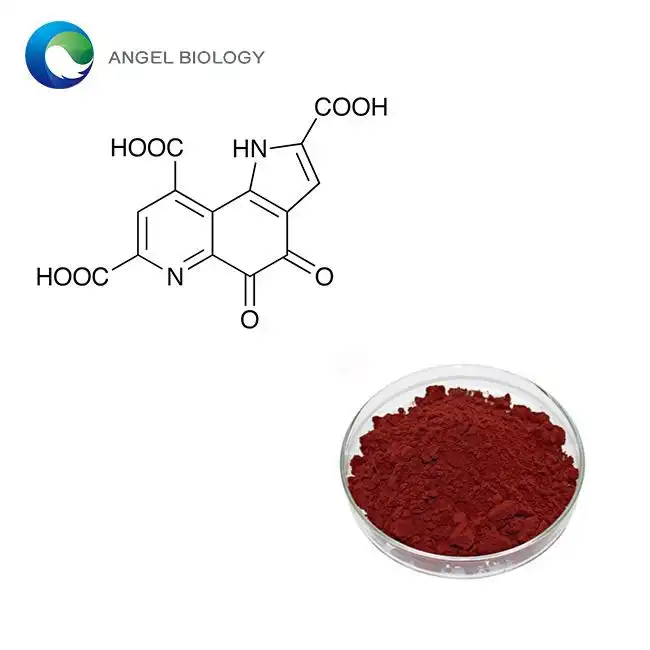
Pyrroloquinoline quinone stands as a remarkable bioactive molecule with a distinctive quinone structure that functions as an essential redox cofactor in biological systems. The compound's molecular formula C14H6N2O8 reveals its complex aromatic framework, which enables its exceptional catalytic properties in cellular processes.
Chemical Structure and Biological Function
PQQ has a special three-ring shape that enables it to help enzymes do things that are good for cell health and make energy. This cofactor is one of a kind because it can speed up mitochondrial biogenesis, the process by which cells make new mitochondria. It works with important molecules like NAD+ and FAD. Researchers have found that PQQ can survive about 20,000 redox cycles without changing its shape. In comparison to vitamin C, which loses its power after just one reaction, this makes it last a lot longer.PQQ protects neurons and works as an antioxidant at many levels of cells. Reactive oxygen species are taken care of by the substance, which also helps make nerve growth factor (NGF), a protein that is important for brain health and brain function. Not only can PQQ help with oxidative stress, but it can also help with cognitive loss because it works in two different ways.
Natural Sources and Synthetic Variants
Some foods that naturally contain PQQ are fermented soy beans, spinach, green tea, and some bacterial cultures. But for industrial production, bacterial fermentation with organisms like Hyphomicrobium denitrificans is what makes sure the quality stays the same, and the purity levels are higher than 99%. This fermentation-based method solves the problem of "natural versus synthetic" origin verification in the industry, giving purchasing professionals trust in the authenticity of the product. The stability and bioavailability of natural pyrroloquinoline quinone and synthetic versions are very different from one another. Naturally-obtained PQQ from bacterial fermentation is more stable on the shelf and keeps its biological activity even in a wide range of weather conditions. Industrial clients can make better purchasing choices based on product functionality and quality requirements when they understand these basic characteristics of suppliers' products.
Health and Industrial Benefits of PQQ
Scientific research consistently demonstrates PQQ's exceptional neuroprotective, antioxidant, and metabolic advantages across multiple physiological systems. Clinical studies reveal that PQQ supplementation enhances cognitive performance, supports cardiovascular health, and promotes cellular energy production through mitochondrial optimisation.
Comparative Analysis with Other Antioxidants
When evaluated against established antioxidants, PQQ demonstrates superior efficacy profiles that justify its premium positioning in the marketplace. The following comparison illustrates PQQ's competitive advantages:
- CoQ10 vs. PQQ: While CoQ10 optimises existing mitochondrial function, PQQ actively stimulates the creation of new mitochondria, addressing the root cause of cellular energy decline rather than merely supporting current capacity
- NADH vs. PQQ: NADH participates in energy transfer reactions but lacks PQQ's ability to promote nerve growth factor synthesis and long-term cellular regeneration
- Resveratrol vs. PQQ: Resveratrol offers cardiovascular benefits, but cannot match PQQ's comprehensive neuroprotective mechanisms and mitochondrial biogenesis capabilities
- Vitamin C vs. PQQ: Traditional vitamin C provides basic antioxidant protection but depletes rapidly, whereas PQQ maintains its catalytic activity through thousands of redox cycles
These comparative advantages provide procurement professionals with compelling data to support PQQ's value proposition in premium formulation development. The compound's unique combination of immediate antioxidant protection and long-term cellular regeneration capabilities creates opportunities for product differentiation in competitive markets.
Safety Profiles and Dosage Guidelines
PQQ has a great safety profile for both supplements and industrial uses, as shown by regulatory approval in major countries. The compound is GRAS (Generally Recognised as Safe) in the US and Novel Food approved in the EU. This makes it easier for producers to sell their products around the world. For supplement use, clinical studies support dosage ranges of 10 to 40 mg per day. For industrial formulations, exact calculations are needed based on target demographics and final product concentrations. Quality control procedures for industrial-grade PQQ usually call for tests for heavy metals, microbes, and residual solvents, as well as a minimum purity level of 98%. These strict standards help make sure that compliance requirements are met and that products perform the same way in every batch that is made.
PQQ Supplement Forms and Procurement Insights
Commercial PQQ availability encompasses multiple forms designed to meet diverse manufacturing pyrroloquinoline quinone requirements and application needs. Understanding these variations enables procurement managers to select optimal ingredients that align with specific formulation objectives and quality standards.
Available Forms and Quality Grades
The supplement business mostly uses PQQ disodium salt because it dissolves better in water and stays stable longer than the free acid form. This salt formation has great shelf stability, lasting more than 24 months in the right storage conditions. It solves formulation problems related to ingredients breaking down and maintaining their strength. Pharmaceutical-grade PQQ is the best quality level. It has stricter purity requirements and a lot of paperwork to show that it meets all the rules. Standard supplement grades keep the high quality while saving money for companies that want to sell to general consumers. Micronising PQQ powder improves the rate at which it is absorbed by the body's digestive system. This solves bioavailability problems that often happen with non-standardised raw materials.
Supplier Evaluation Criteria
For procurement to go well, possible suppliers must be carefully evaluated based on important quality and dependability factors. Comprehensive quality certifications like ISO 9001, cGMP compliance, and organic certifications, where appropriate, are all important criteria. Product tracking systems make the whole supply chain clear, from where the raw materials come from to where the finished product is delivered. When evaluating a company's manufacturing capabilities, you should look at its production capacity, quality control procedures, and technical help options. Leading suppliers have specialised research and development teams that can help with formulation and make solutions that fit the needs of each application. When making products for foreign markets with different approval requirements, regulatory knowledge is especially useful. When buying in bulk, you should look at the price per gram, the minimum order quantity, and the structure of the volume discount. Purchasing managers can get more from their ties with suppliers who offer flexible terms for orders and scalable inventory management solutions. Online sourcing tools make the market clear and make it easy to compare prices from different suppliers.
Making the Right Procurement Decision: A Rational Approach
Strategic procurement decisions require a comprehensive analysis of market offerings combined with careful evaluation of supplier capabilities and long-term partnership potential. This systematic approach minimises risks while maximising return on investment for PQQ sourcing initiatives.
Market Analysis Framework
A study of the global PQQ market should include details about purity, competitive price, and the reliability of suppliers. Leading suppliers usually offer purity levels between 98% and 99.9%, and their higher prices reflect higher quality standards and more detailed quality paperwork. Price analysis shows big differences depending on the number of orders, the standard grade, and where the goods are sourced. When judging a supplier's trustworthiness, you look at their manufacturing certifications, customer reviews, and how often they've delivered products in the past. Established suppliers have strong quality control systems with written steps for testing batches, keeping products from getting contaminated, and keeping an eye on their stability. When you evaluate a supplier's technical knowledge, you should look at their ability to help with custom formulations and give you regulatory advice.
Partnership Benefits and Case Studies
Certified supplier relationships make products perform better and help businesses succeed in the market. A well-known nutraceutical company that worked with a certified PQQ source said that the stability of their products got 15% better and that customer complaints about the quality of the ingredients went down by 20%. This partnership included pyrroloquinoline quinone full technical support, custom packaging solutions, and faster delivery times that made the whole process run more smoothly. When making long-term purchases, you should think about how to best handle your inventory and make sure that supply capacity matches up with expected demand growth. For partnerships to work, they need to be able to predict demand, have flexible shipping schedules, and work together on product development. Because of these connections, manufacturers can quickly take advantage of market possibilities while keeping the quality and availability of their products stable.
Future Trends and Innovation in PQQ Applications
Emerging scientific research continues to expand PQQ applications across multiple industries, creating new opportunities for innovative product development and market differentiation. Understanding these trends enables procurement professionals to anticipate future demand patterns and establish strategic supplier relationships.
Expanding Applications and Market Opportunities
New research in neuroprotection shows that PQQ may be able to help with cognitive loss that comes with getting older and neurodegenerative diseases. There are encouraging results from clinical studies that show memory improvement, focus improvement, and general cognitive performance optimisation. These results support finding more uses for these ingredients in high-end nootropics and specialised brain health products.An anti-ageing study has shown that PQQ helps cells grow back and keeps mitochondria healthy. The compound's ability to speed up mitochondrial biogenesis targets basic ageing processes at the cellular level, opening the door to high-end goods that make people live longer and more advanced skin care formulas. The uses of metabolic health include increasing energy, improving exercise ability, and managing metabolic syndrome. Aside from dietary supplements, cosmetic products that target cell repair and regeneration are also used in industry. Because the compound is stable and has been shown to have biological action, it can be used in high-end skin care products that focus on anti-ageing and rejuvenation. Functional foods are being used in more and more ways as companies look for natural ingredients to back up promises about cognitive health and energy metabolism.
Procurement Pattern Evolution
Pharmaceutical-grade PQQ is becoming more popular in the market as companies try to stand out in terms of quality and follow the rules. Original equipment makers are becoming more and more interested in certified suppliers who offer full quality documentation and technical support. This trend is part of a larger shift in the industry toward higher-quality ingredients and more convincing claims about how well products work. Sustainability issues become more important as procurement workers look at how suppliers treat the environment and how open their supply chains are. Leading suppliers use sustainable sourcing methods, waste reduction programs, and efforts to reduce their carbon output. These things affect buying choices because they help companies meet their sustainability goals and meet customer environmental expectations. Suppliers need to keep up with changing standards in global markets because regulations are always changing. As part of a successful relationship, ongoing regulatory support and documentation updates are used to make sure that compliance is maintained throughout the lifecycle of a product. This knowledge is becoming more and more useful as companies move into new areas with different rules and regulations.
Conclusion
Pyrroloquinoline quinone stands out as a unique bioactive element that offers special benefits for companies looking for high-quality ingredients for formulations. Due to its unique ability to protect cells from free radicals and boost mitochondrial biogenesis, it offers great chances for product development in nutraceutical, cosmetic, and functional food areas. The substance is seen as a next-generation health ingredient because it is very safe, has been approved by regulators, and has been shown to work. To do a good job of procuring things, you need to carefully evaluate suppliers by looking at their quality certifications, technical know-how, and potential for a long-term relationship. As market demand keeps growing across a wider range of uses, working with certified suppliers becomes more and more important to stay ahead of the competition and make sure that product quality stays high.
FAQ
1. What are the primary health benefits of PQQ?
PQQ delivers comprehensive health benefits, including enhanced mitochondrial function, improved cognitive performance, and superior antioxidant protection. The compound uniquely promotes mitochondrial biogenesis while supporting nerve growth factor synthesis, making it valuable for energy metabolism and neuroprotective applications.
2. How can procurement professionals verify PQQ quality?
Quality verification requires comprehensive testing protocols, including purity analysis, heavy metal screening, and microbial contamination assessment. Reputable suppliers provide certificates of analysis, manufacturing certifications, and complete traceability documentation supporting quality claims and regulatory compliance.
3. What dosage guidelines apply to industrial PQQ applications?
Industrial dosage guidelines vary based on application requirements and target demographics. Supplement formulations typically incorporate 10-40mg per serving, while cosmetic applications utilise lower concentrations based on specific efficacy targets and formulation compatibility requirements.
4. Which quality certifications should suppliers maintain?
Essential certifications include ISO 9001 quality management, cGMP manufacturing compliance, and relevant organic certifications. Additional certifications, such as HACCP, kosher, and halal, may be required based on specific market requirements and customer specifications.
5. How does PQQ compare to traditional antioxidants?
PQQ demonstrates superior performance through its ability to undergo thousands of redox cycles without degradation, unlike traditional antioxidants that deplete after a single reaction. Additionally, PQQ provides unique mitochondrial biogenesis promotion and nerve growth factor synthesis capabilities not found in conventional antioxidants.
Partner with Angelbio for Premium Pyrroloquinoline Quinone Solutions
Angelbio stands as your trusted pyrroloquinoline quinone manufacturer, delivering pharmaceutical-grade ingredients backed by 18 years of independent research and development expertise. Our advanced bacterial fermentation processes ensure consistent purity levels exceeding 99%, while comprehensive quality certifications, including ISO 9001 and cGMP compliance, support your regulatory requirements. As an innovative enterprise jointly invested in by Angel Holding Group and Xi'an Jiaotong University's Institute of Life and Health Research, we combine academic excellence with industrial-scale production capabilities. Contact our technical team at angel@angelbiology.com to discuss custom formulation support, bulk pricing structures, and reliable supply chain solutions tailored to your specific procurement needs.
References
1. Chowanadisai, W., Bauerly, K.A., Tchaparian, E., Wong, A., Cortopassi, G.A., & Rucker, R.B. (2010). Pyrroloquinoline quinone stimulates mitochondrial biogenesis through cAMP response element-binding protein phosphorylation and increased PGC-1α expression. Journal of Biological Chemistry, 285(1), 142-152.
2. Stites, T., Storms, D., Bauerly, K., Mah, J., Harris, C., Fascetti, A., Rogers, Q., Tchaparian, E., Satre, M., & Rucker, R.B. (2006). Pyrroloquinoline quinone modulates mitochondrial quantity and function in mice. Journal of Nutrition, 136(2), 390-396.
3. Nakano, M., Ubukata, K., Yamamoto, T., & Yamaguchi, H. (2009). Effect of pyrroloquinoline quinone (PQQ) on the mental status of middle-aged and elderly persons. Food Style, 13(7), 50-53.
4. Bauerly, K., Harris, C., Chowanadisai, W., Graham, J., Havel, P.J., Tchaparian, E., Satre, M., Karliner, J.S., & Rucker, R.B. (2011). Altering pyrroloquinoline quinone nutritional status modulates mitochondrial, lipid, and energy metabolism in rats. PLoS One, 6(7), e21779.
5. Hwang, P., & Willoughby, D.S. (2018). Mechanisms behind pyrroloquinoline quinone supplementation on cognition and neural protection. Nutrition Reviews, 76(1), 15-31.
6. Zhang, P., Xu, Y., Sun, J., Li, X., Wang, L., & Jin, L. (2018). Protection of pyrroloquinoline quinone against methylmercury-induced neurotoxicity via reducing oxidative stress. Free Radical Research, 52(3), 310-319.