



Diep diep in Rutin Powder's Science & Nuance
Rutin Powder frequently impresses nutraceutical and cosmetic R&D directors and procurement managers with its scientific rigor and formulation adaptability. Quercetin-3-O-rutinoside is more than just a plant extract. Combined vascular support, antioxidant capability, and formulation stability address important pain points across numerous product categories. Understanding the chemical details and practical applications of this substance can change your ingredient procurement and product development.
Understanding Rutin Powder: Composition, Production, and Nutritional Profile
The Molecular Identity Behind the Performance
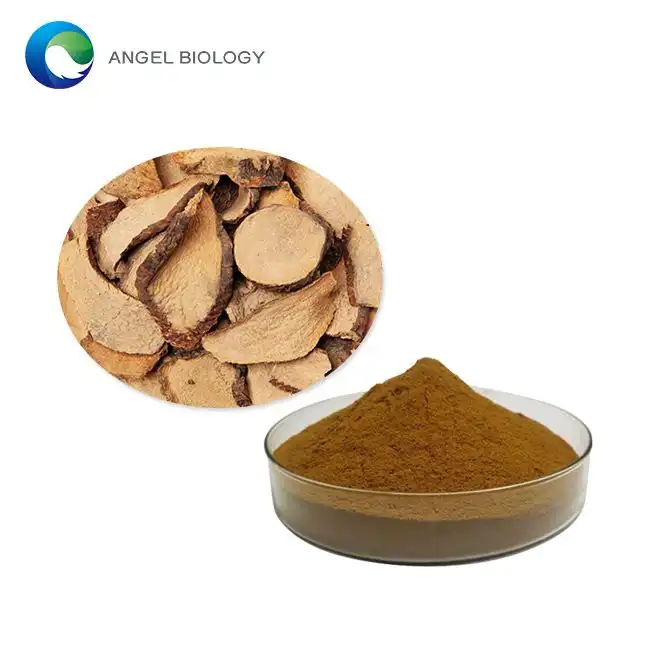
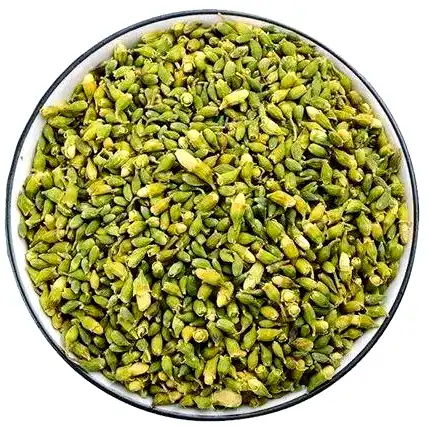
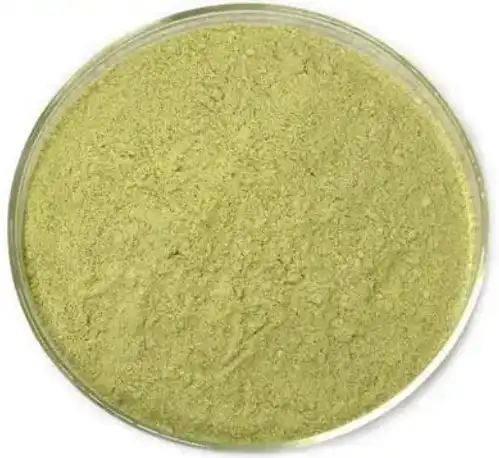
Rutin Powder is a glycoside where quercetin binds to rutinose. Mostly from Sophora japonica L. flower buds—though buckwheat and citrus sources also give commercial supplies—this chemical is known as "Vitamin P" by formulators for preserving capillary integrity. Solvent-based extraction and crystallization produce a yellow to greenish-yellow powder with a melting point between 176°C and 178°C.
Purification quality separates premium material from commodities. Quercetin (the aglycone form) is strictly controlled to below 4.0% in HPLC experiments, which indicates purity values of 95.0% to 101.5% anhydrous. Quercetin, while helpful, has distinct solubility and stability properties that might complicate formulation.
Extraction Technologies That Preserve Bioactivity
Modern producers isolate Rutin Powder while keeping its glycosidic structure using hydroalcoholic extraction and column chromatography. Rutinose, a glucose-rhamnose mixture, considerably affects the compound's water solubility, which is 0.125 g/L at ambient temperature. This restricted water solubility requires careful formulation yet allows regulated release profiles in supplement matrices.
Angelbio has optimized extraction techniques to preserve the compound's UV absorption spectra, with peaks at 257 and 358 nm. These spectral signals help verify quality during inbound inspection and indicate the compound's antioxidant capacity through conjugated double bond structures that intercept free radicals.
Health Benefits and Applications of Rutin Powder
Vascular Support Mechanisms for Nutraceutical Formulations
Its capillary permeability and fragility reduction properties make the chemical famous in vascular health. Rutin Powder modulates endothelial cell activity via modifying nitric oxide generation and suppressing matrix metalloproteinases that destroy vascular connective tissue. Nutraceuticals that treat venous insufficiency use Rutin Powder with horse chestnut extract or diosmin to build vascular support matrices.
Formulation managers should notice that particle size distribution directly affects Rutin Powder's effectiveness in this application. Material flowing through 80 mesh (180 microns) guarantees uniform pill dispersion and digestive fluid dissolving rates, affecting bioavailability and therapeutic results.
Cosmetic Applications Addressing Skin Aging Pathways
Anti-aging serums and photoprotection solutions benefit from Rutin Powder's antioxidant and UV-absorption characteristics. The chemical absorbs UVA and UVB rays and neutralizes UV-generated reactive oxygen species. It treats acute photodamage and accumulated oxidative stress that increases collagen breakdown.
Maintaining stability in aqueous emulsions is difficult. Due to its photosensitivity and mild lipophilicity, Rutin Powder must be microencapsulated or added to liposomes. Our formulation scientists found the best stability between pH 5.5 and 7.0, with light-resistant packaging prolonging shelf life to 24-36 months.
Dosage, Safety, and Side Effects: What B2B Buyers Must Know
Evidence-Based Dosage Parameters Across Applications
In vascular support dietary supplements, 500 mg to 2,000 mg of Rutin Powder daily is recommended by clinical literature. Topical cosmetic formulations use 0.5%–3.0% concentrations, with specific therapy treatments using greater percentages. These ranges represent research-based effectiveness thresholds and solubility and sensory constraints.
Procurement teams should check suppliers' COAs for purity and microbiological characteristics. To maintain stability during product shelf life, total plate count should be below 1,000 CFU/g and yeast and mold counts under 100 CFU/g.
Safety Profile and Regulatory Considerations
Multiple toxicological tests show no severe side effects at acceptable levels for Rutin Powder. The substance is on the GRAS lists in appropriate jurisdictions, enabling food and supplement regulatory procedures. Comprehensive documentation, including ICP-MS analysis for heavy metals (Lead <3 ppm, Arsenic <1 ppm, Cadmium <1 ppm, Mercury <0.1 ppm), is necessary for worldwide market access.
Pesticide residue screening is crucial when buying Rutin Powder. GC-MS and LC-MS multi-residue analysis should verify EU (EC 396/2005) and FDA tolerance standards. Angelbio tests batches against over 500 pesticide chemicals to guarantee material passes the strictest international requirements.
Market Comparison and Supplier Selection Guide for Rutin Powder
Distinguishing Organic Certification from Conventional Sources
Organic versus conventional sourcing affects cost and market position. Certified organic Rutin Powder costs 30–50% more than conventional material, but allows access to the increasing clean-label market. The cultivation, extraction, and processing of Sophora japonica must be verified for organic certification.
Buyers should know that organic certification does not ensure purity or efficacy. High-quality conventional products that fulfill pharmacopoeial standards (EP, USP-NF, DAB10) may perform better at a lower cost. Target market positioning and customer expectations should guide the selection, not quality connection.
Comparative Analysis Against Related Bioflavonoids
Several considerations should be considered when comparing Rutin Powder to quercetin, hesperidin, or diosmin. Quercetin has better intrinsic antioxidant activity but poor absorption and stability. Hesperidin has superior water solubility and vascular advantages over Rutin Powder; however, it lacks UV-absorption for cosmetic use. While clinically proven for venous insufficiency, diosmin costs more and has stricter regulatory classifications in some regions.
The cost-benefit analysis should include formulation complexity, stability, and regulatory processes as well as raw material costs. Rutin Powder's cheap cost, acceptable regulatory status, and formulation diversity make it the top option for multi-functional applications.
How to Procure Quality Rutin Powder for Your Business
Essential Quality Verification Protocols
Incoming inspection should prioritize HPLC assay verification of Rutin Powder against your approval requirements, usually 95-101.5% anhydrous. LOD testing shows trihydrate forms are properly hydrated around 5.5%–9.0%. Deviations from these metrics indicate storage or processing concerns that might impact stability.
Physical properties, including bulk density (0.4-0.6 g/mL) and tapped density, affect downstream processing. Poor flow material may require extra processing aids in tablet compression or capsule filling, affecting production productivity and cost.
Packaging and Storage Requirements for Stability
Rutin Powder's photosensitivity and hygroscopicity require careful packaging. Double-polyethylene bags in fiber drums safeguard bulk shipments, while aluminum foil laminate inner bags are best for long-term storage. To avoid caking and oxidative deterioration, store below 25°C with relative humidity below 65%.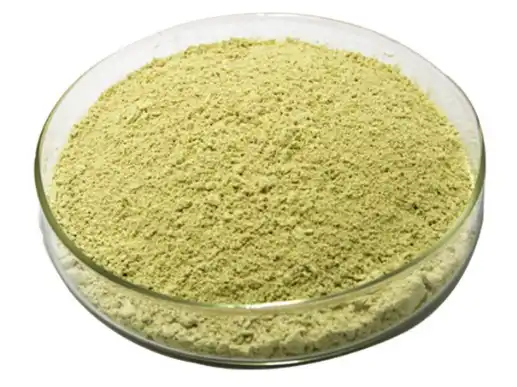
Angelbio uses desiccant packets and nitrogen flushing for long-distance shipments, especially those between climatic zones. These techniques maintain material quality during transit, ensuring your plant receives product that meets supplier qualification criteria.
Building Strategic Supplier Partnerships
Transactional purchase limits your supplier chain influence and formulation development technical support. Strategic connections with skilled manufacturers provide collaborative problem-solving, unique processing standards, and priority allocation during constrained supply.
Building relationships improves communication, speeds up quality investigations, and provides technical expertise that accelerates product development. Our Angelbio team sees client relationships as long-term partnerships where your success drives our quality processes and customer service development.
Conclusion
Scientific knowledge and business acumen are needed to navigate the Rutin Powder purchase. The compound's effectiveness in vascular support, antioxidant protection, and cosmetics makes it a flexible element for numerous product categories. Success depends on collaborating with suppliers that exhibit technical competency and operational reliability, including analytical rigor, documentation completeness, and prompt customer service, beyond competitive cost. These quality criteria and procurement procedures position your firm to use this strong bioflavonoid while avoiding supply chain risks and formulation issues.
FAQ
1. What distinguishes pharmaceutical-grade from food-grade Rutin Powder?
Pharmaceutical-grade Rutin Powder must fulfill EP, USP-NF monograph standards for reduced impurity limits, heavy metal testing, and approved analytical procedures. Food-grade materials fulfill dietary safety standards but may not meet pharmaceutical product registration standards.
2. Can Rutin Powder effectively integrate into oil-based cosmetic formulations?
The compound's low lipid solubility complicates oil-based systems. Solubilizers or inclusion into the emulsions' aqueous phase are needed for integration. Microencapsulation helps anhydrous materials disperse while preventing oxidation.
3. How should bulk cargo quality be checked upon receipt?
Priority testing comprises HPLC assay confirmation, visual inspection for degradation-indicating discoloration or caking, and drying loss to check moisture content. Organoleptic (color, odor) screening precedes thorough testing. Keep representative samples from each lot for traceability.
4. What factors most significantly impact Rutin Powder pricing?
Pricing depends on purity, organic certification, botanical source, and order quantities. Market variables, including Sophora japonica harvest yields and extraction solvent regulations, affect costs. Long-term supply agreements usually price better than spot purchases.
Partner with Angelbio for Premium Rutin Powder Supply
Angelbio offers top grade Rutin Powder made under strict quality standards. Our facility has 18 years of botanical extraction experience and extensive analytical capabilities to ensure every batch fulfills worldwide pharmacopoeial requirements at competitive bulk pricing. From formulation guidance to regulatory documentation, Angel Holding Group and Xi'an Jiaotong University's Institute of Life and Health Research assist our Rutin Powder manufacturing. For certificates of analysis, stability data, or special specifications customized to your application, contact angel@angelbiology.com. We want to be your trusted natural ingredient sourcing partner.
References
1. Gullón, B., Lú-Chau, T.A., Moreira, M.T., Lema, J.M., & Eibes, G. (2017). Rutin: A review on extraction, identification, and purification methods, biological activities, and approaches to enhance its bioavailability. Trends in Food Science & Technology, 67, 220-235.
2. Ganeshpurkar, A., & Saluja, A.K. (2017). The pharmacological potential of rutin. Saudi Pharmaceutical Journal, 25(2), 149-164.
3. Sharma, S., Ali, A., Ali, J., Sahni, J.K., & Baboota, S. (2013). Rutin: therapeutic potential and recent advances in drug delivery. Expert Opinion on Investigational Drugs, 22(8), 1063-1079.
4. Enogieru, A.B., Haylett, W., Hiss, D.C., Bardien, S., & Ekpo, O.E. (2018). Rutin as a potent antioxidant: Implications for neurodegenerative disorders. Oxidative Medicine and Cellular Longevity, 2018, Article ID 6241017.
5. Chua, L.S. (2013). A review on plant-based rutin extraction methods and its pharmacological activities. Journal of Ethnopharmacology, 150(3), 805-817.
6. Ghorbani, A. (2017). Mechanisms of antidiabetic effects of flavonoid rutin. Biomedicine & Pharmacotherapy, 96, 305-312.