Does Acacia Extract Powder Support Gut Microbiome Health?
Acacia Extract Powder demonstrates substantial support for gut microbiome health through its rich soluble fiber content and complex polysaccharide structure. Derived from Acacia senegal and related species, this botanical ingredient acts as a potent prebiotic that selectively nourishes beneficial gut bacteria, particularly Bifidobacteria and Lactobacilli species. Clinical research indicates that regular consumption promotes microbial diversity, enhances short-chain fatty acid production, and strengthens gut barrier function. The soluble fiber fermentation process creates an optimal intestinal environment that supports digestive wellness and metabolic balance, making it a valuable functional ingredient for health-focused product formulations.
Understanding Acacia Extract Powder and Gut Microbiome Health
Botanical Origins and Extraction Process
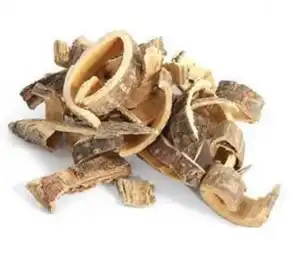
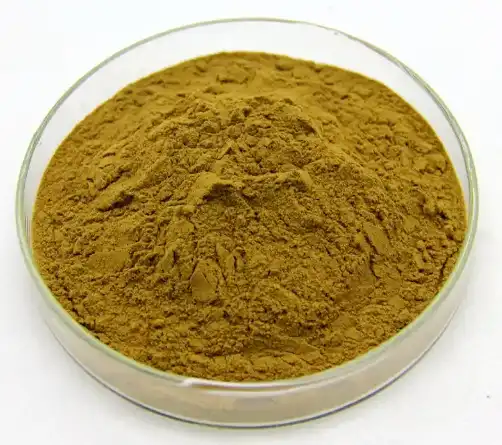
Acacia fiber comes from the sap of Acacia senegal and Acacia seyal trees, which are native to sub-Saharan Africa. Obtaining the natural gum is the first step in the extraction process. It is then carefully dried and ground into a fine, smooth powder. This plant extract, unlike synthetic fibers, keeps its natural polysaccharide matrix, which is made up of arabinogalactan chains that are hard for the upper digestive tract to break down. Standardized extraction ensures that the chemical profiles are always the same, and high-purity grades have 85–95% soluble fiber.
Nutritional Composition and Prebiotic Properties
The unique carbohydrate structure of Acacia fiber is what makes it healthy. The good microorganisms that live in the colon use these complex carbohydrates as food targets. The arabinogalactan part has great prebiotic action, which means it goes through the stomach and small intestine without getting broken down and ends up in the large intestine, where fermentation takes place. Premium Acacia ingredients are different from regular dietary fibers because of this selective feeding mechanism. The neutral pH and low viscosity make it easy to mix into different formulations without changing the way they taste or smell.
The Gut Microbiome's Critical Functions
The intestinal microbiome is made up of trillions of microorganisms that affect metabolism, digestion, and the absorption of nutrients. Keeping the range and balance of microbes in the body has a direct effect on general health. If this delicate ecosystem is upset by not getting enough nutrients, stress, or things in the surroundings, it can hurt the gut system and overall health. Adding prebiotic fibers like Acacia gum helps restore microbial balance by giving specific nutrients to beneficial species while making the environment unsuitable for bacteria that could be harmful.
Market Demand for Functional Gut Health Ingredients
People's knowledge about gut health has grown a lot, which has increased the demand for useful ingredients that have been proven to work by science. More and more, B2B procurement teams are looking for botanical extracts that have been shown to work, are compliant with regulations, and can be used in a variety of ways. The trend toward "clean labels" has sped up interest in naturally derived prebiotics that meet standards for openness. Because it meets these requirements and doesn't have the stability issues that other plant-based ingredients do, Acacia Extract Powder is a good choice for supplement makers, functional food developers, and nutraceutical brands.
Health Benefits of Acacia Extract Powder for Gut and Beyond
Digestive Regularity and Bowel Function
There are several ways that soluble fiber from Acacia sources helps your bowel movements work better. The fermentation process adds bulk and wetness to the stool, making it easier to go to the toilet without causing gas or bloating, which are typical problems with insoluble fiber sources. Clinical studies show that daily drinking helps keep the intestines comfortable and supports regular transit time. Because it has a gentle effect, Acacia fiber is great for people who are sensitive to it and for long-term supplementation plans in commercial products.
Immune System Modulation
About 70% of the body's immune system is made up of lymphoid tissue that is found in the gut. This means that there is a direct link between the health of the microbiome and the immune system. Short-chain fatty acids, like butyrate, acetate, and propionate, are made when Acacia fiber is fermented. These acids give colonocytes energy and change the immune system. These molecules affect the growth of regulatory T-cells and the production of cytokines, which help keep immune reactions in check. When making multifunctional supplements, people who make products with immune health claims can use this mechanistic pathway.
Anti-Inflammatory Effects and Gut Barrier Integrity
Chronic low-grade inflammation is a big problem in today's health care system. The results of the fermentation of Acacia polysaccharides help keep the tight junctions between epithelial cells intact and reduce inflammation in the intestine. This barrier function stops the unwanted movement of bacterial parts and food antigens, which lowers the number of systemic inflammatory triggers. The cascade effect goes beyond the digestive tract and may have an impact on metabolic markers and overall inflammatory status. This is a strong value proposition for positioning functional ingredients.
Comparative Advantages Over Other Fiber Sources
Compared to psyllium husk, inulin, or cellulose-based fibers, Acacia Extract Powder has clear benefits when it comes to preparation. The low viscosity profile lets you give higher doses without changing the texture, and the high tolerance profile keeps stomach pain to a minimum during the adaptation period. Lab tests show that bifidogenic effects are better than those of many other prebiotics. The neutral taste and smell properties get rid of the need for complex flavoring systems. This makes formulations simpler and lowers costs for companies that want to simplify their ingredient decks.
Comparing Acacia Extract Powder with Other Similar Products
Acacia Fiber versus Gum Arabic
The language used in an industry can sometimes make it hard to tell what a product is. Gum Arabic is the raw, unprocessed form of Acacia fluid, which has been used for a long time as a lubricant and stabilizer in food. Standardized Acacia Extract Powder goes through more cleaning and standardizing to get rid of tannins and other substances that get in the way of its prebiotic activity. High-performance liquid chromatography analysis shows that premium extracts have higher amounts of polysaccharide fractions that are good for you. When comparing seller offers, B2B buyers should say how much standardization they want.
Organic Certification and Purity Considerations
The fight over organic vs. standard has big effects on how brands are positioned and how well they follow the rules. Certified organic Acacia powder meets strict farming rules that don't allow manmade fertilizers and pesticides to be used during planting and gathering. This certification is good for premium marketing strategies and certain market groups that value stories about sustainability. Quality assurance is based on more than just the fact that something is certified. It also depends on things like heavy metal content, microbial limits, and pesticide residue testing. The rules for buying things should include acceptable limits that are in line with the needs of the final market, whether it's in North America, Europe, or Asia.
Performance Benchmarking with Scientific Validation
A third-party clinical study is very important for confirming choices about which ingredients to use. Studies that have been published on Acacia fiber supplementation usually use daily doses of 10 to 30 grams and show changes in microbial communities and fermentation markers that can be measured. These dosing ranges are based on facts and help with product creation and marketing claims. Comparative studies that put Acacia up against other prebiotics give us useful information about how they are different. People who work in procurement should ask for copies of important research papers and certificates of analysis that show that active component profiles are consistent from batch to batch.
Practical Guidance on Using Acacia Extract Powder in B2B Applications
Recommended Dosage Parameters
According to clinical research, a daily dose of 10 to 15 grams is recommended for maintaining a healthy microbiome. For medicinal purposes, up to 30 grams may be used, split up into several doses. Product developers have to find a balance between meeting effectiveness goals and taking taste and cost into account. There are different ways to dose single-serve stick packs, capsules, and ready-to-mix beverage powders. Gradual introduction protocols, which start with 5 grams a day and slowly increase over 7–10 days, improve consumer tolerance and adherence rates, which are important things to think about when making user experience strategies.
Integration into Formulation Matrices
Premium Acacia Extract Powder can be used in a wide range of supplement categories because it is very stable and easy to dissolve. The powder doesn't clump when mixed with hot or cold liquids, which makes it perfect for functional drink systems, protein shake recipes, and meal replacement products. Because it is heat-stable, it can be added to baked goods and protein bars without losing its prebiotic properties. Acacia is different from stiffening fibers because it has little effect on viscosity, so desirable texture profiles are kept. Formulators should test how well one active ingredient works with other active ingredients to make sure they don't work against each other.
Quality Assurance and Testing Protocols
Strong quality control methods keep customers safe and protect the brand's image. Suppliers who follow Good Manufacturing Practices test at several different times during production. Organoleptic testing and thin-layer chromatography fingerprinting are used to confirm the botanical identity of incoming raw materials. In-process controls keep an eye on the bulk density, particle size distribution, and moisture content to make sure that the manufacturing process is always the same. Testing the finished product compares the levels of microbial contamination, heavy metal ratios, and chemical residue profiles to standards that have already been set. Each batch shipment should come with a Certificate of Analysis that lists these factors. This way, the products can be tracked and ensure that they meet legal requirements.
Regulatory Compliance Across Global Markets
To get around in the world of regulations, you need to pay close attention to how the ingredients are classified. In the United States, Acacia Extract Powder is generally recognized as safe (GRAS), which means it can be used in a lot of different foods and products. It is sold in European markets under the name E414 and can be used as a food supplement. Asian markets, especially China and Japan, have strict rules about how imports can be registered and how pure they must be. The buying team should make sure that the supplier's paperwork follows the rules of the final market. This includes making sure that the food has the right safety labels, is non-GMO, and has halal or kosher certifications if those are important to the consumers they want to reach.
Procuring Acacia Extract Powder: What B2B Buyers Need to Know
Evaluating Supplier Credentials
Finding a trustworthy ingredient partner starts with a thorough evaluation of the supplier. Manufacturing facility certifications like ISO 9001 quality management systems, HACCP food safety protocols, and industry-specific standards like NSF International or Informed Choice for sports nutrition applications are some of the most important things that are looked at. Site audit records from outside organizations give a neutral check of the production and quality processes. Financial security signs and years of operating history can help you figure out how reliable a supply chain is. Long-term partnerships work best when suppliers show they have technical knowledge, are responsive to communication, and are dedicated to always getting better.
Sample Evaluation and Technical Support
As part of your due research, you should ask for representative samples before agreeing to bulk sales. When you try a sample, you should look at how it tastes, how well it dissolves in the formulation matrix you want to use, and how stable it is in small amounts under the right store conditions. Progressive suppliers give detailed technical data sheets that list the particle size range, pH range, ash content, and concentrations of active ingredients. Having access to regulatory support documents like allergen statements, country-of-origin certificates, and non-GMO papers speeds up the approval process within the company. Working together, technical teams can help with things like formulating problems and finding the best doses, which adds value beyond just providing ingredients.
Pricing Structures and Supply Chain Logistics
To understand how prices change over time, you need to look at more than just unit cost. When buyers commit to buying in bulk, they can usually get better prices, but they have to weigh the savings in costs against the costs of keeping stockpiles and the length of time the goods will last. Lead times depend on production schedules and the logistics of shipping goods around the world. Experienced suppliers keep extra stock on hand to handle urgent orders. Total landed cost is based on payment terms, minimum order amounts, and freight plans. Transparent communication about crop availability, seasonal changes, and possible supply constraints helps with planning ahead and avoids problems with formulation.
Conclusion
There is strong proof that Acacia Extract Powder is good for the health of the gut bacteria. This means that new products in many categories could be made using this ingredient. This naturally occurring prebiotic nutrient has benefits that have been proven by science and meets the needs of clean labels and formulations. Acacia fiber is a unique combination of effectiveness, tolerability, and versatility that can help procurement professionals set their products apart. Successfully integrating ingredients and doing well in the market are based on strategic relationships with suppliers that are based on quality assurance, legal knowledge, and technical cooperation.
FAQ
1. What is the typical timeframe for observing microbiome improvements?
Different people react differently depending on their starting bacteria and the dose they are taking. Within two to four weeks of daily consumption, research studies usually find big changes in the populations of good bacteria. Within 7 to 10 days, markers for the production of short-chain fatty acids may show changes. Improvements in digestive regularity often happen more quickly, sometimes in the first week. For consumers to have realistic expectations, these time frames need to be included in materials that teach them about the product.
2. Can acacia fiber be safely combined with probiotic supplements?
When prebiotic Acacia fiber is mixed with probiotic organisms, they work together to form effects known as "synbiotics." The fiber feeds both added probiotic strains and naturally occurring good bacteria. Clinical research backs up this combination approach, showing that probiotics live longer and colonize more effectively when paired with the right prebiotic substrates. To make sure that the probiotics stay alive during the shelf life, formulation teams should test for stability to make sure that they are compatible. This relationship makes it easier for a product to stand out in places with lots of competition.
Partner with Angelbio for Premium Acacia Extract Powder Supply
Angelbio stands as a reliable company that makes Acacia Extract Powder. They have 18 years of experience in independent research and development and have strict quality control systems in place. Our relationship with Angel Holding Group and the Institute of Life and Health Research at Xi'an Jiaotong University guarantees the use of cutting-edge technology for extracting plants and strict testing standards. We offer high-quality Acacia fiber that is standardized to meet international standards. It comes with all the necessary paperwork to back it up, such as organic licenses, kosher proof, and halal compliance. Our technical team can help you with formulation, create unique specifications, and test samples to speed up the time it takes to make your product. You can email us at angel@angelbiology.com to talk about your special needs, ask for proof of analysis, or set up shipping of samples. We offer a range of open bulk buying choices, affordable prices, and dependable global services that are tailored to your business's needs.
References
1. Calame W., Weseler A.R., Viebke C., Flynn C., Siemensma A.D. (2008). Gum arabic establishes prebiotic functionality in healthy human volunteers in a dose-dependent manner. British Journal of Nutrition, 100(6), 1269-1275.
2. Cherbut C., Michel C., Raison V., Kravtchenko T., Severine M. (2003). Acacia gum is a bifidogenic dietary fibre with high digestive tolerance in healthy humans. Microbial Ecology in Health and Disease, 15(1), 43-50.
3. Slavin J. (2013). Fiber and prebiotics: mechanisms and health benefits. Nutrients, 5(4), 1417-1435.
4. Watzl B., Girrbach S., Roller M. (2005). Inulin, oligofructose, and immunomodulation. British Journal of Nutrition, 93(S1), S49-S55.
5. Roberfroid M., Gibson G.R., Hoyles L., McCartney A.L., Rastall R., Rowland I. (2010). Prebiotic effects: metabolic and health benefits. British Journal of Nutrition, 104(S2), S1-S63.
6. Phillips G.O., Williams P.A. (2009). Handbook of Hydrocolloids, Second Edition. Woodhead Publishing in Food Science, Technology and Nutrition, Chapter 10: Acacia Gum.