



How to Choose High-Quality Apigenin Powder
To choose high-quality apigenin powder, start with verified ingredient identity and a batch-specific Certificate of Analysis (COA) that reports the HPLC assay, moisture content, and relevant contaminant results. Next, match the purity grade to your application. A 98% grade may suit many formulations, while a 99% grade can meet more specific requirements. Then evaluate solubility, particle size, and storage stability under your actual formulation conditions. Confirm the botanical or synthetic origin, review the extraction and purification processes, and assess the supplier's technical documents, certifications, and batch-control procedures. Finally, test samples before placing a bulk order. Below, we explain each step in practical terms.
What Is Apigenin Powder?
A Flavone From Chamomile, Parsley, and Celery
Apigenin powder contains apigenin, a naturally occurring flavone also known as 4',5,7-trihydroxyflavone. Its CAS number is 520-36-5. This compound is found in various plants, including chamomile (Matricaria chamomilla), parsley (Petroselinum crispum), and celery (Apium graveolens). Since its concentration varies among botanical sources, manufacturers may use extraction, separation, and purification processes to obtain standardized apigenin ingredients. The final powder can then be evaluated through HPLC analysis to determine its apigenin content.
It is important to distinguish isolated apigenin powder from chamomile extract. Chamomile extract contains multiple naturally occurring constituents, while purified apigenin is standardized around a specific flavone. Buyers should review the ingredient name, botanical source, and assay information carefully to ensure that the material matches their formulation requirements.

Chemical Identity and Physical Appearance
Apigenin has the molecular formula C15H10O5 and a molecular weight of approximately 270.24 g/mol. These details help buyers and quality-control teams verify the identity of the ingredient against the supplier's specification and analytical documentation.
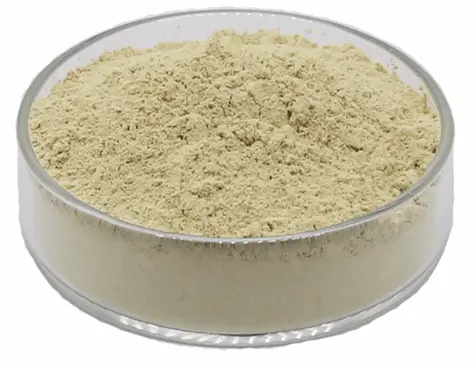
Purified apigenin powder is generally yellow to pale yellow, although its exact appearance may vary with the production and purification process. Appearance alone cannot confirm identity or purity, so buyers should use analytical results as the primary reference. Other useful physical specifications include odor, particle-size distribution, and mesh size. An 80-mesh grade may be suitable for some conventional powder applications, while micronized grades with a specified D90 can be considered when finer particles are needed. These parameters should be confirmed for each product grade rather than assumed to be universal.
Where Buyers Use It
Apigenin powder is used as an ingredient in cosmetic formulations, dietary supplement development, and botanical ingredient blends. It is also studied in scientific research because of its naturally occurring flavone structure and reported antioxidant activity in laboratory studies. However, research findings should not be interpreted as proof of specific effects in finished consumer products.
For cosmetic applications, formulators may evaluate its compatibility with the base, including color, dispersion, and physical stability. For dietary supplement applications, buyers should consider ingredient identity, purity, formulation compatibility, and the labeling requirements of the destination market. Food and cosmetic products are subject to different regulatory frameworks, so regulatory teams should review ingredient naming, source information, and proposed claims before commercialization. Choosing a supplier who can provide clear technical documentation from the beginning can make product development and purchasing more efficient.
The Core Criteria for Choosing High-Quality Apigenin Powder
Look Beyond the Purity Percentage
The purity percentage alone is not enough to establish ingredient quality. Teams purchasing apigenin powder should also review the material's identity, grade, physical properties, batch consistency, and analytical method. HPLC is commonly used to determine apigenin content. Buyers should ask for information about the analytical method, including its suitability, specificity, and validation status.
A 98% grade may meet the requirements of many applications, while a 99% grade may be preferred when tighter ingredient specifications are needed. However, a higher assay does not automatically mean better formulation performance. Consider the intended application, processing conditions, and target specifications before selecting a grade. It is also important to confirm whether the reported assay is calculated on an as-is or dry basis, since moisture content can affect the reported percentage.
Read the Batch-Specific COA
A useful COA should identify the material, batch number, test methods, test results, and applicable acceptance criteria. Depending on the product specification and intended market, it may also include moisture, residual solvents, heavy metals, and microbiological results.
Check that the report corresponds to the actual lot being offered and that its results are consistent with the product specification. A generic or repeated COA does not provide the same level of batch-specific information. Before purchasing, request the current lot's COA and compare it with the technical data sheet. Confirm that the document is dated, traceable to the relevant batch, and reviewed by the supplier's authorized personnel. For U.S. dietary supplement projects, buyers should also consider applicable ingredient identity and quality requirements. Request the Safety Data Sheet (SDS) and technical data sheet together with the COA to support internal review and product development.
Check Physical Properties for Your Process
Powder handling and processing can be affected by particle size, moisture content, appearance, and flow properties. Fine or cohesive powders may behave differently during feeding and blending, while a broad particle-size distribution can affect mixing uniformity in some formulations.
An 80-mesh grade may be suitable for certain powder-processing operations, but the ideal particle size depends on the equipment and finished dosage form. Micronized grades may offer increased surface area and can influence dissolution or dispersion behavior, although smaller particles do not guarantee improved performance in every formulation. Buyers should evaluate these characteristics through practical trials.
For cosmetic formulations, appearance and dispersion should also be assessed in the actual base. Color, odor, and compatibility may influence the final product's appearance and user experience. Include agreed particle-size, moisture, and appearance requirements in the purchase specification to improve consistency between deliveries.
Apigenin Powder Solubility, Stability, and Formulation Performance
Plan Around Poor Water Solubility
Apigenin has limited solubility in water, which can make direct incorporation into aqueous beverages, liquid supplements, and cosmetic formulations challenging. It may require a suitable formulation approach to achieve the desired dispersion and physical stability.
When evaluating suppliers, ask for test information that explains the conditions used, including temperature, pH, concentration, mixing time, and particle size. These details make solubility and dispersion claims easier to compare. A general statement such as "good solubility" is not sufficient without a defined test method and supporting data.
For capsules and tablets, the powder may be easier to handle in a dry blend, but compatibility with other ingredients and processing conditions should still be evaluated. Match the ingredient grade to the intended dosage form before comparing prices.
Water-Dispersible Formats and Carriers
Several formulation approaches may be considered when improving the dispersion of apigenin in liquid systems. These can include micronization, nanoemulsion systems, liposomes, phospholipid complexes, and cyclodextrin inclusion complexes. Each approach has different formulation requirements and may affect the ingredient's physical properties and processing behavior.
Buyers should review the complete ingredient composition and confirm the actual apigenin content in the finished preparation. A product containing 98% apigenin is not equivalent to a carrier-based preparation containing 10% apigenin. The ingredient name, assay, carrier information, and labeling should clearly reflect the product being purchased.
Before selecting a format, request a sample and evaluate it in the intended formulation. Check dispersion, appearance, compatibility, and stability over the planned storage period. A formulation approach that works in one beverage or cosmetic base may not perform the same way in another.
Storage Conditions and Packaging
Apigenin powder should be protected from excessive light, heat, and moisture during storage and transportation. Prolonged exposure to unsuitable conditions may affect its appearance or quality. Store the material in a tightly sealed container under the conditions stated in the supplier's product specification.
Packaging options may include sealed inner bags placed inside protective fiber drums, depending on order size and transportation requirements. For liquid formulations, pH and other environmental factors should be evaluated through product-specific stability testing rather than relying on a universal pH range.
Shelf life should be supported by the supplier's stability data and the conditions specified for the product. Do not assume that every apigenin grade has the same shelf life. Buyers should also confirm whether the packaging provides adequate protection during international shipping and warehouse storage. Discuss temperature, moisture protection, packaging integrity, and handling requirements with the supplier before placing an order.
Apigenin Powder Extraction Methods and Source Selection
Natural or Synthetic Origin
Apigenin powder can be obtained from botanical sources or produced through chemical synthesis. These materials may differ in production route, documentation, cost, and suitability for particular product positioning. Buyers should confirm the actual source rather than relying on a general product description.
For botanical ingredients, request information about the plant species, plant part, country or region of origin, raw material batch, and traceability records. For synthetically produced material, request relevant information about the manufacturing route and impurity profile. Where origin verification is important to the project, appropriate analytical approaches may be considered in consultation with the supplier and testing laboratory.
The choice between botanical and synthetic sources depends on the product's positioning, technical requirements, target-market regulations, and purchasing priorities. Make sure the ingredient's declared origin is consistent with the supporting documentation and proposed product labeling.
How the Extraction Process Shapes Quality
For botanical apigenin, raw material selection is an important starting point. The general production process may involve extraction, filtration, concentration, purification, crystallization, drying, milling, and packaging. Process conditions and raw material characteristics can influence the final powder's assay, color, residual solvent profile, and particle-size distribution.
Buyers should ask the supplier to identify the extraction solvents used and explain how residual solvents are evaluated. Where relevant to the product and destination market, residual solvent limits can be assessed with reference to applicable regulatory or technical guidance. The final specification should clearly state the test method and acceptance criteria.
Purification and drying conditions can also influence the ingredient's physical characteristics. Milling affects particle size, while raw material variations may influence the consistency of the final product. Ask how the supplier monitors key production parameters and evaluates batch-to-batch variation. Clear process information and supporting test records help buyers assess whether a material is suitable for long-term sourcing.
Isolated Apigenin Versus Chamomile Extract
Apigenin powder and chamomile extract serve different formulation purposes. A purified apigenin grade, such as a product specified at 98% or 99%, provides a defined apigenin content for applications that require a concentrated flavone ingredient. Chamomile extract, by contrast, contains a broader range of naturally occurring plant constituents, and its composition depends on the source material and extraction process.
These ingredients should not be treated as interchangeable. They also should not be confused with other flavonoids, such as luteolin. Before purchasing, determine whether your project requires isolated apigenin, a standardized chamomile extract, or a broader botanical profile. Once the ingredient type and specification are clear, supplier quotations can be compared more accurately.
Supplier Evaluation, Procurement Workflow, and Common Mistakes
Supplier Evaluation Checklist
A reliable apigenin powder supplier should support product claims with current, traceable documentation. Request the batch-specific COA, SDS, technical data sheet, and product specification. Depending on the intended application and destination market, also review relevant certificates, audit documents, and regulatory information. Check their validity, issuing organization, scope, and applicable product or facility coverage.
Commercial factors are equally important. Evaluate the minimum order quantity (MOQ), production capacity, lead time, export experience, Incoterms, packaging options, and technical support. The lowest quoted price does not always represent the lowest total purchasing cost, since freight, additional testing, delivery delays, and rejected batches can affect the final cost.
Angelbio has more than 18 years of experience in ingredient-related research and business development, according to company information. Buyers can contact the team to discuss product specifications, documentation, samples, and sourcing requirements. A clear supplier review helps ensure that the offered material and supporting information are aligned with the buyer's project needs.
A Practical Procurement Workflow
A practical procurement process can be organized into five steps. First, define the intended application and key requirements, including purity, origin, solubility or dispersion, particle size, packaging, and relevant documentation. Second, request representative samples and the corresponding technical documents. Third, evaluate the samples in your actual formulation or processing conditions rather than relying only on appearance or specification sheets.
Fourth, for larger or more technically demanding projects, review the supplier's procedures for handling specification changes, batch traceability, and customer complaints. Where appropriate, arrange additional independent testing. Fifth, confirm the final price, MOQ, packaging, lead time, Incoterms, required documents, and batch acceptance criteria before placing the order. Agreeing on these details in advance can reduce communication issues and help avoid unnecessary delays during repeat purchasing.
Common Mistakes and a Simple Decision Matrix
Common purchasing mistakes include selecting a supplier based only on a 99% purity claim, overlooking the ingredient's poor water solubility, and assuming that isolated apigenin is equivalent to chamomile extract. Another frequent mistake is placing a bulk order without first evaluating a representative sample.
A simple decision matrix can help compare suppliers across four areas: technical, quality, commercial, and strategic fit. Technical fit covers ingredient identity, assay method, particle size, solubility or dispersion data, and formulation compatibility. Quality fit includes batch-specific documentation, contaminant testing, traceability, and change-control procedures. Commercial fit considers MOQ, total landed cost, packaging, and lead time. Strategic fit includes communication, technical support, supply continuity, and the ability to meet future project requirements.
Assign weights according to the importance of each factor to your project. This approach gives buyers a more balanced basis for supplier selection than unit price alone.
Conclusion
Choosing high-quality apigenin powder requires more than comparing purity percentages. Buyers should verify ingredient identity, review HPLC results, and request a batch-specific COA to understand exactly what they are purchasing. A 98% grade and a 99% grade may serve different requirements, so the appropriate choice depends on the intended application and specification.
Because apigenin has limited water solubility, buyers should evaluate its compatibility with the intended cosmetic, beverage, or supplement formulation. Botanical origin, extraction and purification processes, particle size, and storage conditions can also influence the final ingredient's characteristics. Isolated apigenin and chamomile extract should be assessed as separate materials with different compositions and specifications.
A structured supplier checklist, sample evaluation, and weighted decision matrix can help purchasing teams compare technical suitability, documentation, commercial terms, and supply reliability. By focusing on verified information and application-specific testing, buyers can make more informed sourcing decisions and reduce avoidable formulation and procurement issues.
FAQ
1. What is the molecular formula of apigenin?
Apigenin has the CAS number 520-36-5 and the molecular formula C15H10O5. Its molecular weight is approximately 270.24 g/mol.
2. Is 99% purity always better than 98%?
Not necessarily. A 98% grade may meet the requirements of many applications, while a 99% grade may be preferred when a tighter assay specification is needed. Buyers should compare the analytical method, COA results, batch consistency, and formulation requirements rather than relying on the purity percentage alone.
3. Why does apigenin powder dissolve poorly in water?
Apigenin has limited water solubility because of its chemical properties. For liquid formulations, buyers may evaluate approaches such as micronization, suitable carriers, cyclodextrin complexes, nanoemulsion systems, or liposomal formulations. The appropriate method depends on the formulation and should be confirmed through practical testing.
4. Which documents should I request from a supplier?
Request a batch-specific COA, SDS, technical data sheet, product specification, and relevant certificates or supporting documents. Depending on the intended application, you may also need origin information, contaminant test results, and shipping documentation.
Source Apigenin Powder From Angelbio
According to company information, Angelbio is associated with Angel Holding Group and the Institute of Life and Health Research of Xi'an Jiaotong University. With more than 18 years of experience in ingredient-related research and business development, Angelbio supports buyers seeking apigenin powder for different application requirements.
To discuss your project, contact angel@angelbiology.com with your required quantity, target purity, intended application, preferred packaging, and destination market. Our team can help you review available specifications, COA documentation, quotations, and sample arrangements.
References
1. Salehi B. et al. The Therapeutic Potential of Apigenin. International Journal of Molecular Sciences, 2019.
2. Ding S.M. et al. Enhanced Bioavailability of Apigenin via Preparation of a Carbon Nanopowder Solid Dispersion. International Journal of Nanomedicine, 2014.
3. Hostetler G.L. et al. Flavones: Food Sources, Bioavailability, Metabolism, and Bioactivity. Advances in Nutrition, 2017.
4. International Council for Harmonisation. ICH Q3C(R8) Guideline for Residual Solvents, 2021.
5. International Council for Harmonisation. ICH Q2(R2) Validation of Analytical Procedures, 2023.