




Sourcing Panax Ginseng Root Extract: Supplier Audits and HPLC Requirements
Sourcing Panax ginseng extract powder starts with two essential checks: a supplier audit and reliable HPLC data. The audit helps buyers evaluate how a manufacturer manages raw material identity, extraction, drying, testing, and batch documentation. HPLC analysis helps confirm whether each batch meets the agreed ginsenoside specifications, including markers such as Rb1, Rg1, and Re. Buyers should request a batch-specific COA, the corresponding chromatogram, analytical method details, and a written product specification before approving a supplier. Together, these steps help supplement, food, beverage, and cosmetic manufacturers assess ingredient identity, composition, and batch consistency before placing an order.
Define the Panax Ginseng Extract Powder You Need
A clear product specification should be the starting point of every sourcing project. It determines which supplier qualifications, analytical tests, and commercial terms need to be reviewed.
Name the Exact Ingredient
Before requesting quotations, identify the exact type of ginseng ingredient you need. Ginseng products include Asian ginseng, American ginseng, Korean red ginseng, water extracts, ethanol extracts, and spray-dried extracts. These materials are not interchangeable.
Specify the botanical name, plant part, geographical origin, extraction method, physical form, and intended application. For example, whole-root powder and concentrated ginsenoside extract may have significantly different compositions and prices. A quotation should therefore be evaluated against the complete specification rather than price alone.


Pair Extract Ratio With Ginsenoside Content
An extraction ratio of 10:1 generally indicates that approximately ten parts of starting raw material were used to produce one part of extract, according to the supplier's calculation method. However, the ratio does not directly indicate the ginsenoside concentration of the finished powder.
For this reason, buyers should request both the extraction ratio and the measured ginsenoside content. Confirm the total ginsenoside specification, individual marker levels where required, and whether results are reported on an as-is or dry-weight basis.
The acceptable range for each marker should be agreed upon before purchasing. This gives the supplier and buyer a clear reference for evaluating batch conformity and determining whether a result meets the agreed specification.
Match the Specification to Your Application
The required specifications depend on the intended product format. Capsules and tablets may require particular moisture, particle-size, flowability, and compressibility characteristics. Beverage applications need additional evaluation of dispersibility, taste, color, and compatibility with the formulation and processing conditions. Cosmetic formulations may require attention to color stability, solubility, and compatibility with other ingredients.
Buyers should also define requirements for packaging, shelf life, microbiological limits, and heavy metal testing according to the target market and intended use. If non-GMO, Halal, Kosher, organic, or low-carrier options are required, these details should be communicated at the quotation stage.
Providing the formulation requirements and target ginsenoside profile allows the supplier to recommend a more suitable specification.
Run a Supplier Audit That Tests Real Capability
A supplier audit should verify whether the company can support its product claims with production information, analytical records, and traceable documentation.
Verify Who Actually Makes the Powder
The first question is whether the company manufactures the extract itself or operates primarily as a trading supplier. Determine which production stages are completed in-house and which are outsourced, including extraction, concentration, drying, blending, and packaging.
Review the available production equipment, processing capabilities, laboratory resources, and production capacity. A manufacturer with accessible technical personnel and clear production records can usually provide more direct answers to specification and process questions.
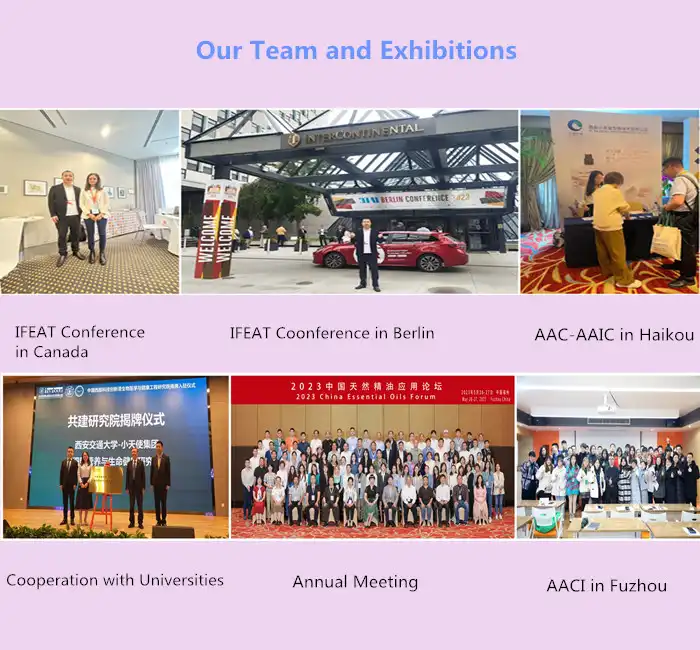
Angelbio operates within Angel Holding Group and works with the Institute of Life and Health Research at Xi'an Jiaotong University. The company has accumulated experience in ingredient development, production, and technical evaluation. Buyers can discuss product specifications and documentation requirements with the team before starting a sourcing project.
Review Quality Controls and Batch Records
For U.S. dietary supplement projects, buyers should understand the applicable requirements under 21 CFR Part 111. Ingredient identity, production records, testing, and documentation should be reviewed as part of the supplier qualification process.
During an audit, examine raw material inspection records, equipment cleaning logs, cross-contamination controls, production instructions, and completed batch records from recent production lots. Ask how the manufacturer handles deviations, nonconforming materials, customer complaints, and corrective actions.
Trace the production history of Panax ginseng extract powder from the incoming raw root through extraction, drying, testing, and final packaging. Consistent and complete records provide useful evidence that the supplier follows defined procedures and can support batch-to-batch evaluation.
Trace the Raw Root to Its Source
Botanical identity and raw material origin are essential parts of ginseng sourcing. Ask the supplier to identify the species, geographical growing area, plant part, harvest information, and raw material sourcing arrangements.
Review how incoming roots are identified, inspected, assigned lot numbers, and connected to production batches. The supplier should be able to demonstrate how raw material records link to the corresponding finished-product batches.
Request representative samples and supporting documentation for new raw material sources when appropriate. For repeat purchases, confirm that the supplied product continues to meet the agreed identity and composition requirements. This helps buyers maintain consistent specifications across different orders.
HPLC Requirements for Ginsenoside Testing
HPLC is an important analytical tool for evaluating the ginsenoside profile of Panax ginseng extract powder. However, the reliability of the result depends on the analytical method, reference standards, sample preparation, and interpretation of the data.
What the Chromatogram Should Show
Ginsenosides are triterpenoid saponins and are commonly used as chemical markers for Panax ginseng. Frequently analyzed compounds include Rb1, Rb2, Rc, Rd, Re, Rg1, and Rf.
HPLC or UPLC methods can separate selected ginsenosides and compare their retention times and detector responses with appropriate reference standards. UV detection near 203 nm is commonly used because many ginsenosides have relatively weak UV absorption. Other laboratories may use evaporative light-scattering or charged aerosol detection, depending on the analytical method.
Ask for the actual batch chromatogram rather than relying only on a total ginsenoside value printed on the COA. Review the identified peaks, baseline quality, retention-time consistency, and whether the reported compounds correspond to the agreed specification. A chromatogram provides additional information for evaluating the analytical result, although it should be interpreted together with the method and reference standards.
Method Details to Request
A useful HPLC report should identify the analytical conditions and calculation procedure. Request information about the column, mobile phase, gradient program, flow rate, detection wavelength, sample preparation, filtration, reference standards, and calculation basis.
Different laboratories may obtain different results when they use different extraction procedures, chromatographic conditions, or calculation methods. Buyers should therefore agree on a suitable analytical method for supplier qualification and routine batch evaluation whenever possible.
Reference standards should have documented identities, sources, and purity information. For initial qualification, buyers may also arrange independent testing of the same sample to compare results. Suppliers should be able to explain how the reported ginsenoside values were obtained and provide supporting analytical information when requested.
Validation Parameters From ICH Q2(R1)
ICH Q2(R1) describes important validation characteristics for analytical procedures, including specificity, linearity, range, accuracy, precision, detection limits, quantitation limits, and robustness.
For ginsenoside analysis, specificity is important because some compounds may have similar chromatographic behavior or elute close to one another. Buyers should review the relevant method validation information and understand how the laboratory demonstrates separation and reliable quantification of the target compounds.
Ask for the available validation or verification records, including relevant system suitability criteria, repeatability data, and reference-standard information. These details help technical and quality teams assess whether the analytical method is appropriate for the intended testing purpose.
Agreeing on analytical requirements in advance also makes batch acceptance and rejection decisions more transparent.
COA, Purity, and Compliance Documents
Analytical results and supporting documentation should be reviewed together. A complete supplier file helps buyers assess product identity, composition, and suitability for their intended market.
What a Batch-Specific COA Contains
Each production batch should have an identifiable COA containing the product name, batch number, manufacturing date, retest or expiry date, appearance, moisture content, ginsenoside results, microbiological results, heavy metal data, and residual solvent information where applicable.
Each reported result should be linked to an analytical method or specification reference. Buyers should also confirm that the COA corresponds to the actual batch being purchased rather than a generic sample report.
For U.S. dietary supplement projects, 21 CFR 111.75 includes requirements relevant to confirming the identity of dietary supplement components. Buyers should evaluate the supplier's supporting records and determine whether additional verification is needed for their own ingredient qualification procedures.
Review the first commercial batches carefully and consider independent testing to compare the supplier's COA with laboratory results obtained using suitable methods.
Contaminant Limits for the U.S. Market
Testing requirements should reflect the product category, intended application, raw material characteristics, and destination-market regulations. Relevant parameters may include microbiological limits, pesticide residues, lead, arsenic, cadmium, mercury, and other potential contaminants.
U.S. buyers may refer to relevant USP general chapters, including USP <2232> for elemental contaminants in dietary supplements and USP <561> for articles of botanical origin, where applicable. The correct acceptance criteria should be determined according to the specific product and applicable requirements rather than applying one universal limit to every market.
Ask the supplier how frequently each parameter is tested, which laboratory performs the analysis, and which method is used. Food, dietary supplement, and cosmetic applications may have different testing and documentation needs. Define the required limits clearly in the product specification.
Certifications and Their Scope
Suppliers may provide documents relating to allergen management, gluten-free status, non-GMO claims, Halal, Kosher, HACCP, ISO-based systems, and other applicable certifications.
Do not rely on certificate titles alone. Check the certificate holder, issuing organization, facility address, covered activities, product scope, validity period, and verification details. The documentation should cover the relevant manufacturing or processing facility and, where applicable, Panax ginseng extract powder.
Also ask when the supplier's most recent independent assessment took place and whether any relevant findings remain unresolved. Request only the certificates and supporting records needed for your intended market and purchasing requirements, and keep them updated in the supplier qualification file.
Compare, Qualify, and Approve Suppliers
A fair supplier comparison requires consistent specifications, documented audit findings, and comparable analytical results.
Compare Technical Equivalence and Avoid Pitfalls
Ginsenoside concentrations in concentrated extracts are generally different from those in whole-root powders. Processing can also change the constituent profile. For example, Korean red ginseng is produced through steaming and drying, which can alter the composition compared with unprocessed white ginseng.
American ginseng is botanically identified as Panax quinquefolius, while Asian ginseng is Panax ginseng. These are different species and should not be treated as equivalent ingredients. Ginsenoside Rf is commonly associated with Panax ginseng and can be useful as part of a broader analytical fingerprint, but a single marker should not be used as the only basis for botanical identification.
HPLC results can help evaluate the ginsenoside profile, but they should be considered alongside botanical identity records and other appropriate identification methods. Be cautious of unclear extraction ratios, unusually high marker claims without supporting chromatograms, and generic COAs that do not identify the tested batch or method.
Even when analytical results meet specifications, conduct formulation trials to evaluate taste, color, flowability, dispersibility, and consistency in the intended product.
Qualify in Stages With a Weighted Scorecard
Begin with a formal RFQ that describes the target ginsenoside profile, intended application, estimated annual volume, destination market, packaging requirements, necessary certificates, MOQ, and expected delivery schedule.
After reviewing the supplier's specification and sample COA, examine the chromatogram and analytical method details. Request representative samples and evaluate the relevant parameters, including moisture, botanical identity, contaminants, microbiological quality, and ginsenoside content.
Compare suppliers using more than price alone. Evaluate production capability, documentation, analytical reliability, traceability, communication, and commercial flexibility. A practical supplier status system can include "approved," "conditionally approved," and "not approved."
Audit findings should be organized by risk and importance, with clear actions, responsible contacts, and target completion dates for unresolved issues. This staged approach makes supplier selection more transparent and manageable.
Understand Price, MOQ, and Packaging
The price of Panax ginseng extract powder depends on factors such as raw material origin, ginsenoside specification, extraction method, processing requirements, packaging, and order quantity.
Request separate quotations for samples, trial orders, bulk purchases, and long-term supply arrangements. MOQ may vary depending on the product specification, customized processing, packaging format, and private-label requirements.
Packaging should protect the powder from moisture and other environmental factors during storage and transportation. Confirm the packaging material, inner liner, sealing method, storage recommendations, and suitability for the intended shipping route.
For OEM and private-label projects, clarify responsibility for artwork, formulation information, stability data, regulatory documentation, and approval timelines before production begins.
Set a Quality Agreement and Monitor Performance
Once a supplier has been approved, document the agreed requirements in a specification agreement or quality agreement. Important details include testing responsibilities, COA format, sampling procedures, change notification, audit arrangements, handling of nonconforming products, complaint management, recall responsibilities, and confidentiality.
After approval, monitor documentation completeness, customer complaints, response times, corrective actions, and delivery performance. Reassess the supplier when significant changes occur in raw material sources, manufacturing processes, analytical laboratories, or production facilities.
A reliable supplier relationship is built on clear specifications, consistent communication, and practical technical support. Suppliers should also be able to discuss the ingredient's suitability for different formulation formats, including beverages, capsules, and tablets, without making unsupported performance promises.
Conclusion
Successful sourcing of Panax ginseng extract powder requires a combination of clear specifications, supplier audits, and appropriate analytical testing. Buyers should confirm the botanical species, plant part, raw material origin, extraction method, extraction ratio, and target ginsenoside profile before comparing quotations.
Supplier audits help establish who actually manufactures the ingredient, how production and batch records are managed, and whether raw materials can be traced to their sources. HPLC chromatograms, analytical method details, reference standards, and suitable method validation information provide additional evidence for evaluating ginsenoside composition and batch consistency.
Batch-specific COAs, contaminant testing, and relevant certification documents should also be reviewed before supplier approval. Sample evaluation, independent testing, a weighted supplier scorecard, and a written specification agreement can further support purchasing decisions and ongoing quality monitoring.
By combining technical verification with commercial evaluation, buyers can select a supplier whose product specifications, documentation, supply arrangements, and technical support align with their business requirements.
FAQ
1. How do I read HPLC data for ginseng extract?
Check whether the chromatogram identifies the expected ginsenoside peaks, including Rb1, Rg1, Re, and other specified markers. Confirm that the reported values match the agreed analytical method and are stated on an as-is or dry-weight basis. Review the reference standards and sample preparation details before comparing results from different suppliers.
2. Is a higher extract ratio better?
Not necessarily. The extraction ratio indicates the relationship between the starting raw material and the resulting extract, according to the supplier's calculation method. It does not directly show the ginsenoside concentration. Buyers should evaluate the extraction ratio together with the actual ginsenoside profile and analytical results.
3. How can I tell Panax ginseng from American ginseng?
Check the botanical name on the product specification, COA, and supporting identity records. American ginseng is Panax quinquefolius, which is different from Asian ginseng, Panax ginseng. HPLC fingerprinting and the presence or relative levels of selected ginsenosides, including Rf, may provide supporting information, but botanical identification should use an appropriate combination of methods.
Request a Panax Ginseng Extract Powder Sourcing Package From Angelbio
Are you looking for a reliable Panax ginseng extract powder supplier for a supplement, food, beverage, or cosmetic project? Angelbio can help you review available product specifications and technical documentation according to your purchasing requirements.
Contact us at angel@angelbiology.com and share your intended application, target ginsenoside content, estimated annual volume, preferred plant material, destination market, and packaging requirements. Our team can discuss available product specifications, HPLC chromatograms, batch-specific COAs, samples, MOQ, and quotation details to help you evaluate the ingredient before placing an order.
References
1. U.S. Food and Drug Administration, 21 CFR Part 111: Dietary Supplement Manufacturing, Packaging, Labeling, and Holding Requirements, 2007.
2. International Council for Harmonisation, ICH Q2(R1): Validation of Analytical Procedures: Text and Methodology, 2005.
3. Advances in Food and Nutrition Research. Ginsenosides: Chemistry, Biosynthesis, Analysis, and Potential Health Effects, 2009.
4. Biochemical Pharmacology. Ginseng Pharmacology: Multiple Constituents and Multiple Actions, 1999.
5. European Medicines Agency. Assessment Report on Panax ginseng C.A. Meyer, Radix, 2014.
6. World Health Organization. WHO Monographs on Selected Medicinal Plants, Volume 1: Radix Ginseng, 1999.
YOU MAY LIKE
 VIEW MOREpure ceramide powder
 VIEW MORECeramide Powder
 VIEW MOREErgothioneine Extract Powder
 VIEW MOREPolygonum Cuspidatum Extract Powder
 VIEW MOREBulk Polygonum Cuspidatum Extract Powder
 VIEW MOREAcerola Cherry Extract Powder
 VIEW MOREBlack Elderberry Extract Powder
 VIEW MOREElderberry Extract Anthocyanin