



Why Eucommia Ulmoides Extract is Gaining Popularity in the European Market?
Because it aligns with the growing interest in plant-based ingredients, traceable sourcing, standardized specifications, and clear technical documentation, Eucommia ulmoides extract powder is attracting attention among European formulators and procurement teams. Buyers can select leaf or bark extracts according to their formulation requirements, set a target for marker compounds such as chlorogenic acid, and evaluate each batch against a documented specification. The ingredient may be considered for capsules, tablets, powdered beverages, and botanical blends, giving product developers another option for creating differentiated plant-based formulations. Suppliers that provide batch-specific Certificates of Analysis (COAs), relevant technical documentation, and flexible bulk or private-label options can make the sourcing process more efficient. In the following sections, we discuss the ingredient, its characteristics, and practical ways to evaluate and purchase it.
What Is Eucommia Ulmoides Extract Powder?
Plant Source and Extraction Process
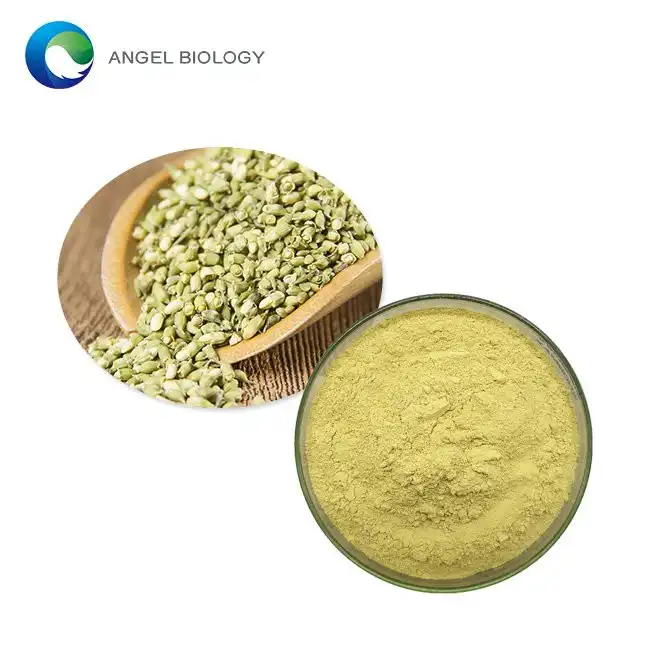
Eucommia ulmoides Oliv. is the botanical name of a tree belonging to the family Eucommiaceae. Commonly known as the hardy rubber tree or Du Zhong, it is native to China and is traditionally valued for its bark. Its leaves are also used as botanical raw materials and can be processed into extracts for different applications.
Eucommia extract powder is produced by extracting selected plant materials with a suitable solvent, followed by filtration, concentration, and drying. Spray drying is one possible method for converting a concentrated extract into powder. Compared with simply milling raw plant material, an extract offers a more defined composition when its extraction process and marker specifications are properly controlled.
The final composition depends on the plant part, raw material quality, extraction solvent, extraction ratio, and purification conditions. Buyers should therefore request a product specification that clearly identifies the botanical species, plant part, extraction method, extract ratio where applicable, and target marker compounds. These details help ensure that different batches are evaluated against the same requirements.
Leaf Extract, Bark Extract, and Bark Powder
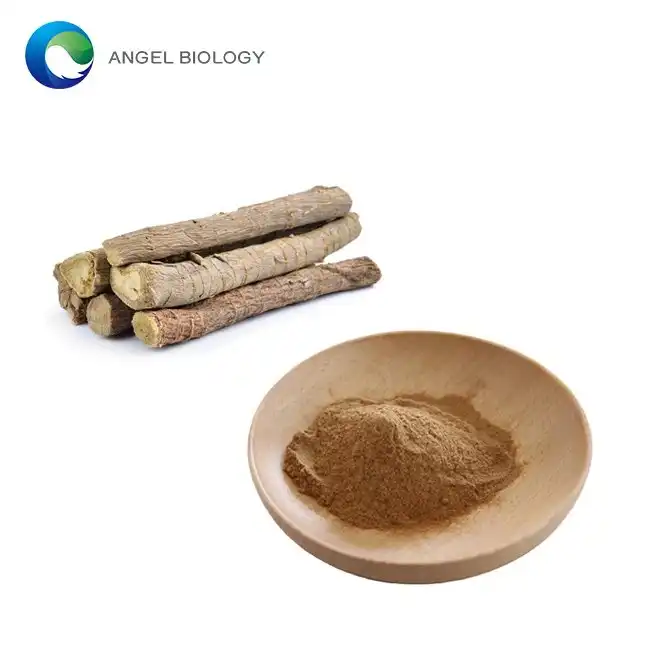
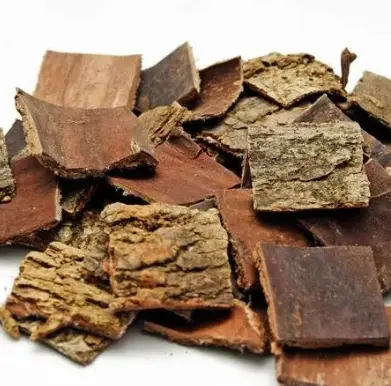
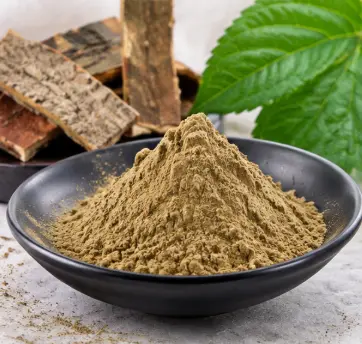
There are three materials that may look similar on a quotation sheet but have different compositions and applications: Eucommia leaf extract, bark extract, and bark powder. Bark powder is produced by drying and milling the bark, while bark extract is obtained through an extraction process that concentrates selected constituents. Leaf extract is made from the leaves and may be standardized to chlorogenic acid or other specified markers.
The chemical profiles of the leaves and bark are not identical. Eucommia leaves are commonly evaluated for phenolic compounds, including chlorogenic acid, while bark contains a different profile of constituents, including lignans and iridoids. However, the actual content depends on the raw material and processing method, so buyers should not assume that every leaf or bark extract has the same composition.
Price, color, flavor, extraction ratio, and marker content may vary among these materials. European buyers should avoid treating them as interchangeable. Instead, request a separate specification and COA for each material and select the grade according to the intended formulation.
Key Active Compounds and Marker Specifications
Chlorogenic acid is one of the commonly referenced marker compounds in Eucommia leaf extract. Depending on the product grade, suppliers may also specify other constituents, such as geniposidic acid, aucubin, lignans, or total phenolic compounds. The appropriate marker depends on the plant part and the intended product specification.
HPLC is commonly used to determine the content of specified marker compounds. However, the reported percentage should always be interpreted alongside the test method, reference standard, calculation basis, and batch-specific analytical results. A broad range of possible percentages should not be treated as a universal specification for all Eucommia extracts.
Plant extracts naturally contain multiple constituents, including phenolics, flavonoids, and iridoids. A higher marker percentage does not automatically mean that a material is more suitable for every application. The appropriate grade depends on the formulation objective, target composition, processing conditions, and applicable market requirements. Buyers should compare the actual COA results and product specifications rather than relying on a marker percentage alone.
Why European Buyers Are Choosing Eucommia Ulmoides Extract
Clean-Label and Plant-Based Demand
European product developers are paying attention to ingredient origin, label transparency, and clearly identified botanical materials. Eucommia ulmoides has a defined botanical identity and a history of traditional use in China, making it an ingredient that may be considered in plant-based product concepts.
Depending on the product category and applicable local requirements, brands may explore positioning related to botanical ingredients, plant-based formulations, and general product differentiation. However, traditional use or laboratory research should not be presented as proof of a specific health effect. Any nutrition or health claims used in the European market must be reviewed against the applicable rules and authorisation requirements.
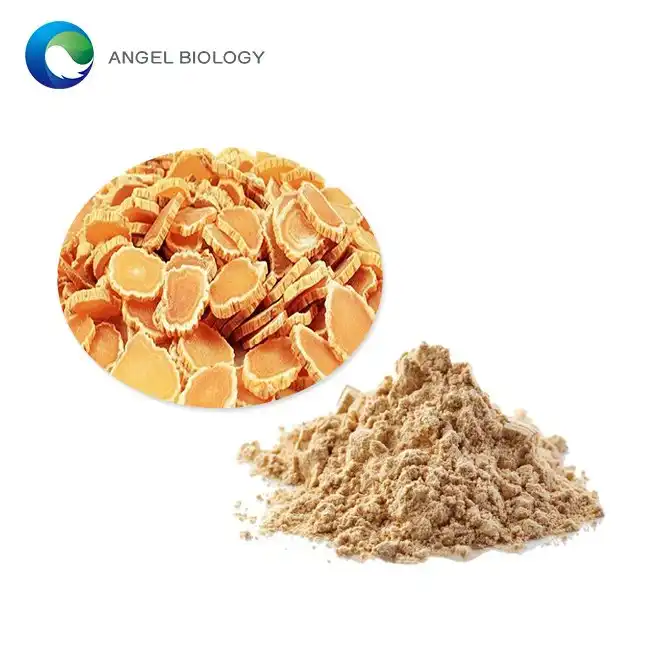
Product teams may also consider combining Eucommia extract with other botanical ingredients, such as ginseng, when developing a distinctive ingredient profile. A standardized extract can help manufacturers define the composition of their formulations more clearly, provided that the marker content and botanical identity are supported by suitable documentation. This makes ingredient selection and communication more consistent for buyers who value transparent product information.
Traceability and Documentation Expectations
In Europe, documentation is an important part of sourcing Eucommia ulmoides extract powder. Buyers commonly request the botanical species name, plant part, country of origin, extraction information, contaminant test results, and batch-specific Certificates of Analysis (COAs).
The European Food Safety Authority (EFSA) provides scientific guidance relevant to the safety assessment of botanical ingredients used in food supplements. In addition, Regulation (EC) No 1924/2006 sets requirements for nutrition and health claims made on foods. These considerations make accurate ingredient identification and supporting documentation important for procurement and regulatory review.
Suppliers that provide clear, consistent, and traceable documents can help buyers organize their internal assessment more efficiently. Before placing an order, your team can review the product specification, batch-specific COA, analytical method information, and relevant supporting documents to assess whether the material is suitable for the intended application and destination market.
Compatibility With Many Product Formats
Eucommia extract powder may be evaluated for use in different product formats, including capsules, tablets, sachets, powdered beverages, and botanical blends. Its physical characteristics, such as color, odor, taste, particle size, and dispersibility, should be considered during formulation.
Depending on the grade and extraction process, the powder may range from yellowish-brown to brown and may have a characteristic botanical flavor. Solubility and dispersion can vary with the plant part, extract composition, carrier ingredients, and processing conditions. Buyers should therefore request product-specific data rather than assume that every Eucommia extract is fully water-soluble.
An 80-mesh specification may be suitable for certain powder-processing applications, while bulk density should be confirmed for the actual grade being supplied. These properties can influence blending, filling, and handling. For beverage applications, additional filtration or formulation adjustments may be considered, but a clear appearance or sediment-free result should be confirmed through testing in the intended beverage matrix. Before commercialization, evaluate the ingredient's color, taste, dispersion, and physical stability under actual processing and storage conditions.
Eucommia Ulmoides Extract Powder Uses and Comparisons
Potential Uses in Supplements and Functional Foods
Eucommia extract is considered by product developers exploring botanical ingredients for dietary supplements, functional foods, herbal beverages, powdered drink mixes, and multi-ingredient formulations. Its plant origin and naturally occurring phenolic and other botanical constituents make it a material of interest for ingredient research and formulation development.
Some extracts contain phenolic compounds that have been investigated for antioxidant activity in laboratory studies. These findings describe research on the compounds or extracts under specific test conditions and should not be interpreted as evidence that a finished beverage or supplement produces a particular health outcome.
The suitability of Eucommia extract in beverages depends on the extract composition, pH, concentration, processing temperature, and interaction with other ingredients. Precipitation, color changes, and flavor differences may occur in certain formulations. Therefore, it should not be assumed that all grades are suitable for low-pH beverages, recovery drinks, or sports beverages without application-specific testing.
There is no universal inclusion level for every product. Formulation decisions depend on the plant part, extract ratio, marker content, product format, intended use, and applicable market requirements. Each brand should work with its formulation and regulatory teams to determine an appropriate ingredient specification and use level.
Formulation Checks Before Launch
A botanical ingredient that performs well in one formulation may not behave the same way in another. A small-scale test plan can help identify potential compatibility issues before full production. Start by checking its compatibility with other active ingredients and excipients. Then evaluate flavor, color, consistency, flowability, and dispersibility in the intended product matrix.
Moisture control is also important during blending and filling, particularly when the powder is sensitive to humidity or tends to absorb moisture. For capsules and tablets, formulators may evaluate suitable flow agents or lubricants, such as magnesium stearate, where appropriate for the formulation and applicable requirements. The selection and amount should be determined through formulation trials rather than applied automatically.
For storage, keep the material in its original sealed packaging or another suitable moisture-protective container, away from direct sunlight and excessive heat. Inner polyethylene bags and protective fiber drums may be used depending on the supplier's packaging specification. Shelf life should be confirmed using product-specific stability information rather than assumed to be identical for every grade.
Before scaling up, prepare a pilot batch and evaluate the extract on the actual processing equipment. This can help identify handling, mixing, filling, and product-stability issues before a larger production run.
Comparison With Ginseng and Other Botanicals
When comparing Eucommia with other botanical ingredients, buyers should focus on the formulation purpose rather than treating different plant extracts as direct substitutes. Traditional use, marker compounds, flavor, consumer familiarity, sourcing conditions, pricing, and regulatory considerations are all relevant factors.
Ginseng is more widely recognized by many consumers, while Eucommia may offer a different botanical identity for brands seeking to develop a distinctive ingredient profile. However, the two ingredients have different compositions and should be evaluated according to their individual specifications.
Eucommia extract is also different from raw bark powder. An extract may provide a more concentrated and defined marker profile, depending on its extraction ratio and standardization. Raw powder may be considered when a less processed botanical material is preferred or when the formulation is designed around whole-plant ingredients.
In addition to the price per kilogram, buyers should calculate the cost per serving or per standardized marker amount where relevant. Request samples, specifications, and analytical data before making a purchasing decision.
How to Choose and Buy Eucommia Ulmoides Extract Powder in Bulk
Build a Clear Technical Brief
Start with a written technical brief that identifies the product category, destination countries, plant part, extraction ratio where applicable, chlorogenic acid target, other required markers such as aucubin, organic preference, particle size, annual volume, and packaging format.
This brief helps suppliers recommend a suitable grade and reduces the risk of receiving quotations for materials that do not match your requirements. If you are developing a clear beverage, communicate this requirement at the beginning of the sourcing process. A standard extract and a specially processed grade may have different dispersion characteristics, and the exact performance should be confirmed through testing.
If you plan to sell in multiple European countries, identify each target market before commercialization. Botanical ingredient requirements can vary according to the product category and national regulatory interpretation. You should also review Regulation (EU) 2015/2283 on novel foods where relevant, including whether the ingredient and its intended use require further regulatory assessment. A specific technical brief can shorten the initial supplier evaluation process and reduce unnecessary sample rounds.
Quality Tests And Certificates To Request
When evaluating Eucommia ulmoides extract powder, review its botanical identity, moisture content, ash content, microbiological limits, heavy metals, pesticide residues, residual solvents, and batch-specific marker assay results. The relevant test requirements should be established according to the product specification, raw material source, extraction process, and destination-market requirements.
Heavy metal and pesticide results should be assessed against applicable limits for the intended product category and market. Residual solvent testing should reflect the solvents used in the extraction process and the relevant technical requirements. HPLC methods can be used to determine specified marker compounds, such as chlorogenic acid, provided that the method and reference standards are suitable for the intended analysis.
Angelbio focuses on ingredient production and quality-control procedures, with product documentation available for buyer review. In addition to test results, buyers may request relevant certificates and supporting documents according to their project requirements, such as food-safety, quality-system, organic, and non-GMO documentation where applicable. Check the issuing organization, scope, validity period, and covered products rather than relying on certificate names alone.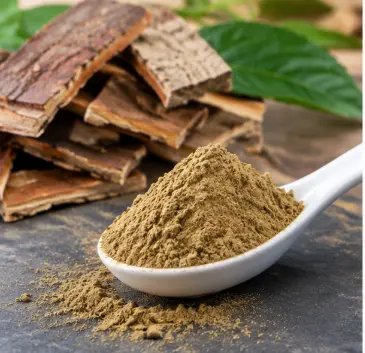
Finally, confirm that the batch number on the COA matches the supplied material and shipment documents. This verification helps buyers identify generic reports, inconsistent specifications, and unsupported supplier claims.
Understand Price Drivers and Order Terms
The price of Eucommia extract powder depends on several factors, including the plant part, raw material origin, extraction ratio, marker specification, organic status, testing requirements, packaging, order quantity, Incoterms, and destination market.
Compare quotations against the same technical specification. A lower price may reflect a different plant part, lower marker content, a different extraction ratio, or a more limited testing scope. Before placing an order, confirm the minimum order quantity (MOQ), sample availability, lead time, shelf life, storage conditions, and packaging format.
It is also useful to request the latest product specification, analytical method information, safety documentation, and certificate of origin where applicable. Clear written agreements covering specifications, acceptance criteria, packaging, delivery terms, and documentation can protect both parties and make repeat purchasing more efficient.
Choosing a Supplier You Can Trust
How to Evaluate a Eucommia Ulmoides Extract Powder Supplier in China
Sourcing Eucommia from China can provide buyers with access to the region where the botanical material is traditionally cultivated and processed. However, proximity to the raw material source alone does not guarantee reliable quality. Buyers should evaluate the supplier's raw material sourcing, botanical identification, batch consistency, analytical testing, production controls, export documentation, packaging, and technical communication.
During supplier evaluation, request information about the plant part, marker specifications, extraction process, production capacity, MOQ, lead time, relevant certificates, and procedures for handling customer feedback. A supplier should be able to explain how the supplied material is checked against the agreed specification and how changes in raw materials or processing are managed.
A staged approval process can reduce sourcing risks. First, review the technical documents and approve a representative sample. Next, evaluate a pilot batch under actual processing conditions. Finally, verify the first commercial lot against the agreed specification and COA. This approach gives your team practical evidence at each stage and supports more consistent repeat purchasing.
Common Procurement Mistakes to Avoid
Several common mistakes can complicate the purchasing process. Buyers may compare suppliers based only on price, treat bark powder as equivalent to Eucommia extract powder, accept a generic COA, or rely on organic and other certification claims without checking their scope and validity.
These issues can lead to materials that do not meet the intended specification or to delays during product development. To avoid them, compare assay results against the agreed target, confirm the plant part in writing, and review the documentation supporting each claim. Marketing teams should also distinguish ingredient research and traditional use from claims made about finished products. Any proposed health-related wording should be reviewed by qualified regulatory professionals before publication or use on product labels.
A careful review before purchasing can save time, reduce avoidable formulation issues, and make supplier comparisons more reliable.
Why Standardized Extract Is Often the Preferred Choice
Standardization helps define the content of selected marker compounds and provides measurable parameters for comparing batches and suppliers. It can support formulation calculations, incoming material checks, and repeat production when the specification and analytical method are clearly established.
For private-label projects, multi-market product development, and distributor sourcing, a standardized extract can make ingredient requirements easier to communicate. It is particularly useful when manufacturers need to maintain consistent specifications across production runs or expand product lines.
However, a marker percentage alone cannot replace botanical identification, contaminant testing, safety evaluation, or traceability. Buyers should consider these factors together when assessing the overall suitability of an extract.
Angelbio focuses on natural ingredients for dietary supplements, food, cosmetics, personal care, and flavor and fragrance applications. According to company information, Angelbio was founded by Angel Holding Group and the Institute of Life and Health Research of Xi'an Jiaotong University and has more than 18 years of experience in natural ingredient research, development, and testing.
Conclusion
Interest in Eucommia ulmoides extract powder in Europe is supported by the broader demand for plant-based ingredients, transparent sourcing information, and clearly defined product specifications. The plant part is an important consideration: Eucommia leaf extract is commonly evaluated for chlorogenic acid, while bark extract has a different profile of lignans and iridoids. Bark powder, meanwhile, is a milled botanical material and should not be treated as equivalent to a concentrated extract.
Marker percentages, HPLC methods, contaminant test results, and batch-specific COAs provide useful information for comparing suppliers. Buyers should also consider formulation compatibility, storage conditions, regulatory requirements, and total cost per standardized amount rather than focusing only on the price per kilogram.
A well-documented extract that matches the intended application can provide a more practical sourcing option than selecting the lowest-priced quotation. By defining specifications in advance, evaluating samples, and reviewing supplier documentation, European buyers can make more informed purchasing decisions and support smoother product development.
FAQ
1. What is the difference between leaf and bark extract?
Eucommia leaf extract is commonly standardized for chlorogenic acid and other phenolic markers. Bark extract has a different chemical profile that may include lignans and iridoids. The actual composition depends on the raw material and extraction process, so buyers should review the product-specific specification and COA.
2. What chlorogenic acid percentages are available?
Available grades depend on the supplier's raw material, extraction process, and product specification. Some products may be offered with different chlorogenic acid targets, but there is no single universal range for all Eucommia extracts. Buyers should confirm the assay method, calculation basis, and batch-specific result before purchasing.
3. Can I use it in beverages?
Eucommia extract may be evaluated for beverage applications, but water solubility and dispersion vary by grade. A standard extract may not produce a clear solution. For clear beverages, discuss the required appearance and dispersion performance with the supplier and test the proposed grade in the actual beverage formula before commercialization.
4. What are the shelf life and storage conditions?
Shelf life depends on the specific product and supporting stability data. Store the powder in a sealed, moisture-protective package in a cool, dry place away from direct sunlight. Because moisture can affect powder handling and quality, keep the inner packaging tightly sealed and follow the supplier's storage instructions.
Contact Angelbio for Eucommia Ulmoides Extract Powder Samples and Specifications
Planning a new formulation with Eucommia ulmoides extract powder? Send Angelbio your preferred plant part, chlorogenic acid target, required quantity, destination market, and packaging needs. Our team can help you review available specifications, batch-specific COAs, sample options, MOQ, and lead times.
With experience in natural ingredient research, development, and testing, Angelbio supports bulk sourcing and private-label projects. Contact us at angel@angelbiology.com to discuss your requirements and request a quotation.

References
1. Pharmacopoeia of the People's Republic of China, 2020.
2. He X. et al. Eucommia ulmoides Oliv.: Ethnopharmacology, Phytochemistry and Pharmacology of an Important Traditional Chinese Medicine. Journal of Ethnopharmacology, 2014.
3. Naveed M. et al. Chlorogenic Acid (CGA): A Pharmacological Review and Call for Further Research. Biomedicine & Pharmacotherapy, 2018.
4. EFSA Scientific Committee. Guidance on Safety Assessment of Botanicals and Botanical Preparations Intended for Use as Ingredients in Food Supplements. EFSA Journal, 2009.
5. Regulation (EU) 2015/2283 on Novel Foods, Official Journal of the European Union, 2015.
6. Regulation (EC) No 1924/2006 on Nutrition and Health Claims Made on Foods, Official Journal of the European Union, 2006.