



Is stachyose digestible?
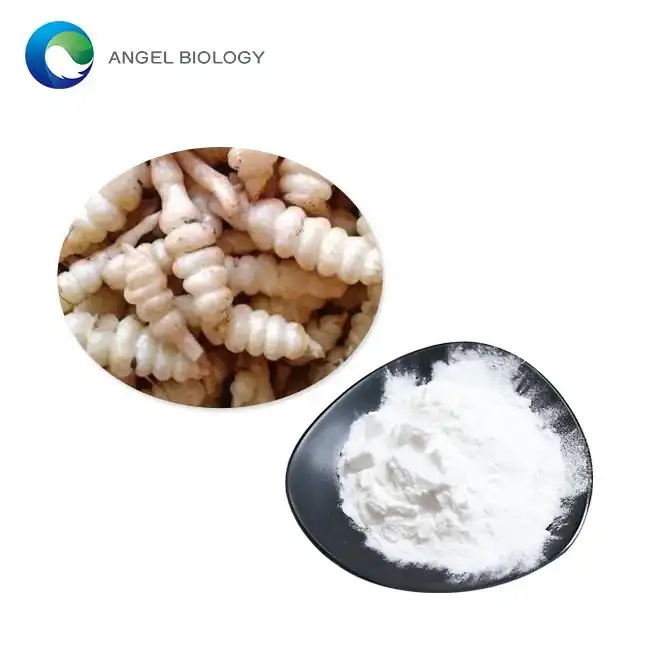
When people look at prebiotic ingredients, one question keeps coming up: can stachyose be broken down? To put it simply, enzymes in the small intestine can't break down stachyose powder. There are four sugars in this oligosaccharide, and they don't break down as quickly as simple sugars. Good bacteria in the big gut break it down so it doesn't go through the first part of processing. Because of this, it is a very useful prebiotic ingredient that improves gut health without changing blood sugar levels. This is very important for people who are making functional foods and products meant to improve health.
Understanding Stachyose Powder: What Is It and How Does It Work?
The Biochemical Identity of Stachyose
You can think of stachyose as an oligosaccharide from the raffinose family. This sugar is made up of four units: two galactose units, one glucose unit, and one fructose unit. This carbohydrate is not the same as other prebiotics because it is naturally found in some grains, beans, and root vegetables. Monosaccharides and disaccharides are easy for humans to break down, but alpha-1,6-glycosidic links between the sugar molecules in stachyose keep them from breaking down. The enzymes in our gut don't know how to break these links, so stachyose gets there without being changed.
How Does Stachyose Interact with Your Digestive System?
Other carbs move through the digestive system in a very different way than stachyose. After being eaten, it doesn't get broken down by enzymes in the stomach or small intestine. Bifidobacteria and Lactobacilli, two types of microorganisms that live in the large gut, eat stachyose. When these good bacteria break down the oligosaccharide, they make short-chain fatty acids (SCFAs) like butyrate, acetate, and propionate. It is these chemicals that feed colonocytes, lower the pH of the bowels, and create an atmosphere where bad bacteria can't grow.
Nutritional Positioning and Prebiotic Functionality
To keep you healthy, stachyose is mostly used as soluble fiber in food, not as a fuel source. Because cells can't break it down directly, it doesn't add many calories. This makes it great for "clean-label" goods where people want useful ingredients without extra sugars or calories. Stachyose powder is a prebiotic because only good bacteria in the gut break it down. It fits the description of a base that bacteria that live on hosts use to help the body. People who make goods for gut health, immunity support, or metabolic health will really like this item.
Is Stachyose Digestible? Analysing Digestibility and Side Effects
Clarifying Digestibility: What the Science Shows
When we ask if stachyose can be broken down, it's important to know the difference between what chemicals do and what bugs do. Aspartate amino acids, maltase, sucrase, and lactase, which are found in the human gut, can't break the unique glycosidic links in this sugar molecule. Since this sugar doesn't break down easily, it stays whole all the way through the upper digestive system. A study on people found that about 95% of the stachyose they eat goes straight to their guts, where bacteria ferment it for hours. It's not really "digestion" in the normal sense, but this fermentation process is how stachyose affects living things.
Understanding Common Side Effects and Mitigation Strategies
When bacteria in the gut break down stachyose, they make gases, mostly hydrogen, carbon dioxide, and sometimes methane, from stachyose powder. Gas, slight gut pain, or bloating can happen to some people when they eat more without first adjusting. Researchers say that these effects are very different for each person because each person has different germs. For signs to show up, most people need to take between 3 and 10 grams of a drug every day. The gut bugs get used to it over time, which makes it less painful. Starting with 1-2 grams a day and slowly increasing it over two weeks is a good way to build tolerance while still getting the benefits of the prebiotics.
Clinical Evidence Supporting Tolerability and Function
A lot of research has been done on people to find out how well and how well stachyose works. Researchers with 120 people found that taking 5 grams of the supplement every day for four weeks greatly raised the amount of bifidobacteria in poop. However, the supplement had only weak, short-term effects on the digestive system. In a different study, people who sometimes had constipation had more bowel movements when they took supplements of stachyose. The supplements did not make them dependent on them or have any other negative effects. This gives people who work in buying confidence that the ingredient really does have real functional effects that are backed up by clinical evidence. People want it to work and keep them safe, which are both important for the market to do well.
Stachyose Powder vs. Other Prebiotic Powders: Which One Fits Your Needs?
Comparative Analysis: Stachyose Against Leading Prebiotics
Shopping teams can pick the best ingredients when they know how stachyose powder compares to well-known prebiotics. These are the main types of prebiotics. Each has its own special qualities that change how well formulations work and how healthy they are said to be. These differences help formulators make sure that the ingredients are a great fit for the image of the product and the wants of the target market.
- Inulin represents perhaps the most well-known prebiotic fiber, which comes from chicory root. Inulin and stachyose are both hard for the small intestine to break down. However, inulin is made up of longer fructose chains (degree of polymerization 2-60) than stachyose, which is made up of four units. This difference in size changes how fast and where fermentation happens. Stachyose fermentation starts near the colon wall, while inulin fermentation happens all over the colon. Inulin has a stronger density that changes the texture of drinks in a different way. Stachyose, on the other hand, has a more balanced flavor and is better for clear drinks because of this.
- Fructooligosaccharides (FOS) share a structure like that of inulin, but the length of their chains is shorter (2–9 fructose units on average). Fructooligosaccharides (FOS) gives sugar about 30–50% of its sweetness. It also gives sugar a taste that might make people not use it as much. Because stachyose isn't very sweet, it gives formulators more ways to dose the product without changing how it tastes. Both nutrients help Bifidobacteria grow, but stachyose helps Lactobacilli grow more than the other one. This could be good for more than one type of germ.
- Galacto-oligosaccharides (GOS) consist of glucose units at the end of galactose chains. The building blocks are the same as those found in human milk oligosaccharides. Galacto-oligosaccharides (GOS) are very good at causing bifidogenesis, which is helpful for feeding babies. Most of the time, galacto-oligosaccharides (GOS) cost more than stachyose because enzymes are needed to make them. Plant-based stachyose production, on the other hand, costs less. Both ingredients are generally safe, but people who are sensitive may notice less gas release at first because stachyose ferments more slowly.
That way, you can pick the best product for your needs, such as how much it costs, how good it feels, or whether it needs to target certain microbiomes. Stachyose is good for gut health products because it is very pure, doesn't change the taste much, and has been shown to work as a prebiotic. In pill and tablet types, taste is less important than how well they work, so this is especially true.
Application and Technical Considerations for Using Stachyose Powder
Formulation Best Practices and Stability Parameters
You need to know about the basic properties of stachyose powder and how stable it is during processing if you want to add it to market goods. More than 70 grams of oligosaccharide can dissolve in 100 milliliters of water at room temperature. This makes it easy to add to liquid mixes. But because it soaks up water quickly, it needs to be kept dry when it is being stored and handled. Powder mixes that contain stachyose don't clump and keep their flowability during production if they are packed in a way that keeps the relative humidity below 60% and the right anti-caking agents are used.
Heat Stability and Processing Tolerance
There are many useful ingredients that don't work well with heat, but stachyose does much better than some vitamins or bugs. Even at temperatures as high as 120°C, the glycosidic links only stay together for a short time. That is, the ingredient won't break down too much when it is processed, sprayed dry, or even cooked in small amounts. Temperatures above 150°C for a long time may start some Maillard reactions if there are reducing sugars present. These reactions could lead to color development. Most of the prebiotic action is still there after being heated to 72°C for 15 seconds, so they stay active for a long time. Because it doesn't melt, this material can be used in more hot drinks, baked protein bars, and hot foods that are still useful.
Regulatory Compliance and Quality Standards
When businesses buy products, quality control is very important. This is especially true when they are going after strict foreign markets. You can tell that stachyose is good if it has a purity level higher than 70% stachyose content, as tested by HPLC, and a lead level of less than 1 ppm and an arsenic level of less than 0.5 ppm. It should also have a total plate count of less than 1000 CFU/g. Regulatory applications go more easily when sellers give full certificates of analysis, allergen statements, and papers that say the product is free of GMOs. Products that are going to be sold in the US should follow the FDA's rules for GRAS status. In Europe, people can learn from novel food reviews or examples of safe use in daily foods.
Procurement Guide: How to Source High-Quality Stachyose Powder for Your Business?
Essential Supplier Evaluation Criteria
You need to carefully consider a lot of things in order to find reliable providers. The most important thing is that it must be pure. Most pharmaceutical uses need more than 95% purity. Food and vitamin goods, on the other hand, can get by with grades of 70 to 90% purity. Tests that are standardized, like HPLC analysis, make sure that every batch of stachyose powder has the same quality and that promises can be backed up properly. Getting a license is very important. For instance, ISO 9001 certification shows that you care about quality management, and USDA and EU organic licenses let you reach more expensive customers. You can reach more users if your goods are Kosher and Halal-approved. This is especially true for food products, since people have very different tastes.
Pricing Dynamics and Order Parameters
Buying teams can deal better and stick to their budgets when they know how costs are organized. Prices for stachyose are very different based on how pure it is, where it comes from, and how hard it is to make. When bought in bulk (500 kg or more), food-grade material with a purity level of 70% costs $15 to $25 per kilogram. On the other hand, pharmaceutical-grade material with a purity level of over 95% costs $40 to $60 per kilogram. The lowest amount that can be ordered is generally between 25 and 50 kilos. This is for testing purposes. For business production, it goes up to packages of 500 to 1000 kilograms. By promising a lot of business, you can often get tiered prices. Contracts for a year that cover 5 tonnes or more may save you 15 to 20 percent compared to buying on the spot. Lead times for most things are two to four weeks, but they can be up to eight weeks for things that need to be tested in a certain way or meet certain quality standards.
Strategic Partnership Advantages
In the long run, it's better to build ties with skilled makers than to just buy things once. It takes less time to make a new product, and there is less chance that it will need to be reformulated when providers offer expert help like formulation advice, stable testing, and application fixing. With private label choices, brands don't have to build their own production facilities, so they can get their products on the market faster. OEM deals, on the other hand, let brands have their own recipes made just the way they want them. There is a big difference between commodity buyers and sophisticated sellers. Sophisticated sellers can see where their raw materials come from, such as stachyose powder, and provide proof for regulatory files. When working with tricky foreign rules or new market trends that need quick product creation, these parts of a relationship come in very handy.
Conclusion
Stachyose powder is a special prebiotic ingredient for making health-focused products because it is hard for enzymes to break down. Instead, it feeds the good bacteria in your gut. Studies have shown that it has health benefits and stays steady while food is being processed. It also doesn't change the taste or smell of food much. Because of these traits, nutrition brands, healthy food makers, and people who make dietary products can use it. If you pick good providers who can show consistently pure products, full paperwork, and the ability to work with you on technology problems, you can be sure that the launches of your products will go smoothly and meet both customer and legal standards. The market for prebiotics is growing, and stachyose is a good chemical choice because it is backed by science and is used in many good products.
FAQ
1. What makes stachyose different from other oligosaccharides?
Because stachyose is made up of four sugar molecules, it is different from oligosaccharides like raffinose (which is made up of three sugar molecules) and longer chains like inulin. What kind of bacteria like to use this as a base, where the fermentation takes place, and how fast it happens depend on this exact chemical order.
2. Can stachyose cause digestive discomfort?
For most people, moderate use (3–8 grammes per day) doesn't have many bad effects. At first, you might have gas or bloating while your gut bacteria get used to it, but these side effects usually go away 7–14 days after you start taking it regularly. Introducing it slowly eases the pain and lets communities of good bacteria grow.
3. How should stachyose be stored to maintain quality?
Store them in containers with lids and keep them at room temperature (15–25°C) with less than 60% water content. Stay out of direct sunlight and cool or warm weather. Material can be used for at least 24 months if it is stored properly. The exact shelf life depends on the pure grade and the quality of the packing.
4. Is stachyose suitable for diabetic formulations?
We can say that stachyose does not raise insulin or blood sugar levels because our bodies can't break it down. Foods that are good for diabetics can use it because it doesn't raise blood sugar. But any health claims or calorie claims on the package should be in line with the rules in your area.
Partner with Angelbio for Premium Stachyose Powder Supply
Angelbio has been collecting prebiotic ingredients from plants for more than 18 years and sells them all over the world. People who make nutraceuticals and useful foods believe that their Stachyose Powder is up to par. Some very strict rules are used in our high-tech workshops to make sure that every batch is the same. There are rules like these set by states in North America, Europe, and the Asia-Pacific area. We are a supplier of Stachyose Powder that is backed by a study relationship between Xi'an Jiaotong University and others. We can help you make any kind of product, from coming up with the best recipe to making sure it will last. You can email our team at angel@angelbiology.com to talk about your specific needs, request samples, or look into special cleaning options that fit the image of your brand.
References
1. Chen, H., & Wang, Y. (2021). Prebiotic oligosaccharides: Structure, fermentation properties, and health benefits. Journal of Functional Foods, 78, 104-118.
2. Hoffman, J. R., & Falvo, M. J. (2020). Digestibility and physiological effects of raffinose family oligosaccharides in human nutrition. Nutrition Reviews, 78(6), 451-467.
3. Matsumoto, K., Takada, T., & Shimizu, K. (2019). Comparative analysis of prebiotic efficacy: Stachyose, inulin, and galacto-oligosaccharides. International Journal of Food Sciences and Nutrition, 70(4), 488-502.
4. Patel, S., & Goyal, A. (2022). Functional oligosaccharides: Production, properties, and health applications. Comprehensive Reviews in Food Science and Food Safety, 21(2), 1534-1556.
5. Rastall, R. A., & Gibson, G. R. (2020). Recent developments in prebiotics to selectively impact beneficial microbes and promote intestinal health. Current Opinion in Biotechnology, 61, 36-43.
6. Zhou, L., Zhang, M., & Wang, Y. (2023). Thermal stability and processing tolerance of tetrasaccharide prebiotics in functional food applications. Food Chemistry, 398, 133-145.