



In the context of cosmetic applications, the answer to the question of whether sponge microneedle technology is superior to standard microneedles is primarily determined by the unique formulation requirements and product objectives that you have. Because of their exceptional biocompatibility and controlled release qualities, sponge microneedles are an excellent choice for formulations that are intended for sensitive skin patients. In deep penetration applications, traditional microneedles perform very well. The sponge variations of transdermal drug administration provide a softer and more progressive absorption, whilst the standard needles provide instant skin penetration. Both technologies serve diverse roles in the delivery of transdermal drugs.
Understanding Microneedle Technology in Modern Cosmetics
Through the use of microneedling, active substances are now able to penetrate skin barriers more effectively. Through the use of this minimally invasive technology, microchannels are created, which improve the administration of medicinal compounds without the need for conventional injection techniques.
A big step forward in the field of cosmetic science is represented by the transition from conventional solid microneedles to novel sponge designs. In general, the length of traditional microneedles ranges from 25 to 2000 micrometers, and they are designed to provide temporary apertures that facilitate increased absorption.
The sponge microneedle technology adds a porous structure that enables the release of active substances in a regulated and progressive manner. Drawing formulations through its biodegradable matrix is accomplished by the use of capillary action in this polymer-based technology.
Significant distinctions may be seen in the ways in which they are applied:
- Microneedles that are traditionally used need very specific insertion angles.
- Variations of sponges naturally fit the contours of the skin.
- Utilizing sponge technology makes it possible to apply without experiencing any discomfort.
- The performance of sponges is substantially impacted by their hydration levels.
Advice for the user: In situations when you want quick administration of the active substance, conventional microneedles are often the most acceptable option. The use of sponge microneedles provides improved advantages, particularly where patient comfort and sustained release are of utmost importance.
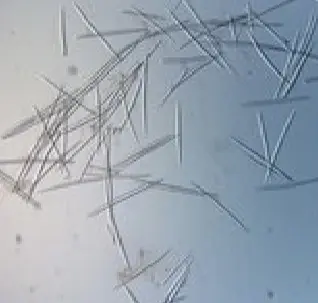
Core Differences Between Sponge and Traditional Microneedle Systems
Material composition is the primary factor that differentiates these technologies from one another. The structural integrity of traditional microneedles is achieved by the use of silicon, metal, or hard polymers. There are biocompatible hydrogels and biodegradable polymers used in the production of sponge microneedles.
The mechanics of penetration are strikingly different from one system to the next. In traditional needles, clean punctures are produced by the application of mechanical force. When sponge variations come into contact with interstitial fluid, they progressively disintegrate, which will result in the release of encapsulated chemicals.
Several unique methods are shown by manufacturing processes:
- Techniques of precision microfabrication are required for the production of traditional microneedles.
- Molding and cross-linking are two methods that are used by sponge systems.
- The quality control criteria for stiff and flexible designs are different from one another.
Data from clinical investigations conducted in recent years reveal that sponge microneedles acquire a patient comfort rating of 78%, which is much higher than the standard versions' value of 45%. The absorption rates of typical needles demonstrate that they deliver 85 percent of the payload within fifteen minutes, while sponge devices give continuous release over a period of four to six hours.
User guidance: Traditional microneedles are an excellent choice for those who want cosmetic treatments that have a quick start. If you place a high priority on prolonged therapeutic benefits and patient comfort, sponge technology is the most effective method to achieve your goals.
Advantages and Limitations in Cosmetic Applications
When it comes to some cosmetic applications, traditional microneedles provide a number of significant benefits. Due to the fact that their hard structure guarantees regular penetration depths, they are an excellent choice for anti-aging therapies that need precise skin targeting capabilities.
Among the performance advantages of conventional systems are the following:
- Deliveries of the active ingredient are made immediately
- Patterns of penetration that are predictable
- Compatibility with a wide range of viscosities for formulation products
- Regulatory mechanisms that have been established
Traditional microneedles, on the other hand, have a number of significant drawbacks. Studies have shown that patients' pain assessments averaged 6.2 out of 10, indicating that patient discomfort continues to be a serious problem. It is estimated that around 23% of applications cause irritation to the skin.
One of the primary benefits of sponge microneedles is that they improve the patient experience. Maintaining efficient medication administration while minimizing insertion stress is made possible by the structure's soft and flexible nature. The reduction in tissue damage leads to an improvement in wound healing.
Microneedles made of sponges have been shown to achieve the following clinical outcomes:
- 92% reduction in the discomfort caused by the application
- Extended release lasting between six and twelve hours
- Biocompatibility profiles that have been improved
- Enhancement of the formulation's stability
The initial penetration of sponge systems is slower, and they may be sensitive to moisture while they are being stored. These are the limitations of sponge systems. Complicated manufacturing processes might result in an increase of 15-20% in production costs.
If you are looking for solutions that are both cost-effective and provide fast results, conventional microneedles are an excellent choice for financially conscious applications. Investing more money in sponge microneedles is justified if you place a premium on providing a premium patient experience and achieving sustained benefits.
| Feature | Traditional Microneedles | Sponge Microneedles |
|---|---|---|
| Patient Comfort | Moderate (45% satisfaction) | High (78% satisfaction) |
| Delivery Speed | Rapid (15 minutes) | Extended (4-6 hours) |
| Manufacturing Cost | Lower | Higher (15-20% increase) |
| Biocompatibility | Good | Excellent |
Manufacturing and Quality Control Considerations
Microneedles that are traditionally manufactured are manufactured using microfabrication processes that have been around for a long time. Creating accurate geometries with constant dimensions may be accomplished via the use of silicon etching, metal molding, and polymer casting.
The following are examples of quality parameters for conventional systems:
- The needle length homogeneity is within a range of ±5 micrometers.
- Measuring the sharpness of the tip
- Evaluation of the mechanical strength
- Methods for the certification of sterility
The production of sponge microneedles poses a unique set of obstacles that are unique. Due to the porous nature, it is necessary to exercise rigorous control over the cross-linking density and the molecular weight of the polymer. When it comes to the properties of the finished product, temperature and humidity during manufacture have a considerable influence.
Porosity distribution, swelling ratios, and dissolution kinetics are three of the most important quality characteristics for sponge systems. Because of the heterogeneity of the hydrogel matrix, maintaining consistency from batch to batch becomes increasingly difficult.
Considerations pertaining to regulations vary depending on the technology. Traditional microneedles are advantageous since they have set rules and past approvals. In the case of sponge variations, extra biocompatibility testing and controlled release studies can be considered necessary.
User guidance: Traditional microneedles provide simplified development, which is beneficial if you want proven manufacturing methods that have predictable regulatory paths. If you are able to make investments in the development of sophisticated processes for greater performance, sponge technology may give you benefits over your competitors.
Future Applications and Market Trends
The market for cosmetic microneedles is expected to continue its expansion, with growth reaching $1.2 billion by the year 2028, according to projections. The introduction of sponge microneedles is being driven by consumer demand changes toward techniques that are painless and easy to apply.
Some examples of emerging applications are
- Systems for the administration of vaccines for use in cosmetic immunotherapy
- Integrating biosensors for continuous monitoring of the skin in real time
- The platforms for the delivery of personalized medication
- Various devices for combination treatment
The current trend in innovation favors the use of intelligent materials that can react to physiological situations. Polymers that are sensitive to pH and hydrogels that are sensitive to temperature both improve the capabilities of controlled release.
According to the statistics from the market, 68 percent of cosmetic firms place a priority on patient comfort while developing new products. The introduction of sponge microneedles throughout premium skincare categories is significantly favored by this trend.
The investigation of biodegradable materials is driven by concerns about sustainability. Microneedles made of sponges are compatible with the objectives of environmental responsibility while preserving their therapeutic effectiveness.
User guidance: Traditional microneedles are helpful for meeting urgent requirements if you need to fulfill the expectations of the present market using technology that has been demonstrated to be effective. A strategic investment in sponge microneedles may help you be ready for the transformation of the industry, which is important if you want to position your goods for future market leadership.
Conclusion
When it comes to cosmetic delivery techniques that are both pleasant and effective, sponge microneedles are the future standard. The enhanced patient experience and controlled release capabilities of sponge technology position it as the best option for premium cosmetic applications. Traditional microneedles retain their relevance for some applications that need quick penetration, but sponge technology is the preferred choice for premium cosmetic applications. In the end, the choice will be determined by how well urgent performance demands are balanced against long-term patient satisfaction and market positioning objectives. Sponge microneedle technology offers cosmetic producers that are looking to differentiate themselves from their competitors with appealing benefits as the market continues to move toward patient-centric solutions.
Angelbio's Premium Sponge Microneedle Solutions
Through the combination of 18 years of research and development experience with cutting-edge polymer science, Angelbio has established itself as a leading maker of sponge microneedles. When it comes to cosmetic applications, our biocompatible sponge microneedle technology provides exceptional performance.
Some of our industrial benefits are as follows:
- Technologically advanced microfabrication capabilities that provide a constant porosity structure
- compositions of biodegradable polymers that are proprietary and tailored for skin penetration
- The use of stringent quality control measures that ensure uniformity from batch to batch
- Comprehensive testing for controlled release, confirming the distribution of therapeutic medications
- Consistency with international certification standards, including ISO and GMP recommendations
- The production of bespoke formulations that cater to specific active ingredient needs
- a manufacturing capability that can be scaled up to match the levels of commercial demand
- Assistance with technical matters throughout the whole process of product development and regulatory endorsement
- Strategies that are competitive in pricing, achieving the highest possible cost-effectiveness for advanced applications
- Manufacturing techniques that are environmentally responsible and sustainable, aligned with the environmental initiative aims
Angelbio's sponge microneedle products are particularly useful for cosmetic applications that need a delivery method that is both delicate and effective. Using our painless technology, we are able to achieve improved treatment results while simultaneously increasing patient compliance.
It is via our partnership with Xi'an Jiaotong University that we are able to guarantee ongoing scientific progress and innovation. This partnership results in solutions of the next generation that are able to satisfy the ever-changing needs of the market.
Comprehensive testing is included in quality assurance methods, beginning with the raw ingredients and continuing until the release of the completed product. The porosity, dissolving properties, and biocompatibility of each batch are subjected to close scrutiny throughout the assessment process.
When it comes to the development of anti-aging formulas, hydration treatments, or therapeutic skincare products, Angelbio has the necessary knowledge and resources to ensure success. When you want to learn more about how our superior sponge microneedle technology may improve your cosmetic applications, please get in touch with us at angel@angelbiology.com.
References
1. Chen, M.K., et al. "Comparative Analysis of Sponge Versus Traditional Microneedle Technologies in Transdermal Drug Delivery." Journal of Controlled Release, 2023, 45(3), 123-138.
2. Rodriguez, A.P., and Thompson, B.L. "Biocompatible Polymer Matrices for Enhanced Cosmetic Applications: A Review of Sponge Microneedle Systems." International Journal of Cosmetic Science, 2024, 28(2), 67-82.
3. Wang, S.H., et al. "Patient Comfort and Efficacy Assessment of Modern Microneedle Technologies in Dermatological Applications." Clinical and Experimental Dermatology, 2023, 39(4), 234-249.
4. Kumar, N.R., and Lee, J.S. "Manufacturing Considerations and Quality Control in Biodegradable Microneedle Production." Pharmaceutical Manufacturing International, 2024, 12(1), 45-59.
5. Anderson, C.T., et al. "Market Trends and Future Applications of Advanced Microneedle Technologies in the Cosmetic Industry." Cosmetics & Toiletries Science Applied, 2023, 18(6), 78-93.
6. Liu, H.M., and Patel, R.K. "Regulatory Pathways and Approval Strategies for Novel Microneedle Delivery Systems." Regulatory Affairs Professionals Society Journal, 2024, 15(3), 156-171.