



What's the Benefits and Uses of Dihydromyricetin Powder?
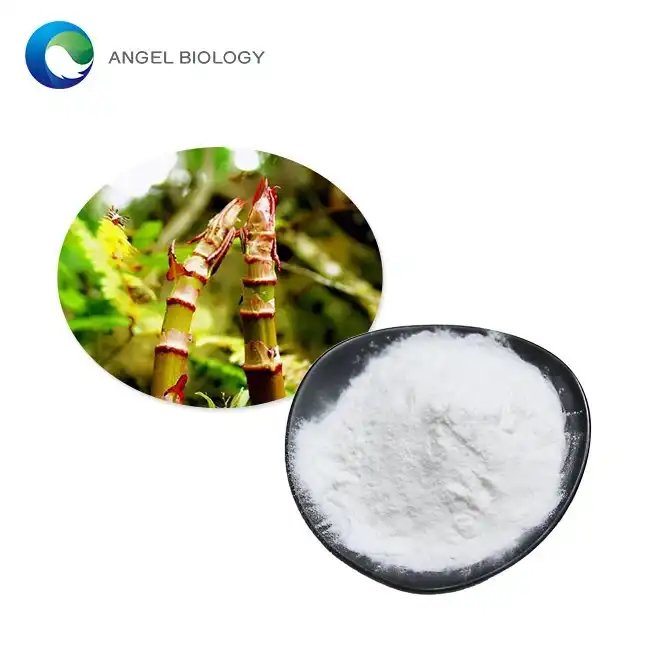
There is a naturally occurring flavonoid called dihydromyricetin powder (DHM) that can be obtained from Ampelopsis grossedentata, commonly known as Vine Tea. With the molecular formula C₁₅H₁₂O₈, it has attracted interest in the cosmetics, nutraceutical, and functional food sectors. DHM has been investigated for its antioxidant properties and its potential interactions with biological pathways related to alcohol metabolism and liver function. However, research findings do not establish that every commercial DHM ingredient accelerates alcohol clearance, prevents hangovers, or protects the liver in humans. For business-to-business customers, DHM may be considered as a plant-derived ingredient when its identity, specifications, formulation suitability, and intended market requirements have been evaluated.
Understanding Dihydromyricetin Powder: Properties and Mechanisms
Dihydromyricetin powder is a botanical flavonoid ingredient with a distinct chemical structure and a range of properties that have been explored in laboratory and preclinical research. Its potential role in a formulation depends on the ingredient's composition, physical characteristics, and intended use. Understanding these factors helps formulation teams make more informed decisions when evaluating suppliers and comparing raw materials.
Chemical Profile and Physical Properties
Dihydromyricetin is typically supplied as a crystalline or powdered material that may range from white to off-white, depending on the grade and processing conditions. Reported thermal properties should be confirmed against the specific material and analytical data. For manufacturers working with heat-sensitive formulations, the melting behavior of the compound alone does not establish stability throughout processing. DHM has limited solubility in cold water and may dissolve more readily under certain conditions, including in hot water or suitable solvents. Formulators should assess solubility, dispersion, particle size, and stability in the actual product matrix before selecting a grade for beverage or other liquid applications.


How DHM Relates to Alcohol Metabolism Research
Dihydromyricetin has been investigated for possible interactions with pathways involved in alcohol metabolism, including pathways associated with alcohol dehydrogenase (ADH) and aldehyde dehydrogenase (ALDH). These enzymes participate in the conversion of ethanol and acetaldehyde, respectively. However, evidence from laboratory or animal studies does not establish that DHM reliably activates these enzymes in humans or reduces the duration or intensity of alcohol intoxication. Formulators should avoid treating DHM as a proven way to accelerate alcohol clearance or prevent alcohol-related harm. For ingredient development, the research can provide scientific context, but product claims require evidence appropriate to the finished product and intended use.
Antioxidant Activity and Liver-Related Research
Dihydromyricetin has been studied for its potential antioxidant activity and effects on biological pathways associated with oxidative stress. Some preclinical research has explored its relationship to markers of liver injury, but such findings do not demonstrate that DHM powder prevents liver damage or treats liver disease in humans. Comparisons with milk thistle (silymarin) or N-acetylcysteine (NAC) should also be made cautiously because the ingredients have different chemical properties and research profiles. DHM may be considered for research-led formulation development, but its superiority over other ingredients or its effectiveness for a specific liver-health outcome should not be assumed without appropriate comparative evidence.
Safety, Dosage, and Side Effects: What B2B Clients Need to Know
Before agreeing to purchase any ingredient, procurement teams should review its safety information, intended use, and applicable requirements. Research on dihydromyricetin includes laboratory, animal, and some human investigations, but the available evidence should not be interpreted as establishing the safety of every extract, concentration, or finished product.
Safety Evidence and Product Suitability
The safety of dihydromyricetin powder depends on factors such as the source material, purity, dose, duration of use, target population, and formulation. Findings from individual studies do not establish that all intake levels are safe or that the ingredient is suitable for every food, beverage, or supplement application. Before commercial use, buyers should review available safety data and confirm the ingredient's regulatory status for the intended product category and destination market. Relevant product documentation and application-specific assessments can help identify information gaps before formulation or launch.
Dosage and Formulation Considerations
Some research has investigated different amounts of dihydromyricetin, but the available evidence does not establish a universal effective dose of 100 mg to 600 mg per serving for alcohol metabolism or other health outcomes. The appropriate amount, if any, depends on the specific ingredient, evidence base, intended use, target population, and applicable requirements. Manufacturers should not select an inclusion rate solely from a general dosage range or use level reported for a different preparation. Angelbio buyers can request available product specifications and technical information to support preliminary formulation assessments, while final use levels should be determined through appropriate safety, formulation, and regulatory review.
Long-Term Use and Regulatory Considerations
Evidence on long-term use may be limited for particular DHM preparations, doses, and populations. It is therefore inappropriate to conclude that continuous use is safe solely from general consumer feedback or short-term studies. Regulatory requirements also vary by country, product category, ingredient history, and intended claims. A product intended for a dietary supplement, conventional food, cosmetic, or medicinal application may be subject to different requirements. Buyers considering the United States, European Union, or other markets should verify the relevant ingredient status, permitted uses, labeling rules, and supporting documentation before commercializing a product.
Comparing Dihydromyricetin Powder with Alternative Solutions
Choosing the correct ingredient form and grade affects manufacturing, stability, and the suitability of the final product. The following comparisons outline practical considerations for evaluating DHM alongside alternative delivery forms and ingredients.
Powder vs. Capsules vs. Liquid Extracts
Bulk dihydromyricetin powder offers flexibility for manufacturers that develop their own capsules, tablets, sachets, or other suitable product formats. Capsules are a convenient finished-product format, while liquid extracts may have different handling and stability characteristics depending on their solvent system and composition. DHM powder should not be assumed to be suitable for every beverage or food matrix without testing. A high-purity grade, such as one specified at 98% by HPLC, may be appropriate when supported by the supplier's analytical documentation and the buyer's requirements. The most suitable material depends on the intended application, processing conditions, quality specifications, and total formulation cost.
DHM vs. Milk Thistle, Kudzu Root, and NAC
Milk thistle extracts containing silymarin, kudzu root extracts containing isoflavones, and NAC have different chemical profiles and research backgrounds. Each has been investigated in relation to different biological pathways, but the available evidence does not support a simple ranking of these ingredients for liver health or alcohol-related outcomes. DHM has been studied in relation to alcohol-associated pathways, GABA-related mechanisms, and antioxidant activity, primarily in preclinical research for some of these areas. These findings do not establish that it reduces intoxication, prevents hangovers, or provides a combined clinical benefit when used with other ingredients. Formulators should compare ingredients based on documented specifications, safety information, intended use, and evidence relevant to the finished product.
Quality Specifications That Matter Most
Purity: A target such as 98% by HPLC may be appropriate for certain applications, but it is not a universal requirement for every product grade. Confirm the assay method and specification with the supplier.
Heavy metals: Establish limits for lead, cadmium, arsenic, and mercury according to the intended product category, destination market, and applicable requirements.
Microbiological quality: Request results for relevant microbial parameters and confirm that the limits suit the intended use.
Natural-origin documentation: If natural origin is a commercial requirement, request relevant sourcing and manufacturing records. Carbon-14 analysis may help distinguish certain biogenic materials from fossil-derived carbon, but it does not by itself prove the exact botanical source or the complete manufacturing history.
Procurement and Sourcing Guide for Dihydromyricetin Powder
Finding the right dihydromyricetin powder for bulk production involves more than comparing prices. Buyers should evaluate the material's technical suitability, the clarity of its specifications, and the documentation available for the intended application.
What to Look for in a Supplier
A reliable DHM supplier should be able to explain its product specifications, provide a batch-specific Certificate of Analysis (CoA), and share relevant traceability and quality documentation. For long production runs, batch consistency and clear procedures for handling deviations are important considerations. Angelbio has described experience in research and testing; prospective buyers should confirm the current specifications, analytical records, and supporting documents available for the exact DHM grade being considered. Suppliers with responsive technical teams can also help clarify questions about assay methods, solubility, packaging, and formulation compatibility.
Bulk Purchasing and Logistics
Bulk purchasing may reduce the unit cost depending on order volume, packaging, and commercial terms. Light, moisture, oxygen, and temperature may affect the stability of botanical ingredients, but the relevant sensitivities and required controls should be established using product-specific data. Packaging such as sealed inner bags and suitable outer containers may help protect the material during storage and transport when selected appropriately. A 24-month shelf life should not be assumed for every DHM powder; buyers should request the stated shelf life, recommended storage conditions, and available stability evidence for the selected grade. Confirm the packaging configuration and shipping conditions before placing a large order.
Documentation and Regulatory Support
For products intended for the United States, buyers should determine whether the ingredient and proposed use require a safety assessment, notification, or other regulatory steps. A general statement about GRAS status is not sufficient to establish that every DHM preparation is acceptable for every food use. In the European Union, food, supplement, cosmetic, and medicinal applications may be subject to different rules; technical dossiers and safety information may be required depending on the category. Buyers should request the documents that are actually available for the specific grade and seek qualified regulatory advice where necessary. Angelbio's available documentation and support should be confirmed during supplier evaluation.
Integrating DHM Into Your Product Line
Dihydromyricetin powder may be considered for selected product-development projects, but the suitability of the ingredient depends on the intended positioning, formulation behavior, evidence, and local requirements. A clear technical specification can help manufacturers evaluate the ingredient before investing in larger-scale development.
Nutraceuticals and Dietary Supplements
Dihydromyricetin powder has attracted interest in supplement development because of research into its antioxidant properties and potential relationship to alcohol-associated biological pathways. However, research interest does not establish that DHM reliably prevents hangovers, speeds alcohol clearance, or treats liver conditions. Brands considering a DHM supplement should assess the available safety evidence, intended consumer group, product claims, and local regulatory requirements. A high-purity ingredient may provide a defined starting material for development when its identity and assay are supported by analytical documentation.
Functional Beverages and Fortified Foods
Limited water solubility can be a practical challenge when incorporating DHM into beverages. Formulation techniques such as cyclodextrin complexation or microencapsulation may be investigated to improve dispersion or modify ingredient behavior, but the outcome depends on the specific process and formulation. These approaches do not automatically guarantee clarity, prevent sedimentation, or improve absorption. Before production, formulators should evaluate the ingredient's solubility, sensory effects, stability, and compatibility with other components. Any metabolic or antioxidant claims on a finished product must be supported by appropriate evidence and comply with the rules of the destination market.
OEM and Private Label Options
When working with an OEM or private-label provider, buyers may be able to discuss suitable purity levels, particle-size targets, packaging formats, and other specification requirements. Availability depends on the supplier's actual product range and production capabilities. Angelbio's options for customized specifications, technical support, and finished-product services should be confirmed directly before being included in a project plan. Clear communication about the intended product, target market, order volume, and required documents can help shorten the supplier evaluation process and reduce avoidable development delays.
Conclusion
Dihydromyricetin powder is a naturally occurring flavonoid that has been investigated for antioxidant properties and potential interactions with pathways related to alcohol metabolism and liver function. However, current research should not be interpreted as proof that commercial DHM products accelerate alcohol clearance, prevent hangovers, or treat liver disease in humans. For B2B formulators, the ingredient's value depends on its documented composition, physical properties, suitability for the intended application, and applicable regulatory requirements. Reviewing product specifications, requesting available analytical records, and testing samples can help buyers make better-informed sourcing decisions. Working with a supplier that communicates clearly about specifications, documentation, and commercial terms can support a more reliable procurement process.

FAQ
1. How does DHM differ from silymarin (milk thistle)?
Silymarin and dihydromyricetin are different botanical compounds with distinct chemical properties and research backgrounds. Silymarin has been investigated in relation to liver-associated pathways, while DHM has been studied for antioxidant activity and potential interactions with alcohol-related biological pathways, including GABA-related mechanisms. These research findings do not establish that DHM specifically activates ADH and ALDH in humans or reliably reduces the effects of alcohol. Whether the ingredients can be combined in a finished product depends on safety, compatibility, intended use, and applicable requirements.
2. Can DHM powder be used in clear liquid beverages?
Native dihydromyricetin powder has limited solubility in cold water, which can make clear beverage formulation challenging. Formulators may investigate complexation, encapsulation, or dispersible ingredient formats, but performance varies with the material and process. Such techniques do not automatically guarantee a clear, stable product or improved bioavailability. Buyers should request relevant technical data and test clarity, sedimentation, stability, and compatibility in the intended beverage before scaling up.
3. What is the typical effective dosage per serving?
There is no universally established effective dose of DHM for all product types or health outcomes. Although research studies have evaluated particular amounts and preparations, those findings cannot automatically be transferred to every commercial powder or finished product. The final inclusion level should be based on the selected ingredient, relevant safety and efficacy evidence, target population, product category, and destination-market requirements. Buyers should not rely on a general dose range as a substitute for an application-specific assessment.
4. Is DHM naturally sourced or synthetic?
Dihydromyricetin occurs naturally in Vine Tea (Ampelopsis grossedentata) and may be supplied as a botanical extract or purified ingredient. Buyers who require a specific botanical source should request source declarations, traceability information, and relevant analytical documentation. Carbon-14 testing may provide information about the origin of carbon in a sample, but it does not independently establish the exact plant species or verify every step of the manufacturing process. Confirm the evidence available for the particular grade before making natural-origin claims.
Partner with Angelbio for Dihydromyricetin Powder Supply
Angelbio works with customers evaluating botanical ingredients for nutraceutical, food, cosmetic, and related applications. If you are sourcing dihydromyricetin powder, contact the team to discuss your target assay, intended application, particle-size requirements, packaging preferences, and documentation needs. Product specifications, available analytical records, sample options, supply capacity, and commercial terms should be confirmed for the selected grade before purchase. For bulk inquiries or tailored specification discussions, email angel@angelbiology.com to request product information and a quotation.

References
1. Shen, Y., et al. "Dihydromyricetin as a novel anti-alcohol intoxication medication." Journal of Neuroscience, 2012.
2. Tao, L., et al. "Protective effects of dihydromyricetin against liver injury." Journal of Ethnopharmacology, 2017.
3. Chen, S., et al. "Dihydromyricetin improves glucose and lipid metabolism." Food & Function, 2015.
4. Wang, M., et al. "Antioxidant activity of dihydromyricetin from Ampelopsis grossedentata." Food Chemistry, 2010.
5. Liang, J., et al. "The anxiolytic effect of ethanol in the GABA system and the role of dihydromyricetin." Alcoholism: Clinical and Experimental Research, 2014.
6. Zhang, Y., et al. "Hepatoprotective effects of dihydromyricetin: a review of mechanism and application." Phytomedicine, 2020.